Rosemary Parslow - The Isles of Scilly
Здесь есть возможность читать онлайн «Rosemary Parslow - The Isles of Scilly» — ознакомительный отрывок электронной книги совершенно бесплатно, а после прочтения отрывка купить полную версию. В некоторых случаях можно слушать аудио, скачать через торрент в формате fb2 и присутствует краткое содержание. Жанр: unrecognised, на английском языке. Описание произведения, (предисловие) а так же отзывы посетителей доступны на портале библиотеки ЛибКат.
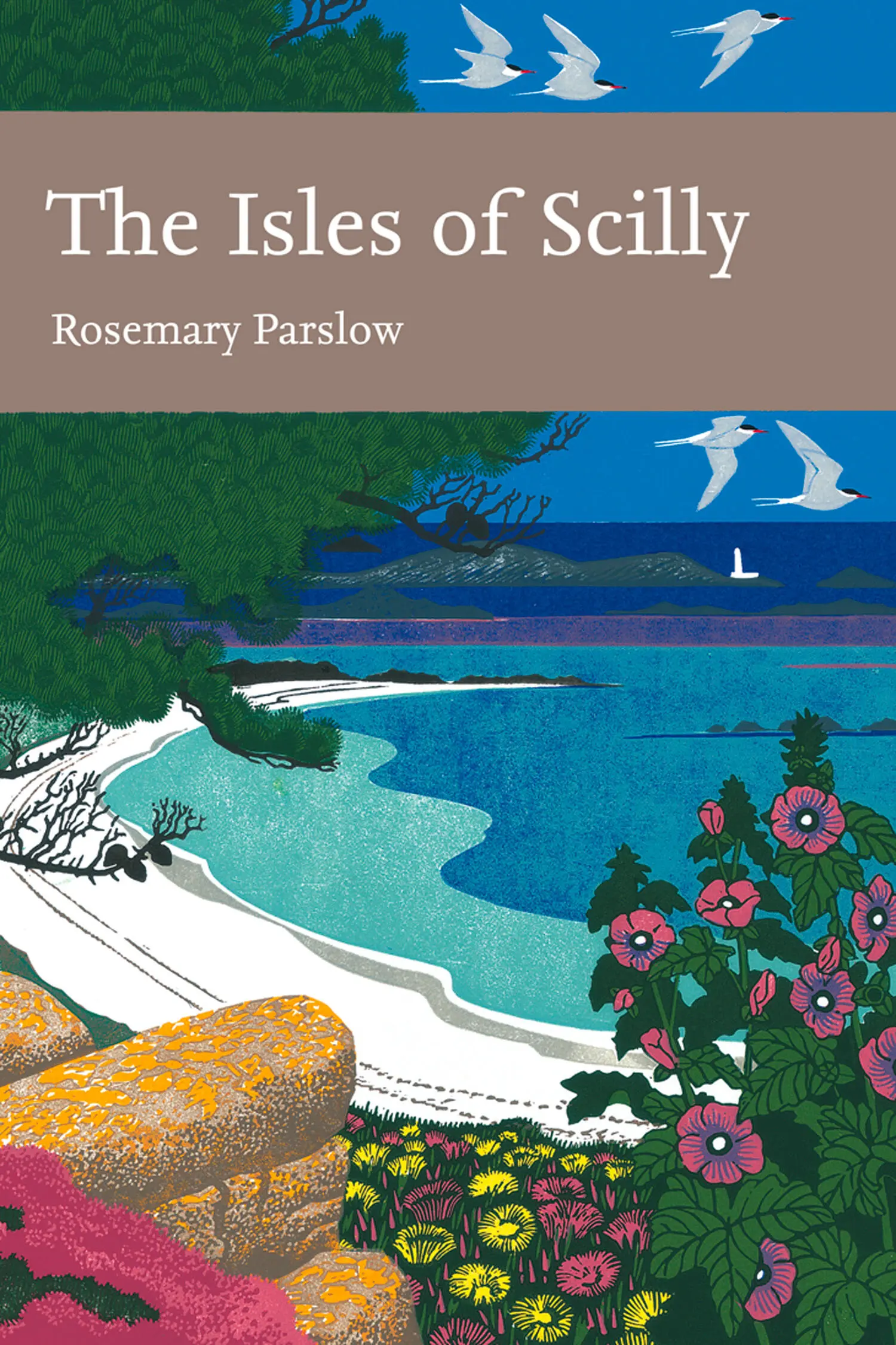
- Название:The Isles of Scilly
- Автор:
- Жанр:
- Год:неизвестен
- ISBN:нет данных
- Рейтинг книги:3 / 5. Голосов: 1
-
Избранное:Добавить в избранное
- Отзывы:
-
Ваша оценка:
The Isles of Scilly: краткое содержание, описание и аннотация
Предлагаем к чтению аннотацию, описание, краткое содержание или предисловие (зависит от того, что написал сам автор книги «The Isles of Scilly»). Если вы не нашли необходимую информацию о книге — напишите в комментариях, мы постараемся отыскать её.
The Isles of Scilly — читать онлайн ознакомительный отрывок
Ниже представлен текст книги, разбитый по страницам. Система сохранения места последней прочитанной страницы, позволяет с удобством читать онлайн бесплатно книгу «The Isles of Scilly», без необходимости каждый раз заново искать на чём Вы остановились. Поставьте закладку, и сможете в любой момент перейти на страницу, на которой закончили чтение.
Интервал:
Закладка:
ST AGNES AND GUGH
Officially counted as one island, you could be forgiven for considering them two separate islands if you only saw them at high tide, when the sea covers the sand bar that links them. Most days there is a period when the bar is uncovered and it is possible to cross from Gugh to St Agnes. When the Hick family lived on Gugh in the 1970s, if the bar was covered by the sea, their two sons would sometimes have to row across in their small dingy – the Bar Bus – or miss getting to school on St Agnes if it was too rough to row (W. Hick, in litt .).
St Agnes is 1.5km long by about 1km wide, and Gugh 1km long by about 0.5km across. The land area they cover together is 145 hectares, of which Gugh is 37 hectares. The St Agnes coastline is very convoluted, so walking around the edge can take a suprising amount of time. In the days of the St Agnes Bird Observatory the daily round of the perimeter of the island, to check what birds had arrived overnight, was said to be five miles (8km), presumably including Gugh.
St Agnes
Most of what could be called the ‘middle’ of St Agnes is cultivated, mainly as bulb or arable fields, and it includes the three ‘towns’, Higher, Middle and Lower Town. Inland, St Agnes is a made up of a nucleus of small fields, farms and houses. Many of the fields have a good arable weed flora and between hedges are glimpses of delightful gardens full of exotic plants. Some of the garden walls have some of the best collections of lanceolate spleenwort Asplenium obovatum in the islands.
Wherever you are on St Agnes you are aware of the lighthouse perched on the hill in the middle of the island. The fat white tower dominates the landscape and appears to squeeze into every photograph (Fig. 49). St Agnes lighthouse was built in 1680, making it one of the oldest in Britain. Initially the light was supplied by a cresset, a coal-burning brazier, which stood on a platform in the lantern. This was not very efficient and was replaced by copper oil lamps and revolving reflectors in 1790. The wind vane on top of the lantern is 22.5 metres above the ground, 42 metres above mean high water mark (Bowley, 1990). When the Peninnis Head lighthouse came on line in 1911 the St Agnes light was downgraded to a daymark. The lighthouse keeper’s house is now a farmhouse. Just below the lighthouse hill is the former parsonage in a grove of trees. In migration times a constant stream of birdwatchers patrol the road outside the parsonage in the hope of seeing some really unusual bird that has been attracted to the dense cover in the garden (Fig. 50). Quite often, if they are lucky enough to glimpse a Pallas’s warbler Phylloscopus proregulus or some such rarity, it will flit across the road to disappear out of sight behind the massive wall of the lighthouse garden.
The northern part of the island is flat, low-lying and sandy, with a large meadow and a few former hayfields towards the rocky headland of Browarth. From the hill near the lighthouse you can see the almost perfect circle of Big

FIG 49.St Agnes: cattle grazing beside the lighthouse, May 2005. (Rosemary Parslow)

FIG 50.Pied flycatcher near St Agnes lighthouse. The gardens of the parsonage and the lighthouse attract many passage migrants. (D. I. M. Wallace)
Pool in the meadow (Fig. 51). Both the pools here (there is also a Little Pool nearby) are surrounded by grassland on low-lying land with the sea on two sides. The sea occasionally floods the meadow area, although recent sea defences have reduced the frequency. At other times the pools flood after heavy rain and the leat connecting Big Pool to the sea has to be opened at low tide to release the water. So, although usually freshwater, Big Pool may at times be slightly brackish. Around the pools are successive rings of vegetation: sea club-rush succeeded by saltmarsh rush, marsh pennywort, then creeping bent Agrostis stolonifera . Big Pool contains a few aquatic species, usually fennel-leaved pondweed but on occasion beaked tasselweed. The pool attracts very few breeding waterfowl, but is important at migration times. There are two resident Odonata species, common darter dragonfly Sympetrum striolatum and blue-tailed damselfly Isnura elegans . Frequently there are very large common eels in the pool and occasionally a heron Ardea cinerea will be seen standing in the pool, struggling to swallow one that has wrapped itself around its neck. These drawn-out battles between fish and bird can last for many minutes before the heron manages to swallow the fish or gives up and lets it go.
The meadow is also the local cricket pitch (as well as the tennis court and occasional helipad, especially in winter), with a species list that includes a
FIG 51.Big Pool and the chamomile cricket pitch, St Agnes, February 2004. (Rosemary Parslow)
number of rare and unusual plants including autumn lady’s-tresses, chamomile and several rare clovers. Most of the meadow sward around the cricket pitch is kept short by mowing, or elsewhere by rabbit and cattle grazing. The only site in Scilly for common adder’s-tongue fern Ophioglossum vulgatum is under bracken on the edge of the meadow. Nearby in the cart ruts left by tractors in the sodden turf can be found two species of spike-rush, slender spike-rush Eleocharis uniglumis and many-stalked spike-rush E. multicaulis , as well as another rarity, early meadow-grass, and tufts of the tiny club-rushes Isolepis setacea and I. cernua .
Just west of the meadow is the harbour of Periglis. Here are the former lifeboat house and the remains of the longest lifeboat slip in Scilly, although the shallowness of the incline meant it never functioned properly. Periglis is the main harbour for the islanders’ boats and is very sheltered from most directions. There is a low dune at the back of the bay with typical dune plants including sea-kale, sea bindweed Calystegia soldanella and strandline species where the sandy beach gives way to rocks and boulders towards the north in one direction and towards the quay in the other. Burnt Island is a small island that lies to the northwest of Periglis, joined to St Agnes by a reinforced boulder-filled gabion at Ginamoney Carn. The island is low-lying and rocky, mainly covered in maritime grassland, bracken and thrift. At the furthest extremity of Burnt Island is Tin’s Walbert, a large rock promontory that can only be reached at low tide.
To the east of the meadow is a large and very rocky bay, Porth Killier, and round the next promontory into Porth Conger is the main quay where passengers and freight are landed. South of the bar which links St Agnes to Gugh is the large inlet of the Cove, in which is found the very popular small bay of Covean. Besides attracting sunbathers to its warm, white sands, this can often be the stopping-off place for migrant birds, and sometimes there are willow warblers Phylloscopus trochilus , flycatchers and other birds flitting in and out of the tamarisks and snatching flies from the sand between the sunbathers. Just above the path from Covean to the Bar is a suite of fields with very sandy soils. Most of these have a particularly impressive arable weed flora and are often very colourful with corn marigolds, the ‘whistling jacks’ gladiolus Gladiolus communis byzantinus , fumitories and smaller tree-mallow.
Читать дальшеИнтервал:
Закладка:
Похожие книги на «The Isles of Scilly»
Представляем Вашему вниманию похожие книги на «The Isles of Scilly» списком для выбора. Мы отобрали схожую по названию и смыслу литературу в надежде предоставить читателям больше вариантов отыскать новые, интересные, ещё непрочитанные произведения.


Обсуждение, отзывы о книге «The Isles of Scilly» и просто собственные мнения читателей. Оставьте ваши комментарии, напишите, что Вы думаете о произведении, его смысле или главных героях. Укажите что конкретно понравилось, а что нет, и почему Вы так считаете.