Rosemary Parslow - The Isles of Scilly
Здесь есть возможность читать онлайн «Rosemary Parslow - The Isles of Scilly» — ознакомительный отрывок электронной книги совершенно бесплатно, а после прочтения отрывка купить полную версию. В некоторых случаях можно слушать аудио, скачать через торрент в формате fb2 и присутствует краткое содержание. Жанр: unrecognised, на английском языке. Описание произведения, (предисловие) а так же отзывы посетителей доступны на портале библиотеки ЛибКат.
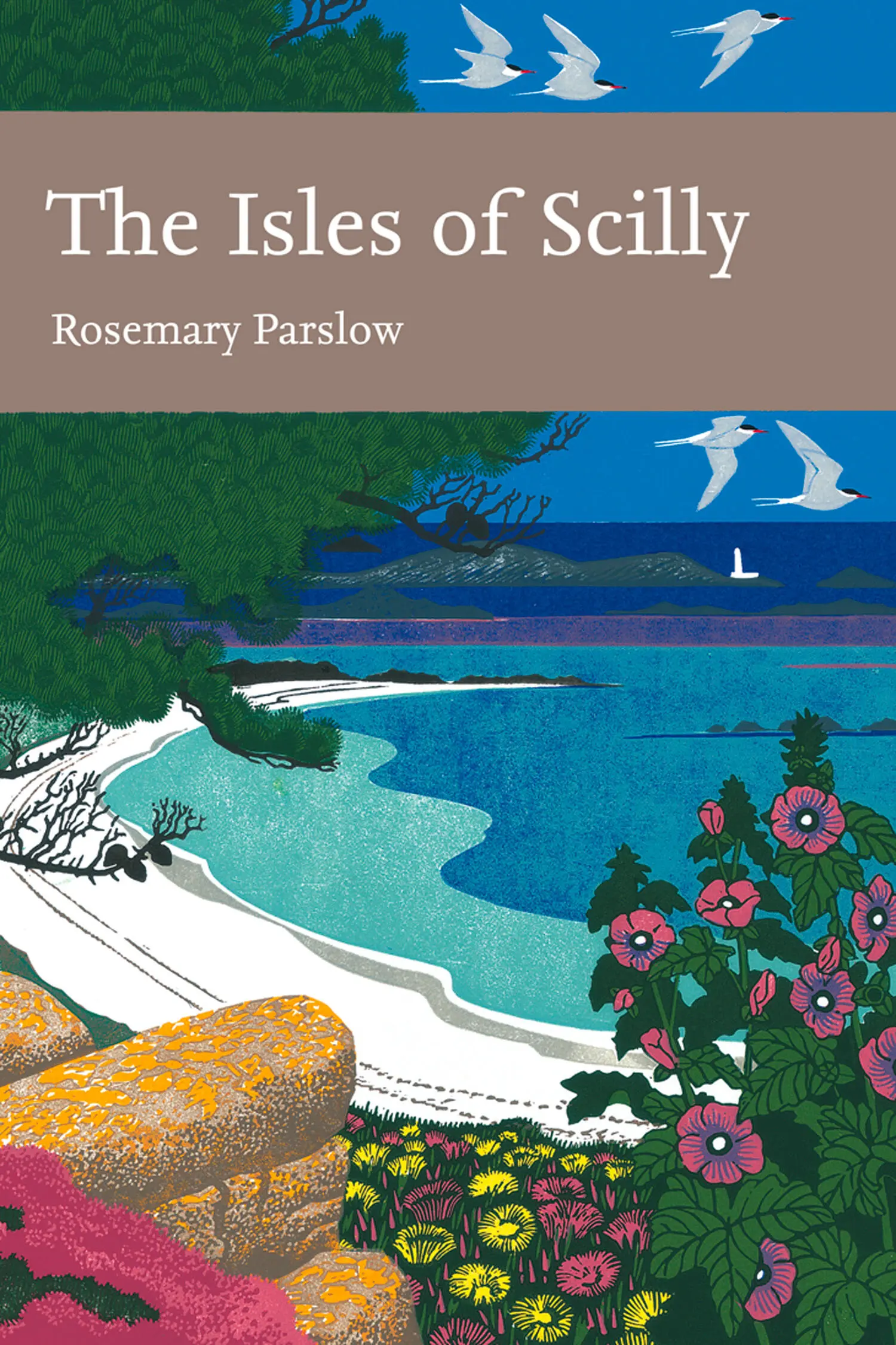
- Название:The Isles of Scilly
- Автор:
- Жанр:
- Год:неизвестен
- ISBN:нет данных
- Рейтинг книги:3 / 5. Голосов: 1
-
Избранное:Добавить в избранное
- Отзывы:
-
Ваша оценка:
The Isles of Scilly: краткое содержание, описание и аннотация
Предлагаем к чтению аннотацию, описание, краткое содержание или предисловие (зависит от того, что написал сам автор книги «The Isles of Scilly»). Если вы не нашли необходимую информацию о книге — напишите в комментариях, мы постараемся отыскать её.
The Isles of Scilly — читать онлайн ознакомительный отрывок
Ниже представлен текст книги, разбитый по страницам. Система сохранения места последней прочитанной страницы, позволяет с удобством читать онлайн бесплатно книгу «The Isles of Scilly», без необходимости каждый раз заново искать на чём Вы остановились. Поставьте закладку, и сможете в любой момент перейти на страницу, на которой закончили чтение.
Интервал:
Закладка:
Great Pool is much more extensive. The lake stretches right across the middle of the island, virtually dividing it in two. Surrounding Great Pool are reedbeds, areas of willow carr and some stretches of muddy foreshore. A painting of the lake and the surroundings by Augustus Smith’s sister Mrs Frances Le Marchant, executed in September 1868, shows the lake to be much more open than now, with the reedbeds only marginal (in King, 1985). The lake attracts many waterbirds, both migrants and the resident species, including gadwall, mallard and moorhen, and is an important feeding area for migrating waders. Among the reeds and in open patches along the foreshore are many common wetland plants, lesser spearwort, royal fern, bulrush (reedmace) Typha latifolia and yellow iris. The rattling songs of reed Acrocephalus scirpaceus and sedge warbler A. schoenobaenus can be heard from the reedbeds around the lake during summer. Good views across the lake can be obtained from the bird hides that are approached by boardwalks from the track north of the pool. One hide was erected in memory of the late David Hunt, the ‘Scilly Birdman’, who was resident on Tresco before moving to St Mary’s (see Chapter 4).
Much of Tresco is under agriculture, with pasture and arable fields (Fig. 43). The Tresco Estate currently runs a large herd of beef cattle. There is more tree cover generally, so that in autumn the island attracts rare migrant birds from
FIG 42.Tresco Abbey and Abbey Pool, April 2005. (Rosemary Parslow)

FIG 43.Arable fields and pine shelterbelt on Tresco. (Rosemary Parslow)
North America and elsewhere to tease the ‘twitchers’ who also flock to the islands.
Across the north end of the island is Castle Down, one of the largest areas of wind-eroded waved heath in the islands. This is a fascinating place, a plateau covered in low heather only about ankle height where the plants form long ridges as they are rolled over by the wind, with large patches of exposed bare ground between the waves. This type of heathland is not particularly species-rich but very atmospheric when the heathers are in flower and the whole place is full of the hum of bees. Besides bell heather and ling, there are several common species of grass, patches of English stonecrop, lousewort and bird’s-foot-trefoil, and lichens and mosses. The tread of many feet on the pathways across the Down, exacerbated by the eroding effect of wind and rain, have caused the braiding of many pathways. On some places on the paths are many shallow temporary pools with a transient wetland flora of starworts and lesser spearwort. Ruins of all that remains of King Charles’s Castle are on one of the high points at the western edge of Castle Down. Besides having a good population of ferns and sea stork’s-bill Erodium maritimum among its stones, the top of the castle makes a good vantage point for looking down into the Tresco Channel between Tresco and Bryher, and over the tower of Cromwell’s Castle on the headland below.
Gimble Porth on the eastern side of the headland is backed with low cliffs where gulls nest, and where some years there is a kittiwake Rissa tridactyla colony. Piper’s Hole is a deep cavern in the north-facing cliffs that can be approached by scrambling down the cliff, but a boat is needed to explore properly. It was very popular with holiday visitors in the past, and there are still postcards on sale showing it lit up with lanterns in the early 1900s. The cave consists of a long boulder-filled passage over 20m long leading to a large underground pool that can be traversed by boat (a punt used to be kept there in the past) to reach the inner chamber, which is over 40m deep. The cave system was investigated in 1993 by Philip and Myrtle Ashmole and specimens of the cavernicolous fauna collected, including a springtail new to Britain, Onychiurus argus , a troglophile species otherwise known from caves in Spain, France and Belgium (Ashmole & Ashmole, 1995).
The plantations and windbreaks originally planted by Augustus Smith and his successors are now coming to the end of their life. Much planting and felling has taken place to remove and replace the fallen timber. The woodlands are a mixture of planted trees and shrubs, escapees from the Gardens, as well as wild plants and ferns – a botanical recorder’s headache. Protected by the plantations are the ‘subtropical’ Abbey Gardens (Fig. 44). These are densely planted with a
FIG 44.Tresco Abbey Gardens, April 2005. (Rosemary Parslow)
great range of plants from countries with a Mediterranean climate, Australasia, the Canary Islands, South Africa and parts of South America (see Chapter 13). Visitors to the Abbey Gardens will also remark on the extraordinarily tame birds. In 2004 the entrance to the Gardens was updated and the tea room moved. If you visit the tea garden, kamikaze robins Erithacus rubecula snatch crumbs from your lips and blackbirds, chaffinches Fringilla coelebs and other birds will help themselves to cake from your plate. At certain times of the year the odd appearance of the house sparrows Passer domesticus , starlings Sturnus vulgaris and blackbirds – with bright yellow caps of pollen from drinking the nectar of Puya chilensis plants – has occasionally led to them being identified as something far more exotic! Another curious phenomenon in the former tea garden was the pecking of holes in the mortar of a wall by dozens of house sparrows, presumably seeking minerals after the manner of some tropical parrots.
Some of the exotic plants that grow around Tresco and the other islands are spread intentionally when people take cuttings or seeds to cultivate for their own gardens or pass around to their friends. Other plants escape from the Gardens by natural means, blown by the wind or otherwise carried accidentally, to end up elsewhere in the islands. Many of these are now established as part of the Scillonian flora. Perhaps the most unusual inhabitants of the Gardens are the two species of New Zealand stick insects that have been part of the fauna for about a century and are now found elsewhere around Tresco. Recently they have also reached St Mary’s. Also from New Zealand but less obvious are the woodland hoppers Arcitalitrus dorrieni , the little back amphipods that now live under every rock and log on the island. These are the most obvious and well-known examples, but there are many other insects and other invertebrate species that originally arrived as stowaways with horticultural material from abroad.
It is not just insects and other animals that have arrived in Scilly with introduced plants. A series of discoveries of rare introduced bryophytes began in 1961 when Miss R. J. Murphy discovered two unexpected liverworts on Tresco, Lophocolea semiteres , new to the northern hemisphere, and a new species of Telaranea that was named T. murphyae after her by Mrs Paton in 1965. Telaranea murphyae may have been introduced to Tresco from the southern hemisphere, as has happened with many other species such as Lophocolea semiteres and L. bispinosa , which are found only on Scilly and in Scotland, pointing to introduction with exotic plants. Besides Lophocolea bispinosa , found by Mrs Paton in 1967, was a moss Calyptrochaeta apiculata , later also found in East Sussex.
Since then, the moss Sematophyllum substrumulosum was first recorded as new to Britain on several of the islands (it has since been discovered to have been found, but not identified, in West Sussex in 1964). It was growing on the bark of Monterey pine in 1995 and again may have arrived with horticultural material (Paton & Holyoak, 2005). Other species recorded have included two mosses rare in Britain ( Chenia leptophylla, Didymodon australasiae ) and another that has become very widespread and common ( Campylopus introflexus ). By 2003 some of the alien bryophytes had greatly extended their ranges since the 1960s, with both alien Lophocolea species now widespread throughout the islands, and Telaranea murphyae had spread from Tresco to St Mary’s.
Читать дальшеИнтервал:
Закладка:
Похожие книги на «The Isles of Scilly»
Представляем Вашему вниманию похожие книги на «The Isles of Scilly» списком для выбора. Мы отобрали схожую по названию и смыслу литературу в надежде предоставить читателям больше вариантов отыскать новые, интересные, ещё непрочитанные произведения.

Обсуждение, отзывы о книге «The Isles of Scilly» и просто собственные мнения читателей. Оставьте ваши комментарии, напишите, что Вы думаете о произведении, его смысле или главных героях. Укажите что конкретно понравилось, а что нет, и почему Вы так считаете.