Rosemary Parslow - The Isles of Scilly
Здесь есть возможность читать онлайн «Rosemary Parslow - The Isles of Scilly» — ознакомительный отрывок электронной книги совершенно бесплатно, а после прочтения отрывка купить полную версию. В некоторых случаях можно слушать аудио, скачать через торрент в формате fb2 и присутствует краткое содержание. Жанр: unrecognised, на английском языке. Описание произведения, (предисловие) а так же отзывы посетителей доступны на портале библиотеки ЛибКат.
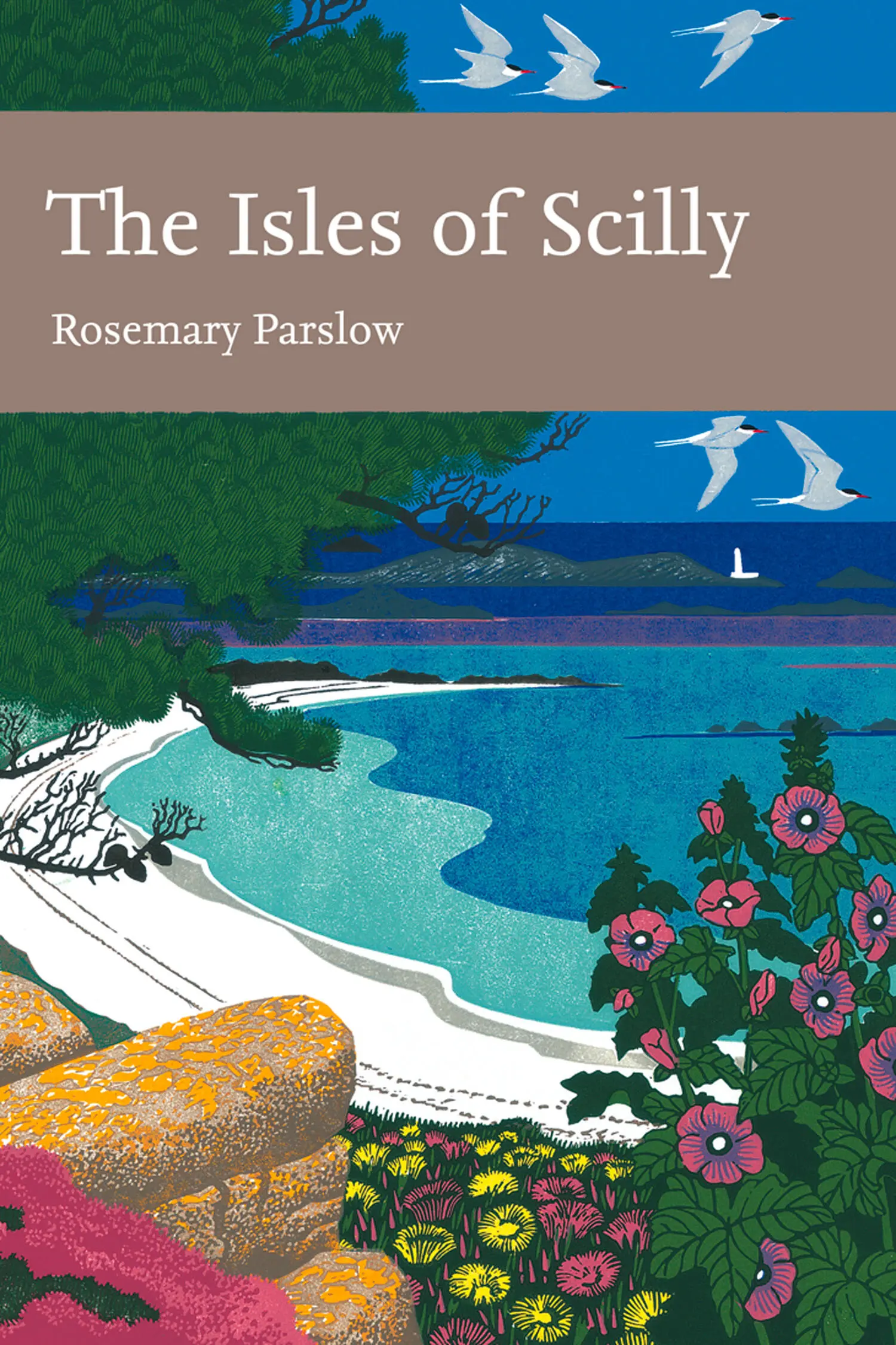
- Название:The Isles of Scilly
- Автор:
- Жанр:
- Год:неизвестен
- ISBN:нет данных
- Рейтинг книги:3 / 5. Голосов: 1
-
Избранное:Добавить в избранное
- Отзывы:
-
Ваша оценка:
The Isles of Scilly: краткое содержание, описание и аннотация
Предлагаем к чтению аннотацию, описание, краткое содержание или предисловие (зависит от того, что написал сам автор книги «The Isles of Scilly»). Если вы не нашли необходимую информацию о книге — напишите в комментариях, мы постараемся отыскать её.
The Isles of Scilly — читать онлайн ознакомительный отрывок
Ниже представлен текст книги, разбитый по страницам. Система сохранения места последней прочитанной страницы, позволяет с удобством читать онлайн бесплатно книгу «The Isles of Scilly», без необходимости каждый раз заново искать на чём Вы остановились. Поставьте закладку, и сможете в любой момент перейти на страницу, на которой закончили чтение.
Интервал:
Закладка:
The Lower Moors nature reserve is situated in a low-lying area between Hugh Town and Old Town Bay (Fig. 37). A stream flows through the site to the sea at Old Town. Part of the area is reedbed, part marsh composed of beds of a very lax local variety of sea rush Juncus maritimus (the endemic var. atlanticus , according to

FIG 37.Lower Moors from the air, February 2004. (Rosemary Parslow)
Lousley), and there are areas of grey sallow carr, as well as a small pool and a scrape with bird hides on the bank. The pools and surrounding vegetation attract rare birds in the migration season. There are ditches, wetter areas and more open areas, all of which support a range of typical wetland plants.
There are also a few other small freshwater pools on St Mary’s, although several have generally degenerated into duck ponds. There is a pond beside the road from Porthloo to Rose Hill which, with the two fields on the west and Well Field on the east, is managed by the Isles of Scilly Wildlife Trust as a nature reserve. These fields are composed of a mixture of wetland plants and open grassland. Very little of nature conservation interest remains in the duck pond these days; it has largely been given over to a collection of exotic ducks and a few half-tame moorhens Gallinula chloropus .
Two small freshwater pools at Newford, the Argy Moor pools, drain into the Watermill Stream. Originally designed as ponds as part of a failed attempt to grow flax (presumably the ponds would have been used to steep the plants), the ponds are now very eutrophic due to the large numbers of semi-domestic ducks that frequent the site. There are a number of introduced plants around the ponds and a few marginal species such as soft rush, but there now (2006) appear to be no aquatic plants, although prior to the invasion of water fern Azolla filiculoides there had been a typical aquatic flora (Lousley, 1971). Whether it was the strenuous attempts to get rid of the water fern using herbicides that also eliminated all the aquatic plants, or whether the conditions of the ponds are no longer suitable, is unclear.
Shooter’s Pool, a small pool on farmland behind Lower Moors, is being developed to provide freshwater habitats for birds by the Isles of Scilly Bird Group (in 2005 the pool attracted a black-winged stilt Himantopus himantopus ). This pool at one time had a population of the rare lesser water plantain, but this apparently disappeared some years ago. It will be interesting to see whether the plant reappears in future.
CHAPTER 6 The Off-Islands
We’ll rant and roar, across the salt seas
Soon we’ll strike soundings in the Channel of Old England
From Ushant to Scilly is thirty-four leagues .
Spanish Ladies , traditional sea-shanty
IN ADDITION TO St Mary’s there are four inhabited islands in the Isles of Scilly. These are called the ‘off-islands’ by Scillonians. Three were formerly joined to St Mary’s when Scilly was mainly one large island many centuries ago (see Chapter 2). St Agnes has been separated from the rest far longer by a deep channel, St Mary’s Sound, and as a result always seems to have a different ‘feel’ and some differences in the flora that may reflect this longer isolation. None of the off-islands has a large population. The majority of the inhabitants are farmers with some involvement with the sea, boats or fishing, and most rely to some extent on tourism.
BRYHER
Lying just to the west of Tresco is the island of Bryher. The island is only 129 hectares above MHWS, 2km long by 1km wide. Even so, the topography is very varied. At the far northernmost tip is the domed headland of Shipman Head Down, 42 metres high and divided from the extreme rocky promontory of Shipman Head by a narrow channel through which the sea boils at high tide. The bay to the west of Shipman Head Down, Hell Bay, is famed for its restless, dramatic seas (Fig. 38). Dominating the west coast of the island are Gweal Hill
FIG 38.Restless sea in Hell Bay, Bryher, May 2006. (Richard Green)
and Heathy Hill, with bays between, Great Popplestone Bay, Stinking Porth and Great Porth. These end in Stony Porth and the sandy bay and dunes of Rushy Bay in the south of the island, looking across to the island of Samson. The eastern side of Bryher is more sheltered and sandy, with dunes facing Tresco across the shallow channel. Only beyond the post office in the northeast does the coast become rocky, with a rather sinister small rocky islet topped with a gibbet emerging from the sea: this is Hangman’s Island, where apparently Admiral Blake, who put down the Royalist uprising in 1651, hanged some of his men (Vyvyan, 1950). Watch Hill gives a good vantage point for looking out over the island, as does Samson Hill further to the south.
The centre of Bryher is low-lying, mainly arable fields and pastureland. The gardens and grounds associated with the hotel occupy a large site dominating the lower land in this part of the island. Close beside the hotel is Great Pool, a large brackish pool with a fringe of marshy vegetation. Most people visiting Bryher for the first time will either head south to the beach at Rushy Bay, a ‘must’ for naturalists because of the unusual plants that are found there, or will aim for Shipman Head across the top of Shipman Head Down to see the notorious wild seascapes in Hell Bay.
Bryher has many good things to offer, and you do not have to be a naturalist to appreciate the colour and the beauty of the scenery. The island is small enough to get round in a day, although it repays a longer visit. Although Bryher does not have the wealth of bulb-field annuals of other islands it does have some, for example common fumitory Fumaria officinale , which is very uncommon elsewhere in Scilly. The dune grassland behind Rushy Bay supports a great variety of dune species, usually in a very stunted form. There are miniature plants of sea spurge Euphorbia paralias and Portland spurge, common stork’s-bill Erodium cicutarium , forget-me-nots Myosotis spp. and English stonecrop Sedum anglicum , growing virtually in pure sand. Nothing, however, can quite prepare you for the Lilliputian perfection of the rare dwarf pansy, when you eventually find it, growing in the sandy turf and on bare sand. In May the pansy may be in its thousands, but they are often very difficult to find. In the dunes behind the bay there is a population of grey bush-crickets Platycleis albopunctata that live mostly in among the marram grass. The very observant may also find one of the tiny lesser cockroaches scuttling across the sand behind the dunes.
Perhaps the next attraction for the naturalist is the Great Pool and surrounding marshy vegetation (Fig. 39). The pool lies close to the shore at Great Porth and is unique in now being the only true brackish lagoon in Scilly. A leat links the pool to the sea in Great Porth. At times the pool is temporary home to shoals of land-locked grey mullet Chelon labrosus , trapped until the spring tides can release them again. The pool is very shallow and open and the only aquatic plants are those that can cope with the brackish conditions, usually
FIG 39.Bryher from Gweal Hill, looking towards the saline Pool and Great Popplestone Bay, June 2002. (Rosemary Parslow).
beaked tasselweed Ruppia maritima and fennel-leaved pondweed Potamogeton pectinatus . Saltmarsh rush Juncus gerardii , sea club-rush Bolboschoenus maritimus and at least one species of spike-rush Eleocharis sp. grow all round the edge of the pool. A few birds frequent the pool. Moorhen usually nest and gadwall Anas strepera , mallard A. platyrhynchos and mute swan Cygnus olor are often seen there. But the salty water restricts the number and species that live in the pool, so dragonflies, for example, cannot breed there. A second very small pool nearby at one time would have been covered in brackish water-crowfoot Ranunculus baudotii and one of the starworts Callictriche sp., but for some years it was planted up with water-lily and other pond plants. Now these have been removed it is returning to its former state.
Читать дальшеИнтервал:
Закладка:
Похожие книги на «The Isles of Scilly»
Представляем Вашему вниманию похожие книги на «The Isles of Scilly» списком для выбора. Мы отобрали схожую по названию и смыслу литературу в надежде предоставить читателям больше вариантов отыскать новые, интересные, ещё непрочитанные произведения.






Обсуждение, отзывы о книге «The Isles of Scilly» и просто собственные мнения читателей. Оставьте ваши комментарии, напишите, что Вы думаете о произведении, его смысле или главных героях. Укажите что конкретно понравилось, а что нет, и почему Вы так считаете.