George Martin - Wild Cards
Здесь есть возможность читать онлайн «George Martin - Wild Cards» — ознакомительный отрывок электронной книги совершенно бесплатно, а после прочтения отрывка купить полную версию. В некоторых случаях можно слушать аудио, скачать через торрент в формате fb2 и присутствует краткое содержание. Жанр: unrecognised, на английском языке. Описание произведения, (предисловие) а так же отзывы посетителей доступны на портале библиотеки ЛибКат.
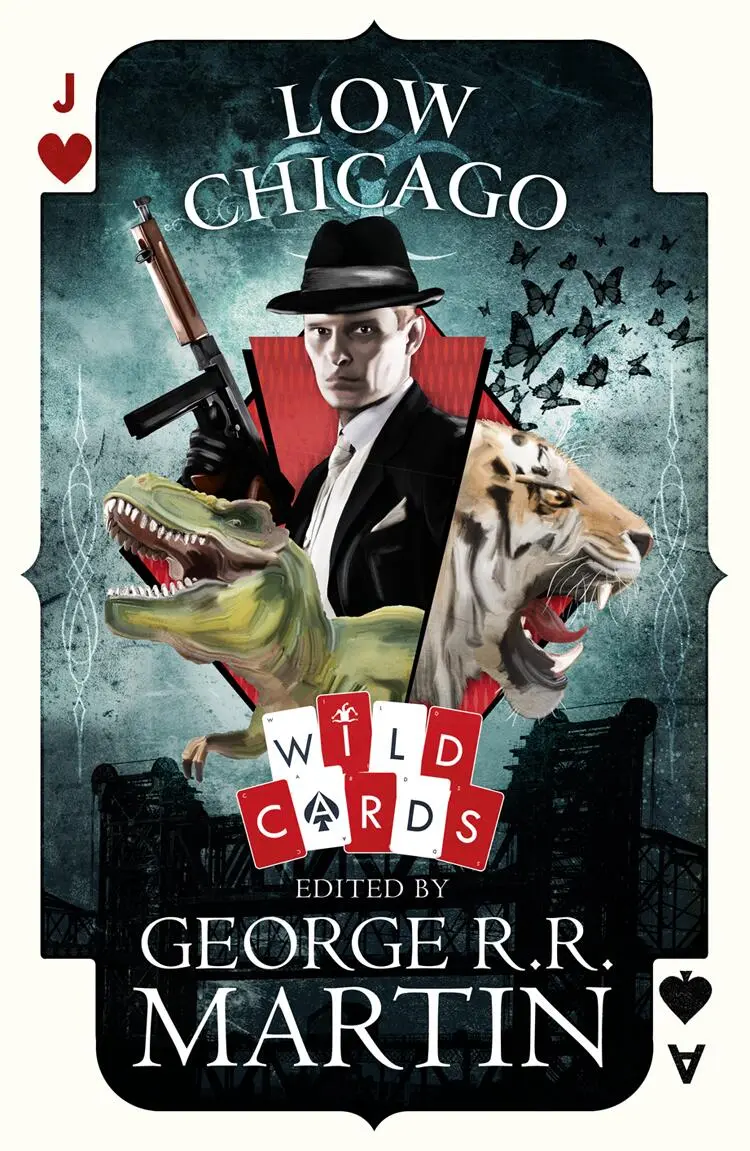
- Название:Wild Cards
- Автор:
- Жанр:
- Год:неизвестен
- ISBN:нет данных
- Рейтинг книги:5 / 5. Голосов: 1
-
Избранное:Добавить в избранное
- Отзывы:
-
Ваша оценка:
Wild Cards: краткое содержание, описание и аннотация
Предлагаем к чтению аннотацию, описание, краткое содержание или предисловие (зависит от того, что написал сам автор книги «Wild Cards»). Если вы не нашли необходимую информацию о книге — напишите в комментариях, мы постараемся отыскать её.
Wild Cards — читать онлайн ознакомительный отрывок
Ниже представлен текст книги, разбитый по страницам. Система сохранения места последней прочитанной страницы, позволяет с удобством читать онлайн бесплатно книгу «Wild Cards», без необходимости каждый раз заново искать на чём Вы остановились. Поставьте закладку, и сможете в любой момент перейти на страницу, на которой закончили чтение.
Интервал:
Закладка:
“—John?”
“Mr. Crenson and I just got into town and we’d like to attend the game this afternoon—”
Ice smiled broadly. “So you came to see Ice?”
“We know it’s a hard ticket. We’re willing to pay—”
Ice made a dismissive gesture. “I got what you need, boy, but the money of John Nighthawk’s son is no good here.” He reached into his waistcoat pocket and came out with a sheaf of tickets. “Good thing you got here now, though. I was just going to send my boys out to see what we could get for them. All prime seats. Here, take two.”
Nighthawk knew better than to argue. “Thanks, Ice.”
As he handed over the tickets, the pawnbroker said, “Since you’re just back in town—a warning. I hope you don’t have any business going on the game.”
“Business?” Nighthawk asked. “You mean a bet? No. Is it rigged?”
“Sure as hell is. It’s not well-known, but Ice knows all. He hears everything. You can’t fart in my town without me knowing. That eastern trash comes to our town with their dirty money and bribes our boys to throw it!” There was real anger in Ice’s voice and eyes. “Thank God our boys aren’t part of that filthy deal.”
“Our boys?” Nighthawk asked.
“You know—Smokey Joe and the Thunderbolt. They wouldn’t take dirty money. They wouldn’t let Chicago down.”
“No,” Nighthawk said thoughtfully.
“Anyway …” Ice brightened some. “Smokey Joe Williams is pitching today, and he’ll show them. Tomorrow, though …” He shook his head. “The white boy is going, the other Williams, Lefty. Bet on Cincinnati if you want to, but I wouldn’t dirty my money.”
“Nor would I,” Nighthawk said.
“Damn right. Well …” Ice smiled as they turned to go. “You remember me to your daddy. And tell him to come by sometime soon. He always brings the best when he comes to visit.”
“I will,” Nighthawk said as they left the shop.
Croyd looked at him. “What the hell?”
Nighthawk sighed. “I suppose I should explain.” He paused. The street was quiet, with a few people passing them as they went about their daily business. “I’m … older than I look.”
“Hey, man, I don’t judge,” Croyd said. “After all, I’m like, Jesus, seventy-seven myself. Or about that.”
“Yeah, well, I’m older than that.” There was a faraway look in his eyes.
Croyd looked impressed. “No shit?”
“No shit. I’ve been around a long time. And though I’ve done some traveling, worked for a while in lots of places, Chicago has been my home ever since I came here after the war.”
“What war was that?” Croyd asked.
Nighthawk looked at him. “The Civil War.”
Croyd’s jaw dropped. “Hey, I’m not trying to pry or anything. We all have our little secrets, our little foibles. It’s not like you’re a vampire or something and drink blood to stay alive for so long.” He paused a moment before adding, “Right? Because, if you were, that would be disgusting.”
“No,” Nighthawk said. “I don’t drink blood.”
“Great. That’s cool.” They started down the street again, heading for the el. “You know, I was a kid when the virus hit, back in ’46. I never finished school.” He shook his head. “Always regretted that I never learned algebra, but then it hasn’t really come up much in my life. I always loved history, though.”
“I’ve lived through a lot of it,” Nighthawk said.
“You ever meet General Ulysses Grant?”
Nighthawk shook his head. “No. But I knew Teddy Roosevelt pretty well.”
“Tell me about it,” Croyd said.
“Well, there was this time when we were ordered to take this hill … you think Cuba is something now, you should have been there in the 1890s …”

Comiskey Park, known as the Baseball Palace of the World, was jammed to the rafters, and then some. Even though it was one of the largest baseball stadiums of its time, every seat was taken and even the aisles were crammed with standing-room-only patrons. Ice’s word was good—the tickets he’d given to Nighthawk and Croyd were excellent, box seats located on the field level, just behind the White Sox dugout. Nighthawk was impressed. He’d been to many games at Comiskey Park, before it fell to the wrecking ball in 1991 … not only White Sox games, but also those of the Negro National League before, and even after, Jackie Robinson broke the major league color barrier. But he’d never seen it so crowded.
While unusual but not unique for this time, Comiskey Park wasn’t racially segregated, so no one even batted an eye when Nighthawk and Croyd took their seats, right on the aisle about six rows above the dugout. Nighthawk didn’t notice any other black fans in his immediate neighborhood, though that was more of an economic rather than a social commentary on the times. These were expensive seats, $5.50 each, as printed on the tickets. Though the stands were already crowded, the field itself was empty. The players had yet to appear for infield practice or even warm-up games of catch.
A vendor passed by hawking scorecards, and Nighthawk called him over. He gave the kid a nickel for the pamphlet. Nighthawk looked at the cover musingly as the kid moved on with his wares. Croyd glanced at him. “Who’s that on the cover?” he asked.
“Oh, the owner, of course, Charles Comiskey. A notorious skinflint whose miserly ways in large part caused the …” He paused, looked around, and lowered his voice. “You know, the thing that Ice told us about.”
“Right. Got ya.”
Nighthawk glanced up. The players were just starting to take the field in ones and twos, strolling about and stretching desultorily. He looked back down at the program, thumbing through it. “You know how much this nickel program would be worth back in—back home?”
“How much?” Croyd asked, interested.
“I’m not really sure, but probably thous—” He stopped. “Oh my God!”
“What?” Croyd asked.
Nighthawk stood up, staring out onto the field with a shocked expression on his face. He was silent for several moments, despite Croyd’s repeated, “What?” and he finally sank back into his seat.
“What is it?” Croyd asked. “You look like you’ve seen a ghost.”
“On the field,” he croaked. “Black men.”
“Yeah, so … oh. Right.”
“Jackie didn’t break the twentieth-century color barrier until 1946,” Nighthawk said in a choked whisper, “in the minors. Forty-seven in the majors.”
He thumbed through the program until he came to a team photo. It was grainy black and white, but he pointed out the three men who were quite obviously black. The names under the photo read Joe Williams, Oscar Charleston, and Spottswood Poles.
He wasn’t familiar with Poles, but knew the other two quite well. He’d seen them play, followed their exploits in the black newspapers of the day. And Ice had named them, though what he’d said was so foreign to Nighthawk that he hadn’t really processed it. Smokey Joe Williams, six feet four, a towering figure on the mound who’d come out of the dusty diamonds of west Texas, half black and half Indian. He’d pitched well into his forties, and was said to throw harder than the Big Train, Walter Johnson. Said so even by Johnson himself, whom he’d faced frequently in exhibition games when black players faced major leaguers back in their day. And Oscar Charleston, a compact but strongly built outfielder, who was called the Hoosier Thunderbolt because of his combination of power and speed.
He looked out over the field. There he was. Charleston was playing catch with Shoeless Joe Jackson himself and chatting with a smaller, more slimly built black man who had to be Spottswood Poles, tossing the ball with a player whom Nighthawk didn’t recognize.
Читать дальшеИнтервал:
Закладка:
Похожие книги на «Wild Cards»
Представляем Вашему вниманию похожие книги на «Wild Cards» списком для выбора. Мы отобрали схожую по названию и смыслу литературу в надежде предоставить читателям больше вариантов отыскать новые, интересные, ещё непрочитанные произведения.

Обсуждение, отзывы о книге «Wild Cards» и просто собственные мнения читателей. Оставьте ваши комментарии, напишите, что Вы думаете о произведении, его смысле или главных героях. Укажите что конкретно понравилось, а что нет, и почему Вы так считаете.