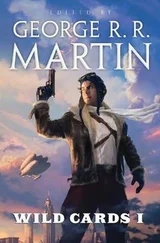
George Martin - Wild Cards
Здесь есть возможность читать онлайн «George Martin - Wild Cards» — ознакомительный отрывок электронной книги совершенно бесплатно, а после прочтения отрывка купить полную версию. В некоторых случаях можно слушать аудио, скачать через торрент в формате fb2 и присутствует краткое содержание. Жанр: unrecognised, на английском языке. Описание произведения, (предисловие) а так же отзывы посетителей доступны на портале библиотеки ЛибКат.
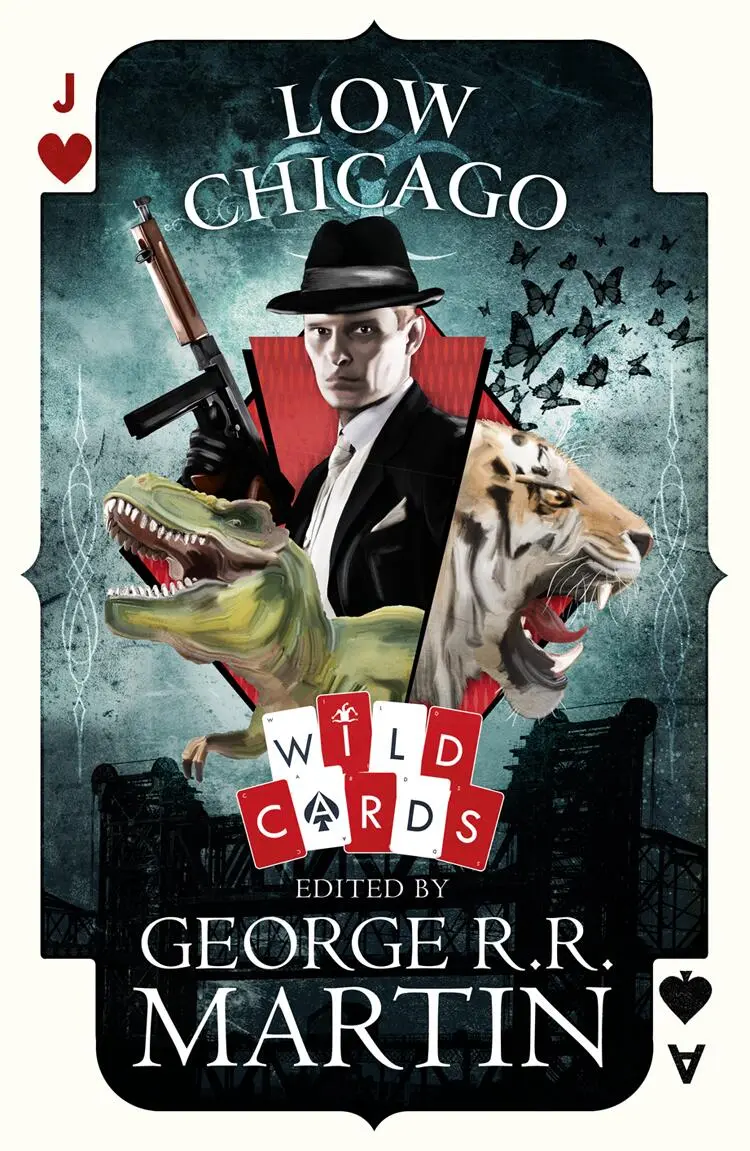
- Название:Wild Cards
- Автор:
- Жанр:
- Год:неизвестен
- ISBN:нет данных
- Рейтинг книги:5 / 5. Голосов: 1
-
Избранное:Добавить в избранное
- Отзывы:
-
Ваша оценка:
Wild Cards: краткое содержание, описание и аннотация
Предлагаем к чтению аннотацию, описание, краткое содержание или предисловие (зависит от того, что написал сам автор книги «Wild Cards»). Если вы не нашли необходимую информацию о книге — напишите в комментариях, мы постараемся отыскать её.
Wild Cards — читать онлайн ознакомительный отрывок
Ниже представлен текст книги, разбитый по страницам. Система сохранения места последней прочитанной страницы, позволяет с удобством читать онлайн бесплатно книгу «Wild Cards», без необходимости каждый раз заново искать на чём Вы остановились. Поставьте закладку, и сможете в любой момент перейти на страницу, на которой закончили чтение.
Интервал:
Закладка:
“I could use a bite to eat,” Croyd said.
Nighthawk was hungry as well. Such mundane concerns as food and drink had been forgotten in the excitement of the game and subsequent events, but now they came back to the time travelers. They took a seat at one of the small sidewalk tables and a white-aproned waiter appeared almost instantaneously. They ordered ham sandwiches and beer and were surprised and happy at the size of the slabs of rye bread, the thick cuts of ham, the whole dill pickles on the side, and the mugs of beer. A pot of spicy German mustard accompanied the sandwiches, which both slathered generously on the bread.
As they tore into the thick, juicy sandwiches, a newsboy came by hawking the afternoon edition of the Tribune . He was a runty little kid, maybe ten or twelve, looking like he stepped out of a Norman Rockwell illustration, or, Nighthawk realized, his memories.
“Hey, kid,” Croyd called. “Give me a paper.” He reached into his pocket for the bill that their British benefactor had given them back in the room in the Palmer House.
The kid’s eyes grew big as Croyd held it out. “Jeez, mister, I can’t change a twenty.”
“How much is the newspaper?” Croyd asked.
“Two cents.”
Croyd laughed. “Two cents? Even when I was a kid …” He looked at Nighthawk in surprise. “It was three cents,” he said, wonder in his voice. “Have I forgotten so much?”
“You’d probably be surprised,” Nighthawk said with a gentle smile.
Croyd called the waiter over. “Give the kid a nickel,” he said, “and add it to our bill.”
The waiter complied.
“Keep the change, kid,” Croyd said.
“Thanks, mister!”
From where he sat, Nighthawk could read the banner headlines: IRISH HOME RULE NEAR! The front page was crowded with columns of text. “Don’t keep me in suspense. What’s the date?”
“Oh, October 8, 1919. Say—” Croyd looked up, frowning in concentration. “I got us pretty close. Flowers has been here a month, tops. Not too much time to get up to a lot of mischief. Now all we have to do is find him. He’s around here somewhere. But where, exactly? How many people lived in Chicago in 1919?”
“Two and a half million.”
“Really?” Croyd looked at him.
“I do know Chicago,” Nighthawk said, looking up and down the bustling street. The memories were flooding back upon him like a wave that threatened to drag him under with its powerful pull. “Wait a minute … 1919? October?”
Croyd looked at him. “Yeah. What?”
Nighthawk set his sandwich back down on the plate, chewing thoughtfully. “At least we missed the riots,” he said.
“Riots?”
“Chicago’s worst race riots—ever.” Nighthawk’s voice became pensive, his gaze turned inward. “The summer of 1919 was known as Red Summer because of the racial tension that spread across the entire country. There were riots in many cities. My people were coming up from the South in massive numbers. Here in Chicago the tensions boiled over when a thrown rock killed a young black man at a beach in late July. By the time the National Guard had been called in to quell the violence, almost forty people were dead, a few more blacks than whites, but most of the property damage occurred in the Black Belt on the South Side, at the hands of organized ‘athletic clubs.’” Nighthawk frowned at Croyd. “Mostly Irish, mostly fairly recent immigrants themselves, competing for the jobs with the blacks coming up from the South.”
“What are you, a history buff or something?” Croyd asked.
“Or something,” Nighthawk said quietly. “It was pretty terrible. But, look, what else happened here in Chicago in 1919?”
Croyd, thumbing through the paper, looked up. “What?”
“The Black Sox scandal! The year the White Sox threw the World Series to the Cincinnati Reds.”
Croyd’s eyes widened. “Flowers would be drawn to that like a fly to shit. But is the Series still going on? Wait a minute.” He flipped the pages more quickly. “Here it is.” He looked up at Nighthawk. “Game seven is at Comiskey Park this afternoon.”
Nighthawk frowned in concentration. “Give me a minute … Yes, that’s right. The White Sox win today, four to one.”
“Wait,” Croyd said, “the White Sox won game seven? I thought they threw the Series—”
“This was one of the years when the World Series was a best of nine.” Nighthawk signaled to their waiter. “Pay him,” he told Croyd, when the boy came over.
“Wait,” Croyd said again. “They played a nine-game World Series? You knew that?”
Nighthawk smiled. “I’m a baseball fan.”
“Where are we going?”
“I know a man—”
“You know a man?”
“I’ll explain later,” Nighthawk said as the waiter came back with their change. They had a little less than nineteen dollars left.
“You’d better. Just where are we headed?”
“You know that Black Belt I mentioned?” Croyd nodded. “We’re going to a part of it called Bronzeville.”
The geography of Chicago hadn’t changed all that much in a century, and the details of it came back to Nighthawk quickly. The Palmer House was located fairly near the northern edge of the Black Belt, which ran about thirty blocks, from Thirty-first to Fifty-fifth Street along State Street, but, as indicated by its name, was only a few blocks wide. The heart of Bronzeville, Chicago’s Black Metropolis, was around Forty-seventh Street.
They took the el, and got off at a pleasant neighborhood that consisted of rambling single-family homes interspersed with business centers lived in and run by blacks. It looked fairly prosperous, except for some spots of destruction they passed where buildings once stood but had obviously recently been burned to the ground. Rubble still remained in many of these spots like broken teeth in an otherwise healthy smile.
“Results of the riots?” Croyd asked.
Nighthawk nodded grimly. “Yes. Like I said, Irish ‘athletic clubs’ paid the hood a visit. And since most of the cops were Irish themselves, they weren’t too interested in restraining their friends. It took five thousand National Guardsmen to enforce the peace.”
“Doesn’t sound pleasant,” Croyd said.
“It wasn’t,” Nighthawk muttered. Before Croyd could question him further, he said, “Here we are,” and turned up the steps of a pawnshop that was in a row of businesses—grocer, barbershop, drugstore, and other small stores.
Inside it was well lit, airy, and spick-and-span clean, with shelves stocked with every kind of item you might be looking for, from clothes to tools to furniture. Near the front, behind a glass counter that was divided by display cases containing guns—small arms, mainly—and jewelry, stood an immense black man. He was fashionably and expensively dressed, with diamond rings on both pinkies and a diamond stickpin in his tie that was the size of a walnut.
“Hello, Ice,” Nighthawk said.
The man looked at him, frowning.
“You know my father,” Nighthawk said.
“John Nighthawk,” the man said, his face lighting in a broad smile. “You favor him, most precisely.”
Croyd opened his mouth and Nighthawk stepped on his foot.
“I’m happy to say that I do,” Nighthawk said. “He’s a good-looking man.”
“Yes, indeed,” the Iceman said.
“This is my friend, Mr. Crenson,” Nighthawk said, indicating Croyd, who smiled and nodded.
“Any friend of John Nighthawk’s son is a friend of mine,” Ice said. “Welcome to Bronzeville.”
“Thanks,” Croyd said. “It looks like a swell place.”
Ice nodded. “What can I do for you—” He paused.
“John. After my father.”
Читать дальшеИнтервал:
Закладка:
Похожие книги на «Wild Cards»
Представляем Вашему вниманию похожие книги на «Wild Cards» списком для выбора. Мы отобрали схожую по названию и смыслу литературу в надежде предоставить читателям больше вариантов отыскать новые, интересные, ещё непрочитанные произведения.

Обсуждение, отзывы о книге «Wild Cards» и просто собственные мнения читателей. Оставьте ваши комментарии, напишите, что Вы думаете о произведении, его смысле или главных героях. Укажите что конкретно понравилось, а что нет, и почему Вы так считаете.