Sharan B. Merriam - Learning in Adulthood
Здесь есть возможность читать онлайн «Sharan B. Merriam - Learning in Adulthood» — ознакомительный отрывок электронной книги совершенно бесплатно, а после прочтения отрывка купить полную версию. В некоторых случаях можно слушать аудио, скачать через торрент в формате fb2 и присутствует краткое содержание. Жанр: unrecognised, на английском языке. Описание произведения, (предисловие) а так же отзывы посетителей доступны на портале библиотеки ЛибКат.
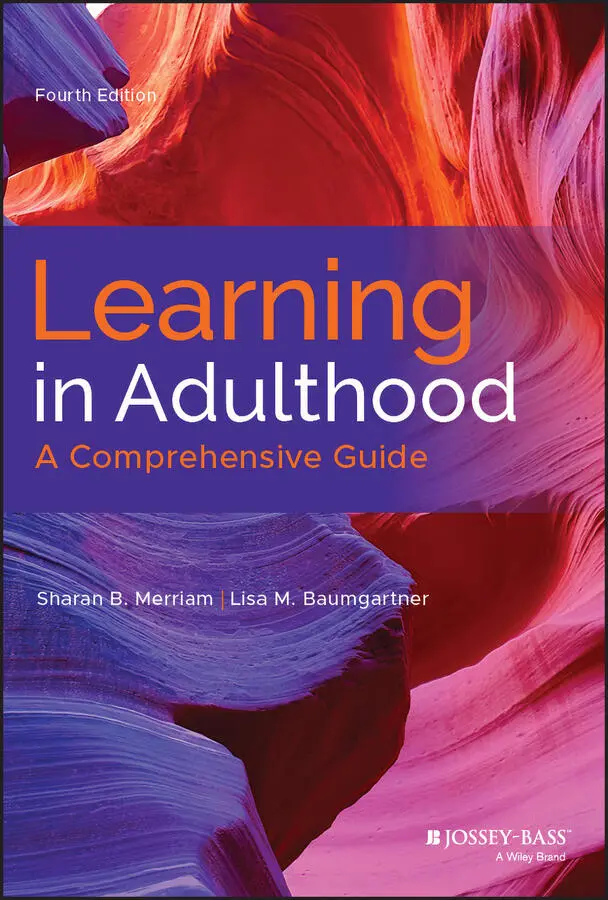
- Название:Learning in Adulthood
- Автор:
- Жанр:
- Год:неизвестен
- ISBN:нет данных
- Рейтинг книги:4 / 5. Голосов: 1
-
Избранное:Добавить в избранное
- Отзывы:
-
Ваша оценка:
Learning in Adulthood: краткое содержание, описание и аннотация
Предлагаем к чтению аннотацию, описание, краткое содержание или предисловие (зависит от того, что написал сам автор книги «Learning in Adulthood»). Если вы не нашли необходимую информацию о книге — напишите в комментариях, мы постараемся отыскать её.
has been the definitive guide in the field of adult education. Now in its fourth edition, this comprehensive volume is fully revised to reflect the latest developments in theory, research, and practice. The authors integrate foundational research and current knowledge to present fresh, original perspectives on teaching and learning in adulthood. Written by internationally-recognized experts, this market-leading guide draws from work in sociology, philosophy, critical social theory, psychology, and education to provide an inclusive overview of adult learning.
Designed primarily for educators of adults, this book is accessible for readers new to adult education, yet suitably rigorous for those more familiar with the subject. Content is organized into four practical parts, covering topics such as the social context of adult learning, self-directed and transformational learning, postmodern and feminist perspectives, cognitive development in adulthood, and more. Offering the most comprehensive single-volume treatment of adult learning available, this landmark text:
Offers a wide-ranging perspective on adult learning Synthesizes the latest thinking and work in the field Includes coverage of the sociocultural perspectives of adult learning Explores the broader social implications of adult education
is an indispensable resource for educators and administrators involved in teaching adults, as well as faculty and students in graduate programs in adult education.
Learning in Adulthood — читать онлайн ознакомительный отрывок
Ниже представлен текст книги, разбитый по страницам. Система сохранения места последней прочитанной страницы, позволяет с удобством читать онлайн бесплатно книгу «Learning in Adulthood», без необходимости каждый раз заново искать на чём Вы остановились. Поставьте закладку, и сможете в любой момент перейти на страницу, на которой закончили чтение.
Интервал:
Закладка:
This book is intended primarily for educators of adults and scholars of adult learning. We have organized the material so that it will make sense to readers who are new to adult education and at the same time will challenge those who are already familiar with the knowledge base of the field. The organization and presentation of this material reflect our efforts over the years to find the best way to organize courses, workshops, and seminars in adult learning and development for audiences with varying levels of expertise. We have endeavored to put together a book that is at once readable, thorough, and up to date in its coverage. In particular, the book is designed for use in courses in adult learning and as a resource for those interested in conducting research on adult learning. In addition to those associated with the field of adult education itself, however, those in counseling, health, social work, human resource development, administration, and instructional technology and in such institutions as libraries, places of worship, museums, business and industry, and higher education often deal on a daily basis with adult learners. We also intend this book to be a resource for practitioners in these fields who would like to know more about adult learners and the learning process.
Overview of the Contents
This fourth edition of Learning in Adulthood retains the organization of topics found in the previous edition. That is, in the third edition we realized that in most courses using this text, the chapters specific to adult learning theory and models were read before chapters on cognitive development, intelligence and aging, and psychosocial developmental frameworks. We have organized accordingly. This edition is divided into four parts. Part Idescribes the context of adult learning. Part IIfocuses on theories and models of adult learning. The chapters in Part IIIaddress newer approaches to adult learning, and those in Part IVpresent material on topics that intersect with adult learning, such as memory and cognition, adult development, and so on.
The chapters in Part I, “Adult Learning in Contemporary Society,” center on the context of adult learning. Chapter 1sets the sociocultural context for adult learning in North America. In it, we discuss three forces—demographics, globalization, and technology—that have shaped adult learning today. It is important to understand how the interaction of those three factors has led to changes in both what adults want to learn and the learning opportunities provided for them. Chapter 2is a new chapter devoted to the ubiquitous presence of technology in all forms of adult education from formal to nonformal to informal and self-directed learning environments. Directly related to the sociocultural context of adult learning are the environments where learning takes place, the subject of Chapter 3. These range from educational and noneducational institutions, such as hospitals and government agencies, to nonformal and community-based agencies, to incidental and informal learning that is more self-directed than structured by others. Also in this chapter we explore the concepts of organizational learning and the learning organization, lifelong learning and the learning society. The fourth chapter in Part Isummarizes the literature on who participates in primarily formal adult learning activities, why people participate, and what they choose to learn. We also take a critical look at key questions of access and opportunity and examine the gaps between the rhetoric and the reality in the provision of formal and nonformal learning activities in our society.
Part II, “Adult Learning Theory,” builds on foundational material in adult learning, material that is at the heart of our field of adult education. The topics covered in these chapters represent the field's efforts in distinguishing itself from the education of children. We begin Chapter 5with a description and critique of the best known of these theories, Knowles's (1980) concept of andragogy. Based on six characteristics of adult learners, andragogy focuses on the adult learner as distinguished from preadult learners. In this chapter we also cover one other model of learning, McClusky's (1970) theory of margin, which has great intuitive appeal to adult learners introduced to it. McClusky considers how everyday life and transitions can be both an opportunity and a barrier to engaging in an adult learning activity. In Chapter 6we explore the rich array of work that has been completed on self-directed learning. Addressed are the goals and processes of self-directed learning, the concept of self-directedness as a personal attribute of the learner, recent approaches to self-directed learning, and some suggestions for building research and theory in this area. Currently, self-directed learning along with transformative learning has taken center stage in research and writing. Chapter 7summarizes the development of transformational learning, reviews the burgeoning recent research in this area, and examines unresolved issues inherent in this approach to adult learning. In Chapter 8, the last chapter of Part II, we look closely at the role of experience in learning: both how adult learning builds on prior experience and how experience shapes learning. The concepts of experiential learning, reflective practice, and situated cognition are also examined in this chapter.
Part III, “Newer Approaches to Adult Learning,” contains three chapters. There is a burgeoning interest in embodied or somatic learning, spirituality and learning, and narrative approaches to learning, topics addressed in Chapter 9. We uncovered so much recent material in these areas that, had space allowed, we could have easily devoted a full chapter to each of these subjects. Chapter 10explores Eastern and indigenous approaches to adult learning. Because the majority of the knowledge base represented in Learning in Adulthood is from a Western perspective, characterized by cultural values of privileging the individual learner and cognitive processes over more holistic approaches, we wanted to introduce readers to other epistemologies, other ways of thinking about learning and knowing. We hope we have done that through brief introductions to five non-Western perspectives. The final chapter in Part IIIis an update of critical theory, postmodernism, and feminist pedagogy. These three perspectives draw from literature outside the field of adult education. Scholars have applied these perspectives to our field, enlarging our understanding by inviting us to question how the structural inequities based on race, gender, class, sexual orientation, able-bodiedness, and so on affect learning.
Part IV, which we have titled “Learning and Development,” brings together material from philosophy, psychology, sociology, biology, and so on that has a bearing on adult learning. Chapter 12focuses on adults' developmental characteristics. Beginning with biological and psychological perspectives on adult development, we move to sociocultural and integrated perspectives. The work on adult development in recent years places less emphasis on age and stage models and more on the effect of such factors as race, gender, class, and ethnicity. Much has been written lately about cognitive development in adulthood, and so this is treated separately in Chapter 13. Here we review several theoretical models of cognitive development as well as present the concept of dialectical thinking. Chapter 14reviews the work on intelligence, especially as it has been studied from a developmental or aging perspective. Drawing on several disciplines and summarizing recent work on memory and aging, expertise, cognitive and learning styles, and brain-based research, Chapter 15on the brain, memory, and cognitive functioning is one of the few compilations of its kind in an adult learning textbook.
Читать дальшеИнтервал:
Закладка:
Похожие книги на «Learning in Adulthood»
Представляем Вашему вниманию похожие книги на «Learning in Adulthood» списком для выбора. Мы отобрали схожую по названию и смыслу литературу в надежде предоставить читателям больше вариантов отыскать новые, интересные, ещё непрочитанные произведения.






Обсуждение, отзывы о книге «Learning in Adulthood» и просто собственные мнения читателей. Оставьте ваши комментарии, напишите, что Вы думаете о произведении, его смысле или главных героях. Укажите что конкретно понравилось, а что нет, и почему Вы так считаете.