Sharan B. Merriam - Learning in Adulthood
Здесь есть возможность читать онлайн «Sharan B. Merriam - Learning in Adulthood» — ознакомительный отрывок электронной книги совершенно бесплатно, а после прочтения отрывка купить полную версию. В некоторых случаях можно слушать аудио, скачать через торрент в формате fb2 и присутствует краткое содержание. Жанр: unrecognised, на английском языке. Описание произведения, (предисловие) а так же отзывы посетителей доступны на портале библиотеки ЛибКат.
- Название:Learning in Adulthood
- Автор:
- Жанр:
- Год:неизвестен
- ISBN:нет данных
- Рейтинг книги:4 / 5. Голосов: 1
-
Избранное:Добавить в избранное
- Отзывы:
-
Ваша оценка:
Learning in Adulthood: краткое содержание, описание и аннотация
Предлагаем к чтению аннотацию, описание, краткое содержание или предисловие (зависит от того, что написал сам автор книги «Learning in Adulthood»). Если вы не нашли необходимую информацию о книге — напишите в комментариях, мы постараемся отыскать её.
has been the definitive guide in the field of adult education. Now in its fourth edition, this comprehensive volume is fully revised to reflect the latest developments in theory, research, and practice. The authors integrate foundational research and current knowledge to present fresh, original perspectives on teaching and learning in adulthood. Written by internationally-recognized experts, this market-leading guide draws from work in sociology, philosophy, critical social theory, psychology, and education to provide an inclusive overview of adult learning.
Designed primarily for educators of adults, this book is accessible for readers new to adult education, yet suitably rigorous for those more familiar with the subject. Content is organized into four practical parts, covering topics such as the social context of adult learning, self-directed and transformational learning, postmodern and feminist perspectives, cognitive development in adulthood, and more. Offering the most comprehensive single-volume treatment of adult learning available, this landmark text:
Offers a wide-ranging perspective on adult learning Synthesizes the latest thinking and work in the field Includes coverage of the sociocultural perspectives of adult learning Explores the broader social implications of adult education
is an indispensable resource for educators and administrators involved in teaching adults, as well as faculty and students in graduate programs in adult education.
Learning in Adulthood — читать онлайн ознакомительный отрывок
Ниже представлен текст книги, разбитый по страницам. Система сохранения места последней прочитанной страницы, позволяет с удобством читать онлайн бесплатно книгу «Learning in Adulthood», без необходимости каждый раз заново искать на чём Вы остановились. Поставьте закладку, и сможете в любой момент перейти на страницу, на которой закончили чтение.
Интервал:
Закладка:
A number of key points about organizational learning are present in this definition. First, it is individuals who do the learning, but in service to the organization, so that the organization can adapt and develop in response to the environment. Second, theories-in-use versus “espoused theories” (what people do versus what they say they do) form the basis for practice. Finally, this learning must become “embedded in the images of organization held in its members' minds and/or in the … artifacts (the maps, memories, and programs) embedded in the organizational environment” (Argyris & Schön, 1996, p. 16).
As it has evolved, organizational learning is a flexible concept spanning a number of disciplines and perspectives so that it is now “impossible to capture with a single definition” (Fenwick, 2005, p. 446). Watkins and Marsick (2010) for example, identify two broad categories of organizational learning. One is “an innovation-and-organizational knowledge perspective that emphasizes storing, retrieving, and managing knowledge, and finding ways to harvest the tacit knowledge embedded in routines and processes” (p. 62). The second perspective is “a culture perspective that emphasizes a more organic process of social construction of meaning and co-creation of knowledge, and that focuses on the ways that culture informs, catalyzes, or inhibits learning and knowledge sharing” (p. 62). Further, the field of organizational development (OD) and the idea of knowledge management (KM) intersect with organizational learning in terms of how to incorporate learning into changing an organization's practices and culture, and how to employ the knowledge generated through individual and group learning. Today, all organizations are grappling with issues that include “generating innovation, integrating new technologies, improving existing processes, predicting and adapting to turbulent conditions, restructuring staff, improving performance, ensuring equitable opportunity, and fostering quality of work” (Fenwick, 2005, p. 448).
Although learning has always gone on in organizations, it was not until the publication in 1990 of Peter Senge's book The Fifth Discipline: The Art and Practice of the Learning Organization that the notion of the learning organization became a popular concept capturing the imagination of organizations worldwide. Senge defined it as
a place where people continually expand their capacity to create the results they truly desire, where new and expansive patterns of thinking are nurtured, where collective aspiration is set free, and where people are continually learning how to act together. (p. 3)
Implicit in this definition is the recognition that the learning organization is a vibrant, social entity; further, individuals learning in conjunction with each other has a synergistic effect—the overall learning is greater than a single individual's.
It is Senge's contention that “organizations learn only through individuals who learn” (p. 140). This is a necessary but not sufficient condition for creating a learning organization. There are also five core disciplines, or “component technologies,” that individuals must adopt for the learning organization to become a reality. Senge views systems thinking as the cornerstone of the learning organization. He believes that it is critical for people to shift their thinking from “seeing parts to seeing wholes, from seeing people as helpless reactors to seeing them as active participants in their reality, from reacting to the present to creating the future” (p. 69). Without this shift in thinking, he views the other four disciplines (developing personal mastery, changing mental models, building shared vision, and participating in team learning) as useless.
Watkins and Marsick's (1993) view of the learning organization is a bit broader. They see the learning not just with individuals but also taking place in “teams, the organization, and even in the communities with which the organizations interact. Learning is a continuous, strategically used process—integrated with, and running parallel to [the] work [of the organization]” (p. 8). Watkins and Marsick have outlined six action imperatives ( Figure 3.1) needed to create and sustain learning organizations. The first imperative is to create continuous learning opportunities at all levels of the organization. These opportunities range from on-the-job learning experiences to hosting global dialogue teams, with the goal that learning becomes an integral part of the everyday work life. To promote this continuous learning, two other action imperatives are brought into play: inquiry and dialogue, and collaboration and team learning. These learning strategies seem to form the heart of most organizational learning efforts, with the emphasis on the collective and interdependent nature of these processes. The fourth imperative, establishing systems to capture and share learning, involves “building organizational capacity for new thinking that is then embedded and shared with others” (Watkins & Marsick, 1993, p. 15). This fourth imperative, along with the fifth—empowering people toward a collective vision—mirrors Senge's disciplines of changing one's mental models and building shared vision. The final imperative, connecting the organization to its environment, acknowledges the connections between the organization and its external constituents, including its customers and the various local, national, and international communities that affect the work of the organization. These connections are symbiotic. It is not only the external constituents that affect the organization; the organization also affects these external groups.
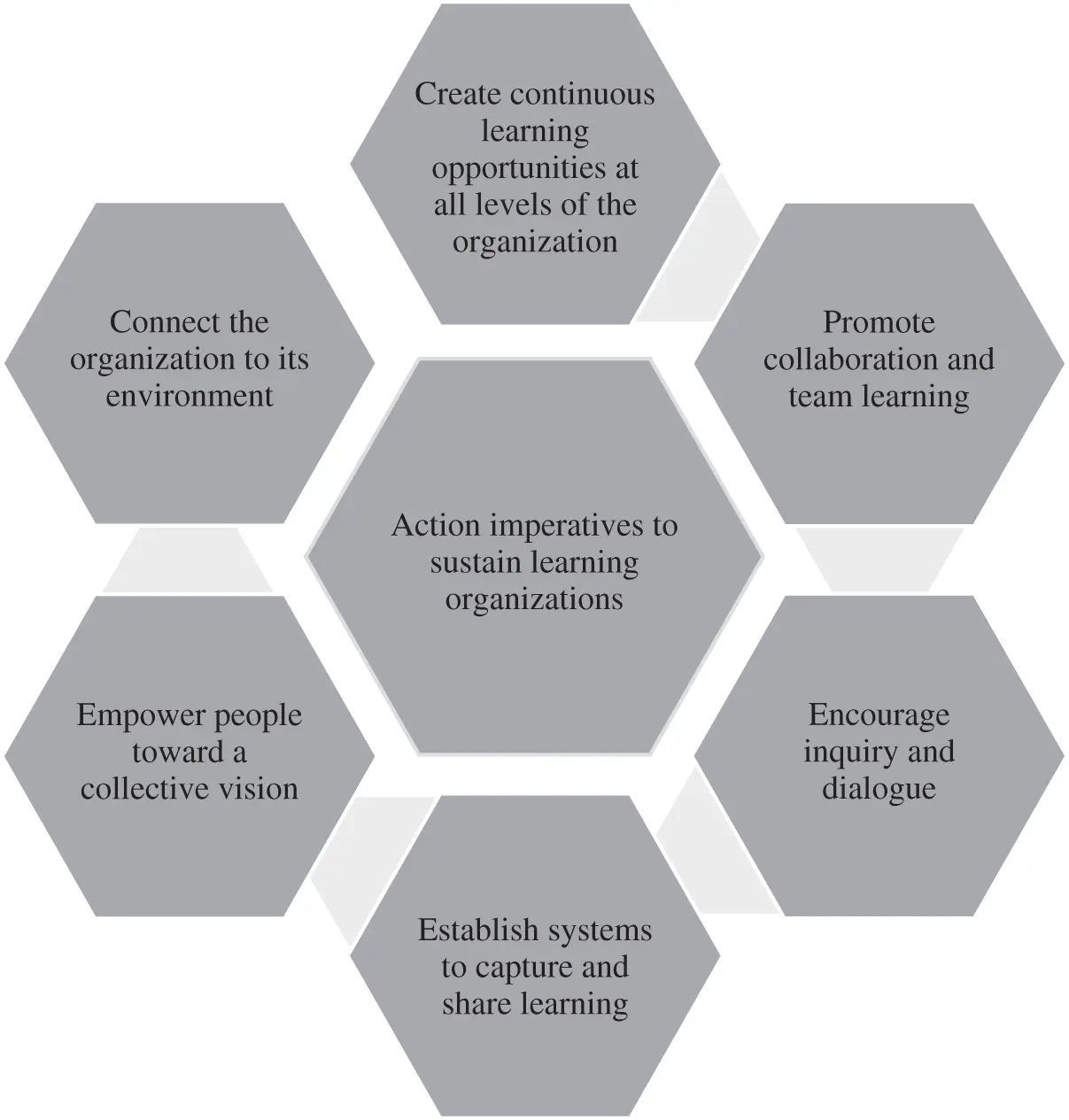
Figure 3.1 Action imperatives to sustain learning organizations.
SOURCE: Adapted from Watkins and Marsick (1993), p. 15.
A recent description of the learning organization by Sarder (2016) focuses on the embeddedness of learning throughout the organization:
A learning organization differentiates itself by valuing and supporting organization-wide learning from the top down. Learning is more than a menu of classes and online programs that employees can participate in when they need to close a performance gap. Instead it is embedded in every aspect of the organization in ways in which decisions are made, problems are addressed, information is shared, the organization is structured, and the physical space is organized (p. 28).
This learning capability improves an organization's capacity to respond quickly and in novel ways, thus increasing its ability to foster innovation and change. Organizations with this ability to make rapid changes are thought to have a competitive advantage in the marketplace.
Today the learning organization goes by a number of names, including adaptive, resilient, and innovative organizations (Marsick & Watkins, 2005). However it is conceptualized, there are some consistent features of a “healthy” learning organization. These include:
(a) openness across boundaries, including an emphasis on environmental scanning, collaboration, and competitor benchmarking; (b) resilience or the adaptability of people and systems to respond to change; (c) knowledge/expertise creation and sharing; and (d) a culture, systems and structures that capture learning and reward innovation. (p. 357)
In thinking about the process of building and sustaining learning organizations, Dixon (1997) offers the metaphor of the hallway as a useful analogy. She defines hallways as “places where collective meaning is made—in other words, meaning is not just exchanged, it is constructed in the dialogue between organizational members” (p. 25). She goes on to outline seven critical elements that characterize hallway learning: (a) reliance on discussion, not speeches; (b) egalitarian participation; (c) encouragement of multiple perspectives; (d) nonexpert-based dialogue; (e) use of a participant-generated database; (f) the creating of shared experiences; and (g) the creation of unpredictable outcomes. This last element is especially intriguing; it asks those who choose to create learning organizations to move away from the predictable aspects of learning and into the realm of reframing problems in unexpected ways and finding possibilities never thought of before.
Читать дальшеИнтервал:
Закладка:
Похожие книги на «Learning in Adulthood»
Представляем Вашему вниманию похожие книги на «Learning in Adulthood» списком для выбора. Мы отобрали схожую по названию и смыслу литературу в надежде предоставить читателям больше вариантов отыскать новые, интересные, ещё непрочитанные произведения.











Обсуждение, отзывы о книге «Learning in Adulthood» и просто собственные мнения читателей. Оставьте ваши комментарии, напишите, что Вы думаете о произведении, его смысле или главных героях. Укажите что конкретно понравилось, а что нет, и почему Вы так считаете.