Daniel Priestley - Oversubscribed
Здесь есть возможность читать онлайн «Daniel Priestley - Oversubscribed» — ознакомительный отрывок электронной книги совершенно бесплатно, а после прочтения отрывка купить полную версию. В некоторых случаях можно слушать аудио, скачать через торрент в формате fb2 и присутствует краткое содержание. Жанр: unrecognised, на английском языке. Описание произведения, (предисловие) а так же отзывы посетителей доступны на портале библиотеки ЛибКат.
- Название:Oversubscribed
- Автор:
- Жанр:
- Год:неизвестен
- ISBN:нет данных
- Рейтинг книги:5 / 5. Голосов: 1
-
Избранное:Добавить в избранное
- Отзывы:
-
Ваша оценка:
Oversubscribed: краткое содержание, описание и аннотация
Предлагаем к чтению аннотацию, описание, краткое содержание или предисловие (зависит от того, что написал сам автор книги «Oversubscribed»). Если вы не нашли необходимую информацию о книге — напишите в комментариях, мы постараемся отыскать её.
. They have buyers who gladly queue up, pay more, and eagerly wait for the chance to hand over their money for the next thing. How do these businesses do it? More importantly, how can
become one of them?
Oversubscribed The principles and philosophies
businesses live by that are often the opposite of what most businesses do Specific steps for getting into the mind of your customer so they only want to buy from your business How to structure campaigns and product launches that systematically get your business Oversubscribed How to implement a process of signalling to market, and collect signals back from market to build up desire and demand for your products and services The new edition of
is a must-read for entrepreneurs, marketers, business leaders and owners, team managers, and business students.
Oversubscribed — читать онлайн ознакомительный отрывок
Ниже представлен текст книги, разбитый по страницам. Система сохранения места последней прочитанной страницы, позволяет с удобством читать онлайн бесплатно книгу «Oversubscribed», без необходимости каждый раз заново искать на чём Вы остановились. Поставьте закладку, и сможете в любой момент перейти на страницу, на которой закончили чтение.
Интервал:
Закладка:
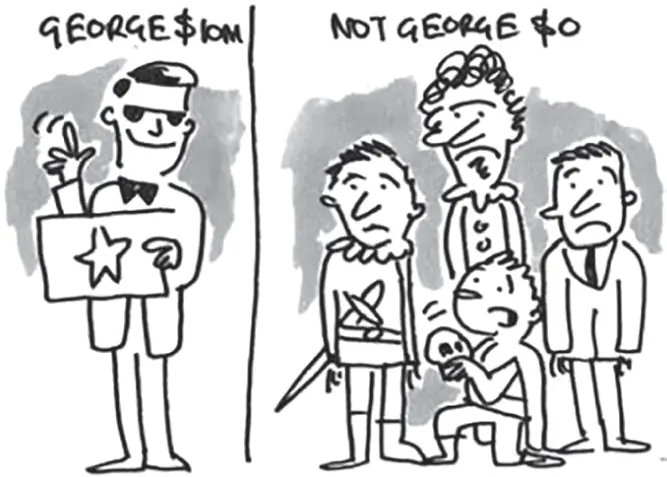
No doubt these top earners are gifted, but their income has very little to do with the craft of acting. It has everything to do with their ability to get people to pay to see the film. These people have the power to get onto talk shows and into the media to promote a film. If their names are attached to a film, the funding and the talented crew come to the table. Producers are actually paying for the ability to successfully mobilise talent, publicity and funding for a project; the acting skill is a bonus.
Creating your own market is about solving bigger problems for people than others do. Being unique is not about performing a task at a high standard; it's about having a unique ability to get things done.
When your business is seen to be unique in the market, you'll make money regardless of what everyone else in your industry is doing. Even if there's thousands of other people who can technically do what you do, it won't impact on the price you can charge. Your price will be determined by your own market.
In 2019, Kylie Jenner was declared the youngest billionaire by Forbes Magazine . Management consultants would never have chosen makeup as the hot product to make a fortune in; the cosmetics industry has long been saturated with big established brands. For the 21‐year‐old entrepreneur, it didn't matter because she had amassed more than 120 million followers on Instagram who would eagerly buy whatever she featured on her profile. With a small team, basic shopping‐cart software and an absence of retail representation or glossy magazine ads, Jenner has shipped enough makeup to make her a seriously valuable brand.
It's easy to assume your income is linked to the economy and that your lifestyle is inextricably linked to what happens “out there.” It's a choice however, if you link your business to the industry, to the market and to the trends that everyone else is following; then you'll continue competing on price like everyone else does.
If you separate from the market and build your own market, you can generate as much money as your market will allow for.
You must start to build your own group of loyal fans. Cultivate a tribe of people who are loyal to your business, your products, your personality and your philosophy. Rally your own troops. Break those people away from the industry, separate them one by one from the market and make them part of something special.
We're going to explore several ways to carve out your own market.
You'll also discover that you don't need to create a massive market for yourself in order to be oversubscribed. Being smaller can be an advantage when it comes to getting yourself oversubscribed. As I illustrated in Chapter 1, two bidders who really want something can be enough to make the price rise. A lucrative lifestyle business may need only a few thousand loyal customers – a relatively small, dedicated fan base of people who really love what you do. A $100 million enterprise might need to appeal to just 25,000 customers who passionately engage with a product that speaks directly to them.
YOU DON'T NEED EVERYONE
Rich Litvin is one of the world's most highly paid life coaches. However, you've probably never heard of him – because he only has eight key clients!
Rich' clients pay upwards of $80,000 per year. They often pay their annual fees in advance and frequently renew with him for several years in a row. If you contact Rich Litvin and ask to become a client, he will ask you a few questions and based on how you answer he will either recommend you to another coach or he will offer you an initial interview session. If the interview goes well, you'll probably be able to start working with him in 6 to 12 months.
Rich Litvin works exclusively with high‐flyers with a track record of success, whose decisions have far‐reaching consequences. His past clients include billion‐dollar business owners, politicians, fund managers and Olympic athletes. He doesn't need everyone to be a client; he needs eight people who want a dedicated level of service that most coaches are too busy to deliver.
Rich has crafted his coaching style for a very exclusive clientele. He goes deep with people who are often isolated in their decision‐making. High‐powered people have big decisions to make and often can't fully express themselves to their spouses, their boards or their employees. These people get enormous value from having a coaching session with someone who understands the pressure they are under, gets them to talk through their options and align their actions to their most important values and goals in life. To a small number of high‐achievers Rich is their secret weapon for getting the most out of life.
Of course, he didn't begin his career this way. Rich was originally a school teacher in London who discovered coaching as part of his training as a leader in the field of education. Seeing the impact coaching skills had on his team, he rapidly developed a passion for life coaching, but when he considered changing career he discovered there wasn't much money in it.
Even in the US, where life coaching is more established as a profession, the average life coach earns $32.50 per hour (according to PayScale.com) and with 5–10 years of experience life coaches can expect to earn just $50,000 per year.
Unwilling to settle for the market rate, Rich moved to LA, began mixing in the right circles and started making high‐value proposals to a select group of people. His personal philosophy and belief in coaching skills gave him the conviction that the more senior the coaching client, the more value they would receive from coaching.
To his surprise, the top end of the market was not anywhere near as crowded as the bottom end. People who earn millions per year don't want to pay $32.50 to a coach, no matter how experienced they are. High‐achievers want a dedicated level of service and a person charging a low rate can't possibly deliver it.
Rich discovered that it was far easier to devote himself to finding eight perfect clients, willing to pay upwards of $80,000 per year, than to find eight hundred clients willing to pay $800. The overheads and hassles of caring for eight clients is nothing compared to serving hundreds.
Rich differentiated himself by writing a book and building up a small tribe of dedicated followers of his coaching methods. He gave away a lot of content in his videos and he spoke at large gatherings of leaders. The key to his success was in saying no to most people who wanted to work with him. When people asked him how much his fees were, he was brave enough to quote a price far above most others and to add that he only worked with a maximum of eight select clients at any given time.
This approach turned many people off. They were shocked his fees were so high and they would never spend that sort of money on a life coach. Some people scoffed, some people hoped that one day they could afford it and some people politely nodded but secretly knew it wasn't an amount they were comfortable to spend. None of that mattered because Rich was oversubscribed – more than eight people a year were excited by the prospect of having a coach who could dedicate time to understand their complex world.
When I first started coaching Rich on his business strategy he had a waiting list for his high‐value coaching but he wanted to expand his business and serve more people. Carefully we crafted a group coaching program and began campaigning for soft signals of interest. The people who signaled their interest started receiving more specialised content from Rich. He shared with them his stories, unique insights, philosophies and methods. Over the course of 60 days, we shared so much value that a group of about 1,000 people went from mildly curious to intensely interested in what Rich had to say.
Читать дальшеИнтервал:
Закладка:
Похожие книги на «Oversubscribed»
Представляем Вашему вниманию похожие книги на «Oversubscribed» списком для выбора. Мы отобрали схожую по названию и смыслу литературу в надежде предоставить читателям больше вариантов отыскать новые, интересные, ещё непрочитанные произведения.










Обсуждение, отзывы о книге «Oversubscribed» и просто собственные мнения читателей. Оставьте ваши комментарии, напишите, что Вы думаете о произведении, его смысле или главных героях. Укажите что конкретно понравилось, а что нет, и почему Вы так считаете.