Fog Computing
Здесь есть возможность читать онлайн «Fog Computing» — ознакомительный отрывок электронной книги совершенно бесплатно, а после прочтения отрывка купить полную версию. В некоторых случаях можно слушать аудио, скачать через торрент в формате fb2 и присутствует краткое содержание. Жанр: unrecognised, на английском языке. Описание произведения, (предисловие) а так же отзывы посетителей доступны на портале библиотеки ЛибКат.
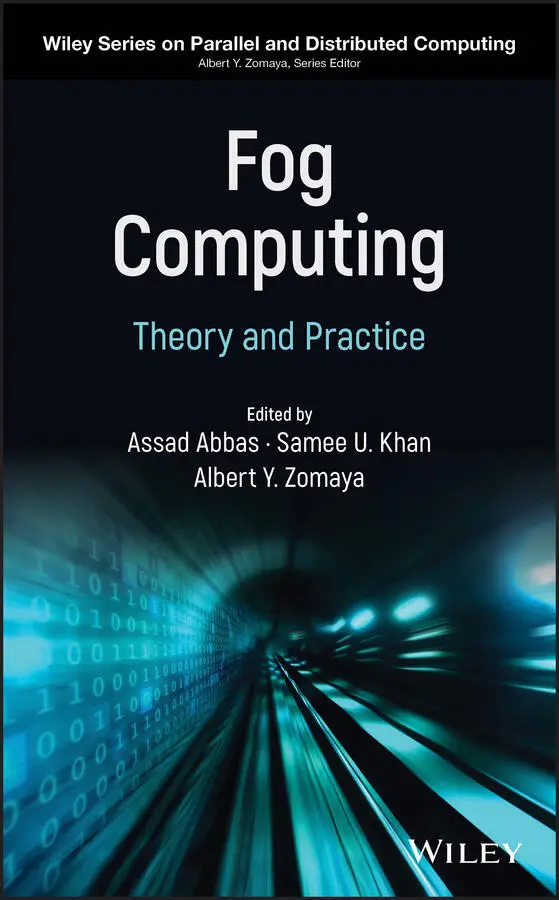
- Название:Fog Computing
- Автор:
- Жанр:
- Год:неизвестен
- ISBN:нет данных
- Рейтинг книги:5 / 5. Голосов: 1
-
Избранное:Добавить в избранное
- Отзывы:
-
Ваша оценка:
Fog Computing: краткое содержание, описание и аннотация
Предлагаем к чтению аннотацию, описание, краткое содержание или предисловие (зависит от того, что написал сам автор книги «Fog Computing»). Если вы не нашли необходимую информацию о книге — напишите в комментариях, мы постараемся отыскать её.
focuses on the technological aspects of employing fog computing in various application domains, such as smart healthcare, industrial process control and improvement, smart cities, and virtual learning environments. In addition, the Machine-to-Machine (M2M) communication methods for fog computing environments are covered in depth.
Presented in two parts—Fog Computing Systems and Architectures, and Fog Computing Techniques and Application—this book covers such important topics as energy efficiency and Quality of Service (QoS) issues, reliability and fault tolerance, load balancing, and scheduling in fog computing systems. It also devotes special attention to emerging trends and the industry needs associated with utilizing the mobile edge computing, Internet of Things (IoT), resource and pricing estimation, and virtualization in the fog environments.
Includes chapters on deep learning, mobile edge computing, smart grid, and intelligent transportation systems beyond the theoretical and foundational concepts Explores real-time traffic surveillance from video streams and interoperability of fog computing architectures Presents the latest research on data quality in the IoT, privacy, security, and trust issues in fog computing
provides a platform for researchers, practitioners, and graduate students from computer science, computer engineering, and various other disciplines to gain a deep understanding of fog computing.
Fog Computing — читать онлайн ознакомительный отрывок
Ниже представлен текст книги, разбитый по страницам. Система сохранения места последней прочитанной страницы, позволяет с удобством читать онлайн бесплатно книгу «Fog Computing», без необходимости каждый раз заново искать на чём Вы остановились. Поставьте закладку, и сможете в любой момент перейти на страницу, на которой закончили чтение.
Интервал:
Закладка:
1.4 Communication Technologies
In this section, we give an overview of communication technologies used by mobile things and mobile fog nodes in each of the major application domains. Unsurprisingly, in existing literature Wi-Fi technology is most prevalent, due to the ready availability of devices with 802.11 support: routers, smartphones, single board computers. Wi-fi is suitable for mFog thanks to the easy mobility of Wi-Fi AP technology. On the other hand, 4G technology, e.g. long-term evolution (LTE), which needs static base stations is the dominant option for iFog.
The fast movement of nodes among road network environment has obliged the existing protocol for the physical layer to consider multipath fading and Doppler frequency shifts. Therefore, the trend is to use very high-frequency radio waves, such as micro or millimeter waves.
1.4.1 IEEE 802.11
The IEEE 802.11 set of specifications, commonly referred to as Wi-Fi, is the most widely used wireless communication technology found in fog computing. Since Wi-Fi infrastructure is widely deployed in homes, offices, public spaces, and so forth, it is the natural choice for fog-thing and fog-UE communication, with the fog node hosting the Wi-Fi AP.
The standards 802.11n and 802.11ac , for instance, have a typical data rate of 200 and 400–700 Mbps respectively, the typical range of 802.11 routers in the 2.4 GHz band can be up to 50 m [37]. The next generation 802.11ax promises to enhance data rates further, but it is unlikely that significantly higher coverage range will be achieved in practice, due to the recent versions using the 2.4 and 5 GHz bands.
Interestingly, advertising capabilities of 802.11 can be improved by including additional information (e.g. fog node capability and status) in the 802.11 advertising beacons [38].
The mentioned signal coverage ranges are suitable in domains where the client device mobility speed is low; consider, for example, pedestrians in UE-fog. Additionally, the smartphones already employ the technology. Existing UE-fog research that does not include real-world technology choice and simply consider the data rate aligns with the capabilities of wi-fi. For example, even 6.9 Gbps rates [39] are theoretically supported by 802.11ac . In terms of existing research prototypes, laptop hotspots are a common choice to establish the wi-fi AP [40–42]. Since laptop hotspots generally operate with 802.11n technology, it is important to consider the newer standards in future fog prototypes.
In UAV-fog, following the mFog concept, a wi-fi AP could reside at UAV node or, alternatively, static 802.11ac APs may act as sink nodes supporting a group of UAVs [16].
IEEE 802.11p, a.k.a. wireless access in vehicular environments (WAVEs) is adapted for the wireless environment with vehicles. In addition, they are designed in such manner that they are very suitable for single hop broadcast V2V communications; however, this technology suffers from an issue related to scalability, reliability, and unbounded delays due to its contention-based distributed medium access control mechanism [23, 43].
For maritime use cases, the coverage ranges offered by Wi-Fi are generally not suitable. However, Wi-Fi is useful in vessels for onboard networks where the clients are crew and passengers, but such scenarios can be categorized rather as UE-fog.
1.4.2 4G, 5G Standards
Currently operating cellular networks target the requirements of the 4G standard (also known as IMT-Advanced), specified by the International Telecommunication Union (ITU) in 2008 [44]. For instance, the requirements suggest 100 Mbps data rates for clients moving at high speeds (e.g. in a train) and 1 Gbps for stationary situations.
Among technology standards accepted as fulfilling the 4G requirements are IEEE 802.16m (WiMAX v2) and 3 GPP Long Term Evolution-Advanced (LTE Advanced), the latter of which has seen far bigger deployment and thus is the common option for existing mobile fog.
To supersede 4G, the ITU is defining requirements for the 5G networks, also called IMT-2020. The 2017 draft of technical performance requirements [45] notes peak data rates of 20 and 10 Gbps for downlink and uplink, respectively, and specifies channel link data rates for four different mobility classes. 5G also specifically targets supporting cases where the density of devices is large, growing from 4G's 10 5–10 6devices km −2[46].
5G networks are enablers for smart collaborative vehicular network architecture since they provide possibilities for fulfilling the requirements of reliability, handover, and throughput of future vehicular networks [47]. LTE D2D-based VANET has proven to be suitable for the safety-critical IoV applications, thanks to their effectiveness in coping with high mobility and precise geo-messaging [43].
The MEC paradigm has introduced the handover and migration of VMs to the cellular base stations for supporting the UE [48–50], however, the similar idea potentially applies to the other mobile fog domains.
In maritime fog systems, the shore-located cellular base stations can be leveraged to also act as sink nodes [4, 51], gathering sensor data from the vessels. Multiple access techniques, such as nonorthogonal multiple access (NOMA) offered by 5G, are considered useful for UAV cloudlets to maximize efficiency [52]. However, generally 4G/5G coverage is available in more urban areas, so for marine communication at sea or UAV deployments in remote areas, alternatives such as satellite communication need to be considered.
1.4.3 WPAN, Short-Range Technologies
From the perspective of the mobile thing, wireless personal area network (WPAN) technologies such as ZigBee (802.15.4) and Bluetooth (801.15.1) are suitable for lower bandwidth and lower energy communication needs, such as interacting with IoT devices or exchanging metadata.
The shorter range, while unfit for marine scenarios, can be applied in UAV-Fog since use cases, such as supporting land/marine vehicle, mandate that the UAV itself will adjust its location to stay close to the peers [31].
The traditional Wi-Fi AP-based infrastructure can be expanded using Wi-Fi direct. Here the client devices form a local Wi-Fi direct group, reducing the load on the AP by locally disseminating the data [35, 53] and advertising device services [54].
Bluetooth and Bluetooth Low Energy are common choices for UE when mediating data from other devices to a fog node (e.g. Wi-Fi AP-based), for instance, forwarding sensor data from Medical IoT devices [5].
Near-field communication (NFC) radio-frequency identification (RFID)-based technology, such as NFC may add an additional layer of physical security due to the extremely low signal range, for instance in UE-based Mobile-to-Mobile computation off-loading [55].
1.4.4 LPWAN, Other Medium- and Long-Range Technologies
VHF marine radio VHF is the internationally used technology for marine radio in the frequency range 156—163 MHz. Typical range of VHF is reported to be up to 70 nautical miles from a land-based station [56], while ship-to-ship signal range is below 40 km [57]. However, VHF is limited in supported data rate, which is below 30 kbps. While VHF may be sufficient to transmit sensory readings from ships to shore-deployed fog nodes [4] for aggregation and forwarding, the low data rate is unsuitable for agile transfer of larger data (e.g. video streams or VM images).
Satellite systems offer higher speeds compared to VHF and provide the greatest signal coverage, which is an important factor considering the distances involved in the marine domain. Yet, due to their high cost, these are a viable option only for larger vessels [57, 58].
Читать дальшеИнтервал:
Закладка:
Похожие книги на «Fog Computing»
Представляем Вашему вниманию похожие книги на «Fog Computing» списком для выбора. Мы отобрали схожую по названию и смыслу литературу в надежде предоставить читателям больше вариантов отыскать новые, интересные, ещё непрочитанные произведения.









Обсуждение, отзывы о книге «Fog Computing» и просто собственные мнения читателей. Оставьте ваши комментарии, напишите, что Вы думаете о произведении, его смысле или главных героях. Укажите что конкретно понравилось, а что нет, и почему Вы так считаете.