Museum Transformations
Здесь есть возможность читать онлайн «Museum Transformations» — ознакомительный отрывок электронной книги совершенно бесплатно, а после прочтения отрывка купить полную версию. В некоторых случаях можно слушать аудио, скачать через торрент в формате fb2 и присутствует краткое содержание. Жанр: unrecognised, на английском языке. Описание произведения, (предисловие) а так же отзывы посетителей доступны на портале библиотеки ЛибКат.
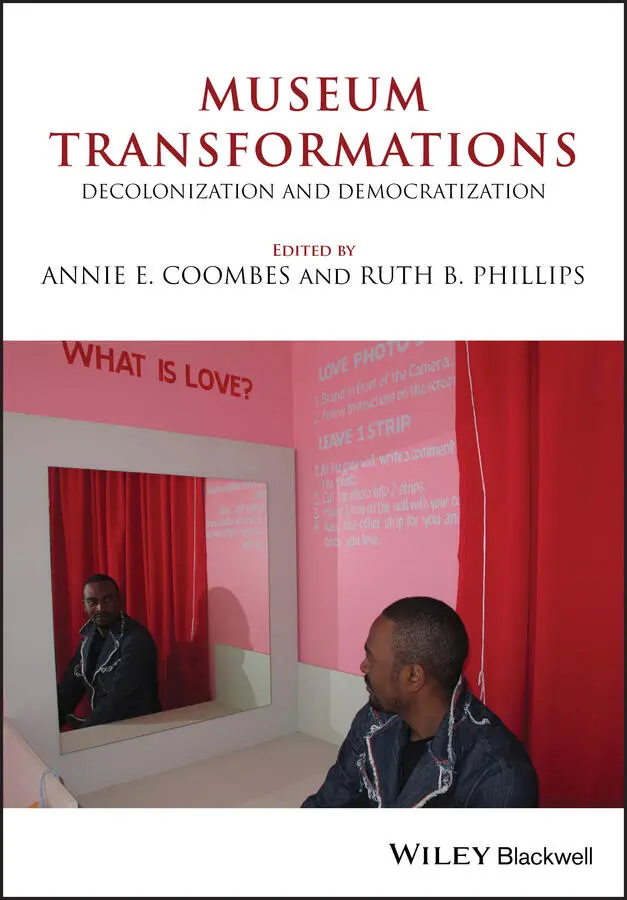
- Название:Museum Transformations
- Автор:
- Жанр:
- Год:неизвестен
- ISBN:нет данных
- Рейтинг книги:4 / 5. Голосов: 1
-
Избранное:Добавить в избранное
- Отзывы:
-
Ваша оценка:
Museum Transformations: краткое содержание, описание и аннотация
Предлагаем к чтению аннотацию, описание, краткое содержание или предисловие (зависит от того, что написал сам автор книги «Museum Transformations»). Если вы не нашли необходимую информацию о книге — напишите в комментариях, мы постараемся отыскать её.
Museum Transformations — читать онлайн ознакомительный отрывок
Ниже представлен текст книги, разбитый по страницам. Система сохранения места последней прочитанной страницы, позволяет с удобством читать онлайн бесплатно книгу «Museum Transformations», без необходимости каждый раз заново искать на чём Вы остановились. Поставьте закладку, и сможете в любой момент перейти на страницу, на которой закончили чтение.
Интервал:
Закладка:
But besides restitution efforts, which were mainly viewed as an issue of governmental and especially foreign policy, West German society was largely unable or unwilling to talk about Nazi crimes and the murder of European Jewry. The first chancellor Konrad Adenauer’s policy was to integrate former Nazis including bureaucrats and judges into the political system and into society rather than punishing them. The building of a democratic state and market economy was the main emphasis of his policy, which was in line with the Cold War policies of the Western Allies (Herf 1997; Frei 2002). If there were feelings of guilt in the population, they were often projected onto the demon Hitler, especially since almost everybody had suffered through war, hunger, and the loss of family members. Then there was the question of how to integrate the millions of ethnic Germans who had been expelled from their former homes in central and eastern Europe. Their fate was similarly seen as a great injustice and provided another reason for Germans to feel that they too were victims.
Becoming aware of the fate of individuals
With the trial of Adolf Eichmann in Jerusalem (1961), and the worldwide publicity it attracted, Germany was forced to face the country’s past as perpetrator again and, during the following years, the Auschwitz trials in Frankfurt also helped to keep the subject in the public consciousness. The student movement of the 1960s publicly challenged the older generation and raised difficult questions. This eventually changed the political culture of West Germany, where undemocratic and authoritarian attitudes had survived. Many members of the younger generation responded with anger and protest while still remaining under the influence of an older generation that had often successfully hidden their participation in National Socialist policies and crimes. Consequently, their protests were often carried out without much knowledge of historical detail and with little interest in the fate of individuals. A real “processing” of the Nazi past had not yet taken place.
Mainly because of the American TV series Holocaust (1978), which brought to light individual stories of victims, younger people in Germany became aware of the fact that millions of individuals – Jewish families, children, men, and women – had been persecuted and murdered by their parents’ generation. This TV series helped give a face to what had until then been known only vaguely, mostly in terms of anonymous numbers and symbolized by pictures of dead bodies so horrible that one did not know how to deal with them. Beginning in the 1980s, a new generation of Germans formed citizens’ groups and initiatives. Grassroots historians appeared and students researched what had happened to Jews in their own home towns and neighborhoods. Often together with victims and survivor groups, they eventually succeeded in getting more public and governmental support to preserve historical sites, put up plaques on buildings, change street names, and to build memorials. Their efforts were accompanied by growing research on the Holocaust and by the famous controversy among historians, the Historikerstreit (Maier [1988] 1997; Evans 1989). A new generation of teachers and politicians also became more aware of the necessity to develop special curricula for the teaching of the Holocaust. These changes in West Germany were embedded in a larger context of perspectives on the Holocaust, and their presentation in the United States, Israel, and the countries of western Europe (Köhr and Lässig 2007; Lässig and Pohl 2007).
However, the commemoration and teaching of the Holocaust in West Germany differed from state to state because of the federalist structure of the FRG. On unification, West Germany’s “landscape of memory” was characterized by a great heterogeneity, and by the various activities of members of civil society.
Dealing with the past in the former GDR
In the former GDR, the situation was different. There was no long process of Vergangenheitsbewältigung (coming to terms with the past); instead, the government initially pursued radical “de-Nazification” measures. After that, it appeared as though all Nazis had either moved to the West or turned into communists. In reality, the official antifascist ideology made it easy for former Nazis and their descendants to project their feelings of guilt onto West German society. In contrast to the commemoration culture that had developed over decades in West German society, East Germany had a centralized state policy of public commemoration that did not change much until the fall of the regime. In the GDR, Holocaust commemoration was linked to the ideological image of the communist resistance fighters; therefore the sites of former concentration camps like Buchenwald and Sachsenhausen were regularly used for ceremonies and rituals to strengthen state ideology. But the fate of the murdered Jews was hardly remembered. In addition, the perspective of teaching the Holocaust only within the theoretical framework of class struggle did not leave room for understanding the special nature of the racist Nazi ideology that had targeted the Jews first and foremost. The antifascist and anticapitalist ideology encompassed anti-Semitic stereotypes, and fostered hostile feelings toward the state of Israel. This changed only during the very last years of the GDR, when the government under Erich Honecker opened up to the Jewish community and to Israel, mainly with the aim of gaining support from the United States for its ruined economy.
Memory discourse after unification
After unification, the situation changed for both parts of Germany. During the 1990s German society discussed its history and identity in several public debates. The most prominent and controversial among them were the disputes surrounding Daniel Jonah Goldhagen’s book Hitler’s Willing Executioners , the plan to build a central Holocaust memorial, a speech by the writer Martin Walser, and an exhibition dealing with the crimes of the German Wehrmacht. The Holocaust was at the center of all these debates which raised important questions about guilt, responsibility, shame, and the role remembrance of the Holocaust should play in Germany’s national self-conception. Meanwhile, Chancellor Helmut Kohl, who promoted a “politics of history” as part of his government’s public policy, built a new historical museum in Bonn and revived the Neue Wache (New Guardhouse) in Berlin as a central place of commemoration for all victims of World War II. But this attempt to include each and every group and individual in the category of “victim” was not successful. The Central Council of Jews in Germany protested, as did members of citizens’ groups (Reichel 1999; Niven 2002, 197–200).
Not least, as a result of the deficits of the Neue Wache, the project of a central Memorial to the Murdered Jews of Europe, which had been initiated in 1987 by a small citizens’ initiative based in West Berlin, became very prominent after the fall of the Wall and was soon hotly debated in public. Two architectural competitions to decide on the form of such a memorial took place during the 1990s; in 1992 the City of Berlin, the Federal Ministry of the Interior, and the citizens’ initiative (which called itself the Association Memorial to the Murdered Jews of Europe) had already agreed on a plan to build the future memorial on a barren strip of land called Ministry Gardens. The place is a prime example of an urban palimpsest (Huyssen 2003); it carries multiple layers of German history (Schlusche 2005; Jordan 2006). During the Nazi period it had been the backyard of the Ministry of Agriculture, situated not far from the former Reich Chancellery of Adolf Hitler and the Führer-Bunker; it had also housed the private home and bunker of the Minister of Propaganda, Joseph Goebbels. Bombing raids in the spring of 1945 had destroyed the buildings in the area.
Читать дальшеИнтервал:
Закладка:
Похожие книги на «Museum Transformations»
Представляем Вашему вниманию похожие книги на «Museum Transformations» списком для выбора. Мы отобрали схожую по названию и смыслу литературу в надежде предоставить читателям больше вариантов отыскать новые, интересные, ещё непрочитанные произведения.





Обсуждение, отзывы о книге «Museum Transformations» и просто собственные мнения читателей. Оставьте ваши комментарии, напишите, что Вы думаете о произведении, его смысле или главных героях. Укажите что конкретно понравилось, а что нет, и почему Вы так считаете.