David Hume - The Dark Ages
Здесь есть возможность читать онлайн «David Hume - The Dark Ages» — ознакомительный отрывок электронной книги совершенно бесплатно, а после прочтения отрывка купить полную версию. В некоторых случаях можно слушать аудио, скачать через торрент в формате fb2 и присутствует краткое содержание. Жанр: unrecognised, на английском языке. Описание произведения, (предисловие) а так же отзывы посетителей доступны на портале библиотеки ЛибКат.
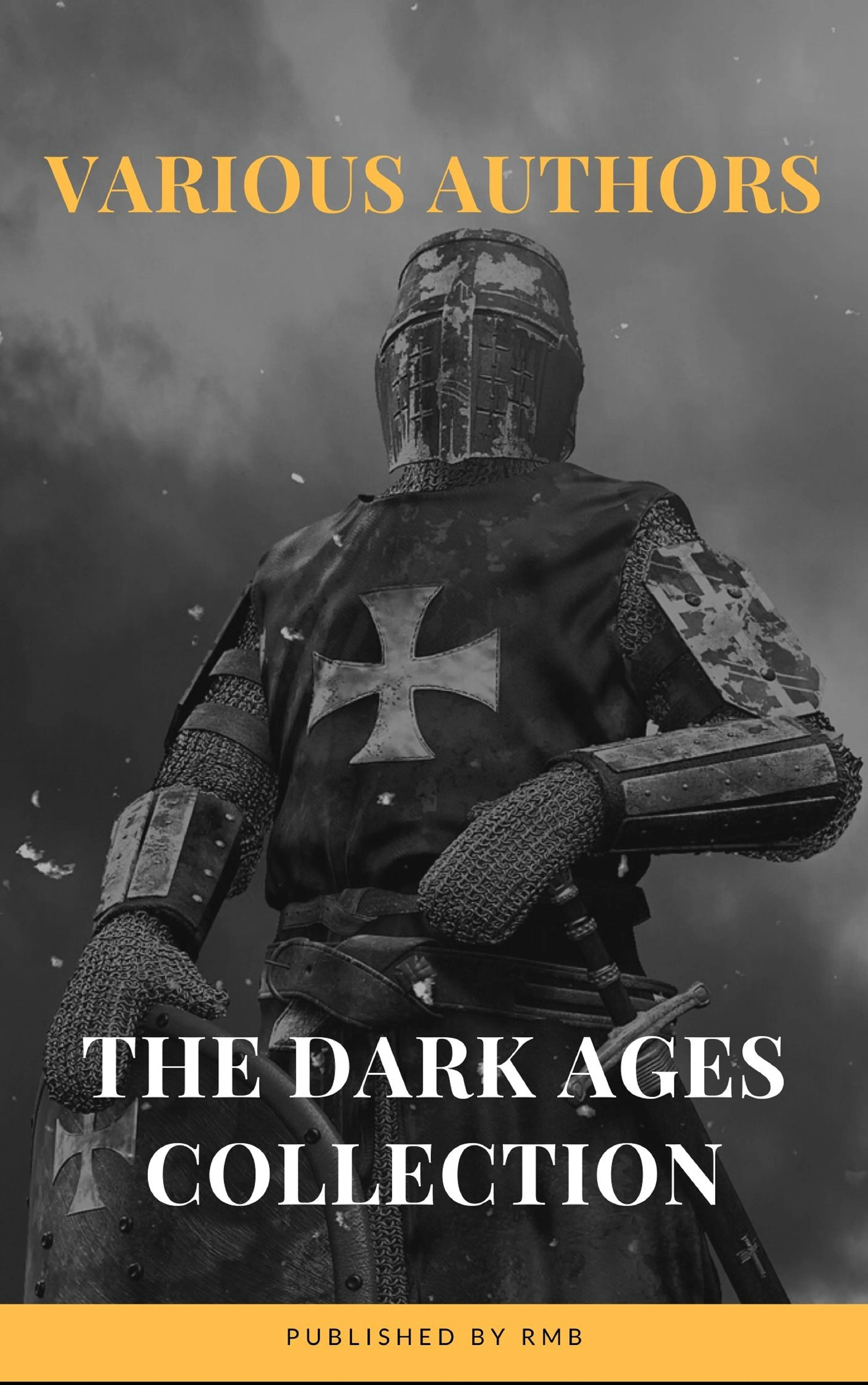
- Название:The Dark Ages
- Автор:
- Жанр:
- Год:неизвестен
- ISBN:нет данных
- Рейтинг книги:5 / 5. Голосов: 1
-
Избранное:Добавить в избранное
- Отзывы:
-
Ваша оценка:
The Dark Ages: краткое содержание, описание и аннотация
Предлагаем к чтению аннотацию, описание, краткое содержание или предисловие (зависит от того, что написал сам автор книги «The Dark Ages»). Если вы не нашли необходимую информацию о книге — напишите в комментариях, мы постараемся отыскать её.
The term employs traditional light-versus-darkness imagery to contrast the era's «darkness» (lack of records) with earlier and later periods of «light» (abundance of records).The concept of a «Dark Age» originated in the 1330s with the Italian scholar Petrarch, who regarded the post-Roman centuries as «dark» compared to the light of classical antiquity.
The Dark Ages Collection features:
HISTORY OF THE LATER ROMAN EMPIRE, by J.B. Bury
THE STORY OF THE GOTHS, by Henry Bradley
THE DARK AGES, by Charles Oman
VISIGOTHS PILLAGE ROME, by Edward Gibbon
HUNS INVADE THE EASTERN ROMAN EMPIRE; ATTILA DICTATES A TREATY OF PEACE, by Edward Gibbon
THE ENGLISH CONQUEST OF BRITAIN, by John Green & Charles Knight
ATTILA INVADES WESTERN EUROPE; BATTLE OF CHÂLONS, by Edward Creasy & Edward Gibbon
FOUNDATION OF VENICE, by Thomas Hodgkin & John Ruskin
CLOVIS FOUNDS THE KINGDOM OF THE FRANKS: IT BECOMES CHRISTIAN, by Francois Guizot
PUBLICATION OF THE JUSTINIAN CODE, by Edward Gibbon
AUGUSTINE'S MISSIONARY WORK IN ENGLAND, by Venerable Bede & John Green
THE HEGIRA; CAREER OF MAHOMET: THE KORAN: AND MAHOMETAN CREED, by Washington Irving & Simon Ockley
THE SARACEN CONQUEST OF SYRIA, by Simon Ockley
SARACENS CONQUER EGYPT; DESTRUCTION OF THE LIBRARY AT ALEXANDRIA, by Washington Irving
EVOLUTION OF THE DOGESHIP IN VENICE, by William Hazlitt
SARACENS IN SPAIN: BATTLE OF THE GUADALETE, by Ahmed ibn Mahomet Al-Makkari
BATTLE OF TOURS, by Edward Creasy
FOUNDING OF THE CARLOVINGIAN DYNASTY; PÉPIN THE SHORT USURPS THE FRANKISH CROWN, by Francois Guizot
CAREER OF CHARLEMAGNE, by Francois Guizot
EGBERT BECOMES KING OF THE ANGLO-SAXON HEPTARCHY, by David Hume
The Dark Ages — читать онлайн ознакомительный отрывок
Ниже представлен текст книги, разбитый по страницам. Система сохранения места последней прочитанной страницы, позволяет с удобством читать онлайн бесплатно книгу «The Dark Ages», без необходимости каждый раз заново искать на чём Вы остановились. Поставьте закладку, и сможете в любой момент перейти на страницу, на которой закончили чтение.
Интервал:
Закладка:
The officials dressed in white gathered in the Consistorium 9on the following day (April 11), and were received ceremonially by Anastasius. The Patriarch was present, and now, if not before, he must have obtained the Emperor’s signature to the declaration, which was lodged in the archives of St. Sophia under the care of the treasurer. Anastasius then left the Consistorium and ascended the steps of the portico 10of the triklinos of the Nineteen Akkubita. Here at the request of the senators he took a public oath that he would distress no person against whom he had a grudge, and that he would govern conscientiously. Then he proceeded to the triklinos of the Hippodrome, put on the Imperial tunic, girdle, leggings, and red boots, 11and entered the Kathisma, in front of which stood the troops, the standards lying on the ground. When he had been raised on a shield, and the torc placed on his head, the standards were raised, and he was acclaimed. Then he returned to the triklinos, when the Patriarch covered him with the Imperial cloak and crowned him. Reappearing in the Kathisma, he addressed the people, promising a donation of 5 nomismata and a pound of silver to each soldier — the same amount which had been given by Leo I. Among the enthusiastic acclamations with which he was greeted we may notice, “Reign as thou hast lived! Thou hast lived piously! reign piously! Restore the army! Reign like Marcian!” and “Cast out the informers!”
A few weeks later Anastasius married Ariadne (May 20). His accession was undoubtedly a welcome change to Byzantium. He was a man of tall stature and remarkable for his fine eyes, which differed in hue. 12He is described as intelligent, well-educated, gentle, and yet energetic, able to command his temper, and generous in bestowing gifts. 13A bishop of Rome wrote to him, “I know that in private life you always strove after piety.” 14
The first task imposed upon the new Emperor was to put an end to the unpopular predominance of the Isaurians, which had lasted for over twenty years. The choice of Anastasius had disappointed and alarmed the Isaurians, who had looked forward to the succession of Longinus. A riot in the Hippodrome soon gave Anastasius a pretext for driving them out of the city. During a spectacle at which the Emperor was present, the people clamoured against Julian, the Prefect of the City, who had done something which public opinion disapproved. Anastasius ordered his guards to intimidate the rioters, who then set fire to the Hippodrome, and pulled down and insulted the bronze statues of the Emperors. Not a few were slain in the tumult. 15The Emperor found it politic to replace Julian by his own brother-in-law Secundinus, but he attributed the disturbance to the machinations of the Isaurians. He expelled them all from the city. He forced Zeno’s brother Longinus to take orders and banished him to the Thebaid. He confiscated Zeno’s property, even selling his Imperial robes. He naturally withdrew the large allowances which Zeno had made to his fellow-countrymen, amounting to 1400 lbs. of gold. 16A revolt had already broken out in Isauria, 17and the rebels were now reinforced by the exiles from Constantinople, among them Longinus of Kardala. 18Their total force is said to have numbered 100,000, and included Romans as well as Isaurians. The leaders in command were Linginines and Athenodorus. 19They were met at Cotyaeum in Phrygia by an Imperial army under John the Scythian and John the Hunchback, 20and were completely defeated, Linginines being slain. This battle shattered the power of the Isaurians irretrievably. But the defeated leaders did not submit and, just as in the case of the struggle between Illus and Zeno, warfare was carried on in the Isaurian mountains for several years before all the rebels were captured and killed. 21It was not till A.D. 498 that the last of them, Longinus of Selinus, was taken and done to death by torture at Nicaea.
The Emperor settled large colonies of Isaurians in Thrace. 22The brief ascendancy of this people was now over for ever, but it was not to be regretted, for it had served the purpose of averting the far more serious peril of a German ascendancy, which might have brought upon the East the fate of Italy. Henceforward the foreign elements in the army were kept well in control by a preponderance of native troops.
It was fortunate for the Empire that the Isaurian struggle was over before a serious war broke out with Persia, which will be described in another chapter. But there was fighting from time to time with other enemies. The Blemyes troubled Egypt, 23the Mazices attacked Libya, 24the Tzani overran Pontus. 25The Saracens of the desert invaded Euphratesia, Syria, and Palestine in 498, but were thoroughly defeated. Another raid four years later was followed by a treaty of peace. 26In A.D. 515 Cappadocia was laid waste by an irruption of the Sabeiroi who came down from the region of the Caucasus. 27But a more dangerous foe than any of these were the Bulgarians beyond the Danube.
After the disruption of the Hunnic empire in A.D. 454, a portion of the Huns had occupied the regions between the mouths of the Danube and the Dniester, where they were ruled by two of the sons of Attila. During the reign of Leo and Zeno, they sometimes raided the Roman provinces and sometimes supplied auxiliaries to the Roman armies. 28They were kept in check by the Ostrogothic federates, but the departure of Theoderic from Italy had left the field clear for their devastations in Thrace and Illyricum, which throughout the reign of Anastasius suffered severely. These Huns now come to be known under the name of Bulgarians. 29But we must distinguish these Bulgarians, who were also known as Unogundurs, from two other great Hunnic hordes who will presently come upon the scene of history: the Kotrigurs who lived between the Dnieper and the Don, and the Utigurs who lived to the south of the Don. These latter peoples were to disappear in the course of time; the Unogundurs were to be the founders of Bulgaria.
The Bulgarians were undoubtedly the foes who invaded the Empire in A.D. 493, defeated a Roman army, and killed Julian, Master of Soldiers. 30The next recorded incursion was in A.D. 499, when Aristus, Master of Soldiers in Illyricum, lost more than a quarter of his army of 15,000 men in a battle against the Bulgarians. 31Their depredations were repeated three years later (A.D. 502), and on this occasion their progress was unopposed. 32Anastasius had determined to secure at least the immediate neighbourhood of the capital against the raids of the barbarians, and for this purpose he built a Long Wall, 33the line of which can still be traced, from the Propontis to the Black Sea, at a distance of about 40 miles west of Constantinople. The southern extremity was just to the west of Selymbria, and the northern between Podima and Lake Derkos. The fortification consisted of a stone wall about 11 feet thick, without earthworks or ditch, and traces of round towers projecting about 31 feet in front have been found. The length of the wall was 41 miles, and it corresponds roughly to the modern Turkish fortifications known as the Chatalja Lines, though the extreme points were further west. 34We do not hear of another invasion till A.D. 517, when a host of barbarian cavalry laid waste Macedonia, Epirus, and Thessaly, penetrating as far as Thermopylae. 35The consequences of the devastations of Germans and Huns for more than a hundred years was the depopulation of the Balkan provinces, the decline of its agricultural produce, and a considerable diminution of the Imperial revenue. 36
Читать дальшеИнтервал:
Закладка:
Похожие книги на «The Dark Ages»
Представляем Вашему вниманию похожие книги на «The Dark Ages» списком для выбора. Мы отобрали схожую по названию и смыслу литературу в надежде предоставить читателям больше вариантов отыскать новые, интересные, ещё непрочитанные произведения.







Обсуждение, отзывы о книге «The Dark Ages» и просто собственные мнения читателей. Оставьте ваши комментарии, напишите, что Вы думаете о произведении, его смысле или главных героях. Укажите что конкретно понравилось, а что нет, и почему Вы так считаете.