David Hume - The Dark Ages
Здесь есть возможность читать онлайн «David Hume - The Dark Ages» — ознакомительный отрывок электронной книги совершенно бесплатно, а после прочтения отрывка купить полную версию. В некоторых случаях можно слушать аудио, скачать через торрент в формате fb2 и присутствует краткое содержание. Жанр: unrecognised, на английском языке. Описание произведения, (предисловие) а так же отзывы посетителей доступны на портале библиотеки ЛибКат.
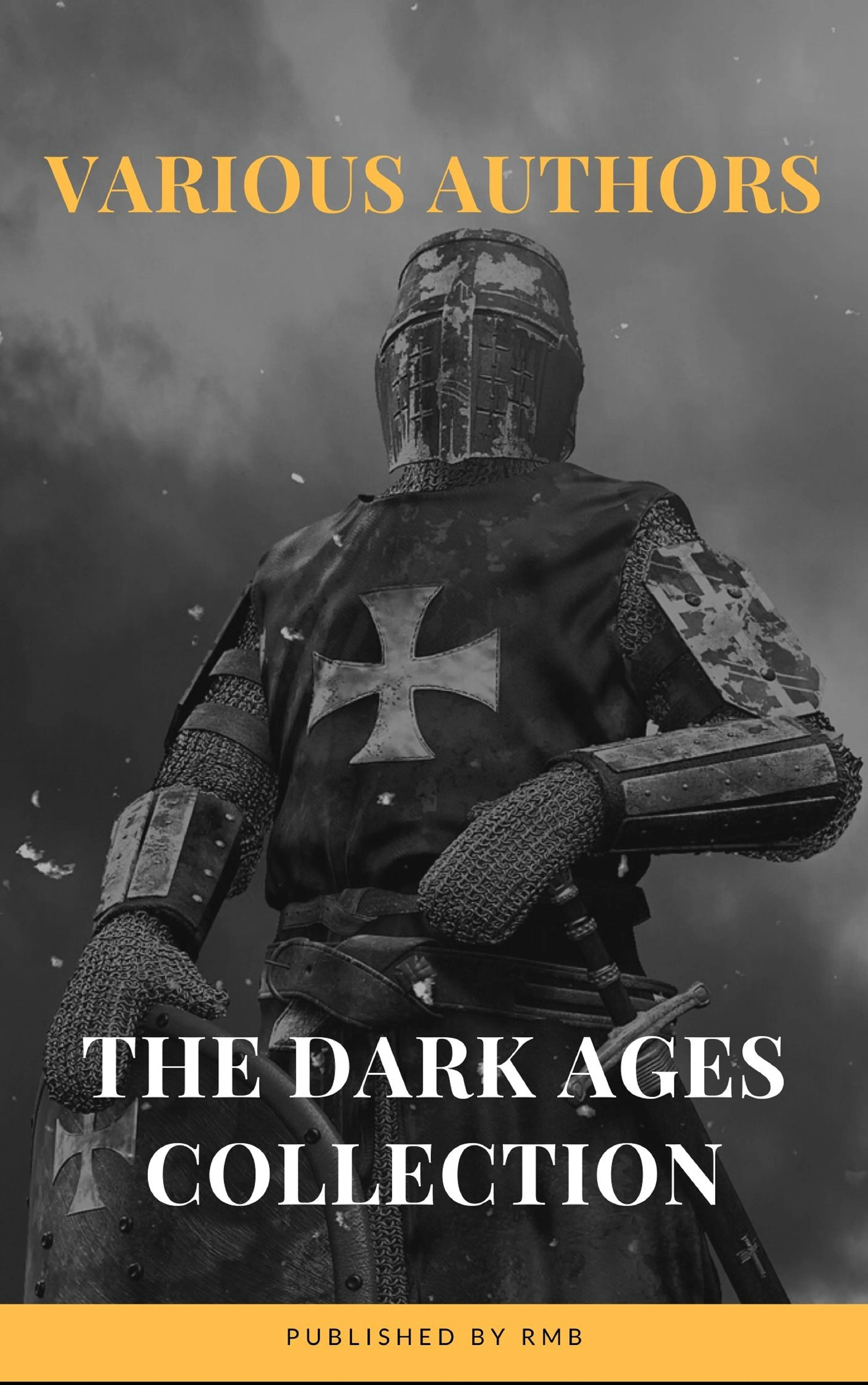
- Название:The Dark Ages
- Автор:
- Жанр:
- Год:неизвестен
- ISBN:нет данных
- Рейтинг книги:5 / 5. Голосов: 1
-
Избранное:Добавить в избранное
- Отзывы:
-
Ваша оценка:
The Dark Ages: краткое содержание, описание и аннотация
Предлагаем к чтению аннотацию, описание, краткое содержание или предисловие (зависит от того, что написал сам автор книги «The Dark Ages»). Если вы не нашли необходимую информацию о книге — напишите в комментариях, мы постараемся отыскать её.
The term employs traditional light-versus-darkness imagery to contrast the era's «darkness» (lack of records) with earlier and later periods of «light» (abundance of records).The concept of a «Dark Age» originated in the 1330s with the Italian scholar Petrarch, who regarded the post-Roman centuries as «dark» compared to the light of classical antiquity.
The Dark Ages Collection features:
HISTORY OF THE LATER ROMAN EMPIRE, by J.B. Bury
THE STORY OF THE GOTHS, by Henry Bradley
THE DARK AGES, by Charles Oman
VISIGOTHS PILLAGE ROME, by Edward Gibbon
HUNS INVADE THE EASTERN ROMAN EMPIRE; ATTILA DICTATES A TREATY OF PEACE, by Edward Gibbon
THE ENGLISH CONQUEST OF BRITAIN, by John Green & Charles Knight
ATTILA INVADES WESTERN EUROPE; BATTLE OF CHÂLONS, by Edward Creasy & Edward Gibbon
FOUNDATION OF VENICE, by Thomas Hodgkin & John Ruskin
CLOVIS FOUNDS THE KINGDOM OF THE FRANKS: IT BECOMES CHRISTIAN, by Francois Guizot
PUBLICATION OF THE JUSTINIAN CODE, by Edward Gibbon
AUGUSTINE'S MISSIONARY WORK IN ENGLAND, by Venerable Bede & John Green
THE HEGIRA; CAREER OF MAHOMET: THE KORAN: AND MAHOMETAN CREED, by Washington Irving & Simon Ockley
THE SARACEN CONQUEST OF SYRIA, by Simon Ockley
SARACENS CONQUER EGYPT; DESTRUCTION OF THE LIBRARY AT ALEXANDRIA, by Washington Irving
EVOLUTION OF THE DOGESHIP IN VENICE, by William Hazlitt
SARACENS IN SPAIN: BATTLE OF THE GUADALETE, by Ahmed ibn Mahomet Al-Makkari
BATTLE OF TOURS, by Edward Creasy
FOUNDING OF THE CARLOVINGIAN DYNASTY; PÉPIN THE SHORT USURPS THE FRANKISH CROWN, by Francois Guizot
CAREER OF CHARLEMAGNE, by Francois Guizot
EGBERT BECOMES KING OF THE ANGLO-SAXON HEPTARCHY, by David Hume
The Dark Ages — читать онлайн ознакомительный отрывок
Ниже представлен текст книги, разбитый по страницам. Система сохранения места последней прочитанной страницы, позволяет с удобством читать онлайн бесплатно книгу «The Dark Ages», без необходимости каждый раз заново искать на чём Вы остановились. Поставьте закладку, и сможете в любой момент перейти на страницу, на которой закончили чтение.
Интервал:
Закладка:
The estates of the monasteries gradually increased through the donations of the rich and pious, and at the beginning of the sixth century a pagan historian writes thus of the “so-called monks”: 149“They renounce legal marriages and fill their populous institutions in cities and villages with celibate people, useless either for war or for any service to the State; but gradually growing from the time of Arcadius to the present day they have appropriated the greater part of the earth, and on the pretext of sharing all with the poor they have, so to speak, reduced all to poverty.” This is the exaggerated statement of a hostile observer, who had been an official of the treasury; but it testifies to the growing popularity, wealth, and power of monastic institutions.
The ascetic spirit, which expressed itself in monasticism, affected the secular clergy also. The strict austerity of the Manichaean heretics was a certain challenge to the Church, 150and in their extravagant praises of virginity some of the Christian fathers were barely able to stop short of the condemnation of marriage which was a tenet of the Manichees. The view that matrimony is a necessary evil naturally involved the question of the celibacy of the clergy. In this matter ecclesiastics were left free to follow the dictates of their own conscience, and no legislation was attempted, till a Roman council (about A.D. 384) summoned by Pope Siricius, forbade bishops, priests, and deacons to marry. “Celibacy,” it has been said, “was but one of the many shapes in which the rapidly progressing sacerdotalism of Rome was overlaying religion with a multitude of formal observances.” 151Against the encroachments of this sacerdotalism, a protestant movement was led in Gaul by Vigilantius, who denounced celibacy, fasting, prayers for the dead, relics, and the use of incense; but it did not survive his death. By degrees, the celibacy of the clergy became the rule in the west. In the eastern provinces, where Roman influence was not preponderant, it was otherwise. Marriage after ordination was forbidden, but compulsory separation of clergy who were already married was not imposed except in the case of bishops. 152
CHAPTER XII: THE REIGN OF ZENO, AND THE GERMAN VICEROYALTY IN ITALY
§ 1. The Usurpation of Basiliscus (A.D. 475-476)
THE new Emperor, Leo II, was a child of seven years, and the regency naturally devolved on his father Zeno. But with the consent of the Senate and the concurrence of the Empress Verina, the child conferred the Imperial dignity on his father, in the Hippodrome (February 9, A.D. 474) and died in the same year, leaving to Zeno nominally as well as actually the sole power (November 17). 1
Zeno was not beloved. 2He was unpopular both with the Byzantine populace and in senatorial circles. 3He was hated as an Isaurian. If we remember the depredations of the Isaurians in the reign of Arcadius, it is not surprising that they had an evil name, and it is more than probable that the soldiers introduced into the capital by Leo had not belied their reputation for rudeness and violence. Zeno’s accession meant Isaurian ascendancy, high places for the Emperor’s fellow-countrymen, and more rude mountaineers in the capital. Historians of the time vent their feelings by describing him as physically horrible and morally abominable, 4and he was said to be a coward. 5His most trusted counsellor was the Isaurian Illus, who was, however, to prove a thorn in his side, and Trocundes, the brother of Illus, also rose into prominence.
The first year of the reign was crowded with anxieties. Vandals, Ostrogoths, Huns, and Arabs were all in arms against the Empire. King Gaiseric must have been deeply displeased by the murder of the Arian Aspar, with whom he is said to have been on friendly terms. After Leo’s death, the Vandals descended on the western shores of Greece and captured Nicopolis. Zeno was not prepared for war. He sent to Carthage Severus, a man of high repute, who made a favourable impression on Gaiseric by refusing all his gifts. The king made him a present of all the captives who had fallen to the share of the royal family and allowed him to redeem others from any Vandals who willing to sell. A perpetual peace was then concluded between the two powers (A.D. 474), 6and was maintained for nearly sixty years. Meanwhile Zeno’s coronation had provoked Aspar’s Ostrogothic relative Theoderic Strabo to new hostilities in Thrace. The Master of Soldiers in the Thracian provinces was captured and slain; but Illus took the field and terminated the war.
If the Emperor was able to cope with foreign foes by negotiation or arms, his position amid a hostile court and people was highly precarious. A formidable conspiracy was formed against him, of which the leading spirit was his mother-in-law, the Augusta Verina. 7She had concurred in Zeno’s elevation, but she did not like him, and being a woman of energy and ambition she found it distasteful to fall into the background, overshadowed by her daughter, the Augusta Ariadne. Her scheme was to raise to the throne and marry her paramour Patricius, who had formerly held the post of Master of Offices. She engaged the co-operation of her brother Basiliscus, who had been living in retirement at Heraclea on the Propontis, and Basiliscus succeeded in seducing the Isaurian brothers Illus and Trocundes to abandon their loyalty to Zeno. 8When all the preparations were complete, the queen-mother, with consummate skill, persuaded Zeno that his life was in danger and that his only safety was in flight. Taking with him a large company of Isaurians, and supplying himself with treasure, he crossed over to Chalcedon (January 9, A.D. 475) and fled to Isauria. 9Those who accompanied him were fortunate, for, when the Emperor’s flight was known, the populace indulged in their inveterate hatred of the Isaurians by a colossal massacre. Verina now hoped to reign as mistress of the palace, but she was outwitted by her brother, who was himself ambitious of the purple. The choice of the ministers and Senate fell not on Patricius but on Basiliscus, who was proclaimed and crowned Emperor at the Hebdomon palace. He immediately crowned his wife Zenonis as Augusta, and conferred the rank of Caesar upon his youthful son Marcus, whom he afterwards crowned Augustus. 10The circumstances of his elevation naturally led to a breach with Verina, and, having good reason to fear her capacity for intrigue, he took the precaution of putting Patricius to death. 11
Basiliscus reigned for twenty months and in that time he made himself extremely unpopular, chiefly by his ecclesiastical policy. He favoured the heresy of Monophysitism and issued a decree against the Council of Chalcedon. He and his wife had fallen under the influence of Timothy Aelurus, the bishop of Alexandria, who had come to Constantinople, and he went so far as to withdraw the Asiatic sees from the control of the bishop of Constantinople. 12Acacius, the Patriarch, was roused by this injury to the rights of his see. He draped St. Sophia in black and appeared in mourning before a large sympathetic congregation. Basiliscus left the city.
The Emperor had made another enemy in the Ostrogothic Theoderic Strabo, who, as the enemy of Zeno, had supported his elevation, by bestowing a Mastership of Soldiers 13on his relation Armatus, a young fop, who was the lover of the Empress Zenonis. Their love is described by a historian in a passage worthy of a romance. 14
Basiliscus permitted Armatus, inasmuch as he was a kinsman, to associate freely with the Empress Zenonis. Their intercourse became intimate, and as they were both persons of no ordinary beauty they became extravagantly enamoured of each other. They used to exchange glances of the eyes, they used constantly to turn their faces and smile at each other; and the passion which they were obliged to conceal was the cause of dule and teen. They confided their trouble to Daniel a eunuch and to Maria a midwife, who hardly healed their malady by the remedy of bringing them together. Then Zenonis coaxed Basiliscus to grant her lover the highest office in the city. The preferment which Armatus received from his uncle elated him beyond measure. He was naturally effeminate and cruel. Theoderic Strabo despised him as a dandy who only care for his toilet and the care of his body; and it was said that in the days of Leo he had punished a number of Thracian rebels by cutting off their hands. When he was exalted by his mistress’s husband, he imagined that he was a man of valour, and dressed himself as Achilles, in which guise he used to ride about and astonish or amuse the people in the Hippodrome. The populace nicknamed him Pyrrhus, on account of his pink cheeks, but he took it as a compliment to his valour, and became still more inflated with vanity. “He did not,” says the historian, “slay heroes like Pyrrhus, but he was a chamberer and wanton like Paris.”
Читать дальшеИнтервал:
Закладка:
Похожие книги на «The Dark Ages»
Представляем Вашему вниманию похожие книги на «The Dark Ages» списком для выбора. Мы отобрали схожую по названию и смыслу литературу в надежде предоставить читателям больше вариантов отыскать новые, интересные, ещё непрочитанные произведения.







Обсуждение, отзывы о книге «The Dark Ages» и просто собственные мнения читателей. Оставьте ваши комментарии, напишите, что Вы думаете о произведении, его смысле или главных героях. Укажите что конкретно понравилось, а что нет, и почему Вы так считаете.