David Hume - The Dark Ages
Здесь есть возможность читать онлайн «David Hume - The Dark Ages» — ознакомительный отрывок электронной книги совершенно бесплатно, а после прочтения отрывка купить полную версию. В некоторых случаях можно слушать аудио, скачать через торрент в формате fb2 и присутствует краткое содержание. Жанр: unrecognised, на английском языке. Описание произведения, (предисловие) а так же отзывы посетителей доступны на портале библиотеки ЛибКат.
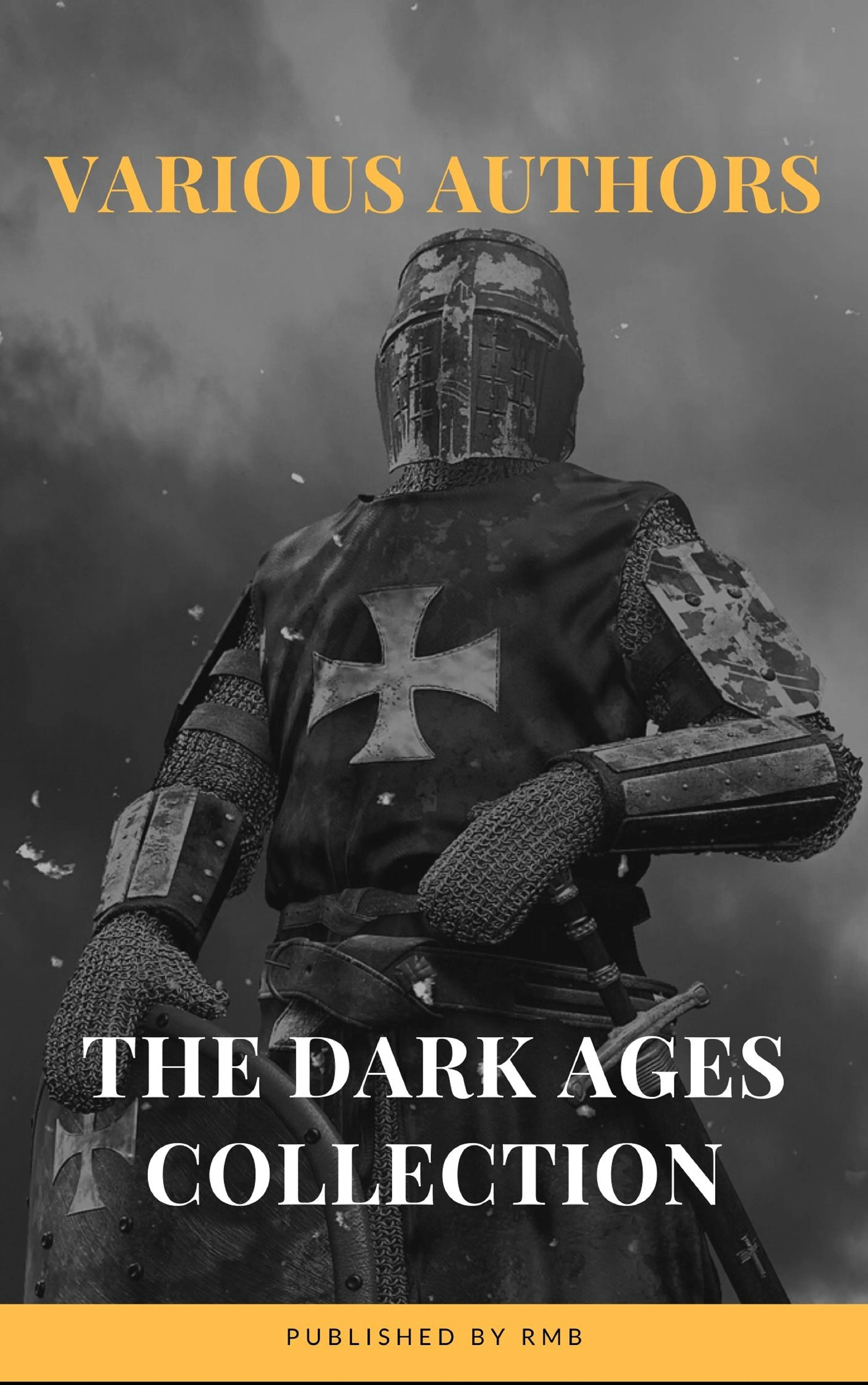
- Название:The Dark Ages
- Автор:
- Жанр:
- Год:неизвестен
- ISBN:нет данных
- Рейтинг книги:5 / 5. Голосов: 1
-
Избранное:Добавить в избранное
- Отзывы:
-
Ваша оценка:
The Dark Ages: краткое содержание, описание и аннотация
Предлагаем к чтению аннотацию, описание, краткое содержание или предисловие (зависит от того, что написал сам автор книги «The Dark Ages»). Если вы не нашли необходимую информацию о книге — напишите в комментариях, мы постараемся отыскать её.
The term employs traditional light-versus-darkness imagery to contrast the era's «darkness» (lack of records) with earlier and later periods of «light» (abundance of records).The concept of a «Dark Age» originated in the 1330s with the Italian scholar Petrarch, who regarded the post-Roman centuries as «dark» compared to the light of classical antiquity.
The Dark Ages Collection features:
HISTORY OF THE LATER ROMAN EMPIRE, by J.B. Bury
THE STORY OF THE GOTHS, by Henry Bradley
THE DARK AGES, by Charles Oman
VISIGOTHS PILLAGE ROME, by Edward Gibbon
HUNS INVADE THE EASTERN ROMAN EMPIRE; ATTILA DICTATES A TREATY OF PEACE, by Edward Gibbon
THE ENGLISH CONQUEST OF BRITAIN, by John Green & Charles Knight
ATTILA INVADES WESTERN EUROPE; BATTLE OF CHÂLONS, by Edward Creasy & Edward Gibbon
FOUNDATION OF VENICE, by Thomas Hodgkin & John Ruskin
CLOVIS FOUNDS THE KINGDOM OF THE FRANKS: IT BECOMES CHRISTIAN, by Francois Guizot
PUBLICATION OF THE JUSTINIAN CODE, by Edward Gibbon
AUGUSTINE'S MISSIONARY WORK IN ENGLAND, by Venerable Bede & John Green
THE HEGIRA; CAREER OF MAHOMET: THE KORAN: AND MAHOMETAN CREED, by Washington Irving & Simon Ockley
THE SARACEN CONQUEST OF SYRIA, by Simon Ockley
SARACENS CONQUER EGYPT; DESTRUCTION OF THE LIBRARY AT ALEXANDRIA, by Washington Irving
EVOLUTION OF THE DOGESHIP IN VENICE, by William Hazlitt
SARACENS IN SPAIN: BATTLE OF THE GUADALETE, by Ahmed ibn Mahomet Al-Makkari
BATTLE OF TOURS, by Edward Creasy
FOUNDING OF THE CARLOVINGIAN DYNASTY; PÉPIN THE SHORT USURPS THE FRANKISH CROWN, by Francois Guizot
CAREER OF CHARLEMAGNE, by Francois Guizot
EGBERT BECOMES KING OF THE ANGLO-SAXON HEPTARCHY, by David Hume
The Dark Ages — читать онлайн ознакомительный отрывок
Ниже представлен текст книги, разбитый по страницам. Система сохранения места последней прочитанной страницы, позволяет с удобством читать онлайн бесплатно книгу «The Dark Ages», без необходимости каждый раз заново искать на чём Вы остановились. Поставьте закладку, и сможете в любой момент перейти на страницу, на которой закончили чтение.
Интервал:
Закладка:
It is clear that throughout the whole controversy personal dislike of Nestorius, who was not an amiable or courteous man, played a considerable part. He was permitted to remain peacefully in his monastery for a few years, notwithstanding the urgent request of Pope Celestine that such a firebrand should be removed from all contact with men. But at length the Emperor adopted harsh measures against him (A.D. 435). 16He was denounced in an edict as sacrilegious, his books were condemned to the flames, 17and he was banished at first to Petra and then to Oasis in Upper Egypt (A.D. 435). He seems to have died in A.D. 451. 18
The compromise of A.D. 433 was not final. The question was opened again by Dioscorus, who had succeeded Cyril (A.D. 444) in the see of Alexandria, and was jealous of the prestige of the theologians of Antioch. He set himself the task of destroying the Antiochian formula of “two natures or hypostaseis and one Christ.” His views found a warm supporter at Constantinople in a certain Eutyches, the archimandrite of a monastery, who had been prominent in the agitation against Nestorius, and enjoyed the favour of the eunuch Chrysaphius. 19Eutyches was charged with heresy; the Patriarch Flavian 20took up the matter and procured his condemnation at a local synod (A.D. 448). Eutyches appealed to Leo, the bishop of Rome; and Dioscorus urged the Emperor to summon a general Council. Theodosius, guided by the counsels of Chrysaphius who hated Flavian, yielded to the wishes of Alexandria, and the Council met at Ephesus in August A.D. 449.
In the meantime Leo had come to the conclusion that the views of Eutyches were heretical, and he wrote in this sense to the Emperor and the Patriarch. He claimed that he was himself the person who should decide and define the dogma by virtue of the authority residing in the see of St. Peter; there was no necessity for a General Council. 21But the Council was called, and Leo sent three delegates, committing to them a Dogmatic Epistle or Tome addressed to Flavian in which he formulated the true doctrine: the unity of two hypostatic natures in one person, wherein the properties of both natures were preserved. 22It was not explained how this union was possible, and a distinguished historian of dogma observes 23that Leo left off at the point where the speculation of Cyril began.
Dioscorus presided at the Council. The letter of Leo was not read, and the Roman representative did not vote. Eutyches was declared orthodox, and Flavian was deposed as having gone beyond the doctrine of the creed of Nicaea. 24Other more distinguished adherents of the Antiochian doctrine, including Theodoret, bishop of Cyrrhus, a notable theologian, were also deposed. The result of the proceedings was to annul the compromise of A.D. 433 and to reinstate the Cyrillian doctrine of the one incarnate nature of the God-Logos. The voting of many of the 115 bishops who signed the Acts was not free; they were overawed by the Imperial authorities and by the violence of a noisy crowd of monks from Syria. Yet it has been said, perhaps with truth, that this Council more than any other expressed the general religious feeling of the time, and would have permanently settled the controversy in the East if extraneous interests had not been involved.
The bishop of Rome denounced the “Robber Council,” as he called it, and prompted Valentinian III to propose to his cousin Theodosius the convention of a new Council in Italy. Theodosius replied that the recent Council had simply defended the rulings of Nicaea and Ephesus against the innovations of Flavian; no further action was called for; the Church was at peace. If the question had been simply doctrinal and no political considerations had intervened, the decision of the “Robber Council” might have been the last word in Eastern Christendom. But that Council had been a triumph for Alexandria, and the prestige which Dioscorus acquired was a menace not only to Old Rome — he promptly excommunicated Leo — but also to New Rome. This danger could not long be ignored, and the death of Theodosius was followed by a change of policy at Constantinople.
Marcian resolved to terminate the ecclesiastical despotism which the Alexandrian bishops sought to impose upon the East, and Anatolius, who through the influence of Dioscorus had succeeded Flavian as Patriarch, did not scruple to lend himself to a new policy and to subscribe the Dogmatic Epistle of Leo. Marcian wrote to Leo agreeing to his request for a new Council, but insisting that it should meet in the East. Then the Pope changed his tactic. He claimed, as before, that his own Epistle was sufficient to settle the whole matter, and did all he could to prevent the meeting of a Council. 25But Marcian knew that, however wonderful Leo’s Epistle might be, a Council would be indispensable to satisfy public opinion in the Eastern Churches, and he summoned a Council for the autumn (A.D. 451). Leo rather sulkily yielded. 26In October an unusually large assembly of ecclesiastics 27met at Chalcedon, and the presidency, which meant the right of first recording his vote, was given to the legate of the Pope.
It was the common object of Leo and of Marcian to procure the deposition of Dioscorus, and in this they succeeded, but not without exercising moral violence. Most of the bishops, including Anatolius who really agreed with Dioscorus, voted against their consciences and relinquished the formula in which they believed. But, while Leo desired that his epistle should be accepted as it stood, Marcian saw that a new formula, which should indeed take account of the Pope’s statement, would be less unacceptable in the East. Accordingly the Council decreed that the true doctrine was contained in certain writings of Cyril 28as well as in Leo’s epistle; and described Jesus Christ as complete in his humanity as well as in his divinity; one and the same Christ in two natures, without confusion or change, division or separation; 29each nature concurring 30into one person and one hypostasis.
The doctrine of the Fourth Ecumenical Council is still accepted as authoritative in the Churches of Christendom. It is interesting to learn the judgment of one of the most learned living theologians. The Council of Chalcedon, “which we might call the Robber and the Traitor Council, betrayed the secret of the Greek faith.” “The disgrace attaching to this Council consists in the fact that the great majority of the bishops who held the same views as Cyril and Dioscorus finally allowed a formula to be forced upon them, which was that of strangers, of the Emperor and the Pope, and which did not correspond to their belief.” 31But the truth is that the definition of Chalcedon might be interpreted in different ways. To Leo and the Western Church it meant one thing; to the followers of Cyril another; to Antiochians and Theodoret, something different which Nestorius himself could have accepted. 32
Politically, the Council was a decisive triumph for Constantinople and a final blow to the pretensions of the see of Alexandria. Marcian completed what Theodosius the Great had begun. Three successive Patriarchs, Theophilus, Cyril, and Dioscorus, had aimed at attaining to the supreme position in Eastern Christendom and at ruling Egypt like kings. Alexandria could never again claim to lead the Church in theology. But the defeat of Alexandria was accompanied by an exaltation of Byzantium which was far from acceptable to Rome. By the twenty-eighth Canon equal privileges with Rome were granted to the see of Constantinople, all the episcopal sees of the Dioceses of Thrace, Asia, and Pontus were assigned to the jurisdiction of the Patriarch. The Roman legates protested against this Canon, and Leo refused to confirm it. 33
Читать дальшеИнтервал:
Закладка:
Похожие книги на «The Dark Ages»
Представляем Вашему вниманию похожие книги на «The Dark Ages» списком для выбора. Мы отобрали схожую по названию и смыслу литературу в надежде предоставить читателям больше вариантов отыскать новые, интересные, ещё непрочитанные произведения.





Обсуждение, отзывы о книге «The Dark Ages» и просто собственные мнения читателей. Оставьте ваши комментарии, напишите, что Вы думаете о произведении, его смысле или главных героях. Укажите что конкретно понравилось, а что нет, и почему Вы так считаете.