Immanuel Kant - Kant's Three Critiques
Здесь есть возможность читать онлайн «Immanuel Kant - Kant's Three Critiques» — ознакомительный отрывок электронной книги совершенно бесплатно, а после прочтения отрывка купить полную версию. В некоторых случаях можно слушать аудио, скачать через торрент в формате fb2 и присутствует краткое содержание. Жанр: unrecognised, на английском языке. Описание произведения, (предисловие) а так же отзывы посетителей доступны на портале библиотеки ЛибКат.
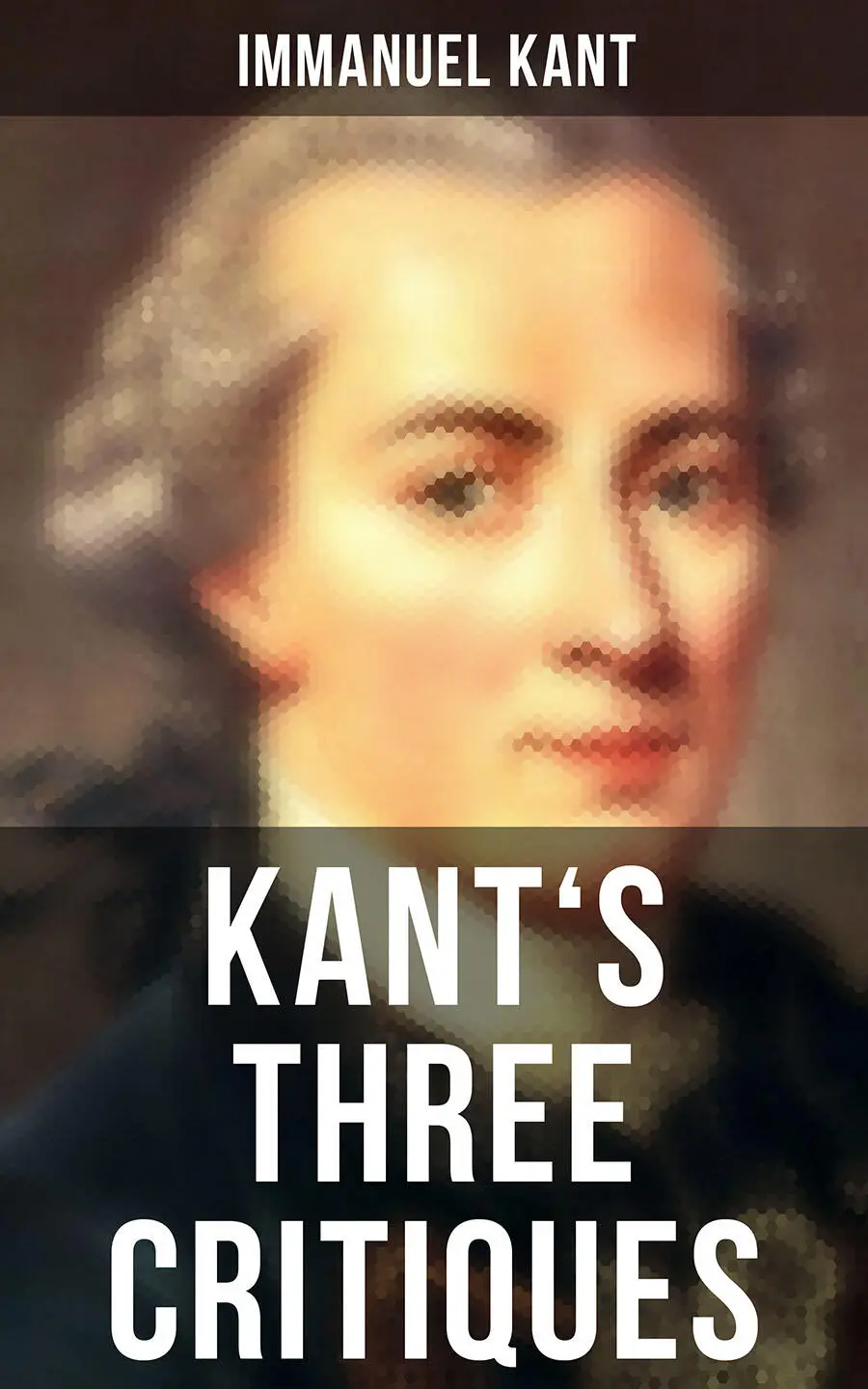
- Название:Kant's Three Critiques
- Автор:
- Жанр:
- Год:неизвестен
- ISBN:нет данных
- Рейтинг книги:5 / 5. Голосов: 1
-
Избранное:Добавить в избранное
- Отзывы:
-
Ваша оценка:
Kant's Three Critiques: краткое содержание, описание и аннотация
Предлагаем к чтению аннотацию, описание, краткое содержание или предисловие (зависит от того, что написал сам автор книги «Kant's Three Critiques»). Если вы не нашли необходимую информацию о книге — напишите в комментариях, мы постараемся отыскать её.
The Critique of Practical Reason is the second of Immanuel Kant's three critiques and it deals with his moral philosophy. The second Critique exercised a decisive influence over the subsequent development of the field of ethics and moral philosophy, beginning with Johann Gottlieb Fichte's Doctrine of Science.
The Critique of Judgment, also translated as the Critique of the Power of Judgment completes the Critical project begun in the Critique of Pure Reason. The book is divided into two main sections: the Critique of Aesthetic Judgment and the Critique of Teleological Judgment, and also includes a large overview of the entirety of Kant's Critical system, arranged in its final form.
Immanuel Kant (1724-1804) was a German philosopher, who, according to the Stanford Encyclopedia of Philosophy is «the central figure of modern philosophy.» Kant argued that fundamental concepts of the human mind structure human experience, that reason is the source of morality, that aesthetics arises from a faculty of disinterested judgment, that space and time are forms of our understanding, and that the world as it is «in-itself» is unknowable. Kant took himself to have effected a Copernican revolution in philosophy, akin to Copernicus' reversal of the age-old belief that the sun revolved around the earth.
Table of Contents:
THE CRITIQUE OF PURE REASON
THE CRITIQUE OF PRACTICAL REASON
THE CRITIQUE OF JUDGMENT
Kant's Three Critiques — читать онлайн ознакомительный отрывок
Ниже представлен текст книги, разбитый по страницам. Система сохранения места последней прочитанной страницы, позволяет с удобством читать онлайн бесплатно книгу «Kant's Three Critiques», без необходимости каждый раз заново искать на чём Вы остановились. Поставьте закладку, и сможете в любой момент перейти на страницу, на которой закончили чтение.
Интервал:
Закладка:
Transcendental Logic.
First Division.
Transcendental Analytic.
Table of Contents
§§ 1.
Transcendental analytic is the dissection of the whole of our a priori knowledge into the elements of the pure cognition of the understanding. In order to effect our purpose, it is necessary: (1) That the conceptions be pure and not empirical; (2) That they belong not to intuition and sensibility, but to thought and understanding; (3) That they be elementary conceptions, and as such, quite different from deduced or compound conceptions; (4) That our table of these elementary conceptions be complete, and fill up the whole sphere of the pure understanding. Now this completeness of a science cannot be accepted with confidence on the guarantee of a mere estimate of its existence in an aggregate formed only by means of repeated experiments and attempts. The completeness which we require is possible only by means of an idea of the totality of the a priori cognition of the understanding, and through the thereby determined division of the conceptions which form the said whole; consequently, only by means of their connection in a system. Pure understanding distinguishes itself not merely from everything empirical, but also completely from all sensibility. It is a unity self-subsistent, self-sufficient, and not to be enlarged by any additions from without. Hence the sum of its cognition constitutes a system to be determined by and comprised under an idea; and the completeness and articulation of this system can at the same time serve as a test of the correctness and genuineness of all the parts of cognition that belong to it. The whole of this part of transcendental logic consists of two books, of which the one contains the conceptions, and the other the principles of pure understanding.
Book I.
Analytic of Conceptions.
Table of Contents
§§ 2
By the term Analytic of Conceptions, I do not understand the analysis of these, or the usual process in philosophical investigations of dissecting the conceptions which present themselves, according to their content, and so making them clear; but I mean the hitherto little attempted dissection of the faculty of understanding itself, in order to investigate the possibility of conceptions a priori , by looking for them in the understanding alone, as their birthplace, and analysing the pure use of this faculty. For this is the proper duty of a transcendental philosophy; what remains is the logical treatment of the conceptions in philosophy in general. We shall therefore follow up the pure conceptions even to their germs and beginnings in the human understanding, in which they lie, until they are developed on occasions presented by experience, and, freed by the same understanding from the empirical conditions attaching to them, are set forth in their unalloyed purity.
Chapter I. Of the Transcendental Clue to the Discovery of all Pure Conceptions of the Understanding.
Introductory. §§ 3
Table of Contents
When we call into play a faculty of cognition, different conceptions manifest themselves according to the different circumstances, and make known this faculty, and assemble themselves into a more or less extensive collection, according to the time or penetration that has been applied to the consideration of them. Where this process, conducted as it is mechanically, so to speak, will end, cannot be determined with certainty. Besides, the conceptions which we discover in this haphazard manner present themselves by no means in order and systematic unity, but are at last coupled together only according to resemblances to each other, and arranged in series, according to the quantity of their content, from the simpler to the more complex — series which are anything but systematic, though not altogether without a certain kind of method in their construction.
Transcendental philosophy has the advantage, and moreover the duty, of searching for its conceptions according to a principle; because these conceptions spring pure and unmixed out of the understanding as an absolute unity, and therefore must be connected with each other according to one conception or idea. A connection of this kind, however, furnishes us with a ready prepared rule, by which its proper place may be assigned to every pure conception of the understanding, and the completeness of the system of all be determined a priori — both which would otherwise have been dependent on mere choice or chance.
Section I. Of defined above Use of understanding in General. §§ 4
Table of Contents
The understanding was defined above only negatively, as a non-sensuous faculty of cognition. Now, independently of sensibility, we cannot possibly have any intuition; consequently, the understanding is no faculty of intuition. But besides intuition there is no other mode of cognition, except through conceptions; consequently, the cognition of every, at least of every human, understanding is a cognition through conceptions — not intuitive, but discursive. All intuitions, as sensuous, depend on affections; conceptions, therefore, upon functions. By the word function I understand the unity of the act of arranging diverse representations under one common representation. Conceptions, then, are based on the spontaneity of thought, as sensuous intuitions are on the receptivity of impressions. Now, the understanding cannot make any other use of these conceptions than to judge by means of them. As no representation, except an intuition, relates immediately to its object, a conception never relates immediately to an object, but only to some other representation thereof, be that an intuition or itself a conception. A judgement, therefore, is the mediate cognition of an object, consequently the representation of a representation of it. In every judgement there is a conception which applies to, and is valid for many other conceptions, and which among these comprehends also a given representation, this last being immediately connected with an object. For example, in the judgement “All bodies are divisible,” our conception of divisible applies to various other conceptions; among these, however, it is here particularly applied to the conception of body, and this conception of body relates to certain phenomena which occur to us. These objects, therefore, are mediately represented by the conception of divisibility. All judgements, accordingly, are functions of unity in our representations, inasmuch as, instead of an immediate, a higher representation, which comprises this and various others, is used for our cognition of the object, and thereby many possible cognitions are collected into one. But we can reduce all acts of the understanding to judgements, so that understanding may be represented as the faculty of judging. For it is, according to what has been said above, a faculty of thought. Now thought is cognition by means of conceptions. But conceptions, as predicates of possible judgements, relate to some representation of a yet undetermined object. Thus the conception of body indicates something — for example, metal — which can be cognized by means of that conception. It is therefore a conception, for the reason alone that other representations are contained under it, by means of which it can relate to objects. It is therefore the predicate to a possible judgement; for example: “Every metal is a body.” All the functions of the understanding therefore can be discovered, when we can completely exhibit the functions of unity in judgements. And that this may be effected very easily, the following section will show.
Section II. Of the Logical Function of the Understanding in Judgements. §§ 5
Интервал:
Закладка:
Похожие книги на «Kant's Three Critiques»
Представляем Вашему вниманию похожие книги на «Kant's Three Critiques» списком для выбора. Мы отобрали схожую по названию и смыслу литературу в надежде предоставить читателям больше вариантов отыскать новые, интересные, ещё непрочитанные произведения.









Обсуждение, отзывы о книге «Kant's Three Critiques» и просто собственные мнения читателей. Оставьте ваши комментарии, напишите, что Вы думаете о произведении, его смысле или главных героях. Укажите что конкретно понравилось, а что нет, и почему Вы так считаете.