Immanuel Kant - Kant's Three Critiques
Здесь есть возможность читать онлайн «Immanuel Kant - Kant's Three Critiques» — ознакомительный отрывок электронной книги совершенно бесплатно, а после прочтения отрывка купить полную версию. В некоторых случаях можно слушать аудио, скачать через торрент в формате fb2 и присутствует краткое содержание. Жанр: unrecognised, на английском языке. Описание произведения, (предисловие) а так же отзывы посетителей доступны на портале библиотеки ЛибКат.
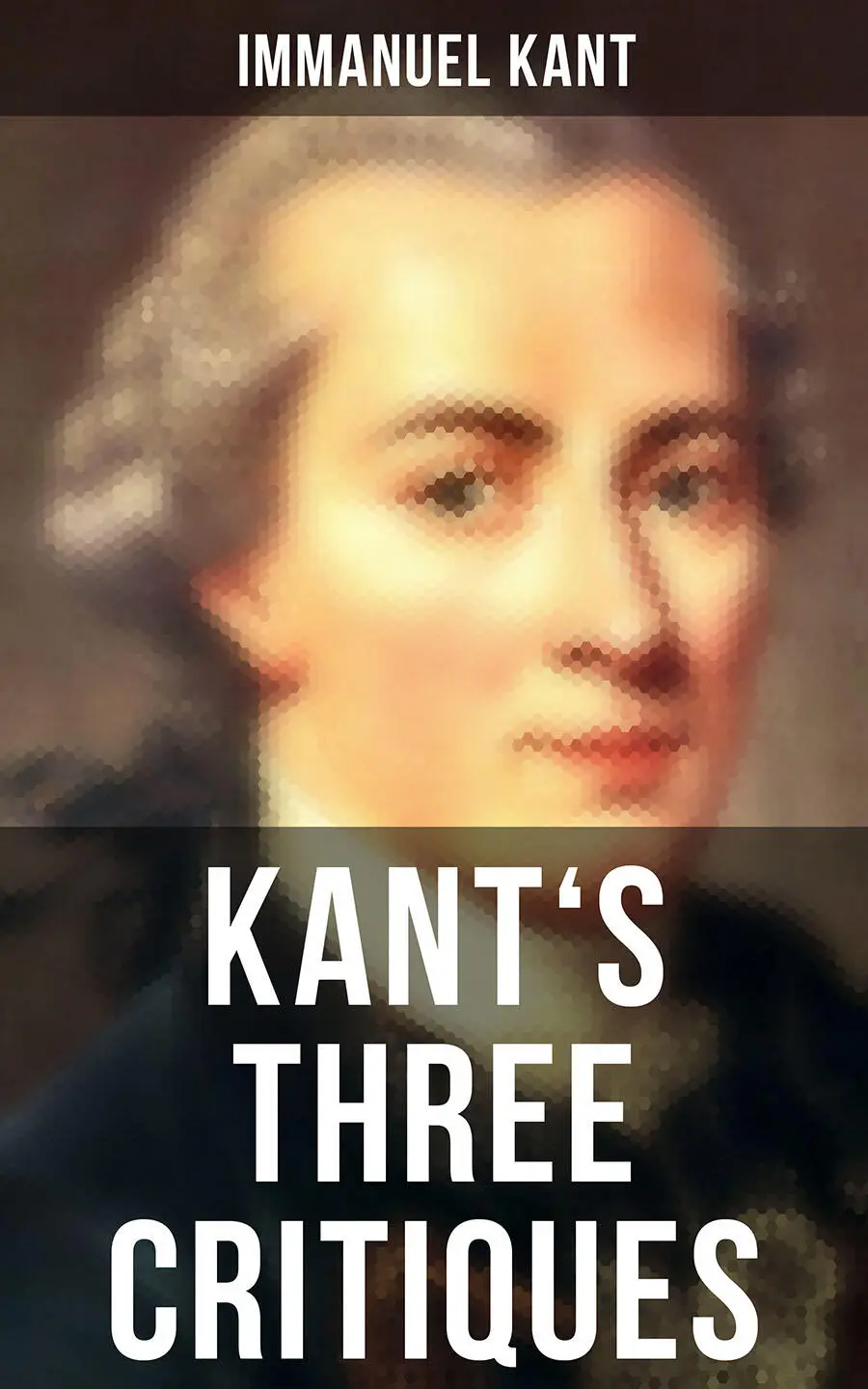
- Название:Kant's Three Critiques
- Автор:
- Жанр:
- Год:неизвестен
- ISBN:нет данных
- Рейтинг книги:5 / 5. Голосов: 1
-
Избранное:Добавить в избранное
- Отзывы:
-
Ваша оценка:
Kant's Three Critiques: краткое содержание, описание и аннотация
Предлагаем к чтению аннотацию, описание, краткое содержание или предисловие (зависит от того, что написал сам автор книги «Kant's Three Critiques»). Если вы не нашли необходимую информацию о книге — напишите в комментариях, мы постараемся отыскать её.
The Critique of Practical Reason is the second of Immanuel Kant's three critiques and it deals with his moral philosophy. The second Critique exercised a decisive influence over the subsequent development of the field of ethics and moral philosophy, beginning with Johann Gottlieb Fichte's Doctrine of Science.
The Critique of Judgment, also translated as the Critique of the Power of Judgment completes the Critical project begun in the Critique of Pure Reason. The book is divided into two main sections: the Critique of Aesthetic Judgment and the Critique of Teleological Judgment, and also includes a large overview of the entirety of Kant's Critical system, arranged in its final form.
Immanuel Kant (1724-1804) was a German philosopher, who, according to the Stanford Encyclopedia of Philosophy is «the central figure of modern philosophy.» Kant argued that fundamental concepts of the human mind structure human experience, that reason is the source of morality, that aesthetics arises from a faculty of disinterested judgment, that space and time are forms of our understanding, and that the world as it is «in-itself» is unknowable. Kant took himself to have effected a Copernican revolution in philosophy, akin to Copernicus' reversal of the age-old belief that the sun revolved around the earth.
Table of Contents:
THE CRITIQUE OF PURE REASON
THE CRITIQUE OF PRACTICAL REASON
THE CRITIQUE OF JUDGMENT
Kant's Three Critiques — читать онлайн ознакомительный отрывок
Ниже представлен текст книги, разбитый по страницам. Система сохранения места последней прочитанной страницы, позволяет с удобством читать онлайн бесплатно книгу «Kant's Three Critiques», без необходимости каждый раз заново искать на чём Вы остановились. Поставьте закладку, и сможете в любой момент перейти на страницу, на которой закончили чтение.
Интервал:
Закладка:
Accordingly, in the expectation that there may perhaps be conceptions which relate a priori to objects, not as pure or sensuous intuitions, but merely as acts of pure thought (which are therefore conceptions, but neither of empirical nor aesthetical origin)— in this expectation, I say, we form to ourselves, by anticipation, the idea of a science of pure understanding and rational cognition, by means of which we may cogitate objects entirely a priori . A science of this kind, which should determine the origin, the extent, and the objective validity of such cognitions, must be called transcendental logic, because it has not, like general logic, to do with the laws of understanding and reason in relation to empirical as well as pure rational cognitions without distinction, but concerns itself with these only in an a priori relation to objects.
III. Of the Division of General Logic into Analytic and Dialectic.
Table of Contents
The old question with which people sought to push logicians into a corner, so that they must either have recourse to pitiful sophisms or confess their ignorance, and consequently the vanity of their whole art, is this: “What is truth?” The definition of the word truth, to wit, “the accordance of the cognition with its object,” is presupposed in the question; but we desire to be told, in the answer to it, what is the universal and secure criterion of the truth of every cognition.
To know what questions we may reasonably propose is in itself a strong evidence of sagacity and intelligence. For if a question be in itself absurd and unsusceptible of a rational answer, it is attended with the danger — not to mention the shame that falls upon the person who proposes it — of seducing the unguarded listener into making absurd answers, and we are presented with the ridiculous spectacle of one (as the ancients said) “milking the he-goat, and the other holding a sieve.”
If truth consists in the accordance of a cognition with its object, this object must be, ipso facto, distinguished from all others; for a cognition is false if it does not accord with the object to which it relates, although it contains something which may be affirmed of other objects. Now a universal criterion of truth would be that which is valid for all cognitions, without distinction of their objects. But it is evident that since, in the case of such a criterion, we make abstraction of all the content of a cognition (that is, of all relation to its object), and truth relates precisely to this content, it must be utterly absurd to ask for a mark of the truth of this content of cognition; and that, accordingly, a sufficient, and at the same time universal, test of truth cannot possibly be found. As we have already termed the content of a cognition its matter, we shall say: “Of the truth of our cognitions in respect of their matter, no universal test can be demanded, because such a demand is self-contradictory.”
On the other hand, with regard to our cognition in respect of its mere form (excluding all content), it is equally manifest that logic, in so far as it exhibits the universal and necessary laws of the understanding, must in these very laws present us with criteria of truth. Whatever contradicts these rules is false, because thereby the understanding is made to contradict its own universal laws of thought; that is, to contradict itself. These criteria, however, apply solely to the form of truth, that is, of thought in general, and in so far they are perfectly accurate, yet not sufficient. For although a cognition may be perfectly accurate as to logical form, that is, not self-contradictory, it is notwithstanding quite possible that it may not stand in agreement with its object. Consequently, the merely logical criterion of truth, namely, the accordance of a cognition with the universal and formal laws of understanding and reason, is nothing more than the conditio sine qua non, or negative condition of all truth. Farther than this logic cannot go, and the error which depends not on the form, but on the content of the cognition, it has no test to discover.
General logic, then, resolves the whole formal business of understanding and reason into its elements, and exhibits them as principles of all logical judging of our cognitions. This part of logic may, therefore, be called analytic, and is at least the negative test of truth, because all cognitions must first of all be estimated and tried according to these laws before we proceed to investigate them in respect of their content, in order to discover whether they contain positive truth in regard to their object. Because, however, the mere form of a cognition, accurately as it may accord with logical laws, is insufficient to supply us with material (objective) truth, no one, by means of logic alone, can venture to predicate anything of or decide concerning objects, unless he has obtained, independently of logic, well-grounded information about them, in order afterwards to examine, according to logical laws, into the use and connection, in a cohering whole, of that information, or, what is still better, merely to test it by them. Notwithstanding, there lies so seductive a charm in the possession of a specious art like this — an art which gives to all our cognitions the form of the understanding, although with respect to the content thereof we may be sadly deficient — that general logic, which is merely a canon of judgement, has been employed as an organon for the actual production, or rather for the semblance of production, of objective assertions, and has thus been grossly misapplied. Now general logic, in its assumed character of organon, is called dialectic.
Different as are the significations in which the ancients used this term for a science or an art, we may safely infer, from their actual employment of it, that with them it was nothing else than a logic of illusion — a sophistical art for giving ignorance, nay, even intentional sophistries, the colouring of truth, in which the thoroughness of procedure which logic requires was imitated, and their topic employed to cloak the empty pretensions. Now it may be taken as a safe and useful warning, that general logic, considered as an organon, must always be a logic of illusion, that is, be dialectical, for, as it teaches us nothing whatever respecting the content of our cognitions, but merely the formal conditions of their accordance with the understanding, which do not relate to and are quite indifferent in respect of objects, any attempt to employ it as an instrument (organon) in order to extend and enlarge the range of our knowledge must end in mere prating; any one being able to maintain or oppose, with some appearance of truth, any single assertion whatever.
Such instruction is quite unbecoming the dignity of philosophy. For these reasons we have chosen to denominate this part of logic dialectic, in the sense of a critique of dialectical illusion, and we wish the term to be so understood in this place.
IV. Of the Division of Transcendental Logic into Transcendental Analytic and Dialectic.
Table of Contents
In transcendental logic we isolate the understanding (as in transcendental aesthetic the sensibility) and select from our cognition merely that part of thought which has its origin in the understanding alone. The exercise of this pure cognition, however, depends upon this as its condition, that objects to which it may be applied be given to us in intuition, for without intuition the whole of our cognition is without objects, and is therefore quite void. That part of transcendental logic, then, which treats of the elements of pure cognition of the understanding, and of the principles without which no object at all can be thought, is transcendental analytic, and at the same time a logic of truth. For no cognition can contradict it, without losing at the same time all content, that is, losing all reference to an object, and therefore all truth. But because we are very easily seduced into employing these pure cognitions and principles of the understanding by themselves, and that even beyond the boundaries of experience, which yet is the only source whence we can obtain matter (objects) on which those pure conceptions may be employed — understanding runs the risk of making, by means of empty sophisms, a material and objective use of the mere formal principles of the pure understanding, and of passing judgements on objects without distinction — objects which are not given to us, nay, perhaps cannot be given to us in any way. Now, as it ought properly to be only a canon for judging of the empirical use of the understanding, this kind of logic is misused when we seek to employ it as an organon of the universal and unlimited exercise of the understanding, and attempt with the pure understanding alone to judge synthetically, affirm, and determine respecting objects in general. In this case the exercise of the pure understanding becomes dialectical. The second part of our transcendental logic must therefore be a critique of dialectical illusion, and this critique we shall term transcendental dialectic — not meaning it as an art of producing dogmatically such illusion (an art which is unfortunately too current among the practitioners of metaphysical juggling), but as a critique of understanding and reason in regard to their hyperphysical use. This critique will expose the groundless nature of the pretensions of these two faculties, and invalidate their claims to the discovery and enlargement of our cognitions merely by means of transcendental principles, and show that the proper employment of these faculties is to test the judgements made by the pure understanding, and to guard it from sophistical delusion.
Читать дальшеИнтервал:
Закладка:
Похожие книги на «Kant's Three Critiques»
Представляем Вашему вниманию похожие книги на «Kant's Three Critiques» списком для выбора. Мы отобрали схожую по названию и смыслу литературу в надежде предоставить читателям больше вариантов отыскать новые, интересные, ещё непрочитанные произведения.







Обсуждение, отзывы о книге «Kant's Three Critiques» и просто собственные мнения читателей. Оставьте ваши комментарии, напишите, что Вы думаете о произведении, его смысле или главных героях. Укажите что конкретно понравилось, а что нет, и почему Вы так считаете.