James Cooper - LEATHERSTOCKING TALES – Complete Collection
Здесь есть возможность читать онлайн «James Cooper - LEATHERSTOCKING TALES – Complete Collection» — ознакомительный отрывок электронной книги совершенно бесплатно, а после прочтения отрывка купить полную версию. В некоторых случаях можно слушать аудио, скачать через торрент в формате fb2 и присутствует краткое содержание. Жанр: unrecognised, на английском языке. Описание произведения, (предисловие) а так же отзывы посетителей доступны на портале библиотеки ЛибКат.
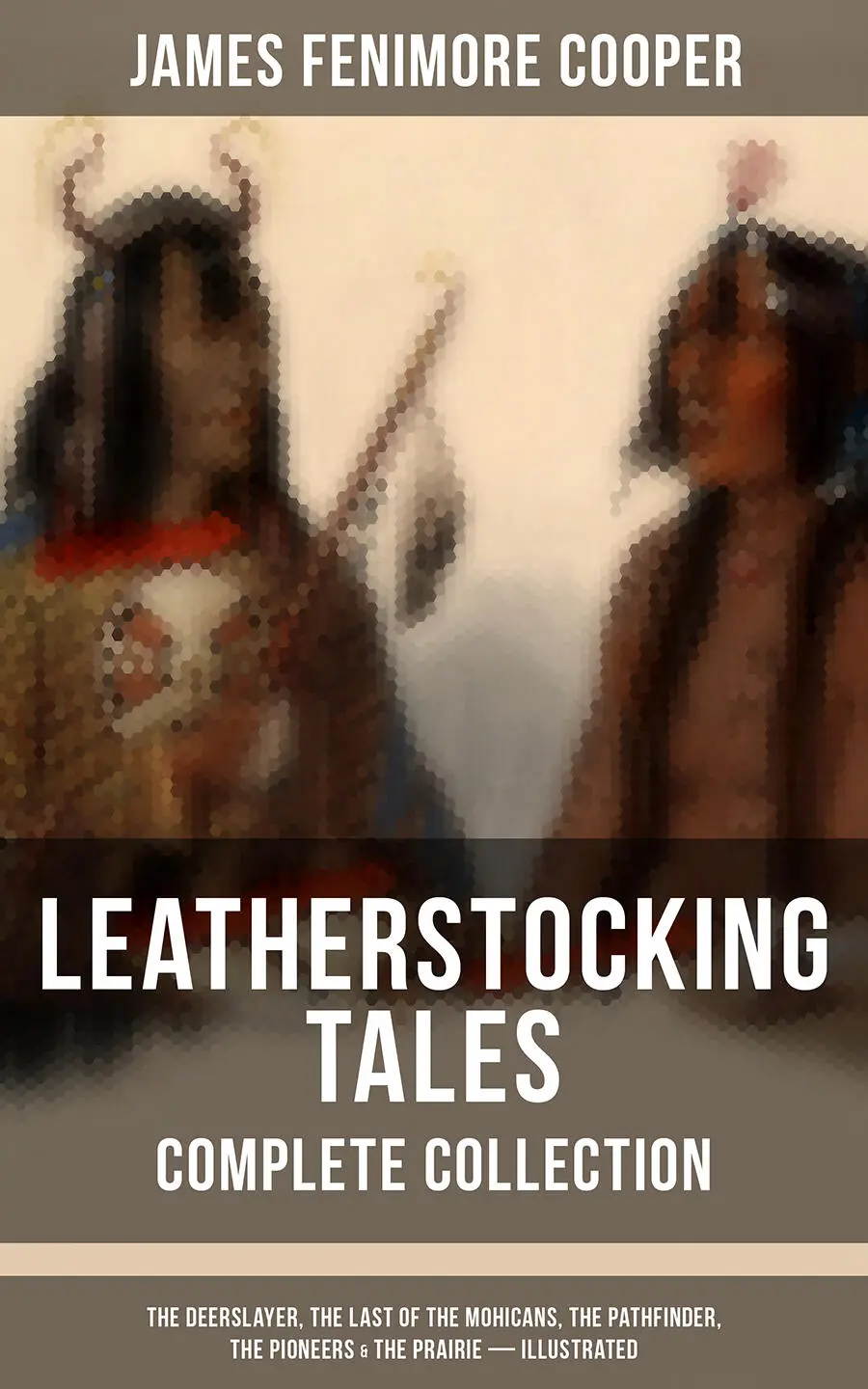
- Название:LEATHERSTOCKING TALES – Complete Collection
- Автор:
- Жанр:
- Год:неизвестен
- ISBN:нет данных
- Рейтинг книги:3 / 5. Голосов: 1
-
Избранное:Добавить в избранное
- Отзывы:
-
Ваша оценка:
LEATHERSTOCKING TALES – Complete Collection: краткое содержание, описание и аннотация
Предлагаем к чтению аннотацию, описание, краткое содержание или предисловие (зависит от того, что написал сам автор книги «LEATHERSTOCKING TALES – Complete Collection»). Если вы не нашли необходимую информацию о книге — напишите в комментариях, мы постараемся отыскать её.
LEATHERSTOCKING TALES – Complete Collection — читать онлайн ознакомительный отрывок
Ниже представлен текст книги, разбитый по страницам. Система сохранения места последней прочитанной страницы, позволяет с удобством читать онлайн бесплатно книгу «LEATHERSTOCKING TALES – Complete Collection», без необходимости каждый раз заново искать на чём Вы остановились. Поставьте закладку, и сможете в любой момент перейти на страницу, на которой закончили чтение.
Интервал:
Закладка:
“My old men would not sit in council over a pale-face until they saw him among them,” answered Rivenoak, looking around him a little ironically; “they said it would be like sitting in council over the winds; they go where they will, and come back as they see fit, and not otherwise. There was one voice that spoke in your favor, Deerslayer, but it was alone, like the song of the wren whose mate has been struck by the hawk.”
“I thank that voice whosever it may have been, Mingo, and will say it was as true a voice as the rest were lying voices. A furlough is as binding on a pale-face, if he be honest, as it is on a red-skin, and was it not so, I would never bring disgrace on the Delawares, among whom I may be said to have received my edication. But words are useless, and lead to braggin’ feelin’s; here I am; act your will on me.”
Rivenoak made a sign of acquiescence, and then a short conference was privately held among the chiefs. As soon as the latter ended, three or four young men fell back from among the armed group, and disappeared. Then it was signified to the prisoner that he was at liberty to go at large on the point, until a council was held concerning his fate. There was more of seeming, than of real confidence, however, in this apparent liberality, inasmuch as the young men mentioned already formed a line of sentinels across the breadth of the point, inland, and escape from any other part was out of the question. Even the canoe was removed beyond this line of sentinels, to a spot where it was considered safe from any sudden attempt. These precautions did not proceed from a failure of confidence, but from the circumstance that the prisoner had now complied with all the required conditions of his parole, and it would have been considered a commendable and honorable exploit to escape from his foes. So nice, indeed, were the distinctions drawn by the savages in cases of this nature, that they often gave their victims a chance to evade the torture, deeming it as creditable to the captors to overtake, or to outwit a fugitive, when his exertions were supposed to be quickened by the extreme jeopardy of his situation, as it was for him to get clear from so much extraordinary vigilance.
Nor was Deerslayer unconscious of, or forgetful, of his rights and of his opportunities. Could he now have seen any probable opening for an escape, the attempt would not have been delayed a minute. But the case seem’d desperate. He was aware of the line of sentinels, and felt the difficulty of breaking through it, unharmed. The lake offered no advantages, as the canoe would have given his foes the greatest facilities for overtaking him; else would he have found it no difficult task to swim as far as the castle. As he walked about the point, he even examined the spot to ascertain if it offered no place of concealment, but its openness, its size, and the hundred watchful glances that were turned towards him, even while those who made them affected not to see him, prevented any such expedient from succeeding. The dread and disgrace of failure had no influence on Deerslayer, who deemed it even a point of honor to reason and feel like a white man, rather than as an Indian, and who felt it a sort of duty to do all he could that did not involve a dereliction from principle, in order to save his life. Still he hesitated about making the effort, for he also felt that he ought to see the chance of success before he committed himself.
In the mean time the business of the camp appeared to proceed in its regular train. The chiefs consulted apart, admitting no one but the Sumach to their councils, for she, the widow of the fallen warrior, had an exclusive right to be heard on such an occasion. The young men strolled about in indolent listlessness, awaiting the result with Indian patience, while the females prepared the feast that was to celebrate the termination of the affair, whether it proved fortunate or otherwise for our hero. No one betrayed feeling, and an indifferent observer, beyond the extreme watchfulness of the sentinels, would have detected no extraordinary movement or sensation to denote the real state of things. Two or three old women put their heads together, and it appeared unfavorably to the prospects of Deerslayer, by their scowling looks, and angry gestures; but a group of Indian girls were evidently animated by a different impulse, as was apparent by stolen glances that expressed pity and regret. In this condition of the camp, an hour soon glided away.
Suspense is perhaps the feeling of all others that is most difficult to be supported. When Deerslayer landed, he fully expected in the course of a few minutes to undergo the tortures of an Indian revenge, and he was prepared to meet his fate manfully; but, the delay proved far more trying than the nearer approach of suffering, and the intended victim began seriously to meditate some desperate effort at escape, as it might be from sheer anxiety to terminate the scene, when he was suddenly summoned, to appear once more in front of his judges, who had already arranged the band in its former order, in readiness to receive him.
“Killer of the Deer,” commenced Rivenoak, as soon as his captive stood before him, “my aged men have listened to wise words; they are ready to speak. You are a man whose fathers came from beyond the rising sun; we are children of the setting sun; we turn our faces towards the Great Sweet Lakes, when we look towards our villages. It may be a wide country and full of riches towards the morning, but it is very pleasant towards the evening. We love most to look in that direction. When we gaze at the east, we feel afraid, canoe after canoe bringing more and more of your people in the track of the sun, as if their land was so full as to run over. The red men are few already; they have need of help. One of our best lodges has lately been emptied by the death of its master; it will be a long time before his son can grow big enough to sit in his place. There is his widow; she will want venison to feed her and her children, for her sons are yet like the young of the robin, before they quit the nest. By your hand has this great calamity befallen her. She has two duties; one to le Loup Cervier, and one to his children. Scalp for scalp, life for life, blood for blood, is one law; to feed her young, another. We know you, Killer of the Deer. You are honest; when you say a thing, it is so. You have but one tongue, and that is not forked, like a snake’s. Your head is never hid in the grass; all can see it. What you say, that will you do. You are just. When you have done wrong, it is your wish to do right, again, as soon as you can. Here, is the Sumach; she is alone in her wigwam, with children crying around her for food — yonder is a rifle; it is loaded and ready to be fired. Take the gun, go forth and shoot a deer; bring the venison and lay it before the widow of Le Loup Cervier, feed her children; call yourself her husband. After which, your heart will no longer be Delaware, but Huron; le Sumach’s ears will not hear the cries of her children; my people will count the proper number of warriors.”
“I fear’d this, Rivenoak,” answered Deerslayer, when the other had ceased speaking —“yes, I did dread that it would come to this. Howsever, the truth is soon told, and that will put an end to all expectations on this head. Mingo, I’m white and Christian born; ‘t would ill become me to take a wife, under red-skin forms, from among heathen. That which I wouldn’t do, in peaceable times, and under a bright sun, still less would I do behind clouds, in order to save my life. I may never marry; most likely Providence in putting me up here in the woods, has intended I should live single, and without a lodge of my own; but should such a thing come to pass, none but a woman of my own colour and gifts shall darken the door of my wigwam. As for feeding the young of your dead warrior, I would do that cheerfully, could it be done without discredit; but it cannot, seeing that I can never live in a Huron village. Your own young men must find the Sumach in venison, and the next time she marries, let her take a husband whose legs are not long enough to overrun territory that don’t belong to him. We fou’t a fair battle, and he fell; in this there is nothin’ but what a brave expects, and should be ready to meet. As for getting a Mingo heart, as well might you expect to see gray hairs on a boy, or the blackberry growing on the pine. No — no Huron; my gifts are white so far as wives are consarned; it is Delaware, in all things touchin’ Injins.”
Читать дальшеИнтервал:
Закладка:
Похожие книги на «LEATHERSTOCKING TALES – Complete Collection»
Представляем Вашему вниманию похожие книги на «LEATHERSTOCKING TALES – Complete Collection» списком для выбора. Мы отобрали схожую по названию и смыслу литературу в надежде предоставить читателям больше вариантов отыскать новые, интересные, ещё непрочитанные произведения.










Обсуждение, отзывы о книге «LEATHERSTOCKING TALES – Complete Collection» и просто собственные мнения читателей. Оставьте ваши комментарии, напишите, что Вы думаете о произведении, его смысле или главных героях. Укажите что конкретно понравилось, а что нет, и почему Вы так считаете.