James Cooper - LEATHERSTOCKING TALES – Complete Collection
Здесь есть возможность читать онлайн «James Cooper - LEATHERSTOCKING TALES – Complete Collection» — ознакомительный отрывок электронной книги совершенно бесплатно, а после прочтения отрывка купить полную версию. В некоторых случаях можно слушать аудио, скачать через торрент в формате fb2 и присутствует краткое содержание. Жанр: unrecognised, на английском языке. Описание произведения, (предисловие) а так же отзывы посетителей доступны на портале библиотеки ЛибКат.
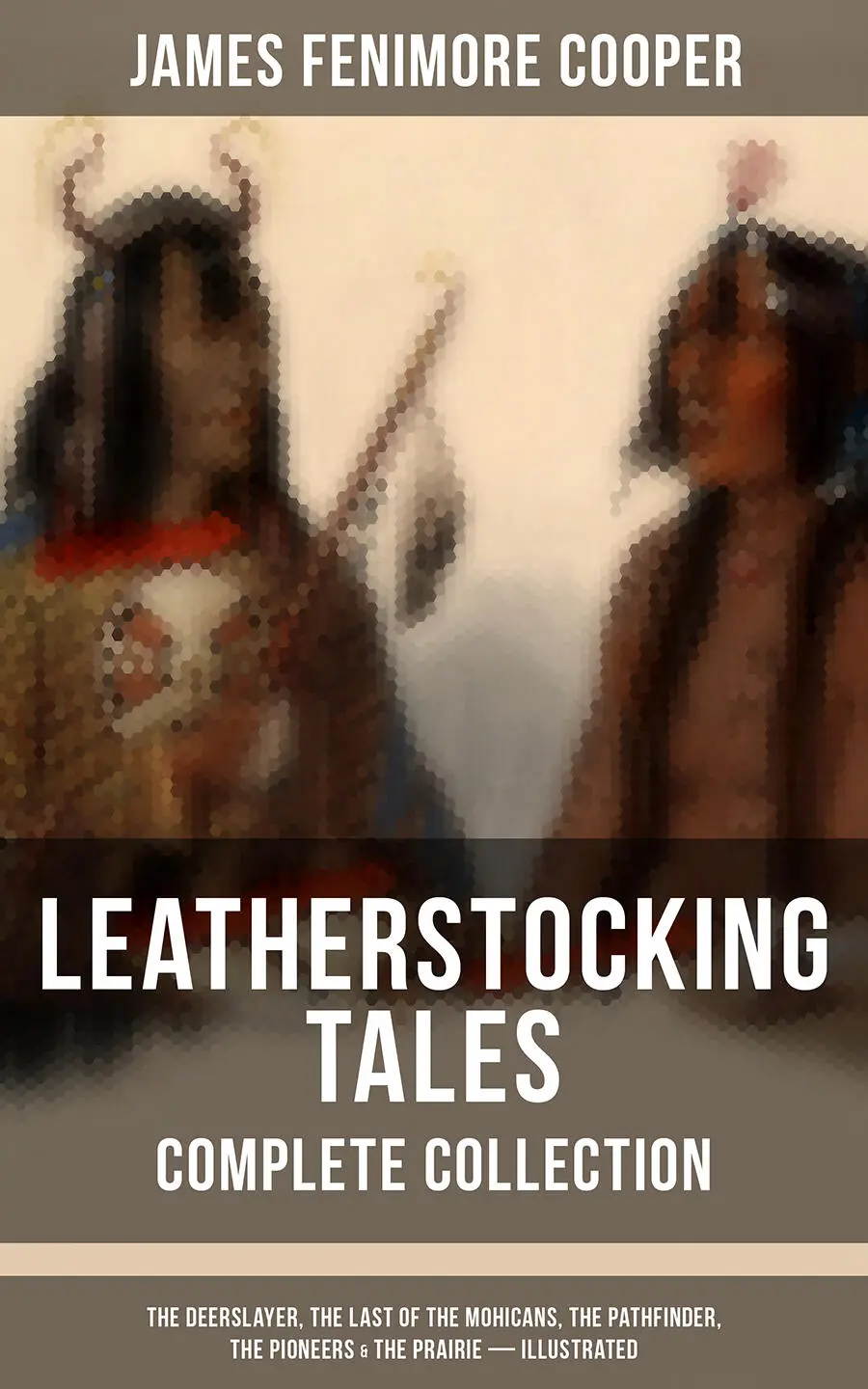
- Название:LEATHERSTOCKING TALES – Complete Collection
- Автор:
- Жанр:
- Год:неизвестен
- ISBN:нет данных
- Рейтинг книги:3 / 5. Голосов: 1
-
Избранное:Добавить в избранное
- Отзывы:
-
Ваша оценка:
LEATHERSTOCKING TALES – Complete Collection: краткое содержание, описание и аннотация
Предлагаем к чтению аннотацию, описание, краткое содержание или предисловие (зависит от того, что написал сам автор книги «LEATHERSTOCKING TALES – Complete Collection»). Если вы не нашли необходимую информацию о книге — напишите в комментариях, мы постараемся отыскать её.
LEATHERSTOCKING TALES – Complete Collection — читать онлайн ознакомительный отрывок
Ниже представлен текст книги, разбитый по страницам. Система сохранения места последней прочитанной страницы, позволяет с удобством читать онлайн бесплатно книгу «LEATHERSTOCKING TALES – Complete Collection», без необходимости каждый раз заново искать на чём Вы остановились. Поставьте закладку, и сможете в любой момент перейти на страницу, на которой закончили чтение.
Интервал:
Закладка:
The Hurons had been divided in their opinions concerning the probability of their captive’s return. Most among them, indeed, had not expected it possible for a pale-face to come back voluntarily, and meet the known penalties of an Indian torture; but a few of the seniors expected better things from one who had already shown himself so singularly cool, brave and upright. The party had come to its decision, however, less in the expectation of finding the pledge redeemed, than in the hope of disgracing the Delawares by casting into their teeth the delinquency of one bred in their villages. They would have greatly preferred that Chingachgook should be their prisoner, and prove the traitor, but the pale-face scion of the hated stock was no bad substitute for their purposes, failing in their designs against the ancient stem. With a view to render their triumph as signal as possible, in the event of the hour’s passing without the reappearance of the hunter, all the warriors and scouts of the party had been called in, and the whole band, men, women and children, was now assembled at this single point, to be a witness of the expected scene. As the castle was in plain view, and by no means distant, it was easily watched by daylight, and, it being thought that its inmates were now limited to Hurry, the Delaware and the two girls, no apprehensions were felt of their being able to escape unseen. A large raft having a breast-work of logs had been prepared, and was in actual readiness to be used against either Ark or castle as occasion might require, so soon as the fate of Deerslayer was determined, the seniors of the party having come to the opinion that it was getting to be hazardous to delay their departure for Canada beyond the coming night. In short the band waited merely to dispose of this single affair, ere it brought matters with those in the Castle to a crisis, and prepared to commence its retreat towards the distant waters of Ontario.
It was an imposing scene into which Deerslayer now found himself advancing. All the older warriors were seated on the trunk of the fallen tree, waiting his approach with grave decorum. On the right stood the young men, armed, while left was occupied by the women and children. In the centre was an open space of considerable extent, always canopied by trees, but from which the underbrush, dead wood, and other obstacles had been carefully removed. The more open area had probably been much used by former parties, for this was the place where the appearance of a sward was the most decided. The arches of the woods, even at high noon, cast their sombre shadows on the spot, which the brilliant rays of the sun that struggled through the leaves contributed to mellow, and, if such an expression can be used, to illuminate. It was probably from a similar scene that the mind of man first got its idea of the effects of gothic tracery and churchly hues, this temple of nature producing some such effect, so far as light and shadow were concerned, as the well-known offspring of human invention.
As was not unusual among the tribes and wandering bands of the Aborigines, two chiefs shared, in nearly equal degrees, the principal and primitive authority that was wielded over these children of the forest. There were several who might claim the distinction of being chief men, but the two in question were so much superior to all the rest in influence, that, when they agreed, no one disputed their mandates, and when they were divided the band hesitated, like men who had lost their governing principle of action. It was also in conformity with practice, perhaps we might add in conformity with nature, that one of the chiefs was indebted to his mind for his influence, whereas the other owed his distinction altogether to qualities that were physical. One was a senior, well known for eloquence in debate, wisdom in council, and prudence in measures; while his great competitor, if not his rival, was a brave distinguished in war, notorious for ferocity, and remarkable, in the way of intellect, for nothing but the cunning and expedients of the war path. The first was Rivenoak, who has already been introduced to the reader, while the last was called le Panth’ere, in the language of the Canadas, or the Panther, to resort to the vernacular of the English colonies. The appellation of the fighting chief was supposed to indicate the qualities of the warrior, agreeably to a practice of the red man’s nomenclature, ferocity, cunning and treachery being, perhaps, the distinctive features of his character. The title had been received from the French, and was prized so much the more from that circumstance, the Indian submitting profoundly to the greater intelligence of his pale-face allies, in most things of this nature. How well the sobriquet was merited will be seen in the sequel.
Rivenoak and the Panther sat side by side awaiting the approach of their prisoner, as Deerslayer put his moccasined foot on the strand, nor did either move, or utter a syllable, until the young man had advanced into the centre of the area, and proclaimed his presence with his voice. This was done firmly, though in the simple manner that marked the character of the individual.
“Here I am, Mingos,” he said, in the dialect of the Delawares, a language that most present understood; “here I am, and there is the sun. One is not more true to the laws of natur’, than the other has proved true to his word. I am your prisoner; do with me what you please. My business with man and ‘arth is settled; nothing remains now but to meet the white man’s God, accordin’ to a white man’s duties and gifts.”
A murmur of approbation escaped even the women at this address, and, for an instant there was a strong and pretty general desire to adopt into the tribe one who owned so brave a spirit. Still there were dissenters from this wish, among the principal of whom might be classed the Panther, and his sister, le Sumach, so called from the number of her children, who was the widow of le Loup Cervier, now known to have fallen by the hand of the captive. Native ferocity held one in subjection, while the corroding passion of revenge prevented the other from admitting any gentler feeling at the moment. Not so with Rivenoak. This chief arose, stretched his arm before him in a gesture of courtesy, and paid his compliments with an ease and dignity that a prince might have envied. As, in that band, his wisdom and eloquence were confessedly without rivals, he knew that on himself would properly fall the duty of first replying to the speech of the pale-face.
“Pale-face, you are honest,” said the Huron orator. “My people are happy in having captured a man, and not a skulking fox. We now know you; we shall treat you like a brave. If you have slain one of our warriors, and helped to kill others, you have a life of your own ready to give away in return. Some of my young men thought that the blood of a pale-face was too thin; that it would refuse to run under the Huron knife. You will show them it is not so; your heart is stout, as well as your body. It is a pleasure to make such a prisoner; should my warriors say that the death of le Loup Cervier ought not to be forgotten, and that he cannot travel towards the land of spirits alone, that his enemy must be sent to overtake him, they will remember that he fell by the hand of a brave, and send you after him with such signs of our friendship as shall not make him ashamed to keep your company. I have spoken; you know what I have said.”
“True enough, Mingo, all true as the gospel,” returned the simple minded hunter, “you have spoken, and I do know not only what you have said, but, what is still more important, what you mean. I dare to say your warrior the Lynx was a stout-hearted brave, and worthy of your fri’ndship and respect, but I do not feel unworthy to keep his company, without any passport from your hands. Nevertheless, here I am, ready to receive judgment from your council, if, indeed, the matter was not detarmined among you afore I got back.”
Читать дальшеИнтервал:
Закладка:
Похожие книги на «LEATHERSTOCKING TALES – Complete Collection»
Представляем Вашему вниманию похожие книги на «LEATHERSTOCKING TALES – Complete Collection» списком для выбора. Мы отобрали схожую по названию и смыслу литературу в надежде предоставить читателям больше вариантов отыскать новые, интересные, ещё непрочитанные произведения.








Обсуждение, отзывы о книге «LEATHERSTOCKING TALES – Complete Collection» и просто собственные мнения читателей. Оставьте ваши комментарии, напишите, что Вы думаете о произведении, его смысле или главных героях. Укажите что конкретно понравилось, а что нет, и почему Вы так считаете.