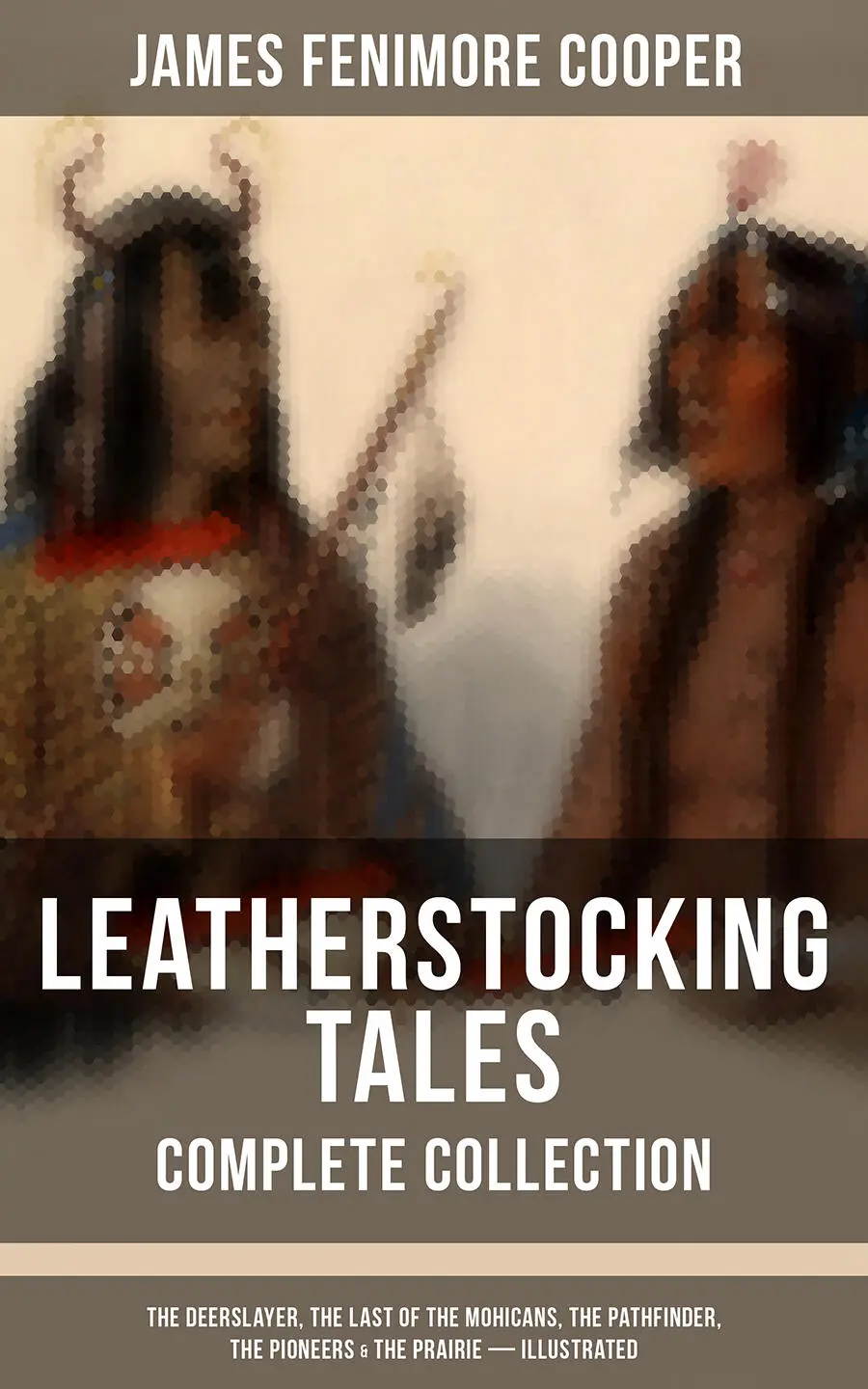
James Cooper - LEATHERSTOCKING TALES – Complete Collection
Здесь есть возможность читать онлайн «James Cooper - LEATHERSTOCKING TALES – Complete Collection» — ознакомительный отрывок электронной книги совершенно бесплатно, а после прочтения отрывка купить полную версию. В некоторых случаях можно слушать аудио, скачать через торрент в формате fb2 и присутствует краткое содержание. Жанр: unrecognised, на английском языке. Описание произведения, (предисловие) а так же отзывы посетителей доступны на портале библиотеки ЛибКат.
- Название:LEATHERSTOCKING TALES – Complete Collection
- Автор:
- Жанр:
- Год:неизвестен
- ISBN:нет данных
- Рейтинг книги:3 / 5. Голосов: 1
-
Избранное:Добавить в избранное
- Отзывы:
-
Ваша оценка:
LEATHERSTOCKING TALES – Complete Collection: краткое содержание, описание и аннотация
Предлагаем к чтению аннотацию, описание, краткое содержание или предисловие (зависит от того, что написал сам автор книги «LEATHERSTOCKING TALES – Complete Collection»). Если вы не нашли необходимую информацию о книге — напишите в комментариях, мы постараемся отыскать её.
LEATHERSTOCKING TALES – Complete Collection — читать онлайн ознакомительный отрывок
Ниже представлен текст книги, разбитый по страницам. Система сохранения места последней прочитанной страницы, позволяет с удобством читать онлайн бесплатно книгу «LEATHERSTOCKING TALES – Complete Collection», без необходимости каждый раз заново искать на чём Вы остановились. Поставьте закладку, и сможете в любой момент перейти на страницу, на которой закончили чтение.
Интервал:
Закладка:
“To-morrow noon; not a minute afore; and you may depend on it, Judith, I shan’t quit what I call Christian company, to go and give myself up to them vagabonds, an instant sooner than is downright necessary. They begin to fear a visit from the garrisons, and wouldn’t lengthen the time a moment, and it’s pretty well understood atween us that, should I fail in my ar’n’d, the torments are to take place when the sun begins to fall, that they may strike upon their home trail as soon as it is dark.”
This was said solemnly, as if the thought of what was believed to be in reserve duly weighed on the prisoner’s mind, and yet so simply, and without a parade of suffering, as rather to repel than to invite any open manifestations of sympathy.
“Are they bent on revenging their losses?” Judith asked faintly, her own high spirit yielding to the influence of the other’s quiet but dignified integrity of purpose.
“Downright, if I can judge of Indian inclinations by the symptoms. They think howsever I don’t suspect their designs, I do believe, but one that has lived so long among men of red-skin gifts, is no more likely to be misled in Injin feelin’s, than a true hunter is like to lose his trail, or a stanch hound his scent. My own judgment is greatly ag’in my own escape, for I see the women are a good deal enraged on behalf of Hist, though I say it, perhaps, that shouldn’t say it, seein’ that I had a considerable hand myself in getting the gal off. Then there was a cruel murder in their camp last night, and that shot might just as well have been fired into my breast. Howsever, come what will, the Sarpent and his wife will be safe, and that is some happiness in any case.”
“Oh! Deerslayer, they will think better of this, since they have given you until to-morrow noon to make up your mind!”
“I judge not, Judith; yes, I judge not. An Injin is an Injin, gal, and it’s pretty much hopeless to think of swarving him, when he’s got the scent and follows it with his nose in the air. The Delawares, now, are a half Christianized tribe — not that I think such sort of Christians much better than your whole blooded onbelievers — but, nevertheless, what good half Christianizing can do to a man, some among ’em have got, and yet revenge clings to their hearts like the wild creepers here to the tree! Then, I slew one of the best and boldest of their warriors, they say, and it is too much to expect that they should captivate the man who did this deed, in the very same scouting on which it was performed, and they take no account of the matter. Had a month, or so, gone by, their feelin’s would have been softened down, and we might have met in a more friendly way, but it is as it is. Judith, this is talking of nothing but myself, and my own consarns, when you have had trouble enough, and may want to consult a fri’nd a little about your own matters. Is the old man laid in the water, where I should think his body would like to rest?”
“It is, Deerslayer,” answered Judith, almost inaudibly. “That duty has just been performed. You are right in thinking that I wish to consult a friend; and that friend is yourself. Hurry Harry is about to leave us; when he is gone, and we have got a little over the feelings of this solemn office, I hope you will give me an hour alone. Hetty and I are at a loss what to do.”
“That’s quite nat’ral, coming as things have, suddenly and fearfully. But here’s the Ark, and we’ll say more of this when there is a better opportunity.”
Chapter XXIII
Table of Contents
“The winde is great upon the highest hilles;
The quiet life is in the dale below;
Who tread on ice shall slide against their willes;
They want not cares, that curious arts should know.
Who lives at ease and can content him so,
Is perfect wise, and sets us all to schoole:
Who hates this lore may well be called a foole.”
—Thomas Churchyard, “Shore’s Wife,” xlvii
The meeting between Deerslayer and his friends in the Ark was grave and anxious. The two Indians, in particular, read in his manner that he was not a successful fugitive, and a few sententious words sufficed to let them comprehend the nature of what their friend had termed his ‘furlough.’ Chingachgook immediately became thoughtful, while Hist, as usual, had no better mode of expressing her sympathy than by those little attentions which mark the affectionate manner of woman.
In a few minutes, however, something like a general plan for the proceedings of the night was adopted, and to the eye of an uninstructed observer things would be thought to move in their ordinary train. It was now getting to be dark, and it was decided to sweep the Ark up to the castle, and secure it in its ordinary berth. This decision was come to, in some measure on account of the fact that all the canoes were again in the possession of their proper owners, but principally, from the security that was created by the representations of Deerslayer. He had examined the state of things among the Hurons, and felt satisfied that they meditated no further hostilities during the night, the loss they had met having indisposed them to further exertions for the moment. Then, he had a proposition to make; the object of his visit; and, if this were accepted, the war would at once terminate between the parties; and it was improbable that the Hurons would anticipate the failure of a project on which their chiefs had apparently set their hearts, by having recourse to violence previously to the return of their messenger. As soon as the Ark was properly secured, the different members of the party occupied themselves in their several peculiar manners, haste in council, or in decision, no more characterizing the proceedings of these border whites, than it did those of their red neighbors. The women busied themselves in preparations for the evening meal, sad and silent, but ever attentive to the first wants of nature. Hurry set about repairing his moccasins, by the light of a blazing knot; Chingachgook seated himself in gloomy thought, while Deerslayer proceeded, in a manner equally free from affectation and concern, to examine ‘Killdeer’, the rifle of Hutter that has been already mentioned, and which subsequently became so celebrated, in the hands of the individual who was now making a survey of its merits. The piece was a little longer than usual, and had evidently been turned out from the work shops of some manufacturer of a superior order. It had a few silver ornaments, though, on the whole, it would have been deemed a plain piece by most frontier men, its great merit consisting in the accuracy of its bore, the perfection of the details, and the excellence of the metal. Again and again did the hunter apply the breech to his shoulder, and glance his eye along the sights, and as often did he poise his body and raise the weapon slowly, as if about to catch an aim at a deer, in order to try the weight, and to ascertain its fitness for quick and accurate firing. All this was done, by the aid of Hurry’s torch, simply, but with an earnestness and abstraction that would have been found touching by any spectator who happened to know the real situation of the man.
“Tis a glorious we’pon, Hurry!” Deerslayer at length exclaimed, “and it may be thought a pity that it has fallen into the hands of women. The hunters have told me of its expl’ites, and by all I have heard, I should set it down as sartain death in exper’enced hands. Hearken to the tick of this lock — a wolf trap has’n’t a livelier spring; pan and cock speak together, like two singing masters undertaking a psalm in meetin’. I never did see so true a bore, Hurry, that’s sartain!”
“Ay, Old Tom used to give the piece a character, though he wasn’t the man to particularize the ra’al natur’ of any sort of fire arms, in practise,” returned March, passing the deer’s thongs through the moccasin with the coolness of a cobbler. “He was no marksman, that we must all allow; but he had his good p’ints, as well as his bad ones. I have had hopes that Judith might consait the idee of giving Killdeer to me.”
Читать дальшеИнтервал:
Закладка:
Похожие книги на «LEATHERSTOCKING TALES – Complete Collection»
Представляем Вашему вниманию похожие книги на «LEATHERSTOCKING TALES – Complete Collection» списком для выбора. Мы отобрали схожую по названию и смыслу литературу в надежде предоставить читателям больше вариантов отыскать новые, интересные, ещё непрочитанные произведения.











Обсуждение, отзывы о книге «LEATHERSTOCKING TALES – Complete Collection» и просто собственные мнения читателей. Оставьте ваши комментарии, напишите, что Вы думаете о произведении, его смысле или главных героях. Укажите что конкретно понравилось, а что нет, и почему Вы так считаете.