James Cooper - LEATHERSTOCKING TALES – Complete Collection
Здесь есть возможность читать онлайн «James Cooper - LEATHERSTOCKING TALES – Complete Collection» — ознакомительный отрывок электронной книги совершенно бесплатно, а после прочтения отрывка купить полную версию. В некоторых случаях можно слушать аудио, скачать через торрент в формате fb2 и присутствует краткое содержание. Жанр: unrecognised, на английском языке. Описание произведения, (предисловие) а так же отзывы посетителей доступны на портале библиотеки ЛибКат.
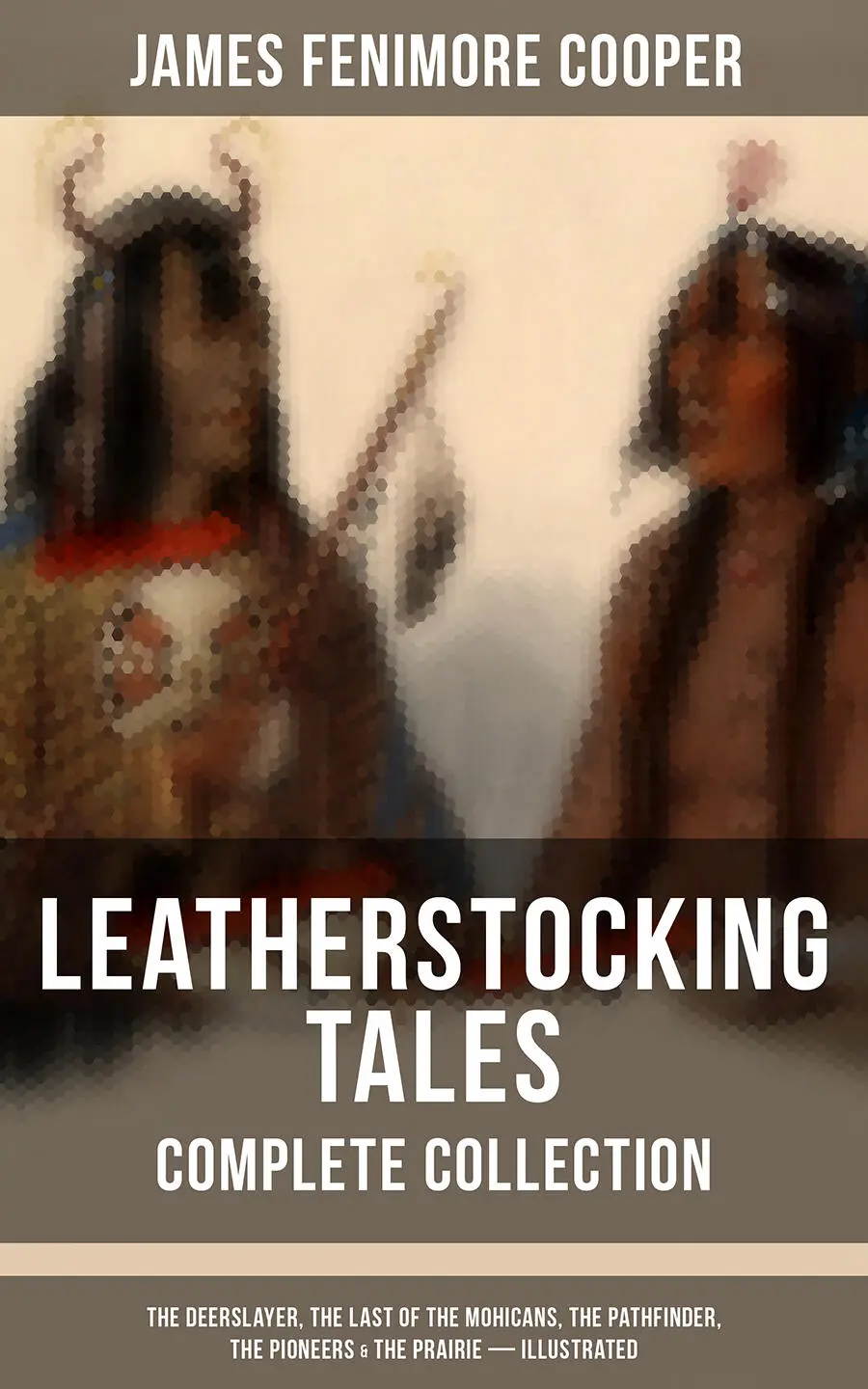
- Название:LEATHERSTOCKING TALES – Complete Collection
- Автор:
- Жанр:
- Год:неизвестен
- ISBN:нет данных
- Рейтинг книги:3 / 5. Голосов: 1
-
Избранное:Добавить в избранное
- Отзывы:
-
Ваша оценка:
LEATHERSTOCKING TALES – Complete Collection: краткое содержание, описание и аннотация
Предлагаем к чтению аннотацию, описание, краткое содержание или предисловие (зависит от того, что написал сам автор книги «LEATHERSTOCKING TALES – Complete Collection»). Если вы не нашли необходимую информацию о книге — напишите в комментариях, мы постараемся отыскать её.
LEATHERSTOCKING TALES – Complete Collection — читать онлайн ознакомительный отрывок
Ниже представлен текст книги, разбитый по страницам. Система сохранения места последней прочитанной страницы, позволяет с удобством читать онлайн бесплатно книгу «LEATHERSTOCKING TALES – Complete Collection», без необходимости каждый раз заново искать на чём Вы остановились. Поставьте закладку, и сможете в любой момент перейти на страницу, на которой закончили чтение.
Интервал:
Закладка:
“Neither, Judith — neither one nor t’other. The Mingos are Mingos still, and will live and die Mingos; it is not likely their natur’s will ever undergo much improvement. Well! They’ve their gifts, and we’ve our’n, Judith, and it doesn’t much become either to speak ill of what the Lord has created; though, if the truth must be said, I find it a sore trial to think kindly or to talk kindly of them vagabonds. As for outwitting them, that might have been done, and it was done, too, atween the Sarpent, yonder, and me, when we were on the trail of Hist —” here the hunter stopped to laugh in his own silent fashion —“but it’s no easy matter to sarcumvent the sarcumvented. Even the fa’ans get to know the tricks of the hunters afore a single season is over, and an Indian whose eyes have once been opened by a sarcumvention never shuts them ag’in in precisely the same spot. I’ve known whites to do that, but never a red-skin. What they l’arn comes by practice, and not by books, and of all schoolmasters exper’ence gives lessons that are the longest remembered.”
“All this is true, Deerslayer, but if you have not escaped from the savages, how came you here?”
“That’s a nat’ral question, and charmingly put. You are wonderful handsome this evening, Judith, or Wild Rose, as the Sarpent calls you, and I may as well say it, since I honestly think it! You may well call them Mingos, savages too, for savage enough do they feel, and savage enough will they act, if you once give them an opportunity. They feel their loss here, in the late skrimmage, to their hearts’ cores, and are ready to revenge it on any creatur’ of English blood that may fall in their way. Nor, for that matter do I much think they would stand at taking their satisfaction out of a Dutch man.”
“They have killed father; that ought to satisfy their wicked cravings for blood,” observed Hetty reproachfully.
“I know it, gal — I know the whole story — partly from what I’ve seen from the shore, since they brought me up from the point, and partly from their threats ag’in myself, and their other discourse. Well, life is unsartain at the best, and we all depend on the breath of our nostrils for it, from day to day. If you’ve lost a staunch fri’nd, as I make no doubt you have, Providence will raise up new ones in his stead, and since our acquaintance has begun in this oncommon manner, I shall take it as a hint that it will be a part of my duty in futur’, should the occasion offer, to see you don’t suffer for want of food in the wigwam. I can’t bring the dead to life, but as to feeding the living, there’s few on all this frontier can outdo me, though I say it in the way of pity and consolation, like, and in no particular, in the way of boasting.”
“We understand you, Deerslayer,” returned Judith, hastily, “and take all that falls from your lips, as it is meant, in kindness and friendship. Would to Heaven all men had tongues as true, and hearts as honest!”
“In that respect men do differ, of a sartainty, Judith. I’ve known them that wasn’t to be trusted any farther than you can see them; and others ag’in whose messages, sent with a small piece of wampum, perhaps, might just as much be depended on, as if the whole business was finished afore your face. Yes, Judith, you never said truer word, than when you said some men might be depended on, and other some might not.”
“You are an unaccountable being, Deerslayer,” returned the girl, not a little puzzled with the childish simplicity of character that the hunter so often betrayed — a simplicity so striking that it frequently appeared to place him nearly on a level with the fatuity of poor Hetty, though always relieved by the beautiful moral truth that shone through all that this unfortunate girl both said and did —“You are a most unaccountable man, and I often do not know how to understand you. But never mind, just now; you have forgotten to tell us by what means you are here.”
“I!— Oh! That’s not very onaccountable, if I am myself, Judith. I’m out on furlough.”
“Furlough!— That word has a meaning among the soldiers that I understand; but I cannot tell what it signifies when used by a prisoner.”
“It means just the same. You’re right enough; the soldiers do use it, and just in the same way as I use it. A furlough is when a man has leave to quit a camp or a garrison for a sartain specified time; at the end of which he is to come back and shoulder his musket, or submit to his torments, just as he may happen to be a soldier, or a captyve. Being the last, I must take the chances of a prisoner.”
“Have the Hurons suffered you to quit them in this manner, without watch or guard.”
“Sartain — I woul’n’t have come in any other manner, unless indeed it had been by a bold rising, or a sarcumvention.”
“What pledge have they that you will ever return?”
“My word,” answered the hunter simply. “Yes, I own I gave ’em that, and big fools would they have been to let me come without it! Why in that case, I shouldn’t have been obliged to go back and ondergo any deviltries their fury may invent, but might have shouldered my rifle, and made the best of my way to the Delaware villages. But, Lord! Judith, they know’d this, just as well as you and I do, and would no more let me come away, without a promise to go back, than they would let the wolves dig up the bones of their fathers!”
“Is it possible you mean to do this act of extraordinary self-destruction and recklessness?”
“Anan!”
“I ask if it can be possible that you expect to be able to put yourself again in the power of such ruthless enemies, by keeping your word.”
Deerslayer looked at his fair questioner for a moment with stern displeasure. Then the expression of his honest and guileless face suddenly changed, lighting as by a quick illumination of thought, after which he laughed in his ordinary manner.
“I didn’t understand you, at first, Judith; no, I didn’t! You believe that Chingachgook and Hurry Harry won’t suffer it; but you don’t know mankind thoroughly yet, I see. The Delaware would be the last man on ‘arth to offer any objections to what he knows is a duty, and, as for March, he doesn’t care enough about any creatur’ but himself to spend many words on such a subject. If he did, ‘twould make no great difference howsever; but not he, for he thinks more of his gains than of even his own word. As for my promises, or your’n, Judith, or any body else’s, they give him no consarn. Don’t be under any oneasiness, therefore, gal; I shall be allowed to go back according to the furlough; and if difficulties was made, I’ve not been brought up, and edicated as one may say, in the woods, without knowing how to look ’em down.”
Judith made no answer for some little time. All her feelings as a woman, and as a woman who, for the first time in her life was beginning to submit to that sentiment which has so much influence on the happiness or misery of her sex, revolted at the cruel fate that she fancied Deerslayer was drawing down upon himself, while the sense of right, which God has implanted in every human breast, told her to admire an integrity as indomitable and as unpretending as that which the other so unconsciously displayed. Argument, she felt, would be useless, nor was she at that moment disposed to lessen the dignity and high principle that were so striking in the intentions of the hunter, by any attempt to turn him from his purpose. That something might yet occur to supersede the necessity for this self immolation she tried to hope, and then she proceeded to ascertain the facts in order that her own conduct might be regulated by her knowledge of circumstances.
“When is your furlough out, Deerslayer,” she asked, after both canoes were heading towards the Ark, and moving, with scarcely a perceptible effort of the paddles, through the water.
Читать дальшеИнтервал:
Закладка:
Похожие книги на «LEATHERSTOCKING TALES – Complete Collection»
Представляем Вашему вниманию похожие книги на «LEATHERSTOCKING TALES – Complete Collection» списком для выбора. Мы отобрали схожую по названию и смыслу литературу в надежде предоставить читателям больше вариантов отыскать новые, интересные, ещё непрочитанные произведения.









Обсуждение, отзывы о книге «LEATHERSTOCKING TALES – Complete Collection» и просто собственные мнения читателей. Оставьте ваши комментарии, напишите, что Вы думаете о произведении, его смысле или главных героях. Укажите что конкретно понравилось, а что нет, и почему Вы так считаете.