Dante Alighieri - The Divine Comedy
Здесь есть возможность читать онлайн «Dante Alighieri - The Divine Comedy» — ознакомительный отрывок электронной книги совершенно бесплатно, а после прочтения отрывка купить полную версию. В некоторых случаях можно слушать аудио, скачать через торрент в формате fb2 и присутствует краткое содержание. Жанр: unrecognised, на немецком языке. Описание произведения, (предисловие) а так же отзывы посетителей доступны на портале библиотеки ЛибКат.
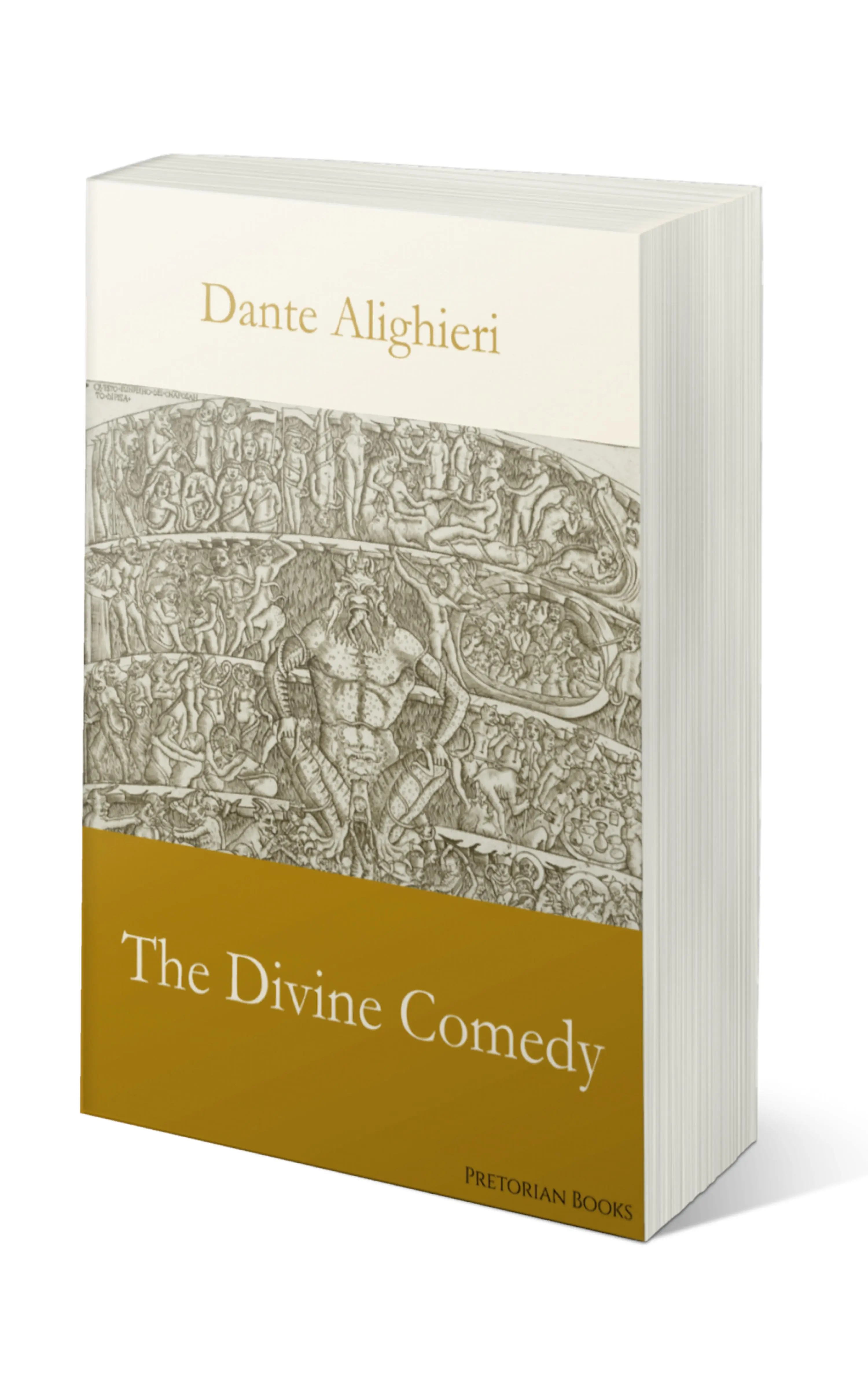
- Название:The Divine Comedy
- Автор:
- Жанр:
- Год:неизвестен
- ISBN:нет данных
- Рейтинг книги:5 / 5. Голосов: 1
-
Избранное:Добавить в избранное
- Отзывы:
-
Ваша оценка:
The Divine Comedy: краткое содержание, описание и аннотация
Предлагаем к чтению аннотацию, описание, краткое содержание или предисловие (зависит от того, что написал сам автор книги «The Divine Comedy»). Если вы не нашли необходимую информацию о книге — напишите в комментариях, мы постараемся отыскать её.
The Divine Comedy — читать онлайн ознакомительный отрывок
Ниже представлен текст книги, разбитый по страницам. Система сохранения места последней прочитанной страницы, позволяет с удобством читать онлайн бесплатно книгу «The Divine Comedy», без необходимости каждый раз заново искать на чём Вы остановились. Поставьте закладку, и сможете в любой момент перейти на страницу, на которой закончили чтение.
Интервал:
Закладка:
With colours and with emblems various mark'd,
On which it seem'd as if their eye did feed.
And when amongst them looking round I came,
A yellow purse I saw with azure wrought,
That wore a lion's countenance and port.
Then still my sight pursuing its career,
Another I beheld, than blood more red.
A goose display of whiter wing than curd.
And one, who bore a fat and azure swine
Pictur'd on his white scrip, addressed me thus:
"What dost thou in this deep? Go now and know,
Since yet thou livest, that my neighbour here
Vitaliano on my left shall sit.
A Paduan with these Florentines am I.
Ofttimes they thunder in mine ears, exclaiming
'O haste that noble knight! he who the pouch
With the three beaks will bring!'" This said, he writh'd
The mouth, and loll'd the tongue out, like an ox
That licks his nostrils. I, lest longer stay
He ill might brook, who bade me stay not long,
Backward my steps from those sad spirits turn'd.
My guide already seated on the haunch
Of the fierce animal I found; and thus
He me encourag'd. "Be thou stout; be bold.
Down such a steep flight must we now descend!
Mount thou before: for that no power the tail
May have to harm thee, I will be i' th' midst."
As one, who hath an ague fit so near,
His nails already are turn'd blue, and he
Quivers all o'er, if he but eye the shade;
Such was my cheer at hearing of his words.
But shame soon interpos'd her threat, who makes
The servant bold in presence of his lord.
I settled me upon those shoulders huge,
And would have said, but that the words to aid
My purpose came not, "Look thou clasp me firm!"
But he whose succour then not first I prov'd,
Soon as I mounted, in his arms aloft,
Embracing, held me up, and thus he spake:
"Geryon! now move thee! be thy wheeling gyres
Of ample circuit, easy thy descent.
Think on th' unusual burden thou sustain'st."
As a small vessel, back'ning out from land,
Her station quits; so thence the monster loos'd,
And when he felt himself at large, turn'd round
There where the breast had been, his forked tail.
Thus, like an eel, outstretch'd at length he steer'd,
Gath'ring the air up with retractile claws.
Not greater was the dread when Phaeton
The reins let drop at random, whence high heaven,
Whereof signs yet appear, was wrapt in flames;
Nor when ill-fated Icarus perceiv'd,
By liquefaction of the scalded wax,
The trusted pennons loosen'd from his loins,
His sire exclaiming loud, "Ill way thou keep'st!"
Than was my dread, when round me on each part
The air I view'd, and other object none
Save the fell beast. He slowly sailing, wheels
His downward motion, unobserv'd of me,
But that the wind, arising to my face,
Breathes on me from below. Now on our right
I heard the cataract beneath us leap
With hideous crash; whence bending down to' explore,
New terror I conceiv'd at the steep plunge:
For flames I saw, and wailings smote mine ear:
So that all trembling close I crouch'd my limbs,
And then distinguish'd, unperceiv'd before,
By the dread torments that on every side
Drew nearer, how our downward course we wound.
As falcon, that hath long been on the wing,
But lure nor bird hath seen, while in despair
The falconer cries, "Ah me! thou stoop'st to earth!"
Wearied descends, and swiftly down the sky
In many an orbit wheels, then lighting sits
At distance from his lord in angry mood;
So Geryon lighting places us on foot
Low down at base of the deep-furrow'd rock,
And, of his burden there discharg'd, forthwith
Sprang forward, like an arrow from the string.
CANTO XVIII
THERE is a place within the depths of hell
Call'd Malebolge, all of rock dark-stain'd
With hue ferruginous, e'en as the steep
That round it circling winds. Right in the midst
Of that abominable region, yawns
A spacious gulf profound, whereof the frame
Due time shall tell. The circle, that remains,
Throughout its round, between the gulf and base
Of the high craggy banks, successive forms
Ten trenches, in its hollow bottom sunk.
As where to guard the walls, full many a foss
Begirds some stately castle, sure defence
Affording to the space within, so here
Were model'd these; and as like fortresses
E'en from their threshold to the brink without,
Are flank'd with bridges; from the rock's low base
Thus flinty paths advanc'd, that 'cross the moles
And dikes, struck onward far as to the gulf,
That in one bound collected cuts them off.
Such was the place, wherein we found ourselves
From Geryon's back dislodg'd. The bard to left
Held on his way, and I behind him mov'd.
On our right hand new misery I saw,
New pains, new executioners of wrath,
That swarming peopled the first chasm. Below
Were naked sinners. Hitherward they came,
Meeting our faces from the middle point,
With us beyond but with a larger stride.
E'en thus the Romans, when the year returns
Of Jubilee, with better speed to rid
The thronging multitudes, their means devise
For such as pass the bridge; that on one side
All front toward the castle, and approach
Saint Peter's fane, on th' other towards the mount.
Each divers way along the grisly rock,
Horn'd demons I beheld, with lashes huge,
That on their back unmercifully smote.
Ah! how they made them bound at the first stripe!
None for the second waited nor the third.
Meantime as on I pass'd, one met my sight
Whom soon as view'd; "Of him," cried I, "not yet
Mine eye hath had his fill." With fixed gaze
I therefore scann'd him. Straight the teacher kind
Paus'd with me, and consented I should walk
Backward a space, and the tormented spirit,
Who thought to hide him, bent his visage down.
But it avail'd him nought; for I exclaim'd:
"Thou who dost cast thy eye upon the ground,
Unless thy features do belie thee much,
Venedico art thou. But what brings thee
Into this bitter seas'ning?" He replied:
"Unwillingly I answer to thy words.
But thy clear speech, that to my mind recalls
The world I once inhabited, constrains me.
Know then 'twas I who led fair Ghisola
To do the Marquis' will, however fame
The shameful tale have bruited. Nor alone
Bologna hither sendeth me to mourn
Rather with us the place is so o'erthrong'd
That not so many tongues this day are taught,
Betwixt the Reno and Savena's stream,
To answer SIPA in their country's phrase.
And if of that securer proof thou need,
Remember but our craving thirst for gold."
Him speaking thus, a demon with his thong
Struck, and exclaim'd, "Away! corrupter! here
Women are none for sale." Forthwith I join'd
My escort, and few paces thence we came
To where a rock forth issued from the bank.
That easily ascended, to the right
Upon its splinter turning, we depart
From those eternal barriers. When arriv'd,
Where underneath the gaping arch lets pass
The scourged souls: "Pause here," the teacher said,
"And let these others miserable, now
Strike on thy ken, faces not yet beheld,
For that together they with us have walk'd."
From the old bridge we ey'd the pack, who came
From th' other side towards us, like the rest,
Excoriate from the lash. My gentle guide,
By me unquestion'd, thus his speech resum'd:
"Behold that lofty shade, who this way tends,
Читать дальшеИнтервал:
Закладка:
Похожие книги на «The Divine Comedy»
Представляем Вашему вниманию похожие книги на «The Divine Comedy» списком для выбора. Мы отобрали схожую по названию и смыслу литературу в надежде предоставить читателям больше вариантов отыскать новые, интересные, ещё непрочитанные произведения.



Обсуждение, отзывы о книге «The Divine Comedy» и просто собственные мнения читателей. Оставьте ваши комментарии, напишите, что Вы думаете о произведении, его смысле или главных героях. Укажите что конкретно понравилось, а что нет, и почему Вы так считаете.