Herman Melville - Moby Dick (English Edition)
Здесь есть возможность читать онлайн «Herman Melville - Moby Dick (English Edition)» — ознакомительный отрывок электронной книги совершенно бесплатно, а после прочтения отрывка купить полную версию. В некоторых случаях можно слушать аудио, скачать через торрент в формате fb2 и присутствует краткое содержание. Жанр: unrecognised, на английском языке. Описание произведения, (предисловие) а так же отзывы посетителей доступны на портале библиотеки ЛибКат.
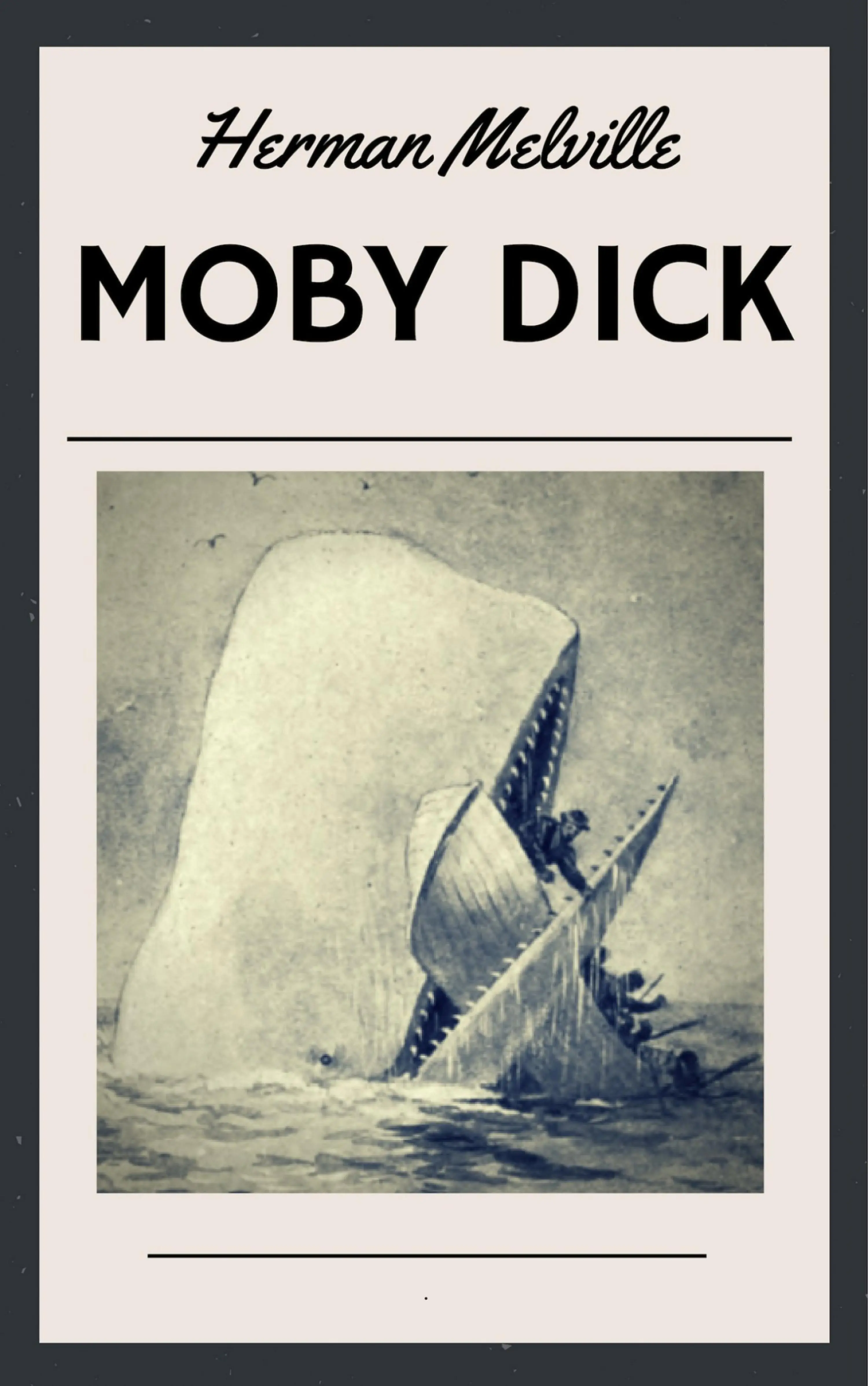
- Название:Moby Dick (English Edition)
- Автор:
- Жанр:
- Год:неизвестен
- ISBN:нет данных
- Рейтинг книги:5 / 5. Голосов: 1
-
Избранное:Добавить в избранное
- Отзывы:
-
Ваша оценка:
Moby Dick (English Edition): краткое содержание, описание и аннотация
Предлагаем к чтению аннотацию, описание, краткое содержание или предисловие (зависит от того, что написал сам автор книги «Moby Dick (English Edition)»). Если вы не нашли необходимую информацию о книге — напишите в комментариях, мы постараемся отыскать её.
"Moby Dick" by Herman Melville was first published in 1851. The book is sailor Ishmael's narrative of the obsessive quest of captain Ahab for revenge on the whale Moby Dick that bit off his leg on his previous voyage. The bestselling novel «Moby Dick» is a classic of world literature and marked a great success for Herman Melville.
Moby Dick (English Edition) — читать онлайн ознакомительный отрывок
Ниже представлен текст книги, разбитый по страницам. Система сохранения места последней прочитанной страницы, позволяет с удобством читать онлайн бесплатно книгу «Moby Dick (English Edition)», без необходимости каждый раз заново искать на чём Вы остановились. Поставьте закладку, и сможете в любой момент перейти на страницу, на которой закончили чтение.
Интервал:
Закладка:
Doubtless one leading reason why the world declines honoring us whalemen, is this: they think that, at best, our vocation amounts to a butchering sort of business; and that when actively engaged therein, we are surrounded by all manner of defilements. Butchers we are, that is true. But butchers, also, and butchers of the bloodiest badge have been all Martial Commanders whom the world invariably delights to honor. And as for the matter of the alleged uncleanliness of our business, ye shall soon be initiated into certain facts hitherto pretty generally unknown, and which, upon the whole, will triumphantly plant the sperm whale-ship at least among the cleanliest things of this tidy earth. But even granting the charge in question to be true; what disordered slippery decks of a whale-ship are comparable to the unspeakable carrion of those battle-fields from which so many soldiers return to drink in all ladies’ plaudits? And if the idea of peril so much enhances the popular conceit of the soldier’s profession; let me assure ye that many a veteran who has freely marched up to a battery, would quickly recoil at the apparition of the sperm whale’s vast tail, fanning into eddies the air over his head. For what are the comprehensible terrors of man compared with the interlinked terrors and wonders of God!
But, though the world scouts at us whale hunters, yet does it unwittingly pay us the profoundest homage; yea, an all-abounding adoration! for almost all the tapers, lamps, and candles that burn round the globe, burn, as before so many shrines, to our glory!
But look at this matter in other lights; weigh it in all sorts of scales; see what we whalemen are, and have been.
Why did the Dutch in De Witt’s time have admirals of their whaling fleets? Why did Louis XVI. of France, at his own personal expense, fit out whaling ships from Dunkirk, and politely invite to that town some score or two of families from our own island of Nantucket? Why did Britain between the years 1750 and 1788 pay to her whalemen in bounties upwards of £1,000,000? And lastly, how comes it that we whalemen of America now outnumber all the rest of the banded whalemen in the world; sail a navy of upwards of seven hundred vessels; manned by eighteen thousand men; yearly consuming 4,000,000 of dollars; the ships worth, at the time of sailing, $20,000,000! and every year importing into our harbors a well reaped harvest of $7,000,000. How comes all this, if there be not something puissant in whaling?
But this is not the half; look again.
I freely assert, that the cosmopolite philosopher cannot, for his life, point out one single peaceful influence, which within the last sixty years has operated more potentially upon the whole broad world, taken in one aggregate, than the high and mighty business of whaling. One way and another, it has begotten events so remarkable in themselves, and so continuously momentous in their sequential issues, that whaling may well be regarded as that Egyptian mother, who bore offspring themselves pregnant from her womb. It would be a hopeless, endless task to catalogue all these things. Let a handful suffice. For many years past the whale-ship has been the pioneer in ferreting out the remotest and least known parts of the earth. She has explored seas and archipelagoes which had no chart, where no Cook or Vancouver had ever sailed. If American and European men-of-war now peacefully ride in once savage harbors, let them fire salutes to the honor and glory of the whale-ship, which originally showed them the way, and first interpreted between them and the savages. They may celebrate as they will the heroes of Exploring Expeditions, your Cooks, your Krusensterns; but I say that scores of anonymous Captains have sailed out of Nantucket, that were as great, and greater than your Cook and your Krusenstern. For in their succourless empty-handedness, they, in the heathenish sharked waters, and by the beaches of unrecorded, javelin islands, battled with virgin wonders and terrors that Cook with all his marines and muskets would not willingly have dared. All that is made such a flourish of in the old South Sea Voyages, those things were but the life-time commonplaces of our heroic Nantucketers. Often, adventures which Vancouver dedicates three chapters to, these men accounted unworthy of being set down in the ship’s common log. Ah, the world! Oh, the world!
Until the whale fishery rounded Cape Horn, no commerce but colonial, scarcely any intercourse but colonial, was carried on between Europe and the long line of the opulent Spanish provinces on the Pacific coast. It was the whaleman who first broke through the jealous policy of the Spanish crown, touching those colonies; and, if space permitted, it might be distinctly shown how from those whalemen at last eventuated the liberation of Peru, Chili, and Bolivia from the yoke of Old Spain, and the establishment of the eternal democracy in those parts.
That great America on the other side of the sphere, Australia, was given to the enlightened world by the whaleman. After its first blunder-born discovery by a Dutchman, all other ships long shunned those shores as pestiferously barbarous; but the whale-ship touched there. The whale-ship is the true mother of that now mighty colony. Moreover, in the infancy of the first Australian settlement, the emigrants were several times saved from starvation by the benevolent biscuit of the whale-ship luckily dropping an anchor in their waters. The uncounted isles of all Polynesia confess the same truth, and do commercial homage to the whale-ship, that cleared the way for the missionary and the merchant, and in many cases carried the primitive missionaries to their first destinations. If that double-bolted land, Japan, is ever to become hospitable, it is the whale-ship alone to whom the credit will be due; for already she is on the threshold.
But if, in the face of all this, you still declare that whaling has no æsthetically noble associations connected with it, then am I ready to shiver fifty lances with you there, and unhorse you with a split helmet every time.
The whale has no famous author, and whaling no famous chronicler, you will say.
The whale no famous author, and whaling no famous chronicler? Who wrote the first account of our Leviathan? Who but mighty Job! And who composed the first narrative of a whaling-voyage? Who, but no less a prince than Alfred the Great, who, with his own royal pen, took down the words from Other, the Norwegian whale-hunter of those times! And who pronounced our glowing eulogy in Parliament? Who, but Edmund Burke!
True enough, but then whalemen themselves are poor devils; they have no good blood in their veins.
No good blood in their veins? They have something better than royal blood there. The grandmother of Benjamin Franklin was Mary Morrel; afterwards, by marriage, Mary Folger, one of the old settlers of Nantucket, and the ancestress to a long line of Folgers and harpooneers—all kith and kin to noble Benjamin—this day darting the barbed iron from one side of the world to the other.
Good again; but then all confess that somehow whaling is not respectable.
Whaling not respectable? Whaling is imperial! By old English statutory law, the whale is declared “a royal fish.” *
Oh, that’s only nominal! The whale himself has never figured in any grand imposing way.
The whale never figured in any grand imposing way? In one of the mighty triumphs given to a Roman general upon his entering the world’s capital, the bones of a whale, brought all the way from the Syrian coast, were the most conspicuous object in the cymballed procession.*
*See subsequent chapters for something more on this head.
Grant it, since you cite it; but, say what you will, there is no real dignity in whaling.
No dignity in whaling? The dignity of our calling the very heavens attest. Cetus is a constellation in the South! No more! Drive down your hat in presence of the Czar, and take it off to Queequeg! No more! I know a man that, in his lifetime, has taken three hundred and fifty whales. I account that man more honorable than that great captain of antiquity who boasted of taking as many walled towns.
Читать дальшеИнтервал:
Закладка:
Похожие книги на «Moby Dick (English Edition)»
Представляем Вашему вниманию похожие книги на «Moby Dick (English Edition)» списком для выбора. Мы отобрали схожую по названию и смыслу литературу в надежде предоставить читателям больше вариантов отыскать новые, интересные, ещё непрочитанные произведения.


Обсуждение, отзывы о книге «Moby Dick (English Edition)» и просто собственные мнения читателей. Оставьте ваши комментарии, напишите, что Вы думаете о произведении, его смысле или главных героях. Укажите что конкретно понравилось, а что нет, и почему Вы так считаете.