Gerald Durrell - The Corfu Trilogy
Здесь есть возможность читать онлайн «Gerald Durrell - The Corfu Trilogy» весь текст электронной книги совершенно бесплатно (целиком полную версию без сокращений). В некоторых случаях можно слушать аудио, скачать через торрент в формате fb2 и присутствует краткое содержание. Год выпуска: 2006, ISBN: 2006, Издательство: Penguin Books, Жанр: Природа и животные, Биографии и Мемуары, на английском языке. Описание произведения, (предисловие) а так же отзывы посетителей доступны на портале библиотеки ЛибКат.
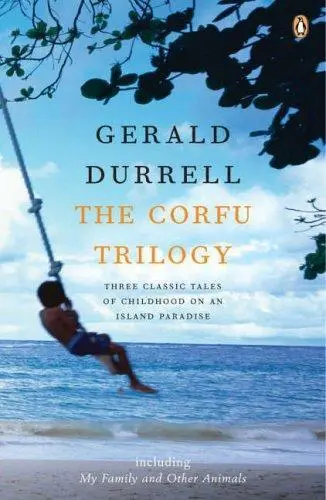
- Название:The Corfu Trilogy
- Автор:
- Издательство:Penguin Books
- Жанр:
- Год:2006
- ISBN:978–0–141–91113–7
- Рейтинг книги:4 / 5. Голосов: 3
-
Избранное:Добавить в избранное
- Отзывы:
-
Ваша оценка:
The Corfu Trilogy: краткое содержание, описание и аннотация
Предлагаем к чтению аннотацию, описание, краткое содержание или предисловие (зависит от того, что написал сам автор книги «The Corfu Trilogy»). Если вы не нашли необходимую информацию о книге — напишите в комментариях, мы постараемся отыскать её.
Durrell dedicated his life to the conservation of wildlife and it is through his efforts that creatures such as the Mauritius pink pigeon and the Mallorcan midwife toad have avoided extinction. Over his lifetime he wrote thirty-seven books, went on dozens of animal-collecting trips and presented numerous tv shows. He founded the Durrell Wildlife Conservation Trust in 1959 as a centre for the conservation of endangered species – of which his wife Lee is still Honorary Director. He was awarded the OBE in 1982.
The Corfu Trilogy
My Family and Other Animals
Birds, Beasts, and Relatives
The Garden of the Gods
The Corfu Trilogy — читать онлайн бесплатно полную книгу (весь текст) целиком
Ниже представлен текст книги, разбитый по страницам. Система сохранения места последней прочитанной страницы, позволяет с удобством читать онлайн бесплатно книгу «The Corfu Trilogy», без необходимости каждый раз заново искать на чём Вы остановились. Поставьте закладку, и сможете в любой момент перейти на страницу, на которой закончили чтение.
Интервал:
Закладка:
He led the way up a creaking staircase to the top of the house, and paused in front of a green baize door. He produced an immense bunch of keys that jangled musically as he searched for the right one; he inserted it, twisted it round, and drew open the heavy door. A dazzle of sunlight poured out of the room, blinding me, and with it came a deafening chorus of bird-song; it was as though Kralefsky had opened the gates of Paradise in the grubby corridor at the top of his house. The attic was vast, stretching away across almost the whole top of the house. It was uncarpeted, and the only piece of furniture was a large deal table in the centre of the room. But the walls were lined, from floor to ceiling, with row upon row of big, airy cages containing dozens of fluttering, chirruping birds. The floor of the room was covered with a fine layer of bird-seed, so that as you walked your feet scrunched pleasantly, as though you were on a shingle beach. Fascinated by this mass of birds I edged slowly round the room, pausing to gaze into each cage, while Kralefsky (who appeared to have forgotten my existence) seized a large watering-can from the table and danced nimbly from cage to cage, filling water-pots.
My first impression, that the birds were all canaries, was quite wrong; to my delight I found there were goldfinches painted like clowns in vivid scarlet, yellow, and black; greenfinches as green and yellow as lemon leaves in midsummer; linnets in their neat chocolate-and-white tweed suiting; bullfinches with bulging, rose-pink breasts; and a host of other birds. In one corner of the room I found small French windows that led me out onto a balcony. At each end a large aviary had been built, and in one lived a cock blackbird, black and velvety with a flaunting, banana-yellow beak; while in the other aviary opposite was a thrushlike bird which was clad in the most gorgeous blue feathering, a celestial combination of shades from navy to opal.
‘Rock-thrush,’ announced Kralefsky, poking his head round the door suddenly and pointing at this beautiful bird; ‘I had it sent over as a nestling last year… from Albania, you know. Unfortunately I have not, as yet, been able to obtain a lady for him.’
He waved the watering-can amiably at the thrush, and disappeared inside again. The thrush regarded me with a roguish eye, fluffed his breast out, and gave a series of little clucks that sounded like an amused chuckle. Having gazed long and greedily at him, I went back into the attic, where I found Kralefsky still filling water-pots.
‘I wonder if you would care to assist?’ he asked, staring at me with vacant eyes, the can drooping in his hand so that a fine stream of water dribbled onto the highly polished toe of one shoe. ‘A task like this is so much easier if two pairs of hands work at it, I always think. Now, if you hold the watering-can… so… I will hold out the pots to be filled… excellent! That’s the ticket! We shall accomplish this in no time at all.’
So, while I filled the little earthenware pots with water, Kralef-sky took them carefully between finger and thumb and inserted them deftly through the cage doors, as though he were popping sweets into a child’s mouth. As he worked he talked to both me and the birds with complete impartiality, but as he did not vary his tone at all I was sometimes at a loss to know whether the remark was addressed to me or to one of the occupants of the cages.
‘Yes, they’re in fine fettle today; it’s the sunshine, you know… As soon as it gets to this side of the house they start to sing, don’t you? You must lay more next time… only two, my dear, only two. You couldn’t call that a clutch, with all the good will in the world. Do you like this new seed? Do you keep any yourself, eh? There are a number of most interesting seed-eaters found here… Don’t do that in your clean water… Breeding some of them is, of course, a task, but a most rewarding one, I find, especially the crosses. I have generally had great success with crosses… except when you only lay two, of course… rascal, rascal! ’
Eventually the watering was done, and Kralefsky stood surveying his birds for a moment or so, smiling to himself and wiping his hands carefully on a small towel. Then he led me round the room, pausing before each cage to give me an account of the bird’s history, its ancestors, and what he hoped to do with it. We were examining – in a satisfied silence – a fat, flushed bullfinch, when suddenly a loud, tremulous ringing sound rose above the clamour of bird-song. To my astonishment the noise appeared to emanate from somewhere inside Kralefsky’s stomach.
‘By Jove!’ he exclaimed in horror, turning agonized eyes on me, ‘by Jove!’
He inserted finger and thumb into his waistcoat and drew out his watch. He depressed a tiny lever and the ringing sound ceased. I was a little disappointed that the noise should have such a commonplace source; to have a tutor whose inside chimed at intervals would, I felt, have added greatly to the charm of the lessons. Kralefsky peered eagerly at the watch and then screwed up his face in disgust.
‘By Jove!’ he repeated faintly, ‘twelve o’clock already… winged time indeed… Dear me, and you leave at half-past, don’t you?’
He slipped the watch back into its pocket and smoothed his bald patch.
‘Well,’ he said at last, ‘we cannot, I feel, achieve any scholastic advancement in half an hour. Therefore, if it would pass the time pleasantly for you, I suggest we go into the garden below and pick some groundsel for the birds. It’s so good for them, you know, especially when they’re laying.’
So we went into the garden and picked groundsel until Spiro’s car honked its way down the street like a wounded duck.
‘Your car, I believe,’ observed Kralefsky politely. ‘We have certainly managed to gather a good supply of green stuff in the time. Your assistance was invaluable. Now, tomorrow you will be here at nine o’clock sharp, won’t you? That’s the ticket! We may consider this morning was not wasted; it was a form of introduction, a measuring up of each other. And I hope a chord of friendship has been struck. By Jove, yes, that’s very important! Well, au revoir until tomorrow, then.’
As I closed the creaking, wrought-iron gates he waved at me courteously and then wandered back towards the house, leaving a trail of golden-flowered groundsel behind him, his hump-back bobbing among the rose bushes.
When I got home the family asked me how I liked my new tutor. Without going into details, I said that I found him very nice, and that I was sure we should become firm friends. To the query as to what we had studied during our first morning I replied, with a certain amount of honesty, that the morning had been devoted to ornithology and botany. The family seemed satisfied. But I very soon found that Mr Kralefsky was a stickler for work, and he had made up his mind to educate me in spite of any ideas I might have on the subject. The lessons were boring to a degree, for he employed a method of teaching that must have been in fashion round about the middle of the eighteenth century. History was served in great, indigestible chunks, and the dates were learned by heart. We would sit and repeat them in a monotonous, sing-song chorus, until they became like some incantation that we chanted automatically, our minds busy with other things. For geography I was confined, to my annoyance, to the British Isles, and innumerable maps had to be traced and filled in with the bevies of counties and the county towns. Then the counties and the towns had to be learned by heart, together with the names of the important rivers, the main produce of places, the populations, and much other dreary and completely useless information.
‘Somerset?’ he would trill, pointing at me accusingly.
Читать дальшеИнтервал:
Закладка:
Похожие книги на «The Corfu Trilogy»
Представляем Вашему вниманию похожие книги на «The Corfu Trilogy» списком для выбора. Мы отобрали схожую по названию и смыслу литературу в надежде предоставить читателям больше вариантов отыскать новые, интересные, ещё непрочитанные произведения.



Обсуждение, отзывы о книге «The Corfu Trilogy» и просто собственные мнения читателей. Оставьте ваши комментарии, напишите, что Вы думаете о произведении, его смысле или главных героях. Укажите что конкретно понравилось, а что нет, и почему Вы так считаете.