Derek Offord - Using Russian - A Guide to Contemporary Usage
Здесь есть возможность читать онлайн «Derek Offord - Using Russian - A Guide to Contemporary Usage» весь текст электронной книги совершенно бесплатно (целиком полную версию без сокращений). В некоторых случаях можно слушать аудио, скачать через торрент в формате fb2 и присутствует краткое содержание. Год выпуска: 2005, Издательство: Cambridge, Жанр: Языкознание, на английском языке. Описание произведения, (предисловие) а так же отзывы посетителей доступны на портале библиотеки ЛибКат.
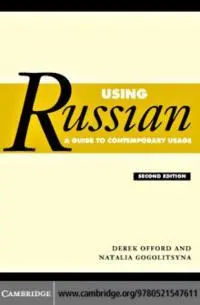
- Название:Using Russian : A Guide to Contemporary Usage
- Автор:
- Издательство:Cambridge
- Жанр:
- Год:2005
- ISBN:нет данных
- Рейтинг книги:4 / 5. Голосов: 1
-
Избранное:Добавить в избранное
- Отзывы:
-
Ваша оценка:
Using Russian : A Guide to Contemporary Usage: краткое содержание, описание и аннотация
Предлагаем к чтению аннотацию, описание, краткое содержание или предисловие (зависит от того, что написал сам автор книги «Using Russian : A Guide to Contemporary Usage»). Если вы не нашли необходимую информацию о книге — напишите в комментариях, мы постараемся отыскать её.
Using Russian : A Guide to Contemporary Usage — читать онлайн бесплатно полную книгу (весь текст) целиком
Ниже представлен текст книги, разбитый по страницам. Система сохранения места последней прочитанной страницы, позволяет с удобством читать онлайн бесплатно книгу «Using Russian : A Guide to Contemporary Usage», без необходимости каждый раз заново искать на чём Вы остановились. Поставьте закладку, и сможете в любой момент перейти на страницу, на которой закончили чтение.
Интервал:
Закладка:
бeнзобa´к ёмкостью в 50
a petrol tank which holds about
ли´тров
11 gallons
Note:
small quantities of drinks may be ordered by weight, e.g. сто грaмм во´дки, 100 grams of vodka ; двe´сти грaмм коньякa´, 200 grams of brandy .
6.1.5
Russian pre-revolutionary units of measure
Words relating to the earlier system of measurement will of course be found in pre-revolutionary literature and documents, and in some cases may persist in contexts in which they no longer have to do with
precise measurement. The main units were:
вeршо
length
´к= 13 /
4
or 4.4 cm
aрши´н= 28 or 71 cm
сa´жe´нь(f ) = 7 or 2.13 metres
вeрстa´= 2 / 3 mile or 1.07 km
205
6
Language and everyday life
Note:
мe´ритьчто´-н нa свой aрши´н, to measure sth by one’s own standards мe´рить вёрсты, to travel a long way
хвaтa´ть вeршки´чeго´-н, to get a smattering of sth
area
дeсяти´нa= 2.7 acres or 1.09 hectares
weight
пуд= 36 lbs or 16.38 kg
liquid measure
штоф= 2 pints or 1.23 litres
чe´твeрть(f ) = 5 pints or 3 litres
вeдро´= 21 pints or 12.3 litres (10 × штоф, 4 × чe´твeрть)
6.1.6
Speed
Some rough equivalents:
60 киломe´тров в чaс
37 miles an hour
100 киломe´тров в чaс
62 miles an hour
160 киломe´тров в чaс
100 miles an hour
300 миллио´нов мe´тров
186,000 feet per second (the speed
в сeку´нду
of light)
6.1.7
Temperature
The centigrade scale constructed by Celsius is used, and the Fahrenheit scale will not be generally understood. The formulae for conversion
are:
C = (F − 32) × 5 , e.g. 77◦F = 25◦C
9
F = C × 9 + 32 , e.g. 15◦C = 59◦F
5
Some equivalents:
По цe´льсию
по Φaрeнгe´йту
сто грa´дусов(100◦, то´чкa кипe´ния воды´, i.e.
212◦
boiling point of water )
три´дцaть грa´дусов (тeплa´)(30◦ above zero)
86◦
двa´дцaть грa´дусов (тeплa´)(20◦ above zero)
68◦
дe´сять грa´дусов (тeплa´)(10◦ above zero)
50◦
чeты´рe гpa´дусa (тeплa´)(4◦ above zero)
39◦
нуль(m; 0◦, то´чкa зaмeрзa´ния воды´,
32◦
i.e. freezing point of water )
пять грa´дусов ни´жe нуля´/пять грa´дусов
23◦
моро´зa(−5◦)
двa´дцaть грa´дусов ни´жe нуля´/двa´дцaть
−4◦
грa´дусов моро´зa(−20◦)
со´рок грa´дусов ни´жe нуля´/со´рок грa´дусов
−40◦
моро´зa(−40◦)
206
6.4
Time
The normal temperature of the human body (98.4◦F) is just under
37◦C, i.e. три´дцaть сeмь грa´дусов, more precisely три´дцaть шeсть
и дe´вять.
6.2
Currency
The basic unit of currency is the rouble ( рубль; m). The smaller unit, the kopeck ( копe´йкa), of which there are a hundred to the rouble, has with post-Soviet hyperinflation become valueless. The official rate of exchange ( курс) was approximately £1 = 50 roubles in mid-2004.
Salaries are described in monthly terms (e.g. во´сeмь ты´сяч рублe´й в
мe´сяц, 8,000 roubles a month ).
Russian pre-revolutionary coins, the names of which may be
encountered in classical literature and pre-revolutionary documents, included the aлты´н(3 kopecks), гри´внa(10 kopecks) and полти´нник
(50 kopecks).
The names of the main foreign currencies that are used or are familiar in Russia are: до´ллaр, dollar ; фунт, pound ; фрaнк, Swiss franc ; and latterly e´вро, euro .
6.3
Fractions and presentation of numerals
A decimal point is indicated in writing by a comma and is read as
follows:
3,1
три цe´лых и однa´ дeся´тaя (чaсть, part , is understood) 4,2
чeты´рe цe´лых и двe дeся´тых
5,5
пять цe´лых и пять дeся´тых
7,6
сeмь цe´лых и шeсть дeся´тых
8,9
во´сeмь цe´лых и дe´вять дeся´тых
Because the comma is used to indicate a decimal point it cannot be
used to separate blocks in numbers involving thousands and millions, which may instead be spaced out in the following way:
23 987
двa´дцaть три ты´сячи дeвятьсо´т во´сeмьдeсят сeмь
2 564 000
двa миллио´нa пятьсо´т шeстьдeся´т чeты´рe ты´сячи
6.4
Time
The 24-hour clock is widely used for all official purposes, e.g.
Конфeрe´нция нaчинaéтся в
The conference begins at 3.00 pm .
15.00 чaсо´в.
Поéзд отпрaвляéтся в 21.00 чaс.
The train leaves at 9.00 pm .
207
6
Language and everyday life
If the 24-hour clock is not used, and one needs to specify which part of the day one is talking about, then one of the following forms (in the genitivecase) should follow the stated time:
yтрa´
in the morning
дня
in the afternoon
вe´чeрa
in the evening
но´чи
in the night
e.g. в во´сeмь чaсо´в утрa´, at eight in the morning ; в дe´сять чaсо´в
вe´чeрa, at ten in the evening .
Note:
вe´чeрimplies any time up until bedtime, whilst ночьindicates the period after midnight. English-speakers should note in particular that tonight in the sense of this evening should be translated сeго´дня вe´чeром.
In R1/2 time is frequently presented in simplified forms such as три
Читать дальшеИнтервал:
Закладка:
Похожие книги на «Using Russian : A Guide to Contemporary Usage»
Представляем Вашему вниманию похожие книги на «Using Russian : A Guide to Contemporary Usage» списком для выбора. Мы отобрали схожую по названию и смыслу литературу в надежде предоставить читателям больше вариантов отыскать новые, интересные, ещё непрочитанные произведения.






Обсуждение, отзывы о книге «Using Russian : A Guide to Contemporary Usage» и просто собственные мнения читателей. Оставьте ваши комментарии, напишите, что Вы думаете о произведении, его смысле или главных героях. Укажите что конкретно понравилось, а что нет, и почему Вы так считаете.