Clara Park - Exiting Nirvana
Здесь есть возможность читать онлайн «Clara Park - Exiting Nirvana» весь текст электронной книги совершенно бесплатно (целиком полную версию без сокращений). В некоторых случаях можно слушать аудио, скачать через торрент в формате fb2 и присутствует краткое содержание. ISBN: , Жанр: Психология, на английском языке. Описание произведения, (предисловие) а так же отзывы посетителей доступны на портале библиотеки ЛибКат.
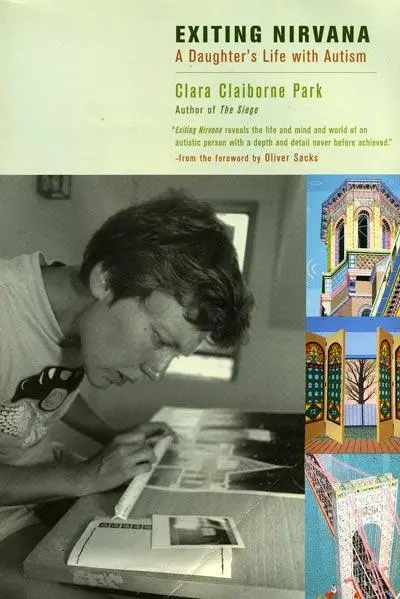
- Название:Exiting Nirvana
- Автор:
- Жанр:
- Год:неизвестен
- ISBN:0-316-69117-8
- Рейтинг книги:4 / 5. Голосов: 1
-
Избранное:Добавить в избранное
- Отзывы:
-
Ваша оценка:
Exiting Nirvana: краткое содержание, описание и аннотация
Предлагаем к чтению аннотацию, описание, краткое содержание или предисловие (зависит от того, что написал сам автор книги «Exiting Nirvana»). Если вы не нашли необходимую информацию о книге — напишите в комментариях, мы постараемся отыскать её.
All illustrations are by Jessy Park.
Exiting Nirvana — читать онлайн бесплатно полную книгу (весь текст) целиком
Ниже представлен текст книги, разбитый по страницам. Система сохранения места последней прочитанной страницы, позволяет с удобством читать онлайн бесплатно книгу «Exiting Nirvana», без необходимости каждый раз заново искать на чём Вы остановились. Поставьте закладку, и сможете в любой момент перейти на страницу, на которой закончили чтение.
Интервал:
Закладка:
«Make-believe» — exactly so. Jessy has always been quite clear about what is make-believe and what is real. (She was nine when she drew herself, Big Girl Jessy, crayon in hand, holding what was clearly her own drawing of a Piper Cleaner person — see page 178.) Often anxious, she was never fearful; real fear requires imagination. Jessy was immune to the usual fears; we used to think of her as the child in the fairy tale who didn’t know how to shudder. There were no monsters under her bed. She was never afraid of the dark; it was the neighbor who was concerned when he found her sitting alone, lights out, one evening when her father and I were elsewhere. She wasn’t upset by blood; at twelve, when her periods began she was exultant that what was predicted had occurred: «Blood did come!» Though today she is a regular blood donor, her satisfaction has little to do with altruism. «Into the small tube! It was fast! How fast! Too good to see! That’s why I’m closing my eyes!»
There were dragons in her picture books, but Jessy did not imagine what dragons might do. She did not imagine what dangers might lurk in the dark. Blood did not make her think of wounds and death but of a regular appointment and a heart- shaped sticker. Menstruation was simply something that was supposed to come and did; she did not imagine the social anxieties of puberty. And yet she imagined the little people. Little imitation people, flavor tubes, elaborate, proliferating systems — so many glimpses of what a flawed but vigorous mind may create when, barred from ordinary experience, its energy flows into the limited channels of its comprehension.
We had no idea of encouraging imagination when we drew so much with her, looked at so many pictures with her, filled her room with dolls and doll clothes and doll furniture. The absence of pretend play was not yet a diagnostic indicator, far from it; in the Bettelheim orthodoxy autistic children suffered from too much imagination, from noxious and terrifying hallucinations they could not distinguish from reality. We were just doing whatever we could think of to enrich her life. Jessy might line the dolls up on the dollhouse roof, as later she would line up her number people, but at least she wasn’t sifting silly business.
But looking back over the record of Jessy’s early years, I am struck by how often our groping play was, in fact, teaching her to pretend and enjoy it. Jessy was four when her father pretended to put her to bed on the kitchen floor. She was six when her siblings amused themselves getting her to mime them as they «died»; she learned it was fun to gag and choke and collapse on the rug. She’d laugh when her sister played «sad» with crocodile tears, though she knew what crying was. She might line up her dolls, but she gave them names, and once I even heard her tell one to «Eat up, dolly!» Recent work with autistic children shows that though pretend play, like other social behaviors, doesn’t develop spontaneously, it can be taught. [27] „Lewis and Boucher (1988) have shown that autistic children’s pretense is unimpaired relative to controls when the play is ‘instructed, ’ that is, when the children are told what to pretend“. Gregory Currie, „Simulation-Theory, Theory-Theory, and Evidence from Autism“, in Theories of Theories of Mind, P. Carruthers and P. K. Smith, eds. (Cambridge: Cambridge University Press, 1996), p. 251.
Unconsciously we taught it, making the little people possible, making it possible for Jessy to think and say, years later, «Pretend the sun is the parent and the planets are the children and the earth is me!»
Nevertheless, the limitations of autism remained. The Piper Cleaner family were dependent on Batman and Harold for their activities; a year passed, and they were still enacting the same plots. The little people who later lived in our appliances, having no such originals, had no plots. Instead they had elaborate kinship structures, inspired by our lessons on the shifting words for family relationships and by the families of people she knew. «Guess what! The oven is a make-believe family also! Noise of the oven same as the buzzer of the washing machine. This part of the family has only two children and both get married and one of them has children and the other don’t. And there are four parts of the family. Remember our family has two parts. Second part are my cousins. Stove has three sets of cousins. Some of the sisters and cousins are Karens. There are two Karens in two different sets of cousins and both didn’t get married. Too young».
They were lovely to think about. But they did nothing, didn’t go anywhere, even to bed or a party. Lorna Wing’s generalization held good: «imaginative activities», while not, as in some cases, «totally absent», were «copied from other[s]», or «spontaneous but carried out repetitively or in an identical fashion». [28] Wing, op. cit., p. 109.
Jessy couldn’t invent. She could only combine — sometimes in startling ways — what she found elsewhere. Ten years ago I was astonished when she said, «I want to tell what it look like when I am imagining things» — astonished and hopeful. Would she, could she, at last open the window on that mysterious interior? But her next words disabused me: «I saw it on cartoons!»
Strange hypersensitivities, strange obsessions, strange compulsions, strange, explosive reactions. Strangeness can be frightening, especially when it lunges at you suddenly, loudly, hostilely, even with violence. As recently as the seventies, children like Jessy were called psychotic, and the terms «autism» and «childhood schizophrenia» were used interchangeably. In the long centuries before those labels, there was another explanation for such children. We found out what it was when a religious acquaintance told us that there are (still!) church rituals for casting out demons, and that we should have Jessy exorcised. I have seen Jessy’s father really angry only once, on the day it was suggested that his little daughter was in the power of the devil.
So I revert from the dark side of Jessy’s strangeness to what was, and is, far more characteristic, to her quirky, innocent pleasures. «Anna’s dishwasher sounds like music, even run nonstop like music running nonstop. General Electric don’t stop!» She rocks in pure delight.
There is pleasure in transition phrases on the TV. There is pleasure in the fivefold division of Route 7 (including its extension north as Route 133 in Canada). There is pleasure in «astrothings», especially anything to do with Venus, like the shell on which she rises from the waves in The Treasury of Art Masterpieces. «I saw Vena [„Venus“ is too good to say] peeping out at the corner of the science building». Anything that ends in — nus is good — not only Uranus and Cygnus, but minus and Janus and bonus as well. Why? Because NUS is «the greater light backwards», the greater light of Genesis 1, a.k.a. «the great big identified nonflying object», as Jessy grabs at any means to suppress that too-good word. Her world is full of «enthusiasms», which is what she calls these strange sources of delight. «There are many different kinds of happinesses», she tells me. «Enthusiasms, ecstasies, encouragement, enjoyment, bubbly. Joy!»
Part three
Painting
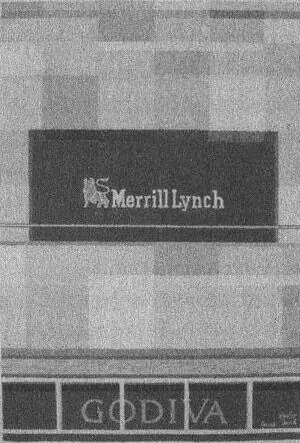
Jessy Park: Merrill Lynch & Godiva at the World Financial Center, 1999
Chapter 8
«The sky is purple-black»
Jessy’s in her room, the door shut. I knock of course the proper behavioral lesson — but it’s years since we heard the angry «Go away!» of her adolescence. Today, though, there’s a pause before the «Come in». I know why; she’s doing «secrets», and she’s putting them away. Though the tubes of acrylics are in place, her table is empty of its usual work-in-progress. It’s three weeks before Christmas — or Valentine’s Day, or Easter — and Jessy is painting her little cards. Each family member will get one; so will former Jessy-helpers; so will the «housemates» who live with her when we are away.
Читать дальшеИнтервал:
Закладка:
Похожие книги на «Exiting Nirvana»
Представляем Вашему вниманию похожие книги на «Exiting Nirvana» списком для выбора. Мы отобрали схожую по названию и смыслу литературу в надежде предоставить читателям больше вариантов отыскать новые, интересные, ещё непрочитанные произведения.
![Майкл Азеррад - Come as you are - история Nirvana, рассказанная Куртом Кобейном и записанная Майклом Азеррадом [litres]](/books/392533/majkl-azerrad-come-as-you-are-istoriya-nirvana-ra-thumb.webp)



![Эверетт Тру - Nirvana - Правдивая история [litres]](/books/399241/everett-tru-nirvana-pravdivaya-istoriya-litres-thumb.webp)



Обсуждение, отзывы о книге «Exiting Nirvana» и просто собственные мнения читателей. Оставьте ваши комментарии, напишите, что Вы думаете о произведении, его смысле или главных героях. Укажите что конкретно понравилось, а что нет, и почему Вы так считаете.