Lev Rosen - Depth
Здесь есть возможность читать онлайн «Lev Rosen - Depth» весь текст электронной книги совершенно бесплатно (целиком полную версию без сокращений). В некоторых случаях можно слушать аудио, скачать через торрент в формате fb2 и присутствует краткое содержание. Город: New York, Год выпуска: 2015, ISBN: 2015, Издательство: Regan Arts., Жанр: sf_postapocalyptic, Детективная фантастика, на английском языке. Описание произведения, (предисловие) а так же отзывы посетителей доступны на портале библиотеки ЛибКат.
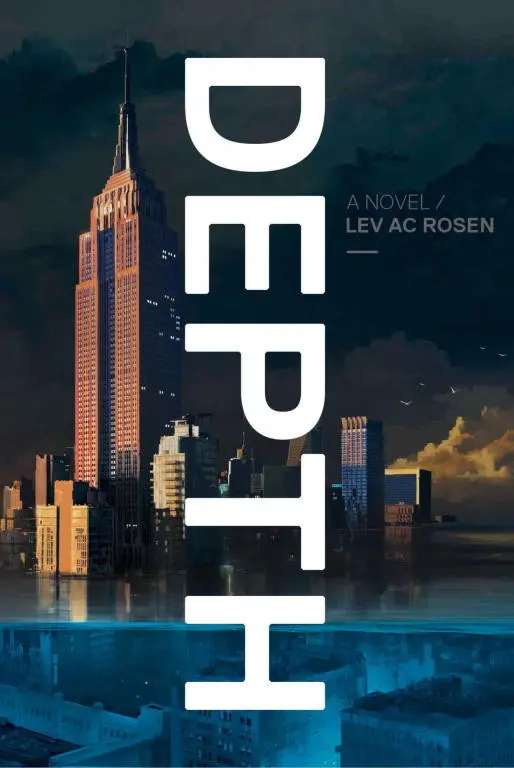
- Название:Depth
- Автор:
- Издательство:Regan Arts.
- Жанр:
- Год:2015
- Город:New York
- ISBN:978-1-941393-07-9
- Рейтинг книги:3 / 5. Голосов: 1
-
Избранное:Добавить в избранное
- Отзывы:
-
Ваша оценка:
Depth: краткое содержание, описание и аннотация
Предлагаем к чтению аннотацию, описание, краткое содержание или предисловие (зависит от того, что написал сам автор книги «Depth»). Если вы не нашли необходимую информацию о книге — напишите в комментариях, мы постараемся отыскать её.
(Tor, 2011), which was an
, on over a dozen best of the year lists, and has been nominated for multiple awards.
described it as “mixing genres with fearless panache.” His work has been featured in Esopus Magazine and on various blogs including Tor.com. He lives in Manhattan. Review
About the Author “Heinlein meets Hammett in this whip-smart whodunnit set amid the billowing fog and rising waters of a future New York.”
(Chuck Greaves, award-winning author of
) “I have long admired Lev Rosen's strange, genre-bending work—his riff on the detective story is elegant, surprising, and, yes, deep.”
(Dan Chaon, National Book Award finalist, author of
)
Depth — читать онлайн бесплатно полную книгу (весь текст) целиком
Ниже представлен текст книги, разбитый по страницам. Система сохранения места последней прочитанной страницы, позволяет с удобством читать онлайн бесплатно книгу «Depth», без необходимости каждый раз заново искать на чём Вы остановились. Поставьте закладку, и сможете в любой момент перейти на страницу, на которой закончили чтение.
Интервал:
Закладка:
“Everything is trouble to somebody,” Dash said, reaching out and taking her wrist. “I was hoping we might cause a little trouble for each other.” Simone considered it, could feel Dash tugging her onto him, and could imagine that it would be fun to just fall. To forget for a while. Even with Dash. But she didn’t trust him—didn’t even think he was a good person. But she could get around that, she thought, looking at the curves of muscle on his stomach, his shoulders, his hips. But there was too much happening. She needed to stay afloat right now. Solve the thing. Then she could relax.
“Tempting,” Simone said, pulling her hand away. “But let’s wait till the case is closed. Then we’ll celebrate.”
“Tease,” Dash said. Simone smiled and started walking for the door. “So where did you plant your tracker?” he called after her. “Tit for tat, right? One of my belts?” Simone turned and waved over her shoulder, then walked out the door.
Outside, Simone stretched and let her body cool down in the open air. She didn’t know everything yet. But she finally felt like she knew enough to start putting the pieces together. She needed to know more about the Reinel, and what could be hidden inside. There was only one other person she knew who had seen it. She hoped he’d see her without an appointment. She told her earpiece to call Mr. Ryan’s line. He picked up after four rings.
“Ms. Pierce,” he said. He sounded primped and prepared as always, as though her calling was no surprise at all. “What can I do for you today?”
“I was hoping for another art history lesson. On Paul Reinel.”
On the other end of the line, Mr. Ryan paused. Simone could hear the sound of a glass being clinked down on marble. “And when were you hoping for this lesson?” he asked, his tone exactly the same.
“Today,” Simone said. “If you’re available.”
“Come by at five.”
“Thank you, Mr. Ryan.”
“And, Ms. Pierce, let me be frank: I don’t give away anything for free except art history lessons. Are we clear?”
“Absolutely.”
“Excellent. I look forward to our meeting, then. See you at five.” He hung up without waiting for a reply. Simone checked the time on her earpiece holoscreen. She still had a few hours, and there were a few more places where she could fish for information.
First she headed west, to where the junkies and bums lived. The buildings there, the high rises of what was once Chelsea and Hell’s Kitchen, had been some of the first coated in Glassteel, before the formula was perfected, and so they stood, but they were crumbling faster than everywhere else. They were also usually the first to get hit by storms. The buildings had probably been nice once—large buildings filled with spacious family condos—but now they were rotting and always smelled like mold. People who were down on their luck, who were still determined to rise up and live as good a life as New York could offer, had the old penthouses. There it didn’t smell so bad, and no one else bothered them. They just had to deal with walking up dozens of flights of stairs and the knowledge that when a storm hit, they were the most likely to get blown away.
Everyone else in the area lived on the lower floors, where whole apartments had been cleared out, with cheap plaster walls or curtains for privacy. People shared molding mattresses and threw plastic tarps on the floor to keep it dry. A lot of these people were Foam addicts, and they stuck together, forming dens and packs; the rest had just given up and stared out their windows all day. Their view wasn’t of the city, just of the huge expanse of ocean, and Simone thought that to them it probably looked tempting, like a future they were waiting for because they were too tired or scared to go outside and claim it themselves. Simone understood that. The edges of the city—the flat foreverness of the ocean—appealed to her. These places were quiet and peaceful. When the sun cast long lines of light on them they looked like a good place to die.
Simone knew some junkies and dealers and walked around the neighborhood looking for them. It was chilly, and the water seemed especially black. The bridges here were thin, reedy things that creaked underfoot and groaned like old instruments. The smell was worse than in the rest of the city—from rotten wood and rust, and the damp smell of people who hadn’t bathed. Simone stuffed her hands in her pockets and kept her feet firm.
Her few contacts didn’t have any new information for her. Neither did the junkies she found lying in the corners of bridges, their mouths white, their eyes vacant, almost looking drowned, breathing heavily. Yeah, they said, a woman who looked like Linnea had been around. She’d scored some Foam, pocketed it, and vanished downtown. No one had seen her today, though. That was it. Maybe Linnea was a former MouthFoamer, falling back on old habits because of the stress. But Simone didn’t think so. That stuff left permanent damage—a glazed look, like only being half awake—and Linnea hadn’t shown any signs of that.
Next stop was back downtown, to Above Water Exports/Imports. It was open, despite it being Sunday. Lou was inside, going through some large crates that now filled the room. She had her back to the door and didn’t turn around when Simone shut the door behind her.
“We’re not really open today,” she said, “I just had to be here to accept this shipment.”
“I’m not here to buy, Lou,” Simone said, walking towards her.
“Oh,” Lou said, turning around, “the shamus. Sober by now, I hope?” She raised an eyebrow as Simone sauntered forward, nodding. “You can help me get this lamp out, then.” She jabbed at the crate with her thumb, then stepped away from it, took a cigarette out of her pocket, and lit it. Simone looked over the top of the crate—about the same height as Lou—and saw that the lamp was stuck under a rocking chair. It was a heavy desk lamp, curving around like a spring or an ancient staircase overrun with trees. Simone managed to unhook it and hand it to Lou, who was by now haloed in smoke.
“Thanks,” Lou said, taking the lamp under one arm, cigarette still in hand. She walked over to her desk and put the lamp down, evaluating it. “What are you doing here?”
“I think Henry was killed because of a sculpture he found in your inventory.”
“Why would Linnea kill him for a sculpture?” Lou asked, blowing smoke out her mouth. She folded an arm over her chest, looking unimpressed.
“If it was Linnea, it was because they were trying to sell it. For a lot. The art is by Reinel. You have anything in storage?”
Lou raised her eyebrows, then started to laugh. “Reinel? Who would kill for a Reinel? The man was nobody special.”
Simone shrugged. “I know. But that’s where the evidence is pointing, and beauty is in the eye of the beholder. Maybe someone thought this art was worth killing for.”
Lou shook her head and went to her touchdesk, where she typed a few things with the hand that wasn’t holding the cigarette. The smoke was making Simone want a cigarette, too, so she fished one out of her pocket.
“No smoking in here,” Lou said, glancing up from her table screen. “At least not that crap. Here, take one of mine.” She tossed Simone her pack.
“Thanks,” Simone said. She took one and lit it. It tasted like burnt earth and melting sugar.
“We had a Reinel a few years back, but we sold it to a small museum in Brazil. Nothing since then.”
Simone walked closer and handed the cigarettes back to Lou, still breathing deeply, enjoying the beautiful filth of the tobacco.
“And you don’t know why a Reinel would be valuable?” Simone asked. Lou shook her head.
“They’re nice sculptures, and they’re early coral work, but he never made a big splash. Only an insanely rabid collector would kill for one. Only someone stupid would pay more than… maybe twenty grand for one of his really big pieces, or a bust of someone famous, maybe. But those are all in museums.” She shrugged, rippling the cloud of smoke around her.
Читать дальшеИнтервал:
Закладка:
Похожие книги на «Depth»
Представляем Вашему вниманию похожие книги на «Depth» списком для выбора. Мы отобрали схожую по названию и смыслу литературу в надежде предоставить читателям больше вариантов отыскать новые, интересные, ещё непрочитанные произведения.











Обсуждение, отзывы о книге «Depth» и просто собственные мнения читателей. Оставьте ваши комментарии, напишите, что Вы думаете о произведении, его смысле или главных героях. Укажите что конкретно понравилось, а что нет, и почему Вы так считаете.