Orbit 2
Здесь есть возможность читать онлайн «Orbit 2» весь текст электронной книги совершенно бесплатно (целиком полную версию без сокращений). В некоторых случаях можно слушать аудио, скачать через торрент в формате fb2 и присутствует краткое содержание. Год выпуска: 1967, Издательство: Berkley Medallion, Жанр: Фантастика и фэнтези, на английском языке. Описание произведения, (предисловие) а так же отзывы посетителей доступны на портале библиотеки ЛибКат.

- Название:Orbit 2
- Автор:
- Издательство:Berkley Medallion
- Жанр:
- Год:1967
- ISBN:нет данных
- Рейтинг книги:3 / 5. Голосов: 1
-
Избранное:Добавить в избранное
- Отзывы:
-
Ваша оценка:
Orbit 2: краткое содержание, описание и аннотация
Предлагаем к чтению аннотацию, описание, краткое содержание или предисловие (зависит от того, что написал сам автор книги «Orbit 2»). Если вы не нашли необходимую информацию о книге — напишите в комментариях, мы постараемся отыскать её.
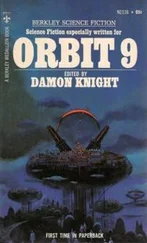
For each new volume, editor Damon Knight invites contributions from established SF authors as well as from new writers, and selects the best of the hundreds of submitted manuscripts.
Damon Knight is founder and first president of Science Fiction Writers of America, author of five SF novels, four collections of short stories and has edited fourteen SF anthologies.
Orbit 2 — читать онлайн бесплатно полную книгу (весь текст) целиком
Ниже представлен текст книги, разбитый по страницам. Система сохранения места последней прочитанной страницы, позволяет с удобством читать онлайн бесплатно книгу «Orbit 2», без необходимости каждый раз заново искать на чём Вы остановились. Поставьте закладку, и сможете в любой момент перейти на страницу, на которой закончили чтение.
Интервал:
Закладка:
“Hallooo!” he roared. She grunted and drew back, closing the shutter. She had made no motion to get dressed when he came in, but lay with her arms under her head. He stood in the doorway, tucking his shirt into his trousers; then this cunning man said, “I came to get something” (looking at her sidewise), and diffidently carried his wet, tightly curled beard past her into a corner of the cabin. He knelt down and burrowed diligently.
“Get what?” said she. He didn’t answer. He was rummaging in a chest he had dragged from the wall; now he took out of it — with great tenderness and care — a woman’s nightdress, worked all in white lace, which he held up to her, saying:
“Do you want this?”
“No,” she said, and meant it.
“But it’s expensive,” he said earnestly, “it is, look,” and coming over to sit on the edge of the bed, he showed the dress to her, for the truth was it was so expensive that he hadn’t meant to give it to her at all, and only offered it out of — well, out of—
“I don’t want it,” she said, a little sharply.
“Do you like jewelry?” he suggested hopefully. He had not got thoroughly dried and water was dripping unobtrusively from the ends of his hair onto the bed; he sat patiently holding the nightgown out by the sleeves to show it off. He said ingenuously, “Why don’t you try it on?”
Silence.
“It would look good on you,” he said. She said nothing. He laid down the nightgown and looked at her, bemused and wondering; then he reached out and tenderly touched her hair where it hung down to the point of her small, grim jaw.
“My, aren’t you little,” he said.
She laughed. Perhaps it was being called little, or perhaps it was being touched so very lightly, but this farm girl threw back her head and laughed until she cried, as the saying is, and then:
“Tcha! It’s a bargain, isn’t it!” said this cynical girl. He lowered himself onto the floor on his heels; then tenderly folded the nightgown into a lacy bundle, which he smoothed, troubled.
“No, give it to me,” she demanded sharply. He looked up, surprised.
“Give it!” she repeated, and scrambling across the bed she snatched it out of his hands, stripped off her shift, and slid the gown over her bare skin. She was compact but not stocky and the dress became her; she walked about the cabin, admiring her sleeves, carrying the train over one arm while he sat back on his heels and blinked at her.
“Well,” she said philosophically, “come on.” He was not at all pleased. He rose (her eyes followed him), towering over her, his arms folded. He looked at the nightgown, at the train she held, at her arched neck (she had to look up to meet his gaze), at her free arm curved to her throat in a gesture of totally unconscious femininity. He had been thinking, a process that with him was slow but often profound; now he said solemnly:
“Woman, what man have you ever been with before?”
“Oh!” said she startled, “my husband,” and backed off a little.
“And where is he?”
“Dead.” She could not help a grin.
“How?” She held up a fist. Blackbeard sighed heavily.
Throwing the loose bedclothes onto the bed, he strode to his precious chest (she padded inquisitively behind him), dropped heavily to his knees, and came up with a heap of merchandise: bottles, rings, jingles, coins, scarves, handkerchiefs, boots, toys, half of which he put back. Then, catching her by one arm, he threw her over his shoulder in a somewhat casual or moody fashion (the breath was knocked out of her) and carried her to the center of the cabin, where he dropped her — half next to and half over a small table, the only other part of the cabin’s furnishings besides the bed. She was trembling all over. With the same kind of solemn preoccupation he dumped his merchandise on the table, sorted out a bottle and two glasses, a bracelet, which he put on her arm, earrings similarly, and a few other things that he studied and then placed on the floor. She was amazed to see that there were tears in his eyes.
“Now, why don’t you fight me!” he said emotionally.
She looked at the table, then at her hands.
“Ah!” he said, sighing again, pouring out a glassful and gulping it, drumming the glass on the table. He shook his head. He held out his arms and she circled the table carefully, taking his hands, embarrassed to look him in the face. “Come,” he said, “up here,” patting his knees, so she climbed awkwardly onto his lap, still considerably wary. He poured out another glass and put it in her hand. He sighed, and put nothing into words; only she felt on her back what felt like a hand and arched a little — like a cat — with pleasure; then she stirred on his knees to settle herself and immediately froze. He did nothing. He was looking into the distance, into nothing. He might have been remembering his past. She put one arm around his neck to steady herself, but her arm felt his neck most exquisitely and she did not like that, so she gave it up and put one hand on his shoulder. Then she could not help but feel his shoulder. It was quite provoking. He mused into the distance. Sitting on his lap, she could feel his breath stirring about her bare face, about her neck— she turned to look at him and shut her eyes; she thought, What am I doing? and the blood came to her face harder and harder until her cheeks blazed. She felt him sigh, felt that sigh travel from her side to her stomach to the back of her head, and with a soft, hopeless, exasperated cry (“I don’t expect to enjoy this!”) she turned and sank, both hands firstmost, into Blackbeard’s oceanic beard.
And he, the villain, was even willing to cooperate.
Time passes, even (as they say) on the sea. What with moping about while he visited farmhouses and villages, watching the stars wheel and change overhead as they crept down the coast, with time making and unmaking the days, bringing dinnertime (as it does) and time to get up and what-not— Well, there you are. She spent her time learning to play cards. But gambling and prophecy are very closely allied — in fact they are one thing — and when he saw his woman squatting on deck on the balls of her feet, a sliver of wood in her teeth, dealing out the cards to tell fortunes (cards and money appeared in the East at exactly the same time in the old days) he thought— or thought he saw — or recollected — that goddess who was driven out by the other gods when the world was made and who hangs about still on the fringes of things (at crossroads, at the entrance to towns) to throw a little shady trouble into life and set up a few crosscurrents and undercurrents of her own in what ought to be a regular and predictable business. She herself did not believe in gods and goddesses. She told the fortunes of the crew quite obligingly, as he had taught her, but was much more interested in learning the probabilities of the appearance of any particular card in one of the five suits 2 2 ones, tens, hundreds, myriads, tens of myriads
— she had begun to evolve what she thought was a rather elegant little theory — when late one day he told her, “Look, I am going into a town tonight, but you can’t come.” They were lying anchored on the coast, facing west, just too far away to see the lights at night. She said, “Wha’?”
“I am going to town tonight,” he said (he was a very patient man) “and you can’t come.”
“Why not?” said the woman. She threw down her cards and stood up, facing into the sunset. The pupils of her eyes shrank to pinpoints. To her he was a big, blind rock, a kind of outline; she said again, “Why not?” and her whole face lifted and became sharper as one’s face does when one stares against the sun.
“Because you can’t,” he said. She bent to pick up her cards as if she had made some mistake in listening, but there he was saying, “I won’t be able to take care of you.”
Читать дальшеИнтервал:
Закладка:
Похожие книги на «Orbit 2»
Представляем Вашему вниманию похожие книги на «Orbit 2» списком для выбора. Мы отобрали схожую по названию и смыслу литературу в надежде предоставить читателям больше вариантов отыскать новые, интересные, ещё непрочитанные произведения.





Обсуждение, отзывы о книге «Orbit 2» и просто собственные мнения читателей. Оставьте ваши комментарии, напишите, что Вы думаете о произведении, его смысле или главных героях. Укажите что конкретно понравилось, а что нет, и почему Вы так считаете.