Geoff Ryman - Was
Здесь есть возможность читать онлайн «Geoff Ryman - Was» весь текст электронной книги совершенно бесплатно (целиком полную версию без сокращений). В некоторых случаях можно слушать аудио, скачать через торрент в формате fb2 и присутствует краткое содержание. Жанр: Фантастика и фэнтези, на английском языке. Описание произведения, (предисловие) а так же отзывы посетителей доступны на портале библиотеки ЛибКат.
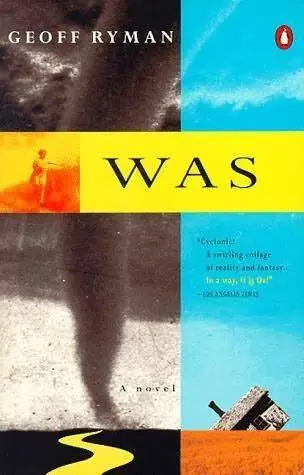
- Название:Was
- Автор:
- Жанр:
- Год:неизвестен
- ISBN:нет данных
- Рейтинг книги:5 / 5. Голосов: 1
-
Избранное:Добавить в избранное
- Отзывы:
-
Ваша оценка:
Was: краткое содержание, описание и аннотация
Предлагаем к чтению аннотацию, описание, краткое содержание или предисловие (зависит от того, что написал сам автор книги «Was»). Если вы не нашли необходимую информацию о книге — напишите в комментариях, мы постараемся отыскать её.
Ryman's darkly imaginative, almost surreal improvisation on L. Frank Baum's Oz books combines a stunning portrayal of child abuse, Wizard of Oz film lore and a polyphonic meditation on the psychological burden of the past.
From Kirkus Reviews
The Scarecrow of Oz dying of AIDS in Santa Monica? Uncle Henry a child abuser? Dorothy, grown old and crazy, wearing out her last days in a Kansas nursing home? It's all here, in this magically revisionist fantasy on the themes from The Wizard of Oz. For Dorothy Gael (not a misprint), life with Uncle Henry and Aunty Em is no bed of roses: Bible-thumping Emma Gulch is as austere (though not as nasty) as Margaret Hamilton, and her foul- smelling husband's sexual assaults send his unhappy niece over the line into helpless rage at her own wickedness and sullen bullying of the other pupils in nearby Manhattan, Kansas. Despite a brush with salvation (represented by substitute teacher L. Frank Baum), she spirals down to madness courtesy of a climactic twister, only to emerge 70 years later as Dynamite Dottie, terror of her nursing home, where youthful orderly Bill Davison, pierced by her zest for making snow angels and her visions of a happiness she never lived, throws over his joyless fianc‚e and becomes a psychological therapist. Meanwhile, in intervening episodes in 1927 and 1939, Frances Gumm loses her family and her sense of self as she's transformed into The Kid, Judy Garland; and between 1956 and 1989, a little boy named Jonathan, whose imaginary childhood friends were the Oz people, grows up to have his chance to play the Scarecrow dashed by the AIDS that will draw him to Kansas-with counselor Davison in pursuit-in the hope of finding Dorothy's 1880's home and making it, however briefly, his own. This tale of homes lost and sought, potentially so sentimental, gets a powerful charge from Ryman's patient use of homely detail in establishing Dorothy's and Jonathan's childhood perspectives, and from the shocking effects of transforming cultural icons, especially in detailing Dorothy's sexual abuse. Science-fiction author Ryman (The Child Garden, 1990) takes a giant step forward with this mixture of history, fantasy, and cultural myth-all yoked together by the question of whether you can ever really go home.
Was — читать онлайн бесплатно полную книгу (весь текст) целиком
Ниже представлен текст книги, разбитый по страницам. Система сохранения места последней прочитанной страницы, позволяет с удобством читать онлайн бесплатно книгу «Was», без необходимости каждый раз заново искать на чём Вы остановились. Поставьте закладку, и сможете в любой момент перейти на страницу, на которой закончили чтение.
Интервал:
Закладка:
"Mr. Sue?" called Mrs. Purcell. Dorothy began to wish she hadn't come.
Mr. Sue emerged from some inner recess, smiling, smiling.
"Good morning, ladies. So kind to come. I hope you are not cold. Thank you, thank you."
He looked funny. Dorothy wasn't sure how. He was small and quick, wearing perfectly normal clothes and a bowler hat. Dorothy was miffed. Didn't he know it was impolite to wear a hat indoors? Then she saw him take it off, over and over, once for each of the ladies.
Inside the store, the air smelled a bit like soap, nice soap, and there were things in pretty boxes, nice colors, very pale and gentle. There were bolts of shiny cloth and little cups and teapots. There were china people, white with pink cheeks, frozen forever, looking shy and a bit afraid.
Dorothy began to be afraid for Mr. Sue. China was made of clay and so, said the Preacher, were people. China could fall and break. Maybe that's why the adults were frightened. They were frightened that they could shatter him. They walked so carefully around him as he smiled and smiled. He pulled back a curtain and held out his hat to show them the way they should go.
They went into a room, and Dorothy wondered if China people lived in tents like Indians. The wall seemed to be made of blue cloth. Dorothy pushed the cloth. There was a solid wall behind it. Perhaps wood or stone was too rough for China people.
There were cushions everywhere, with cloth flowers sewn on them, and the little room was hot as a stove, and full of the soap smell.
"Oh!" said Mrs. Purcell, looking around the tiny place in surprise. She looked large and clumsy, as if she would knock something over. But Dorothy felt at home. Everything was the right size for her.
Then Mrs. Sue came in and Dorothy knew she was right. China people could be broken.
Mrs. Sue walked in with breathless child steps, small and very quick, and her eyes and her face were lowered from shyness and she smiled shyly. She wore blue trousers and a blue top, very shiny, and she was painted like the frozen people outside. Pink on her cheeks, black around the eyes, red on her lips.
"Da doh, da doh," she seemed to be saying, unable to look at the ladies, bowing to them. She held out her hands.
The ladies looked at each other.
"She doesn't speak English, and she wants to take our coats," said Aunty Em, crisply. "Dorothy, please to help Mrs. Sue with all these coats. Mind you take them where she shows you."
Aunty Em passed her own thick, black, worn coat to her. "Thank you, thank you, Mrs. Sue," she said loudly, very plainly, smiling with her leaky gray teeth.
Mrs. Sue averted her face and bowed, again, and said something with the gentleness of the wind.
"May I help you?" Dorothy asked, looking up at her.
Mrs. Sue could bear to look at Dorothy but not at the adults. She looked at Dorothy and smiled. Dorothy strode boldly among the ladies, taking coats. She knew she would not knock anything over.
"We are to sit on the cushions," announced Aunty Em.
The ladies raised their eyebrows. This would be indelicate. Dorothy wanted to see how plump Mrs. Purcell and bony old Mrs. Elliott would manage it. Mrs, Sue, in a soft and singsong voice, was trying to tell her something, so Dorothy turned and saw she was to follow through another curtain, into an alcove. There was a white statue in the alcove, of a fat and naked smiling man. There were pipe cleaners all around it, burning. Did Mrs. Sue think you were supposed to smoke the cleaners and not the pipe? Mrs. Sue reached and hung up the coats. She folded and smoothed down the ladies' scarves. They looked beautiful, the scarves, folded so tidily. Mrs. Sue smiled her gentle, withdrawn smile, and Dorothy knew she was to go back to the adults.
Back in the hot room, the ladies were sitting, backs straight. Mrs. Purcell and Aunty Em had adopted the side saddle position they had learned as young ladies. Mrs. Elliott was thrashing, trying to fight her way upright. She kept slipping off the cushion.
"Knees under you, Emeline," said Mrs. Purcell.
Mrs. Sue came toddling in, carrying something that was neither a tray nor a table. It was made of beautiful brown wood and carved in funny shapes, and there was a teapot with red and blue crisscrosses on it. The tray was placed on the floor. There was tea and little pink cakes. Mrs. Sue lowered her head and held out her arms with a sweep over the tea and cakes.
"Isn't it exquisite," announced Aunty Em, determined they would all feel the right thing. "And so charmingly presented." She inclined forward, with her broken and horsey smile. Mrs. Sue tried to look pleased, but she could not bear the huge, coarse visage and had to look away, lest the distaste show.
Dorothy felt she was having some kind of revenge. The adults all looked wrong, like pigs or straggly plants. The only beautiful person in the room was Mrs. Sue.
She began to pour the tea, and to pass the cakes, looking up hopefully to make sure that everything was all right, that she had done nothing wrong. And Dorothy knew, just from looking, that Mrs. Sue was alone in Kansas, and that she was trying as hard as she could, but that she and these women would never be friends, no matter how correct they all were, no matter how polite. It was all done in hopefulness and was doomed to failure.
"The cakes," said Mrs. Purcell, in horror. "I think they're made out of fish."
Dorothy tasted one of them. It was bland and chewy.
The pink bland cakes were followed by sweet spicy ones that were also to no one's taste. And Mrs. Sue, trying hard, adopting all the right postures, sent signals of sociability that were only partially received. They were swamped by the heavy-handed and insincere gestures that came in reply.
"These are very unusual. Very unusual. Nice," said Aunty Em, loudly, holding up the spice cake.
Mrs. Sue kept smiling, looking nowhere. She leaned forward like a river reed to fill more cups with tea.
"Shouldn't she let it steep more?" wondered one of the ladies without looking at the others.
"Chinese tea is famous for its delicacy," Aunty Em informed them.
"I wish the incense was," said Mrs. Parker.
It couldn't go on much longer. Tea and cakes can only do so much without conversation. More smiles and nodding, and Mrs. Sue knew she had failed. Her eyes were veiled as she tried to look pleased and honored when the ladies left. Dorothy went to help her with the coats.
Dorothy wanted to say something. But how could you say something to someone who had not learned to talk?
She had an idea. She talked like a baby would talk. She made sounds without the words that she found she lacked. Dorothy whispered, sadly, "Da tori nah sang ga la ta no rah tea so la tee ree." Without having to find words, Dorothy said that she was sorry, sorry that Mrs. Sue was alone in a foreign country, and that her cakes had not been liked, and that no one else was coming, and that her husband would probably be cross.
Mrs. Sue knew that the little girl was really trying to say something, something kind. And she could see what she was not supposed to notice, that the child was poorly dressed. Mrs. Sue had a happy idea. It was a season of gift giving. She turned and gave the child a folded-paper doll, dressed in crepe paper, with a folded face and a painted smile.
"Thank you," said Dorothy.
They filed back out through the hot, cushioned room, through the curtain, down the cooler, wooden corridor, back into the store. Mr. Sue was smiling, thanking them for the call. Do tell your wife how charmed we were, said the ladies, what a lovely room, what a lovely blue… um… ensemble she wore, a delightful tea, such a departure from the usual. Why, Dorothy wondered, do adults always lie?
Back out into the cold.
"Oh," said one of the ladies, a safe distance away. "Back out into God's own air!"
Читать дальшеИнтервал:
Закладка:
Похожие книги на «Was»
Представляем Вашему вниманию похожие книги на «Was» списком для выбора. Мы отобрали схожую по названию и смыслу литературу в надежде предоставить читателям больше вариантов отыскать новые, интересные, ещё непрочитанные произведения.










Обсуждение, отзывы о книге «Was» и просто собственные мнения читателей. Оставьте ваши комментарии, напишите, что Вы думаете о произведении, его смысле или главных героях. Укажите что конкретно понравилось, а что нет, и почему Вы так считаете.