Geoff Ryman - Was
Здесь есть возможность читать онлайн «Geoff Ryman - Was» весь текст электронной книги совершенно бесплатно (целиком полную версию без сокращений). В некоторых случаях можно слушать аудио, скачать через торрент в формате fb2 и присутствует краткое содержание. Жанр: Фантастика и фэнтези, на английском языке. Описание произведения, (предисловие) а так же отзывы посетителей доступны на портале библиотеки ЛибКат.
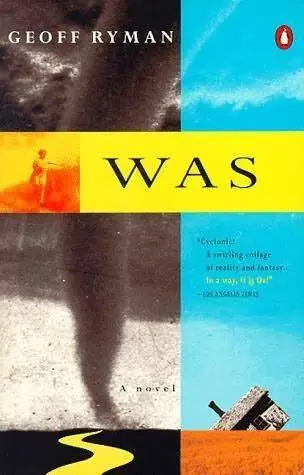
- Название:Was
- Автор:
- Жанр:
- Год:неизвестен
- ISBN:нет данных
- Рейтинг книги:5 / 5. Голосов: 1
-
Избранное:Добавить в избранное
- Отзывы:
-
Ваша оценка:
Was: краткое содержание, описание и аннотация
Предлагаем к чтению аннотацию, описание, краткое содержание или предисловие (зависит от того, что написал сам автор книги «Was»). Если вы не нашли необходимую информацию о книге — напишите в комментариях, мы постараемся отыскать её.
Ryman's darkly imaginative, almost surreal improvisation on L. Frank Baum's Oz books combines a stunning portrayal of child abuse, Wizard of Oz film lore and a polyphonic meditation on the psychological burden of the past.
From Kirkus Reviews
The Scarecrow of Oz dying of AIDS in Santa Monica? Uncle Henry a child abuser? Dorothy, grown old and crazy, wearing out her last days in a Kansas nursing home? It's all here, in this magically revisionist fantasy on the themes from The Wizard of Oz. For Dorothy Gael (not a misprint), life with Uncle Henry and Aunty Em is no bed of roses: Bible-thumping Emma Gulch is as austere (though not as nasty) as Margaret Hamilton, and her foul- smelling husband's sexual assaults send his unhappy niece over the line into helpless rage at her own wickedness and sullen bullying of the other pupils in nearby Manhattan, Kansas. Despite a brush with salvation (represented by substitute teacher L. Frank Baum), she spirals down to madness courtesy of a climactic twister, only to emerge 70 years later as Dynamite Dottie, terror of her nursing home, where youthful orderly Bill Davison, pierced by her zest for making snow angels and her visions of a happiness she never lived, throws over his joyless fianc‚e and becomes a psychological therapist. Meanwhile, in intervening episodes in 1927 and 1939, Frances Gumm loses her family and her sense of self as she's transformed into The Kid, Judy Garland; and between 1956 and 1989, a little boy named Jonathan, whose imaginary childhood friends were the Oz people, grows up to have his chance to play the Scarecrow dashed by the AIDS that will draw him to Kansas-with counselor Davison in pursuit-in the hope of finding Dorothy's 1880's home and making it, however briefly, his own. This tale of homes lost and sought, potentially so sentimental, gets a powerful charge from Ryman's patient use of homely detail in establishing Dorothy's and Jonathan's childhood perspectives, and from the shocking effects of transforming cultural icons, especially in detailing Dorothy's sexual abuse. Science-fiction author Ryman (The Child Garden, 1990) takes a giant step forward with this mixture of history, fantasy, and cultural myth-all yoked together by the question of whether you can ever really go home.
Was — читать онлайн бесплатно полную книгу (весь текст) целиком
Ниже представлен текст книги, разбитый по страницам. Система сохранения места последней прочитанной страницы, позволяет с удобством читать онлайн бесплатно книгу «Was», без необходимости каждый раз заново искать на чём Вы остановились. Поставьте закладку, и сможете в любой момент перейти на страницу, на которой закончили чтение.
Интервал:
Закладка:
"Oh-ho!" cried Mrs. Jewell, unsteadily.
"He didn't like it here. He didn't like school or anything. He wanted to get away."
But he was too frightened to leave, and so he felt ashamed. It was shame that made him kill himself. Dorothy could taste the shame and feel the shape it had, but she didn't have the words for it.
"Dorothy!" raged Aunty Em, stepping forward. Dorothy was seized, pulled, hauled away. Mrs. Jewell seemed to sag, waving Dorothy away. The drawing fell to the floor.
"But Uncle Henry said you didn't understand!" said Dorothy. Aunty Em gave her arm a savage tug. Dorothy knew she had done wrong, but she didn't care. It was the truth.
Aunty Em got her to the wagon and bundled her up onto the front seat. "Hurry up, Henry, let's get away." Uncle Henry speeded up somewhat. The mule was untied.
"Dorothy. What am I going to do with you?" Aunty Em's hand covered her face. Her face moved from side to side. "That poor woman."
Dorothy didn't want to hear what she had done wrong. Everything she did was wrong. "It was a present," she murmured.
"It was a present that opened a wound. I told you, Dorothy, not to mention what he did!"
"But I'm the only one who knows."
Knows that there is a nothingness in the wilderness, a great emptiness in the plains and sky, a nothingness that needs to be filled, not only with houses and horses and plows, but with imagination, an inhuman nothingness that could suck you in and kill you.
There was no point talking. How could Dorothy make anyone understand that? She could not explain it; she had no words. She could only endure the incomprehension and the harsh words and the silence.
It was dark by the time they got home. Scarecrows waved in moonlight. Instead of going inside, Dorothy hopped down from the wagon and ran.
She ran up the slopes of the bald hill to where the snowmen were. There were still three of them, in a row, as glossy and hard as marble. They were white-blue in moonlight. They were here and Wilbur was not. When the sun came, they would melt, and nothing Dorothy could do would stop it. They would melt away like memories trickling out of her head. There was very little Dorothy could do about anything at all.
And there were the angels in the snow, a tall one next to a little one. The trick was to leave no footprints, as if you had lain there for a time and flown away to Heaven.
And suddenly, Dorothy was crying. She found she could cry. "Will-hill-bur!" Maybe there were Indians in Heaven. Maybe Wilbur had found them there. Maybe he had finally joined them.
Maybe not. The tears were soon over. Dorothy had faced death before. She was weary of it, bone-weary. People were here and then they were gone and you had to live as if they had never been here. What once had been, what might have been, could give her nothing. Powdery snow whispered in the wind as it blew. The scarecrows lined up over the wallows, though there was no need for them in winter. Even the wallows were as hard as stone.
The clouds in the sky were as white as ice, and they raced in thin crystals over the surface of the moon. The stars were cold. The valley lay under a sheet of white, and smoke from chimneys hung like freezing fog.
Only where there were houses was there light, was there warmth. It shone out of the windows, orange, fire red, faintly glowing. Those houses were the only place to go, the only life available.
Dorothy finally saw what adults wanted her to see. She saw pioneer beauty, from the top of a hill. It was a trade. In exchange, she had to become resigned. Dorothy knuckled under. She heard Aunty Em call, and she walked back down to punishment and food and a new clean bed.
A few days later, across the naked fields, Dorothy saw Bob Jewell armed with a shovel. For no reason, he was beating one of the scarecrows flat, in a rage.
Zeandale and Manhattan, Kansas-Winter 1875-1876
"That would make me very unhappy," answered the china princess. "You see, here in our own country, we live contentedly, and can talk and move around as we please. But whenever any of us are taken away, our joints at once stiffen and we can only stand straight and look pretty…" -L. Frank Baum, The Wonderful Wizard of Oz
Dorothy knuckled down to learning to read. She would sit by the window, and Aunty Em would open up some huge volume smelling of mushrooms and dust. Toto would tug at her dress to go outside. Toto was kept inside now to keep him from freezing, but he was tied up most of the time.
"What's the first letter, Dorothy? Look at the book, child. Toto, set. Toto, get to your corner. Dorothy, what is the first letter?"
Dorothy was ashamed. "E?"
Another bad thing that Aunty Em had found out when Dorothy came was that she did not know her letters.
"No, Dorothy, that's a W. Now what does W sound like? A W with an H after it. Whuh. Whuh sound, Dorothy. Now I'll just read this first sentence for you. 'Whether I shall turn out to be the hero of my own life or whether that station will be held by anybody else, these pages must show.' "
Beyond the walls, the woods on the ridge sighed in the wind. Both the sky and the ground were the same white color. Aunty Em asked her to recite the alphabet. Dorothy forgot F.
"Don't start all over again," said Aunty Em. "That's just learning by rote, parrot fashion, and I want you to really know this. I don't want people to think we're ignorant, Dorothy Gael, and they will if you go to school without your alphabet and the rudiments of ciphering!"
And then she said, "What was your mama thinking of?"
Dorothy began to hate her mother, for all the things she had left out: prayers and table manners and numbers. Dorothy helped at candle making. She swept up the floor. She watched Aunty Em repairing shoes, repairing trousers, jabbing the needle so hard that she sometimes stabbed herself with it. She watched Aunty Em cook in a rage.
In the evenings, Henry would come in moving slowly with his long, stick-thin limbs. He would slump in his chair as Aunty Em threw pots about the stove, spilling, burning, humming hymns to herself. She made terrible mistakes. She baked cakes with salt instead of sugar. Meat came out of the oven burned black outside but red raw inside.
"You could plant an extra crop," said Aunty Em, one night.
Uncle Henry was baffled by exhaustion. "What crop?"
"Spring wheat, corn, I don't know."
"Most of this land is hillside turf, Em, or it's covered in woods. What you reckon on clearing it?"
"We could keep hogs in the woods."
"We got any spare cash to buy hogs with?"
"We would have with what fifty acres of river-bottom prime would earn anyone else."
"It's not prime land, Em. Your father didn't do too much with it either."
The pot slammed down as if on a head. "My father was writing the newspaper at the same time, instead of sitting around here with his boots off."
"So we're back to wheat. Every year since I come, people say it's going to be eight-row wheat, and then 'long comes the drouth or the hail or the wind or the bust. This year, last year it was locusts."
"Such a good excuse for you, weren't they?" said Aunty Em, talking over him.
"Or the herd laws means somebody's cows trample it. Worst thing of all is when you have a good year and the price just dries up till you get nothing for nothing."
"Well, I don't see the Aikens or the McCormacks or the Allens in poverty."
"They got sons, they got brothers."
"Well, hire yourself a hand."
"We don't have any money," said Henry, his voice muffled by the hand that rubbed his eyes.
"Well, we got to do something!" shouted Aunty Em, and the stove hissed and steamed with spilled water. "We got that child to feed now and send to school soon as she's old enough. Poor little creature."
Читать дальшеИнтервал:
Закладка:
Похожие книги на «Was»
Представляем Вашему вниманию похожие книги на «Was» списком для выбора. Мы отобрали схожую по названию и смыслу литературу в надежде предоставить читателям больше вариантов отыскать новые, интересные, ещё непрочитанные произведения.




Обсуждение, отзывы о книге «Was» и просто собственные мнения читателей. Оставьте ваши комментарии, напишите, что Вы думаете о произведении, его смысле или главных героях. Укажите что конкретно понравилось, а что нет, и почему Вы так считаете.