Brian Aldiss - Helliconia Winter
Здесь есть возможность читать онлайн «Brian Aldiss - Helliconia Winter» весь текст электронной книги совершенно бесплатно (целиком полную версию без сокращений). В некоторых случаях можно слушать аудио, скачать через торрент в формате fb2 и присутствует краткое содержание. Год выпуска: 1985, ISBN: 1985, Издательство: Jonathan Cape, Жанр: Фантастика и фэнтези, на английском языке. Описание произведения, (предисловие) а так же отзывы посетителей доступны на портале библиотеки ЛибКат.
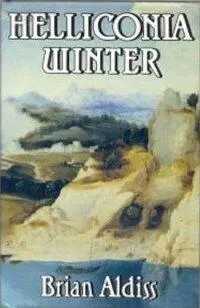
- Название:Helliconia Winter
- Автор:
- Издательство:Jonathan Cape
- Жанр:
- Год:1985
- ISBN:0-224-01847-7
- Рейтинг книги:5 / 5. Голосов: 1
-
Избранное:Добавить в избранное
- Отзывы:
-
Ваша оценка:
Helliconia Winter: краткое содержание, описание и аннотация
Предлагаем к чтению аннотацию, описание, краткое содержание или предисловие (зависит от того, что написал сам автор книги «Helliconia Winter»). Если вы не нашли необходимую информацию о книге — напишите в комментариях, мы постараемся отыскать её.
Helliconia Winter — читать онлайн бесплатно полную книгу (весь текст) целиком
Ниже представлен текст книги, разбитый по страницам. Система сохранения места последней прочитанной страницы, позволяет с удобством читать онлайн бесплатно книгу «Helliconia Winter», без необходимости каждый раз заново искать на чём Вы остановились. Поставьте закладку, и сможете в любой момент перейти на страницу, на которой закончили чтение.
Интервал:
Закладка:
Fully grown gunnadu made docile mounts, but tired easily. They were ideal for short journeys, such as an inspection of the Shokerandit estate. He felt himself safe here. The police would never enter one of the great estates. While his father was away enjoying the hunt, Luterin was in charge. Despite his long absence, despite his metamorphosis, he fell into the role with ease. From the Chief Steward down to the lowest slave, everyone knew him. It was absurd to think of any other life. And he was the perfect only son.
He had duties. Those he would attend to. He must introduce Toress Lahl to his mother. And he would have to speak to Insil Esikananzi; that might be a little awkward… Meanwhile, there were more im- portant duties.
He had matured. He caught himself reflecting that it was no bad thing that his father was absent. Always before this, he had missed him. Lobanster Shokerandit’s word hereabouts was law, as it was with his one remaining son. But the formidable Keeper of the Wheel was frequently absent. He liked to live rough, he said, and his hunting trips took up two or three tenners at a time. Off he would go, taking his dogs and his yelk with him. Sometimes he went accompanied only by his mute hunt captain, Liparotin. A farewell wave and he would be away, into the trackless wilds.
From his childhood, Luterin remembered that casual gesture of the hand upraised. Less a sign of love for him and his mother as they watched him depart, more a sign of acknowledgement to the spirit which presided over the lonely mountains.
Luterin had grown up missing his father. His withdrawn mother was hardly compensating company. Once he had insisted on accompanying his father and his brother, Favin. He had been proud then, among the proud caspiams; but Lobanster had appeared vexed with his sons, and they had returned home after no more than a week away.
He sniffed. He told himself that he too was a solitary, like his father. And then his thoughts swung back to Harbin Fashnalgid, last seen when Uuundaamp had turned him off the sledge. Only now did he realise he liked Fashnalgid, and should try to do something for him. His jealous anger at the man for possessing Toress Lahl was over.
Now he could recall Harbin uttering his unseemly oath, and smile. What an outcast the man was! Perhaps that was why it rankled when he called Luterin a victim of the system, or whatever the phrase was. The captain also had had a good side to his nature.
He and the Chief Steward visited the stungebag enclosure. The slow creatures were much as he remembered them. It was said that the Shokerandits had bred stungebags through four Great Years. The stungebags looked like badly thatched caterpillars or, when stretched to their full length, like fallen trees. They were combined animal and plant, a sport born at the melting time when the planet was showered by high-energy radiation.
Slaves were working in the hoxney paddock. Droves of hoxneys had once roved the uplands. Now they were starting to go into hibernation. In one of the corners of the estate, slaves were collecting the animals and storing them away in dry barns, prising them out of the nooks and crannies in which they had hidden. The animals relapsed swiftly into a shrunken, glassy state, their energies draining. They would come to resemble small translucent figures. Already, some were losing their dull brown colour and exhibiting colourful horizontal stripes, as they had done in the Great Spring.
In the hibernatory state, the hoxneys were known as glossies, perhaps not only for their shine, but because, like gossies, they were not entirely dead.
The estate manager, a freeman, came up and touched his hat.
“Glad to see you back, master. We’re packing the glossies with hay between, as you may observe, to protect the creatures. They should be all right when spring arrives, if so happen it ever does.”
“It’ll come. It’s only a matter of centuries.”
“So you scholars say,” said the man, with a conspiratorial grin at the steward.
“The principle is to organise for spring now. By storing these hoxneys safely, instead of leaving them to the vagaries of nature, we guarantee a good riding herd when the time comes.”
“ ‘Twill be long past our lifetimes.”
“Someone will be here, I don’t doubt, to be grateful for our providence.”
But he spoke absentmindedly, with Fashnalgid still on his mind.
When he got back to the mansion, he summoned his father’s secretary, a learned withdrawn man called Evanporil. He gave Evanporil instructions that four armed liegemen were to be sent on two giant biyelk as far down the road as Noonat, to seek out Fashnalgid if he was to be found. Fashnalgid was to be brought back to the safety of the Shokerandit estate. The secretary left about his task.
Luterin ate some lunch, and only then thought that he should visit his mother.
The hall of the great house was gloomy. There were no windows on the lower floor, so as to render the structure more impervious to ice, snow, and flood. A great heavy chair stood empty on the marble tiling; as far as Luterin knew, no one had ever sat in it.
Between the dim wall lamps, fed from the biogas chambers, skulls of phagors projected from the walls. These were specimens that Lobanster and other Shokerandits before him had killed. They remained now with their horns held high, their shadowed eye sockets observing with melancholy the far recesses of the hall.
He paused on the way to his mother’s quarters, aware of an uproar outside. Someone was shouting in a thick drunken voice. Shokerandit ran for a side door, hip-bell clattering. A slave hastily flung back the bolts to allow him passage.
In a court overlooked by the upper windows of the mansion, a liegeman and two freemen were brandishing swords. They had cornered six dehorned phagors. One of the phagors, a gillot with thin withered dugs which spoke of years in captivity, was calling out in a hoarse voice, in Sibish, “You not to kill, you vile Sons of Freyr! This Hrl-Ichor Yhar come back belong to us, the ancipitals! Stop! Stop!” “Stop!” Shokerandit said.
The men had already killed one of the ahumans. A swordsman had disembowelled a stallun with a downward slash of his sword. Ancipital eddre lodged in their carcasses above their lungs. As Shokerandit bent over the corpse, which was still in spasm, the intestines slithered forth on a tide of yellow blood.
The mass loosened itself and began slowly to evacuate the cavern of the ribs like a concoction of soft- boiled eggs in jelly. Beige shadows ran between little glistening mounds which came creeping out of the wound like a living mass, flowing thickly over the flags and into the cracks between the flags, flowing until all poured forth, separate organs no longer distinguishable in the general exodus, leaving a hollow behind them.
Shokerandit tugged back the dead creature’s ear to expose its blaze mark.
He glared at the men.
“These are our slave ancipitals. What are you doing?”
The liegeman was scowling. “Best mind out the way, master. Orders are to kill off all phagors, whether ours or otherwise.”
The five phagors began shouting hoarsely and scrambling to get past the men, who immediately brought their swords to the ready.
“Stop. Drikstalgil, who gave you these orders?” He remembered the liegeman’s name.
Keeping one eye on the ancipitals and his sword ready, the liegeman dipped into his left pocket and brought out a folded paper.
“Secretary Evanporil issued me this this morning. Now, stand back, if you would not mind, master, or you’ll get crushed.”
He handed Shokerandit a poster, which Shokerandit flapped open with an angry gesture. It was printed in heavy black letters.
The poster announced that a New Act had been passed, in a further attempt to keep down the Plague known as the Fat Death. The Ancipital Race had been identified as the main Carrier of the Plague. All Phagors must therefore be killed. Phagor slaves must be put down. Wild Phagors should be shot on sight. A bounty would be paid of One Sib per ancipital head by the appropriate authority in each District. Henceforth, the possession of Phagors was illegal, under Penalty of Death. By Order of the Oligarch.
Читать дальшеИнтервал:
Закладка:
Похожие книги на «Helliconia Winter»
Представляем Вашему вниманию похожие книги на «Helliconia Winter» списком для выбора. Мы отобрали схожую по названию и смыслу литературу в надежде предоставить читателям больше вариантов отыскать новые, интересные, ещё непрочитанные произведения.



Обсуждение, отзывы о книге «Helliconia Winter» и просто собственные мнения читателей. Оставьте ваши комментарии, напишите, что Вы думаете о произведении, его смысле или главных героях. Укажите что конкретно понравилось, а что нет, и почему Вы так считаете.