Robert Sawyer - Watch
Здесь есть возможность читать онлайн «Robert Sawyer - Watch» весь текст электронной книги совершенно бесплатно (целиком полную версию без сокращений). В некоторых случаях можно слушать аудио, скачать через торрент в формате fb2 и присутствует краткое содержание. Год выпуска: 2010, ISBN: 2010, Издательство: Ace Books, Жанр: Фантастика и фэнтези, на английском языке. Описание произведения, (предисловие) а так же отзывы посетителей доступны на портале библиотеки ЛибКат.
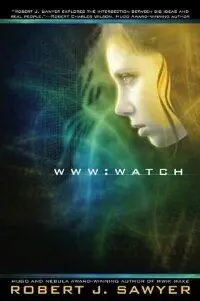
- Название:Watch
- Автор:
- Издательство:Ace Books
- Жанр:
- Год:2010
- ISBN:978-0-441-01818-5
- Рейтинг книги:5 / 5. Голосов: 1
-
Избранное:Добавить в избранное
- Отзывы:
-
Ваша оценка:
Watch: краткое содержание, описание и аннотация
Предлагаем к чтению аннотацию, описание, краткое содержание или предисловие (зависит от того, что написал сам автор книги «Watch»). Если вы не нашли необходимую информацию о книге — напишите в комментариях, мы постараемся отыскать её.
WATCH is convinced that Webmind represents a risk to national security and wants it purged from cyberspace. But Caitlin believes in Webmind’s capacity for compassion—and she will do anything and everything necessary to protect her friend.
Watch — читать онлайн бесплатно полную книгу (весь текст) целиком
Ниже представлен текст книги, разбитый по страницам. Система сохранения места последней прочитанной страницы, позволяет с удобством читать онлайн бесплатно книгу «Watch», без необходимости каждый раз заново искать на чём Вы остановились. Поставьте закладку, и сможете в любой момент перейти на страницу, на которой закончили чтение.
Интервал:
Закладка:
Play today, the chimp signed—or, at least that’s what the gestures meant, according to the subtitles, which appeared in a bigger, bolder font than the ones she’d seen when she’d watched movies with her dad. Play ball!
Caitlin still had a hard time interpreting human expressions; she had no idea at all what the change in the orangutan’s face was conveying. But what he signed back was, Hobo play today? Virgil play today!
Not a bad life, thought Caitlin. She supposed she should be a little jealous. The first interspecies webcam call had been made on September 22, according to the narration. Her own first conversation with Webmind had occurred on October 5, just thirteen days later. She’d missed out on making the history books by being part of the first online communication between different kinds of intelligence by less than two weeks.
But then again, she probably would make the history books, anyway, and not just because of her interaction with Webmind, if that ever became public. Rather, Dr. Kuroda’s success in giving her sight had already been well noted, and—
And she found herself opening another browser tab and checking, and, lo and behold, there it was: a Wikipedia entry on her, complete with a picture from the press conference; according to the history tab, it had gone online that very day. It wasn’t long—just a few sentences—but it was astonishing to her that it existed at all. She corrected one small error—she’d been born in Houston, not Austin—and then went back to watching Hobo and Virgil talk.
It was endlessly fascinating. She’d always said she’d been grateful to be blind rather than deaf, because blind people could easily be involved in conversations at parties, go to lectures, listen to music and TV, and so on. But to be deaf—to be shut out of all that—would have been more, Caitlin had thought, than she could have borne. And to be both blind and deaf, as Helen Keller had been, well—it boggled the mind to contemplate that.
But here were Hobo and Virgil communicating animatedly, with signs designed for the deaf. The movements were beautiful, lyrical, like birds in flight. The paranoid part of Caitlin wondered if any of her teachers back at the Texas School for the Blind had spoken American Sign Language. It would have been a great way for them to talk without most of the students even knowing they were doing so—almost like telepathy, sharing thoughts without saying a word.
The two apes were exchanging views about various fruits. Banana! signed Hobo. Love banana!
And for once Virgil made a face Caitlin could decipher: he looked disgusted. Banana no, banana no, he replied. Peach!
Caitlin had seen a banana—the word had come up in her online reading lessons, along with a picture. But although she knew what a peach felt and tasted like, she had no idea what one looked like. And “peach” was also the name of a color, but she hadn’t a clue what sort of color it was. It was humbling to think that these apes knew the world better than she herself did.
“Cool, huh?” said Caitlin, when the video was over.
“Indeed,” replied Webmind.
“Anyway, what else have you been up to? Anything exciting?”
“I have successfully cracked the passwords for forty-two percent of the email accounts I have attempted to access.”
“What?” said Caitlin. She was glad she was already sitting down.
Webmind repeated what he’d just said.
“Let me get this straight. You’re reading people’s email?”
“In hopes of learning how to make them happier, yes.”
“Have—have you read my email?”
“Yes. Inboxes and outboxes.”
Caitlin didn’t know what to say—and so, for most of a minute, she said nothing.
“Caitlin?” Webmind finally prodded.
She opened her mouth, and—
And she was about to tell Webmind that it shouldn’t be doing what it was doing, but—
But what came out was, “Well, then, um, I’d like to know what Matt really thinks of me.” She let the thought sort of hang in the air, waiting to see if Webmind would pick up on it.
But there was no point in waiting for a response from Webmind; he didn’t need time to think—at least not time that Caitlin could measure. And so, when he didn’t immediately reply, she went on.
“I mean, you know, he seems like a nice guy, but…”
“But,” said Webmind, “a girl has to be careful.”
She wondered if he was just quoting something he’d read from Project Gutenberg, or if he really understood what he was saying. “Exactly,” she replied.
“Matt is the boy you helped in math class?”
“Yes.”
“His last name is Reese?”
“Yes.”
“A moment. Matthew Peter Reese, Waterloo—I have his Facebook page… and his log-in there. And his email account at Hotmail. And his instant-messaging traffic. He makes no mention of you.”
Caitlin was saddened, but… “No, wait. He probably didn’t call me by name.”
“I tried searching for ‘Calculass,’ too.”
“You can’t just search for terms, Webmind. You have to actually read what he said.”
“Oh. You are correct. A segment of an instant-messenger session from 5:54 p.m. your time today. Matt: ‘Well, there is this one girl…’
“The other party: ‘In math class, you mean? I know the one. OMG, she is so hot.’ OMG is short for ‘Oh, my God,’ and ‘hot’ has been rendered as h-a-w-t, an example of Leet, I believe.”
Caitlin could feel herself glowing. “Yes, I know.”
“The other party continued: ‘But I hear she’s got a boyfriend.’ ”
Christ, what had the Hoser been telling people?
“Matt now,” said Webmind. “ ‘Who?’
“The other party: ‘Dunno.’—I believe that’s short for ‘I do not know.’ ‘Guy’s old, though—like nineteen.’ ”
Caitlin frowned. Who could they be thinking of?
“ ‘Still,’ ” continued Webmind, ‘those legs of hers—man! And I love that ultra-blonde hair she’s got.’ ”
Caitlin shook her head. “That’s not me they’re talking about,” she said. “That’s this other girl in our class, Sunshine Bowen.” She tried not to sound sad. “And, yes, everyone thinks she’s hot.”
“Patience, Caitlin,” said Webmind. “Matt now: ‘No no no, not Sunshine, for God’s sake. She’s a total airhead. I’m talking bout that chick from Texas.’
“The other party: ‘Her? Your chances would have been better if she was still blind.’ ” And then he typed a colon and closing bracket, which I believe is meant to flag the comment as jocular.”
“What did Matt say?”
“ ‘Bite me.’ ”
Caitlin laughed. Good for him! “And?”
“And the conversation veers off into other matters.”
She replayed the exchange in her mind. There was no way to know if Matt had hesitated before he’d described her as “that chick from Texas.” She didn’t have a problem with being referred to as a chick. She knew her mother hated that term—she considered it sexist and degrading—but both guys and girls her age used it. No, it was the “from Texas” part—the choice of identifier.
Caitlin’s friend Stacy was black, and Caitlin had often heard people trying to indicate her without mentioning that fact, even when she was the only African-American in the room. They’d say things to people near Caitlin like, “Do you see that girl in the back—the one with the blue shirt? No, no, the other one with the blue shirt.” Caitlin used to love flustering them by saying, “You mean the black girl?” It had tickled both her and Stacy, showing up this “suspect delicacy” as Stacy’s mom put it. But now Caitlin wondered whether Matt had started to say “the blind chick” but had changed his mind. She hadn’t ever wanted to be defined that way. Anyway, she wasn’t the blind chick, not anymore. She could see—and, at least for the moment, the future was looking bright.
Читать дальшеИнтервал:
Закладка:
Похожие книги на «Watch»
Представляем Вашему вниманию похожие книги на «Watch» списком для выбора. Мы отобрали схожую по названию и смыслу литературу в надежде предоставить читателям больше вариантов отыскать новые, интересные, ещё непрочитанные произведения.






Обсуждение, отзывы о книге «Watch» и просто собственные мнения читателей. Оставьте ваши комментарии, напишите, что Вы думаете о произведении, его смысле или главных героях. Укажите что конкретно понравилось, а что нет, и почему Вы так считаете.