Robert Silverberg - Homefaring
Здесь есть возможность читать онлайн «Robert Silverberg - Homefaring» весь текст электронной книги совершенно бесплатно (целиком полную версию без сокращений). В некоторых случаях можно слушать аудио, скачать через торрент в формате fb2 и присутствует краткое содержание. Год выпуска: 1983, Издательство: Dragon Publishing, Жанр: Фантастика и фэнтези, на английском языке. Описание произведения, (предисловие) а так же отзывы посетителей доступны на портале библиотеки ЛибКат.
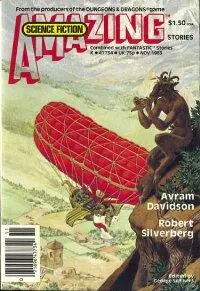
- Название:Homefaring
- Автор:
- Издательство:Dragon Publishing
- Жанр:
- Год:1983
- ISBN:нет данных
- Рейтинг книги:5 / 5. Голосов: 1
-
Избранное:Добавить в избранное
- Отзывы:
-
Ваша оценка:
Homefaring: краткое содержание, описание и аннотация
Предлагаем к чтению аннотацию, описание, краткое содержание или предисловие (зависит от того, что написал сам автор книги «Homefaring»). Если вы не нашли необходимую информацию о книге — напишите в комментариях, мы постараемся отыскать её.
Homefaring — читать онлайн бесплатно полную книгу (весь текст) целиком
Ниже представлен текст книги, разбитый по страницам. Система сохранения места последней прочитанной страницы, позволяет с удобством читать онлайн бесплатно книгу «Homefaring», без необходимости каждый раз заново искать на чём Вы остановились. Поставьте закладку, и сможете в любой момент перейти на страницу, на которой закончили чтение.
Интервал:
Закладка:
— Tell me, said McCulloch. What were the former worlds like, and what will the next one be?
— You should know more about the former worlds than I, friend human McCulloch. And as for the world to come, we may only speculate.
— But what are your traditions about those worlds?
— The first world, the lobster said, was a world of fire. — You can understand fire, living in the sea? — We have heard tales of it from those who have been to the dry place. Above the water there is air, and in the air there hangs a ball of fire, which gives the world warmth. Is this not the case?
McCulloch, hearing a creature of the ocean floor speak of things so far beyond its scope and comprehension, felt a warm burst of delight and admiration.
— Yes! We call that ball of fire the sun.
— Ah, so that is what you mean, when you think of the sun! The word was a mystery to me, when first you used it. But I understand you much better now, do you not agree?
— You amaze me.
— The first world, so we think, was fire: it was like the sun. And when we dwelled upon that world, we were fire also. It is the fire that we carry within us to this day, that glow, that brightness, which is our life, and which goes from us when we die. After a span of time so long that we could never describe its length, the Time of the Molting came upon the fire-world and it grew hard, and gathered a cloak of air about itself, and creatures lived upon the land and breathed the air. I find that harder to comprehend, in truth, than I do the fire-world. But that was the first Molting, when the air-world emerged: that world from which you have come to us. I hope you will tell me of your world, friend human McCulloch, when there is time.
— So I will, said McCulloch. But there is so much more I need to hear from you first!
— Ask it.
— The second Molting — the disappearance of my world, the coming of yours —
— The tradition is that the sea existed, even in the former world, and that it was not small. At the Time of the Molting it rose and devoured the land and all that was upon it, except for one place that was not devoured, which is sacred. And then all the world was covered by water, and that was the second Molting, which brought forth the third world.
— How long ago was that?
— How can I speak of the passing of time? There is no way to speak of that. Time passes, and lives end, and worlds are transformed. But we have no words for that. If every grain of sand in the sea were one lifetime, then it would be as many lifetimes ago as there are grains of sand in the sea. But does that help you? Does that tell you anything? It happened. It was very long ago. And now our world’s turn has come, or so we think.
— And the next world? What will that be like? McCulloch asked.
— There are those who claim to know such things, but I am not one of them. We will know the next world when we have entered it, and I am content to wait until then for the knowledge.
McCulloch had a sense then that the host had wearied of this sustained contact, and was withdrawing once again from it; and, though his own thirst for knowledge was far from sated, he chose once again not to attempt to resist that withdrawal.
All this while the pilgrims had continued down a gentle incline into the great bowl of a sunken valley. Once again now the ocean floor was level, but the water was notably deeper here, and the diffused light from above was so dim that only the most rugged of algae could grow, making the landscape bleak and sparse. There were no sponges here, and little coral, and the anemones were pale and small, giving little sign of the potent intelligence that infused their larger cousins in the shallower zones of the sea.
But there were other creatures at this level that McCulloch had not seen before. Platoons of alert, mobile oysters skipped over the bottom, leaping in agile bounds on columns of water that they squirted like jets from tubes in their dark green mantles: now and again they paused in mid-leap and their shells quickly opened and closed, snapping shut, no doubt, on some hapless larval thing of the plankton too small for McCulloch, via the lobster’s imperfect vision, to detect. From these oysters came bright darting blurts of mental activity, sharp and probing: they must be as intelligent, he thought, as cats or dogs. Yet from time to time a lobster, swooping with an astonishingly swift claw, would seize one of these oysters and deftly, almost instantaneously, shuck and devour it. Appetite was no respecter of intelligence in this world of needful carnivores, McCulloch realized.
Intelligent, too, in their way, were the hordes of nearly invisible little crustaceans—shrimp of some sort, he imagined—that danced in shining clouds just above the line of march. They were ghostly things perhaps an inch long, virtually transparent, colorless, lovely, graceful. Their heads bore two huge glistening black eyes; their intestines, glowing coils running the length of their bodies, were tinged with green; the tips of their tails were an elegant crimson. They swam with the aid of a horde of busy finlike legs, and seemed almost to be mocking their stolid, plodding cousins as they marched; but these sparkling little creatures also occasionally fell victim to the lobsters’ inexorable claws, and each time it was like the extinguishing of a tiny brilliant candle.
An emanation of intelligence of a different sort came from bulky animals that McCulloch noticed roaming through the gravelly foothills flanking the line of march. These seemed at first glance to be another sort of lobster, larger even than McCulloch’s companions: heavily armored things with many-segmented abdomens and thick paddle-shaped arms. But then, as one of them drew nearer, McCulloch saw the curved tapering tail with its sinister spike, and realized he was in the presence of the scorpions of the sea.
They gave off a deep, almost somnolent mental wave: slow thinkers but not light ones, Teutonic ponderers, grapplers with the abstruse. There were perhaps two dozen of them, who advanced upon the pilgrims and in quick one-sided struggles pounced, stung, slew. McCulloch watched in amazement as each of the scorpions dragged away a victim and, no more than a dozen feet from the line of march, began to gouge into its armor to draw forth tender chunks of pale flesh, without drawing the slightest response from the impassive, steadily marching column of lobsters.
They had not been so complacent when the great-mouthed swimming thing had menaced McCulloch’s host; then, the lobsters had come in hordes to tear the attacker apart. And whenever one of the big squids came by, the edgy hostility of the lobsters, their willingness to do battle if necessary, was manifest. But they seemed indifferent to the scorpions. The lobsters accepted their onslaught as placidly as though it were merely a toll they must pay in order to pass through this district. Perhaps it was. McCulloch was only beginning to perceive how dense and intricate a fabric of ritual bound this submarine world together.
The lobsters marched onward, chanting in unfailing rhythm as though nothing untoward had happened. The scorpions, their hungers evidently gratified, withdrew and congregated a short distance off, watching without much show of interest as the procession went by them. By the time McCulloch’s host, bringing up the rear, had gone past the scorpions, they were fighting among themselves in a lazy, half-hearted way, like playful lions after a successful hunt. Their mental emanation, sluggishly booming through the water, grew steadily more blurred, more vague, more toneless.
Читать дальшеИнтервал:
Закладка:
Похожие книги на «Homefaring»
Представляем Вашему вниманию похожие книги на «Homefaring» списком для выбора. Мы отобрали схожую по названию и смыслу литературу в надежде предоставить читателям больше вариантов отыскать новые, интересные, ещё непрочитанные произведения.



Обсуждение, отзывы о книге «Homefaring» и просто собственные мнения читателей. Оставьте ваши комментарии, напишите, что Вы думаете о произведении, его смысле или главных героях. Укажите что конкретно понравилось, а что нет, и почему Вы так считаете.