Walter Tevis - Mockingbird
Здесь есть возможность читать онлайн «Walter Tevis - Mockingbird» весь текст электронной книги совершенно бесплатно (целиком полную версию без сокращений). В некоторых случаях можно слушать аудио, скачать через торрент в формате fb2 и присутствует краткое содержание. Город: London, Год выпуска: 2007, ISBN: 2007, Издательство: Gollancz, Жанр: Фантастика и фэнтези, на английском языке. Описание произведения, (предисловие) а так же отзывы посетителей доступны на портале библиотеки ЛибКат.
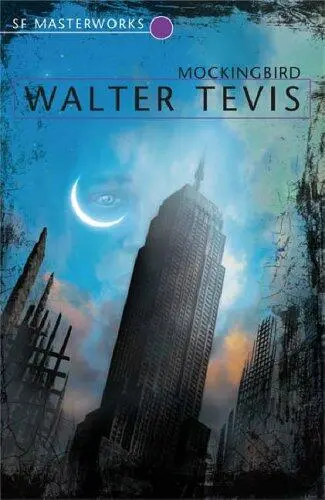
- Название:Mockingbird
- Автор:
- Издательство:Gollancz
- Жанр:
- Год:2007
- Город:London
- ISBN:978-0575079151
- Рейтинг книги:5 / 5. Голосов: 1
-
Избранное:Добавить в избранное
- Отзывы:
-
Ваша оценка:
Mockingbird: краткое содержание, описание и аннотация
Предлагаем к чтению аннотацию, описание, краткое содержание или предисловие (зависит от того, что написал сам автор книги «Mockingbird»). Если вы не нашли необходимую информацию о книге — напишите в комментариях, мы постараемся отыскать её.
Mockingbird
Review
From the Inside Flap “A moral tale that has elements of Aldous Huxley’s
,
, and
.”
—
“Set in a far future in which robots run a world with a small and declining human population, this novel could be considered an unofficial sequel to
, for its central event and symbol is the rediscovery of reading.”
—
“Because of its affirmation of such persistent human values as curiosity, courage, and compassion, along with its undeniable narrative power,
will become one of those books that coming generations will periodically rediscover with wonder and delight.”
—
“I’ve read other novels extrapolating the dangers of computerization but Mockingbird stings me, the writer, the hardest. The notion, the possibility, that people might indeed lose the ability, and worse, the desire to read, is made acutely probable.”
—
bestselling author ANNE MCCAFFREY “Walter Tevis is science fiction’s great neglected master, one of the definitive bridges between sf and literature. For those who know his work only through the movies, the lucid prose and literary vision of
and
will come as a revelation.”
—AL SARRANTONIO, Author of
saga
Mockingbird — читать онлайн бесплатно полную книгу (весь текст) целиком
Ниже представлен текст книги, разбитый по страницам. Система сохранения места последней прочитанной страницы, позволяет с удобством читать онлайн бесплатно книгу «Mockingbird», без необходимости каждый раз заново искать на чём Вы остановились. Поставьте закладку, и сможете в любой момент перейти на страницу, на которой закончили чтение.
Интервал:
Закладка:
Once, when we were alone, I asked her about her sadness. Even though there was nothing physical between us, I had come to feel an intimacy with her from the work we did together and from the feeling I sensed we both had that we would never be like the Baleen family.
“Have you always been unhappy?” I said, once, when we were putting a stack of coffee cakes into irradiation bags for storage. I was wrapping the cakes in the plastic bags and she was working the Sears machine that sealed them and shone the yellow preserving light on them.
At first I thought she wasn’t going to answer me. But then she said, “I was a very happy young girl. I used to sing often. And I loved to hear my mother tell me stories. There was a lot more of that within Swisher House than there is here.” She gestured with her arm, talcing in the big, empty kitchen.
“Would you like to go back?” I said.
“It wouldn’t be any good,” she said. “They’re all too old now.”
“You should let me teach you to read,” I said. We had talked about that before.
“No,” she said. “I’m too busy. And I don’t think I could make the effort.” She smiled shyly. “But I love to hear you read. It sounds like… another world.”
I finished wrapping the last of the coffee cakes, handed it to her, and poured myself a cup of coffee. I looked out toward the garden and the chicken house. “Is it your husband’s death that makes you sad?”
“No,” she said. “My husband was never… important to me. Not after I found that I wouldn’t have any children. I always wanted very much to have children. I would have been a good mother.”
I thought about that before I spoke. “If you quit using pills…” I had told her about the label on the Valium box.
“No,” she said. “It’s too late. I’m really… really worn out with it all. And I don’t think I could live around here without the pills.”
“Annabel,” I said, “you and I could leave here together. And if you didn’t take pills for a yellow you might be able to have a baby. My baby.”
She looked at me strangely, and I could not tell what she was thinking. She said nothing.
I took a step over toward her and then reached out and gently took her shoulders in my hands, feeling the bones beneath the cloth of her shirt. She did not pull away from me this time. “We’re different from these people. We could be together, and we might be able to have children.”
And then she looked me in the face and I could see that she was crying. “Paul,” she said, “I could not go with you unless Edgar Baleen gave me to you and married us in church.”
I looked at her, not knowing what to say and upset by her tears. “Church,” I knew, was the Sears store. It was used for weddings and funerals. In the old days children had been baptized there, in the same fountain that I had been baptized in.
Finally I thought of something to say. “I’m not a Baleen. And you aren’t either.”
“That’s true,” she said. “But I could never live in sin with a man. It would be… immoral.”
The way she said that last sentence had more feeling in it than I knew how to deal with. I knew about “living in sin”; I had learned about it from silent films. But I had had no idea that she would have possessed such a notion.
“It wouldn’t have to be ‘sin,’” I said. “We could have our own ceremony—over at the Mall at night, if you wanted it.”
“No, Paul,” she said, and then she wiped her eyes with the hem of her apron. My heart went out to her at the gesture. For that moment I was in love with her.
“What is it, Annabel?” I said.
“Paul,” she said, “I have heard of women who enjoy… making love.” She looked down toward the floor. “That may be right for them to… to fornicate. To commit adultery. But we women from the Plain are Christian.”
I did not know what to make of it. I knew the word “Christian”; it was used for people who believed that Jesus was a God. But Jesus, as far as I could understand what I had read about him in the Bible, had seemed very tolerant of sexual behavior. I remembered some people called “scribes” and “Pharisees” who had wanted to punish women who had committed adultery. But Jesus had disagreed with them.
I did not pursue that with her, though. Possibly it was something final about the way she pronounced the word “Christian.” Instead I said, “I don’t know that I understand.”
She looked at me, half pleadingly and half angrily. Then she said, “I don’t like sex, Paul. I hate it.”
I did not know what to say.
It remained at that between Annabel and me for the rest of that spring; we did not discuss it again. But we worked together and got to know each other’s ways very well and I came to feel closer to her than I have to anyone else in my life—closer even than to Mary Lou, with whom I had made love many times with a great and deep pleasure for both of us. She was such a good person. I can cry to remember how good she was—and how melancholy. And how competent at what she did. I can see her standing by her potter’s wheel, or at the stove, or feeding the chickens with her blue apron blowing in the wind, or just pushing a light-colored wisp of hair back off her forehead. And I can see her as she stood facing me that day with tears streaming down her cheeks, telling me that she could not live with me.
And it was she who got rid of Biff’s fleas, and she who always prepared breakfast for me when I came downstairs in the early mornings. It was she who told me that I should consider fixing up this old house to live in. She was the first to take me to see it, a mile from the Maugre obelisk and on a bluff overlooking the ocean.
It was a house she had known of when she was a girl, one that had been lived in by some recluse who had died years before. The children from the Cities had thought of it as “haunted.” She told me she had sneaked into it once on a dare, but had been too frightened to stay for more than a minute.
I think of Annabel as a little girl when I look around me now at my living room, as though she were standing there now as a frightened child. If the place is haunted, it is she who haunts it. A beautiful shy child, who loved to sing.
I loved Annabel. What I felt for her was different from what I felt—and, to some degree, still feel—about Mary Lou. What Annabel needed was a way to put her talent and her energy to use. She did a great deal of work; but no one thanked her for it and most of it could have been done by a Make Three robot without the Baleens’ knowing the difference—all the cooking so lovingly and skillfully done, all the sweeping and dishwashing and pottery making, for years. And no one thanked her for it.
I must write this down quickly, before the emotion of it paralyzes me while I sit here, on this morning in early summer, as I approach the end of this part of my journal.
We went on like that, Annabel and I, doing kitchen work together and talking after my readings in the mornings. I learned of many more things than the art of cooking and the sense of sexual puritanism that was not only Annabel’s but was a basic part of the culture of the Seven Cities of the Plain. Where the Baleens had come from Annabel did not know, except that they had been wandering preachers at one time, generations before, until the Bible and the literacy that went with it were gradually lost. She had been born in Swisher House, but her mother had been a wanderer in her youth. Once they had been singers of religious songs, but the “Plague of Childlessness” had caused old Baleen to silence them from singing, when Annabel was a young girl. She had been the last one born in the Cities.
I never tried to make love to her again. I have thought since that I should have tried; but once she had told me how she felt about lovemaking I was too confused and uncertain. I would think about Annabel and Mary Lou, loving them both and knowing both were unattainable. And somehow it was almost good that way. There were no risks .
Читать дальшеИнтервал:
Закладка:
Похожие книги на «Mockingbird»
Представляем Вашему вниманию похожие книги на «Mockingbird» списком для выбора. Мы отобрали схожую по названию и смыслу литературу в надежде предоставить читателям больше вариантов отыскать новые, интересные, ещё непрочитанные произведения.





Обсуждение, отзывы о книге «Mockingbird» и просто собственные мнения читателей. Оставьте ваши комментарии, напишите, что Вы думаете о произведении, его смысле или главных героях. Укажите что конкретно понравилось, а что нет, и почему Вы так считаете.