Walter Tevis - Mockingbird
Здесь есть возможность читать онлайн «Walter Tevis - Mockingbird» весь текст электронной книги совершенно бесплатно (целиком полную версию без сокращений). В некоторых случаях можно слушать аудио, скачать через торрент в формате fb2 и присутствует краткое содержание. Город: London, Год выпуска: 2007, ISBN: 2007, Издательство: Gollancz, Жанр: Фантастика и фэнтези, на английском языке. Описание произведения, (предисловие) а так же отзывы посетителей доступны на портале библиотеки ЛибКат.
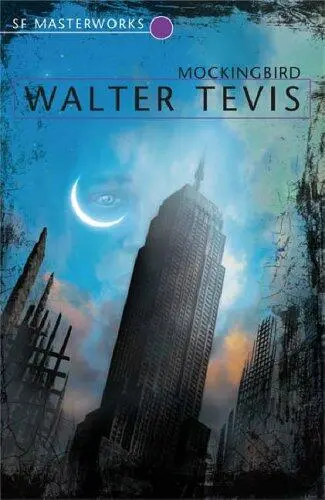
- Название:Mockingbird
- Автор:
- Издательство:Gollancz
- Жанр:
- Год:2007
- Город:London
- ISBN:978-0575079151
- Рейтинг книги:5 / 5. Голосов: 1
-
Избранное:Добавить в избранное
- Отзывы:
-
Ваша оценка:
Mockingbird: краткое содержание, описание и аннотация
Предлагаем к чтению аннотацию, описание, краткое содержание или предисловие (зависит от того, что написал сам автор книги «Mockingbird»). Если вы не нашли необходимую информацию о книге — напишите в комментариях, мы постараемся отыскать её.
Mockingbird
Review
From the Inside Flap “A moral tale that has elements of Aldous Huxley’s
,
, and
.”
—
“Set in a far future in which robots run a world with a small and declining human population, this novel could be considered an unofficial sequel to
, for its central event and symbol is the rediscovery of reading.”
—
“Because of its affirmation of such persistent human values as curiosity, courage, and compassion, along with its undeniable narrative power,
will become one of those books that coming generations will periodically rediscover with wonder and delight.”
—
“I’ve read other novels extrapolating the dangers of computerization but Mockingbird stings me, the writer, the hardest. The notion, the possibility, that people might indeed lose the ability, and worse, the desire to read, is made acutely probable.”
—
bestselling author ANNE MCCAFFREY “Walter Tevis is science fiction’s great neglected master, one of the definitive bridges between sf and literature. For those who know his work only through the movies, the lucid prose and literary vision of
and
will come as a revelation.”
—AL SARRANTONIO, Author of
saga
Mockingbird — читать онлайн бесплатно полную книгу (весь текст) целиком
Ниже представлен текст книги, разбитый по страницам. Система сохранения места последней прочитанной страницы, позволяет с удобством читать онлайн бесплатно книгу «Mockingbird», без необходимости каждый раз заново искать на чём Вы остановились. Поставьте закладку, и сможете в любой момент перейти на страницу, на которой закончили чтение.
Интервал:
Закладка:
Halfway through the program I closed my eyes tightly and saw no more of it. I could hear occasional responsive grunts from the Baleens around me. From the beginning they had all been passionately absorbed in the story on the screen. It was horrible.
After the television show had ended—with Detectors saving the girl, judging from the sound track—the screen was turned off and I was brought to the lectern to read.
During my reading I came before long to the part about Noah, which I remembered from prison. Noah was a man whom God had decided to save from drowning during a flood that destroyed all of the rest of life on earth. There was a passage in the reading that went like this:
God said to Noah, “The loathsomeness of all mankind has become pain to me, for through them the earth is full of violence. I intend to destroy them.”
And when I read: “I intend to destroy them,” I heard old Baleen beside me shout out, very loudly, “Amen!” and another shout of “Amen!” came from the people in front of me. It was startling, but I read on.
After the reading I had hoped to be able to talk with Annabel, but old Baleen took me over to the Mall and waited while I picked myself some new clothing at Sears. I wanted to stay for a while and look over all of the ancient things in that vast store, but he merely said, “This is sacred ground,” and would not let me. He did not say so but I felt I had better not let myself be caught over here alone again.
And I did intend to return. I was not as awed by Rules as I had once been. And I was not afraid of Edgar Baleen.
We left the Mall. With fresh new jeans and a black turtleneck next to my skin I felt oddly elated, and while we were crossing the short moonlit distance over to Baleena, I was struck by an idea and said, “Do you mind if I help Annabel in the kitchen for a few days? I’m not very good at farm work.” That wasn’t exactly true; I merely hated farm work.
He stopped walking and was silent for a moment. Then he said, “You talk a lot.”
Somehow that angered me slightly. “Why not?” I said.
“Talk’s cheap,” he said, and I wondered: What has that got to do with it ?
There was silence for another long moment, and then he said, “Life is serious , Reader.”
I nodded, not knowing what to say, and that seemed to placate him, for he went on, “You can help Annabel.”
Annabel did not think talk was cheap, and she was the only one of them who felt that way. In a sense, she was not one of them. She was originally a Swisher, from one of the other Seven Families, and had changed her name to Baleen when she had married one of old Baleen’s sons. The Swishers had been a more talkative breed, but a less prolific one than the Baleens. There were only three Swishers left, two very old men and a half-crazy old woman, Annabel’s mother. They lived in what was called Swisher House, several miles up the coast, and bartered gasoline with the Baleens in return for food and clothing from the Mall. The rest of the families in what was called the Cities of the Plain were smaller and weaker than the Baleens. All of them farmed a little. The Baleens, Annabel told me, were more religious than the others, but all were “Christians.”
I asked her about the reaction to Noah that I had received. I can still picture her vividly as she told me this, with her light hair pulled back in a bun, a coffee cup in her hand, and her blue-gray eyes shy and sa3.
“It’s my father-in-law,” she said. “He thinks he’s a prophet. He thinks the reason there are no more children is that the Lord is punishing the world for its sins—as with Noah. Everybody knows the story of Noah. My mother told it to me—but differently from the way you read it. She didn’t tell about his being drunk, and about his sons.”
“Is Edgar Baleen expecting to be saved, like Noah?”
She smiled. “I don’t really know. I don’t know how he could be. He’s too old to have children.”
I asked her a more personal question. It was difficult for me to become used to Invasion of Privacy, even though the Baleens did not believe in that rule. “What became of your husband?” I asked.
She sipped from her coffee. “Suicide. Two years ago.”
“Oh,” I said.
“He and two of his brothers took thirty sopors and then poured gasoline on themselves and lit it.”
I was shocked. It was the same thing I had seen in New York, at the Burger Chef. “People have done that in New York,” I said.
She lowered her eyes. “It’s happened here—in all of the families,” she said. “My husband wanted me to be the third in the group. I was attracted to the idea, but I declined. I want to live a while longer.” She got up from the table where we were sitting and began to take dishes over to the sink. “At least I think I want to live.”
I was made silent by the weariness that had suddenly come into her voice.
After clearing the table she got herself another cup of coffee and sat down again.
After a minute I spoke. “Do you think you will marry again?”
She looked up at me sadly. “It’s not allowed. To marry a Baleen you must be a… a virgin.” She blushed slightly, and lowered her eyes.
This kind of talk was all rather strange to me, since I had never before met people who married. But I was familiar with such things from books and films, and I knew that it had been once considered a Mistake for a man to marry a “fallen woman” of the kind that Gloria Swanson often was—but I had not thought a widow was spoken of as “fallen.” Still, all such masters were basically alien to my education. I had been taught “Quick sex is best.” I was only beginning to realize that the world might be full of people who had not received the education I had.
It was in the middle of the morning when we had that conversation, and I remember now that was the first time I felt a sexual attraction toward Annabel. She was sitting there quietly, her face melancholy, holding one of the big ceramic coffee mugs that she had let me watch her make in the pottery shed that sat on the other side of the rose garden. I had watched her then at the wheel with awe, amazed at the sureness of her movements as she shaped wet clay into a flawless cylinder, her hands and wrists wet with gray and clayey water, and her eyes focused in complete, intelligent attention on her work. My respect and admiration for her at that time had been great; but I had felt nothing physical.
But now, sitting alone at the big table with her, I realized that I was becoming aroused. I had changed. Mary Lou had changed me; and the films and the books and prison and afterward had changed me too. The last thing I wanted with Annabel was quick sex. I wanted to make love to her; but more importantly I wanted to touch her, and to comfort her from the sadness that seemed to . hold her spirit.
She had set her coffee cup down and was staring toward the windows. I reached my hand out and laid it gently on her forearm.
She jerked her arm away immediately, spilling the rest of her coffee. “No,” she said, not looking at me. “You mustn’t.”
She got a cloth from the sink and wiped up what she had spilled.
During the next several weeks Annabel remained pleasant, but distant. She taught me to make corn pudding from the frozen corn in the refrigerators, and cheesecake and dill pickles and ice cream and soup and chili. I would set the table for lunch and dinner, and prepare the soups and help with the cleaning up. Some of the Baleen men looked at me strangely for doing such work, but none of them spoke aloud of it and I did not really care what they thought. I enjoyed it well enough, although it grieved me to see how sad the repeated work made Annabel feel. I would praise her cooking occasionally, and that seemed to help a little.
Читать дальшеИнтервал:
Закладка:
Похожие книги на «Mockingbird»
Представляем Вашему вниманию похожие книги на «Mockingbird» списком для выбора. Мы отобрали схожую по названию и смыслу литературу в надежде предоставить читателям больше вариантов отыскать новые, интересные, ещё непрочитанные произведения.





Обсуждение, отзывы о книге «Mockingbird» и просто собственные мнения читателей. Оставьте ваши комментарии, напишите, что Вы думаете о произведении, его смысле или главных героях. Укажите что конкретно понравилось, а что нет, и почему Вы так считаете.