Walter Tevis - Mockingbird
Здесь есть возможность читать онлайн «Walter Tevis - Mockingbird» весь текст электронной книги совершенно бесплатно (целиком полную версию без сокращений). В некоторых случаях можно слушать аудио, скачать через торрент в формате fb2 и присутствует краткое содержание. Город: London, Год выпуска: 2007, ISBN: 2007, Издательство: Gollancz, Жанр: Фантастика и фэнтези, на английском языке. Описание произведения, (предисловие) а так же отзывы посетителей доступны на портале библиотеки ЛибКат.
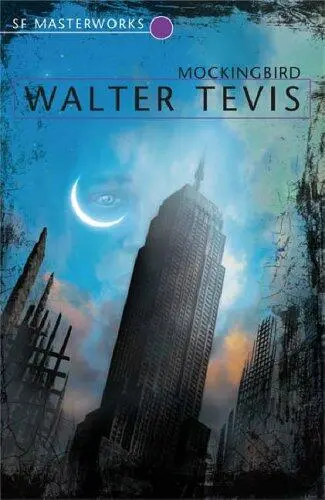
- Название:Mockingbird
- Автор:
- Издательство:Gollancz
- Жанр:
- Год:2007
- Город:London
- ISBN:978-0575079151
- Рейтинг книги:5 / 5. Голосов: 1
-
Избранное:Добавить в избранное
- Отзывы:
-
Ваша оценка:
Mockingbird: краткое содержание, описание и аннотация
Предлагаем к чтению аннотацию, описание, краткое содержание или предисловие (зависит от того, что написал сам автор книги «Mockingbird»). Если вы не нашли необходимую информацию о книге — напишите в комментариях, мы постараемся отыскать её.
Mockingbird
Review
From the Inside Flap “A moral tale that has elements of Aldous Huxley’s
,
, and
.”
—
“Set in a far future in which robots run a world with a small and declining human population, this novel could be considered an unofficial sequel to
, for its central event and symbol is the rediscovery of reading.”
—
“Because of its affirmation of such persistent human values as curiosity, courage, and compassion, along with its undeniable narrative power,
will become one of those books that coming generations will periodically rediscover with wonder and delight.”
—
“I’ve read other novels extrapolating the dangers of computerization but Mockingbird stings me, the writer, the hardest. The notion, the possibility, that people might indeed lose the ability, and worse, the desire to read, is made acutely probable.”
—
bestselling author ANNE MCCAFFREY “Walter Tevis is science fiction’s great neglected master, one of the definitive bridges between sf and literature. For those who know his work only through the movies, the lucid prose and literary vision of
and
will come as a revelation.”
—AL SARRANTONIO, Author of
saga
Mockingbird — читать онлайн бесплатно полную книгу (весь текст) целиком
Ниже представлен текст книги, разбитый по страницам. Система сохранения места последней прочитанной страницы, позволяет с удобством читать онлайн бесплатно книгу «Mockingbird», без необходимости каждый раз заново искать на чём Вы остановились. Поставьте закладку, и сможете в любой момент перейти на страницу, на которой закончили чтение.
Интервал:
Закладка:
I spent the rest of that night there, sitting against the wall and sleeping as well as I could. When I awoke in the morning, daylight was coming in the windows and the lights had dimmed themselves. Toasters were still moving along the production line there in the gray morning light and the robots were still standing where they had been the evening before. My body was stiff, and I was ravenous.
It was good to be warm again, and I decided to stay there in the factory for the rest of the winter, if I could just find food. And it turned out that there was food. The robots were of a very primitive make, somewhat like the ones diagrammed in my Audel’s Robot Maintenance and Repair Guide . They had been made by selective cloning from living tissue, and they required food. Shortly after I awoke, the assembly line shut itself down automatically and all of the robots gathered in a sheep-like cluster by a doorway next to the recycling room, and the inspector robot, the one from the end of the line, opened the door. Inside was a large closet with three sets of shelves, two of them stacked high with little cartons slightly larger than a package of cigarettes. On the other shelf were cans of some kind of drink.
Nearly starving, I pushed in with the robots and was handed a carton of food and a can of drink.
The food was some kind of unfavored soybar, and the drink was terribly sweet; but I got them eaten and drunk in a hurry. Then, a bit apprehensively, I opened the closet and took out ten food cartons and four cans of drink. None of the robots paid any attention. I was enormously relieved; I would not starve.
Later I discovered a huge pile of unused shipping cartons under the conveyor belt on the back wall. I took four of them and flattened them out on the floor where I had slept the night before, and they made a fairly comfortable bed—far better than the frozen beaches I had been sleeping on.
So I was provided for, and I kept saying to myself, “This is my winter home.” But even from the start I did not believe it, for, sick as I was, the place was no home to me. It was the most horrible place I have slept in in my life, with that mindless parody of productivity going on constantly around me, and with the wretched waste of time and energy in the making and unmaking of battery-powered toasters. And those gray-uniformed sub-morons, parodies of humanity, shuffling around silently, with no real work to do. During the five days I stayed there I saw no robot except the inspector do anything at his job. And he only dropped toasters into a bin and every hour or so shouted, “Recycle time!” And fed the others their two meals a day.
After two days the snow stopped, and the day after, the weather warmed up. I provided myself with all the food and drink I could carry in my backpack, and left. It was a warm, safe place, and there was plenty of food and drink there. But it was no home for me.
After I had packed my backpack with fifty soybars and thirty-five cans of drink at the toaster factory and was ready to leave, I made a close inspection of the machines along the assembly line, studying the function of each of them. They were all of gray metal and all quite big, but each was differently made. One formed the sheets of metal into the toaster shell, another fastened a heating element in place, a third installed the battery, and so on. The robot who stood in front of each machine, supposedly attending it, paid no attention to me.
Eventually I found what I was looking for. It was a machine slightly smaller than the others, with a hopper that held some kind of little metallic chip in stacks of hundreds. Where the chips were supposed to drop from a narrow neck in the hopper and be picked up by metal fingers and placed on the passing toaster, one of them had fallen sideways and stuck in place so that no more chips could get out. I stood there a moment looking at it and thinking of how much wasted energy that little jammed-up piece of silicon or whatever it was must have caused. I remembered when the toaster in my dormitory had broken down and how we had had no toast ever after that.
Then I reached out and jiggled the hopper with my hand until the chip came loose.
The mechanical hand took it from the bottom of the hopper and placed it inside the next toaster, just below the switch on its side, and a small laser beam flared briefly and welded it there.
A few moments later, at the end of the line, the inspector robot flipped up the switch on that toaster and its element glowed red. He showed no surprise but merely flipped the switch back off and set the toaster in an empty carton, and then repeated his action.
I watched him fill up a carton with twenty toasters ready for shipping. I had not the remotest idea how they would be shipped or where, but I felt pleased with what I had done.
Then I put on my backpack, picked up Biff, and left.
Mary Lou
Last night I couldn’t sleep. I had lain in bed an hour or more, thinking about the loneliness in the streets, about how no one seemed to talk to anyone. Paul had shown me a film once, called The Lost Chord . There was a long scene in it of what was called a “picnic,” in which ten or twelve people bad sat at a big table out of doors eating things like corn on the cob and watermelon and talking to one another—just talking, all of them. I had not paid much attention at the time, sitting by Paul at his bed-and-desk in that gaudy room of his in the library basement; but the scene had somehow stayed with me and would come into my mind from time to time. I had never seen anything like it in real life—a whole big group of people engaged in eating and talking together, their faces alive with the talk, sitting outdoors with a breeze blowing their shirts and blouses gently—the women with their hair softly blowing around their faces—and with good honest food in their hands, eating and talking to one another as though there were no better thing in life to do.
It was a silent movie, and I could not at the time read the words on the screen, so I had no idea what they were talking about. But it did not matter. Lying in bed last night, I ached to be a part of that conversation, to be sitting around that wooden table in that ancient black-and-white film, eating corn on the cob and talking to all those other people.
Finally I got out of bed and went into the living room, where Bob was sitting staring at the ceiling. He nodded to me as I seated myself in the chair by the window, but he said nothing.
I stretched myself in the chair and yawned. Then I said, “What happened to conversations? Why don’t people talk anymore, Bob?”
He looked at me. “Yes,” he said, as though he had been thinking about the same thing himself. “When I was newly made, back in Cleveland, there was more of it than now. At the automobile factories there were still a few humans working along with the robots, and they would get together—five or six at a time—and talk. I would see them doing it.”
“What happened?” I said. “I’ve never seen groups of people talking. Maybe sometimes in twos—but then very seldom.”
“I’m not sure,” Bob said. “The perfecting of drugs had much to do with it. And the inwardness. I suppose Privacy rules reinforced it.” He looked at me thoughtfully. Sometimes Bob was more human than any human I have known, except maybe Simon. “Privacy and Mandatory Politeness were invented by one of my fellow Make Nines. He felt it was what people really wanted, once they had the drugs to occupy themselves with. And it nearly put a stop to crime. People used to commit a lot of crimes. They would steal from one another and do violent things to one another’s bodies.”
“I know,” I said, not even wanting to think about it. “I’ve seen television…”
Читать дальшеИнтервал:
Закладка:
Похожие книги на «Mockingbird»
Представляем Вашему вниманию похожие книги на «Mockingbird» списком для выбора. Мы отобрали схожую по названию и смыслу литературу в надежде предоставить читателям больше вариантов отыскать новые, интересные, ещё непрочитанные произведения.





Обсуждение, отзывы о книге «Mockingbird» и просто собственные мнения читателей. Оставьте ваши комментарии, напишите, что Вы думаете о произведении, его смысле или главных героях. Укажите что конкретно понравилось, а что нет, и почему Вы так считаете.