Phoebe North - Starbreak
Здесь есть возможность читать онлайн «Phoebe North - Starbreak» весь текст электронной книги совершенно бесплатно (целиком полную версию без сокращений). В некоторых случаях можно слушать аудио, скачать через торрент в формате fb2 и присутствует краткое содержание. Год выпуска: 2014, Издательство: Simon & Schuster Books for Young Readers, Жанр: Фантастика и фэнтези, на английском языке. Описание произведения, (предисловие) а так же отзывы посетителей доступны на портале библиотеки ЛибКат.
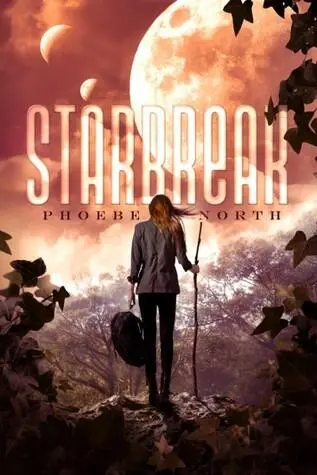
- Название:Starbreak
- Автор:
- Издательство:Simon & Schuster Books for Young Readers
- Жанр:
- Год:2014
- ISBN:нет данных
- Рейтинг книги:5 / 5. Голосов: 1
-
Избранное:Добавить в избранное
- Отзывы:
-
Ваша оценка:
Starbreak: краткое содержание, описание и аннотация
Предлагаем к чтению аннотацию, описание, краткое содержание или предисловие (зависит от того, что написал сам автор книги «Starbreak»). Если вы не нашли необходимую информацию о книге — напишите в комментариях, мы постараемся отыскать её.
Then Terra finally discovers Vadix. The boy who has haunted her dreams may be their key to survival—but his own dark past has yet to be revealed. And when Aleksandra gets humanity expelled from the planet, it’s up to Terra, with Vadix by her side, to unite her people—and to forge an alliance with the alien hosts, who want nothing more than to see humanity gone forever.
Starbreak — читать онлайн бесплатно полную книгу (весь текст) целиком
Ниже представлен текст книги, разбитый по страницам. Система сохранения места последней прочитанной страницы, позволяет с удобством читать онлайн бесплатно книгу «Starbreak», без необходимости каждый раз заново искать на чём Вы остановились. Поставьте закладку, и сможете в любой момент перейти на страницу, на которой закончили чтение.
Интервал:
Закладка:
And I’d had Vadix. Even if he’d been merely a dream, he’d been there , his kisses working to cure my loneliness. But he was gone now, who knew where, or why. No, that wasn’t true. I’d stood right there as Aleksandra had told him the truth about me. I was murderous, a killer. No better than her, and certainly no better than the Ahadizhi who drew close to me now, examining me with curious eyes.
I’d collapsed on the precipice of an Ahadizhi home—a squat, circular building whose stone walls were pressed with multicolored glass. The door behind me had been left open; the space inside was blue-dark and cavernous. There was only one beam of light inside, subtle, muted. It landed at the center of the entryway, filled with dust motes that swirled a lazy dance.
And there was music. Someone was singing a sweet, gentle refrain, slow notes that lingered for just a touch too long. I’d heard this song before, but it didn’t matter. It was my song— mine . It wove the story of a girl whose mother had been lost to her, a girl whose father had left her just when she needed him most. It was the song of a girl who had lain awake in her bed at night, staring up at the endless dark, wondering when the strange dreams of an unseen love would leave her, when the boys in school would finally look her way, when she’d finally feel real and fully formed—grown-up. It was all carried in the aching notes that reached out that open doorway, wrapping their slender arms around me. I rose, leaning forward so that I could better peek inside that cool, inviting space.
A sharp scent hit me, putrid and slimy. But there was that music. It wore me down until I was tender, until my heart felt raw in my chest. I stepped forward along the stone floor. The fall of my flight boots was as quiet as rustling paper, drowned out beneath the sound of that voice. It told me about my mother, her limbs all tangled up with Benjamin Jacobi’s—the dead librarian, her lover. It told me about the hope in his eyes the last time we ever spoke, the day I got my vocation. Like he was examining me for any sign, however small, of her .
Inside the house the air was chilly. There was a long counter, illuminated by a pair of horn-shaped lights. They swayed from their chains, casting sinister shadows on the floor. Beneath them were sides of meat hacked up into pieces; the spaces between the limbs were slick with green blood. In front of the counter sat an Ahadizhi man. He sang as he worked his double-bladed cleaver into them, slicing massive limbs into smaller and smaller portions.
But that song, that song—it told me about what was supposed to have been my wedding night, when I’d answered that final, lingering question. I could have married Silvan Rafferty, could have given him my heart even if I would have never cherished his. I could have been normal, in a way. But I hadn’t done it. And I wasn’t normal. I stepped closer. I wanted to wrap that music around me, pull it tight like a blanket.
Terra .
My head snapped up. Vadix. His voice, unmistakable. Tender and worried. Worried for me . I answered him without speaking, from a place deep inside me where there were no words. His voice came back at me again, stronger this time.
Terra, leave this place. It is not safe for you.
But I had nowhere left to go! No one understood me. No one but this singer, who despite his work—up to the elbows in blood, two glinting blades in hand—began to turn his head back toward me, hoping to get another look.
Terra, I understand you.
I felt something then: a jolt. Electric, sure, but there was a story in the current. Love, warmth. Separation. And then something else, a cleft that had torn his good senses away from him. Now there was only an ache, tender and throbbing. A curious sensation, like an itch, but worse. The desire to pull his skin away, to make his body weep. I stumbled backward through the front door, out into the blinding light of day again. There were footsteps insite the round house, calm, even. And a face. Smiling, but far from benevolent.
Terra, Vadix said. His words, in my head. How was it even possible? But I’d learned the possibility of many improbable things over the past few days. Him. Me. This city. Our dreams. Terra, run.
The Ahadizhi man reached out for me, but I jerked my hand away, gave my body a twist, and ran.
As I raced through the streets of Raza Ait, something changed. My body still dripped sweat like a faucet; my mind was still hazy from the heat. And yet the image of the roads before me split. I could see the cobblestone, the bridges, but a second image joined them. Memories. Vadix had walked these paths recently, heading from the quarantine camp to his own house. He’d seen the Ahadizhi turn toward him. Back then the word on their lips hadn’t been “human.” It had been smaller, simpler—and more cutting, too.
Lousk.
He’d turned a corner, and so did I. He’d let his body drift down a wide staircase, so I clutched the railing in hand and descended. Beneath the overpasses a whole wild forest grew. To the aliens it was nothing more than a park—dotted with purple leaves, full of flowers that glowed like lanterns. Vadix knew this place well; it was one of the only notes of joy in his thin, meager life. To me it was dazzling, full of color and movement and the sweet scent of new growth. I wanted to stop, to sit on one of the stone benches and watch fresh water drip down the face of a massive fountain. But I didn’t settle into the soft, cool dirt. I still had a ways to go yet: through the fruit grove up ahead.
The ground between the shivering trees was soft and black. The air was chilly, more fragrant than any I’d yet breathed on Zehava. I took a deep breath, held it in my lungs.
Vadix likes it here, I thought. It reminds him of the place where he’s meant to be.
I shook the thought from my head. It made no sense. It wasn’t mine to have. And yet I still marched on and on through the cool forest, toward the enclave of abandoned houses through the break in the trees. Because of his presence, strong and steady in my mind, I knew that those houses were some of the oldest in the city. First came the senate, then the funerary fields, then the winter caves. Then these small abodes, made from hand out of alabaster earth and glass. They’d housed the first Ahadizhi, before they sprouted child after child and outgrew the round walls. The hunters had abandoned the houses like old, ill-fitting clothes when they headed for the new buildings above. Now most of the hollow lumps of clay were dark. Their doors hung open on their hinges with only blackness shining out into the afternoon. But I knew that there would be one that was still well kept, inhabited. It was the oldest, the largest. It had belonged to the first Ahadizhi senator. For the time it had been a grand accommodation. Shaped like a nautilus, the house had a thousand shards of colored glass pressed into her walls—a thousand tiny windows into the life inside. As I drew near, my steps slowed. There was a light on somewhere, and it made the flints of green and blue and gold gleam.
I stood in the shadow of the house, breathing hard. I had come through the wild alien city, half baked by the sun and utterly lost. And I had found it—the multifaceted jewel in all this darkness. The house. His house. I wanted to cry at the sight of it, but I was too tired, too spent. Instead I just stood, my mouth open. I was dirty and tired. My flight boot had worn a blister in my heel. But I was alive. Whole. And here.
The door clicked open. There was Vadix, his dark skin looking almost black in this dim light. He’d taken off his outer robes. Now he wore only a pair of trousers whose lengths were embroidered with sparkling threads. Decorative flowers trailed along the lengths of his limbs like roses on a trellis. His body shone, freshly washed, still damp from the shower. But his chest was not the smooth blue plane I’d seen in dreams. He was covered with dozens of pale scars, every one the exact width of his own fingers. I saw a flash in my mind’s eye: Vadix, alone at night, using his bare hands to rend his skin open again and again and again.
Читать дальшеИнтервал:
Закладка:
Похожие книги на «Starbreak»
Представляем Вашему вниманию похожие книги на «Starbreak» списком для выбора. Мы отобрали схожую по названию и смыслу литературу в надежде предоставить читателям больше вариантов отыскать новые, интересные, ещё непрочитанные произведения.





Обсуждение, отзывы о книге «Starbreak» и просто собственные мнения читателей. Оставьте ваши комментарии, напишите, что Вы думаете о произведении, его смысле или главных героях. Укажите что конкретно понравилось, а что нет, и почему Вы так считаете.