Phoebe North - Starbreak
Здесь есть возможность читать онлайн «Phoebe North - Starbreak» весь текст электронной книги совершенно бесплатно (целиком полную версию без сокращений). В некоторых случаях можно слушать аудио, скачать через торрент в формате fb2 и присутствует краткое содержание. Год выпуска: 2014, Издательство: Simon & Schuster Books for Young Readers, Жанр: Фантастика и фэнтези, на английском языке. Описание произведения, (предисловие) а так же отзывы посетителей доступны на портале библиотеки ЛибКат.
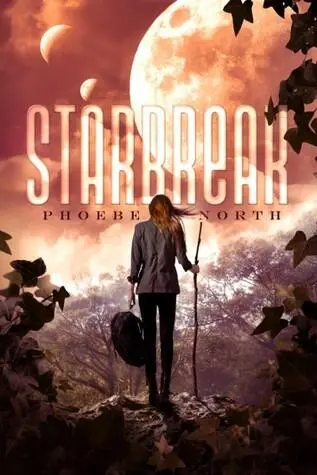
- Название:Starbreak
- Автор:
- Издательство:Simon & Schuster Books for Young Readers
- Жанр:
- Год:2014
- ISBN:нет данных
- Рейтинг книги:5 / 5. Голосов: 1
-
Избранное:Добавить в избранное
- Отзывы:
-
Ваша оценка:
Starbreak: краткое содержание, описание и аннотация
Предлагаем к чтению аннотацию, описание, краткое содержание или предисловие (зависит от того, что написал сам автор книги «Starbreak»). Если вы не нашли необходимую информацию о книге — напишите в комментариях, мы постараемся отыскать её.
Then Terra finally discovers Vadix. The boy who has haunted her dreams may be their key to survival—but his own dark past has yet to be revealed. And when Aleksandra gets humanity expelled from the planet, it’s up to Terra, with Vadix by her side, to unite her people—and to forge an alliance with the alien hosts, who want nothing more than to see humanity gone forever.
Starbreak — читать онлайн бесплатно полную книгу (весь текст) целиком
Ниже представлен текст книги, разбитый по страницам. Система сохранения места последней прочитанной страницы, позволяет с удобством читать онлайн бесплатно книгу «Starbreak», без необходимости каждый раз заново искать на чём Вы остановились. Поставьте закладку, и сможете в любой момент перейти на страницу, на которой закончили чтение.
Интервал:
Закладка:
“Died?” The frown grew deeper and deeper on Vadix’s lips. This was the wrong story to tell. Hadn’t I warned him that Mara was no diplomat? “Our cities were built to keep us from dying.”
“Yes, well,” Mara Stone said, unaffected by the offense that shone on his teeth. He leaned forward, bending his body toward her.
“Your people are often barbarous, are they not? Brandishing knives and sticks. Striking their own crèchemates down. They cannot be trusted to cool their tempers.”
He spoke to her, but I could tell that his words were meant for me. I’d killed—felled Mazdin in cold blood. Could I be trusted? I wanted to tell him that I could, but the words froze in my chest. Mara didn’t even seem to notice the laser intensity of his eyes as they narrowed upon me.
“Of course they can!” she snapped. “Now, don’t we have a meeting to attend?”
Vadix leaned back, watching as Mara fiddled with the lapels of her coat. His lips lifted wryly.
“Indeed we do,” he agreed, then started off toward the twisting central staircase.
15
“Aulsix aum elix tauziz!”
“Yes, my apologies. Senator Saida feels that it would be inappropriate to discuss the proliferation of Terran food animals on our planet before we have agreed to permit you to settle on Aur Evez.”
“We can adapt to a vegetarian diet, of course. But ideally we’re omnivores. And we’ve carried our flocks all this way. You can’t expect us to slaughter them after five hundred years of travel?”
“Taot?”
“Saoso elix zhosozazhi, saudd thosolo.”
“ Aikri thosoloezhi, aikri sore zhosozazhi. Tatoum , Senator Sadex agrees that this is a delicate subject to raise, particularly in the presence of our esteemed Xollu senators. Perhaps we might turn the subject back to your likely environmental impact on this world.”
In the senate antechamber at the top of the Grand Senate building of Raza Ait, I sat with my head in my hands. Bringing Mara here was a mistake, just like I’d told Vadix it would be. But there was nothing I could do about it now except gaze out the glass wall beside me, down into the massive amphitheater that formed the main senate room below. I could see the junior senators coming and going in their silver robes, looking harried and distracted. But those seated among us were senior politicians, garbed in lengths of copper and gold. Little emotion showed on their alien faces; the “human problem,” as Vadix had called it as we sat down around the table, was one they hoped to resolve quickly, with little fuss.
Mara Stone, however, had other ideas.
“Your esteemed Xollu senators! Well, I’m sorry if their sensibilities are offended by the diversity of our diets. I know they’re plants, but they must consume something besides sunbeams and vapors.”
“You’d think that,” I murmured. Mara turned sharply toward me.
“What did you say, Talmid ?”
I shrank back in my chair. I was no diplomat. I was hardly even a scientist. But Mara had no patience for my doubts. She slammed the heel of her hand against the table.
“Spit it out! You’ve been here for days. Surely you’ve learned something . You’re not so dense.”
“The Ahadizhi are carnivorous,” I said softly. “But the Xollu don’t eat anything.”
“That’s absurd,” she said. She swung her gaze to look at Vadix. Nostrils flaring, she took in the sight of him—his height, the ease with which he moved. “Motile plants would have to have astronomical energy requirements.”
“You would know more about astronomy than we,” Vadix said coolly. “But it’s true. We may eat, but we rarely do. Instead we sleep.”
“Sleep?”
One by one the pairs bowed their heads.
“All the long winter,” he said. “Our bodies wrapped around our mates, we sleep. It is only our alliance with the Ahadizhi that protects us from the claws and teeth of beasts over the winter’s depths.”
“Winter?” I asked. “But it’s winter now, isn’t it?”
Mara waved her hand at me, not even deigning to meet my eyes. “We haven’t seen anything yet, girl. I’m sure by the time deep winter sets in, this city will be buried. Am I right?”
Vadix gazed down at his long fingers, clutched over the stone table. “ Tatoum. Yes, this is correct.”
“Won’t be long now, will it?”
“Three passes of the moons before we sleep.”
“That’s, what, five weeks? Six? But what I don’t understand,” Mara began, leaning forward in her seat; she pointed a crooked finger at all the Ahadizhi who sat idle at the far end of the table, “is what you get out of this deal. You’re clearly intelligent. Don’t pretend like you don’t understand me. I know you do.”
One of them flashed Mara a view of his mouth, full of a thousand tiny blades.
“Tatoum,” he agreed. She gave a nod.
“So what is it? Are you slaves? Do they call all the shots?” She jerked her thumb toward Vadix. For the first time his countenance faltered.
“No, no!” he protested. But the Ahadizhi gave a slow blink and smiled. He reminded me of a feline when he spoke, purring, complacent—but with hidden claws.
“No slaves,” he said, his tongue hissing against his many teeth. “Partners.”
Mara turned to Vadix. “Explain,” she said. Then she added, smiling: “Taot?”
Vadix pressed his lips together in a frustrated line. It bothered him, I think, to have Mara pick up even the smallest pieces of his language. He didn’t want his place at the table superseded, not the slightest bit.
“Partners,” Vadix said, then hastily added: “In the service of the hunt, they have developed their arts. They had words first. Music and poetry. Art and writing. Their minds are not like ours. They are hidebound, well-planted in the land where they sprout. But we are curious. We study. We scheme. We are scientists. Scholars. Political strategists. They are hunters, builders, artists, musicians.”
I thought of Rebbe Davison, of what he’d told me about his plans with Aleksandra back when we’d first stumbled across her out in the wild. She was supposed to become the brawn behind the rebellion—Mordecai Davison, the brains. Apparently the aliens of Aur Evez had opted for a similar setup. Vadix went on.
“In exchange for their protection, we build them cities. And they fill them with music and color, and care for us during our long winter’s nap.”
“And it’s worked for you, hasn’t it?” Mara asked. She sat back in her chair, apparently satisfied by his explanation. “Almost too well. These streets are crowded.”
The corner of Vadix’s mouth twitched. It was as if Mara had stumbled into an old, old argument. But she didn’t seem to notice his reaction. She lifted a cutting hand, then let it fall.
“Well? Too crowded for us, isn’t it?”
Vadix dragged his gaze away. Touching his chest, he turned to the senators.
“Vala xezlu aum aizzu zhososezhi zaizikk aiosoa?”
The senators erupted into conversations. Even the Ahadizhi joined in—gesturing wildly with their stubby fingers, leaping to their feet and brandishing the double-edged daggers they kept hidden beneath their robes. Mara glanced at me, her eyebrows lifted mildly. But I didn’t look back at her.
My gaze was on Vadix. He was watching them all, his expression as still as the Asherah ’s reservoirs and nearly as dark. He didn’t seem to be stirred by their arguments. The ruddy-skinned Xollu pairs clutched their hands together and drew close to each other, frightened by the sudden explosion of sound. The Ahadizhi hissed and muttered angry words. But Vadix only sat square in his chair, calm and silent. At last, without a single word, he rose from his seat. He stood tall, tucking his hands inside his robes, and regarded the senators who had gathered there.
Читать дальшеИнтервал:
Закладка:
Похожие книги на «Starbreak»
Представляем Вашему вниманию похожие книги на «Starbreak» списком для выбора. Мы отобрали схожую по названию и смыслу литературу в надежде предоставить читателям больше вариантов отыскать новые, интересные, ещё непрочитанные произведения.








Обсуждение, отзывы о книге «Starbreak» и просто собственные мнения читателей. Оставьте ваши комментарии, напишите, что Вы думаете о произведении, его смысле или главных героях. Укажите что конкретно понравилось, а что нет, и почему Вы так считаете.