Phoebe North - Starbreak
Здесь есть возможность читать онлайн «Phoebe North - Starbreak» весь текст электронной книги совершенно бесплатно (целиком полную версию без сокращений). В некоторых случаях можно слушать аудио, скачать через торрент в формате fb2 и присутствует краткое содержание. Год выпуска: 2014, Издательство: Simon & Schuster Books for Young Readers, Жанр: Фантастика и фэнтези, на английском языке. Описание произведения, (предисловие) а так же отзывы посетителей доступны на портале библиотеки ЛибКат.
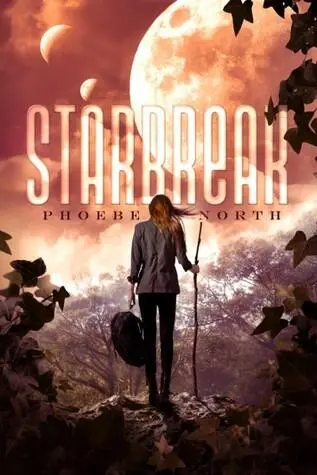
- Название:Starbreak
- Автор:
- Издательство:Simon & Schuster Books for Young Readers
- Жанр:
- Год:2014
- ISBN:нет данных
- Рейтинг книги:5 / 5. Голосов: 1
-
Избранное:Добавить в избранное
- Отзывы:
-
Ваша оценка:
Starbreak: краткое содержание, описание и аннотация
Предлагаем к чтению аннотацию, описание, краткое содержание или предисловие (зависит от того, что написал сам автор книги «Starbreak»). Если вы не нашли необходимую информацию о книге — напишите в комментариях, мы постараемся отыскать её.
Then Terra finally discovers Vadix. The boy who has haunted her dreams may be their key to survival—but his own dark past has yet to be revealed. And when Aleksandra gets humanity expelled from the planet, it’s up to Terra, with Vadix by her side, to unite her people—and to forge an alliance with the alien hosts, who want nothing more than to see humanity gone forever.
Starbreak — читать онлайн бесплатно полную книгу (весь текст) целиком
Ниже представлен текст книги, разбитый по страницам. Система сохранения места последней прочитанной страницы, позволяет с удобством читать онлайн бесплатно книгу «Starbreak», без необходимости каждый раз заново искать на чём Вы остановились. Поставьте закладку, и сможете в любой момент перейти на страницу, на которой закончили чтение.
Интервал:
Закладка:
16
Traveling alone, the city was a whole new beast.
At first I chased Vadix, watching for the blue smear of light among the jumbled crowd of red. He led me across the wide pavilion and past the train station, down a twisting underpass and through a grove of shifting trees. Then he turned down an alleyway. I went after him, but ran smack into a Xollu pair. They flinched from my body’s touch, pulling back their hands as if I were diseased.
“Sorry! Sorry!” I breathed. Sniffing, they moved past me. But when they did, I realized that I had lost him. The pathway up ahead was packed full of bodies. Ahadizhi streamed in and out of the storefronts along the alley’s lowest level, stopping to watch me with inquisitive eyes. I shrugged off their grabby fingers, shouldering past them. Surely he had to be somewhere up ahead. So I trudged forward.
The smell of meat was thick in the midday sun. The shop counters were piled high with it. There were insects here, the first I’d seen on the planet—hairy, and as big as both fists, swarming heavily on the wind. They were held back from every shop door by a translucent skin of netting, but they clouded the path ahead. I heard the pound of footfalls. A group of diminutive Ahadizhi scampered past. Their furred skin was blue, the color of a burst berry. Children, I realized. They were children. They let out clicking laughter as they gamboled past.
I watched them go, tracing the bruisey blue of their bodies as they disappeared into the crowd. Was Vadix a child, then? He didn’t look like one. He stood just as tall as the others, and his countenance suggested experience. He’d lived, seen things—perhaps too much. I knew there was a story hidden beneath his sad, full lips. As I scrambled forward, sweat streaming down my face, I wondered what it was that made him different from the rest of them. Other than the fact that he was alone. Other than the fact that he was mine.
I gazed forward, searching the pathway for any sign of him. But no luck. Up ahead the road dipped and twisted, finally arching over a burbling stream. I hurried across the wide stone bridge, pausing halfway to take stock. Underneath, Ahadizhi piloted painted craft. I watched as they pulled up eel traps, filled with yellow, slithering creatures. There was shouting, clucks of laughter, the music of splashing water. Light danced and jiggled against the hulls of their boats. I reached up, touching the back of my neck. Beneath my fingers I could feel my skin burning—like I had a fever. But I didn’t feel ill. I pulled myself to the far end of the bridge, and continued on my way.
I’m not sure when my journey changed, when the road ahead became as muddied as river dirt. I walked over bridge after bridge after bridge, crossing the canals as they looped and knotted through Raza Ait. The sun overhead was relentless, amplified by the sparkling cupola overhead. I’d never known anything like it. On the ship the artificial sunlight was never so bright as to make my eyes water or to leave my throat parched. But the city’s inhabitants didn’t seem to mind. I saw young Ahadizhi splayed out against the hot cobblestone, soaking up the light. Even stately Xollu pairs paused in their walking, unlacing the tops of their robes to bare their red shoulders to the sun.
Meanwhile I stopped by the water’s edge to splash water over my face.
Cool and sparkling, it trickled down my dirty neck, leaving pale rivers in its wake. The water tasted like metal and earth. Sharp, familiar flavors, not so different from the waters of home, but somehow cleaner. I wanted to dive in, to strip off my clothing and wash away the weeks of dirt and sweat and blood. But I couldn’t. I had to find Vadix. He was here somewhere. He had to be.
I turned and looked over my shoulder, half expecting to see him there behind me. But an Ahadizhi woman stood there instead. She pushed a cart ahead of her on rickety wheels. The painted vehicle was piled high with scrolls of paper. I ambled forward. Lozenge eyes opened wide at the sight of me; her mouth fell open, showing teeth. So many teeth. Wiping my damp hands against my shorts, I picked out a scroll and slowly unrolled it. Paint had been spilled against the reedy canvas in great, dripping splotches. The pigments were lovely, one color layered over the next. A sunset. It showed a sunset. A white-yellow circle stood stark amid all that blue and green and violet.
“Xarki,” I said, my hand barely gracing the bright shape. “You’re very talented.”
“Tatoum,” she agreed. She put her hand over mine, helping me to unroll the scroll to its full length. She was standing close to me—maybe too close. Her body smelled so sweet in the sunlight, wilder than Vadix’s, and more fragrant.
The bottom of the scroll had been only lightly washed with paint. There was the pale blue of snow and a distant red line of trees. I could practically see them moving against the skyline, writhing, shifting. I drew my gaze downward. There at the bottom was a green splotch of color, heavily shadowed with black.
I held the painting at arm’s length. The Ahadizhi woman’s hand still touched my own. But my fingers slowly went cold under hers. A body. It was a body. One of Zehava’s great beasts, torn to pieces, its guts splayed out across the frozen winter fields.
The Ahadizhi woman didn’t seem threatening as her fingers dug gently into my arm. But even in my addled state, I remembered the pitcher plant. Mara had taught me all about the tubular flowers, which drew insects close with their sweet scent before drowning them in their nectar. They didn’t look dangerous. They were green and red, their bells narrow. Delicate. But in truth they were deadly.
I dropped the scroll back down into the cart. Slowly, carefully, I backed away. It wasn’t until she tried to close her hand on mine again, squeezing my fingers tight, that I snatched them back and broke out into a run. Without looking back, I raced across the next bridge and away.
I could feel myself cooking, the skin of my bare arms and face growing pink in the sun. As I headed toward the city’s outskirts, I kept trying to clamp my hands down over my neck, shielding it from the hot light of day. Xarki. Miserably I glanced up. Even as I squinted into the amplified sunlight, my face ached. It was too much. I didn’t know how all these scattered Ahadizhi could stand it. They lingered in the doorways half naked, chatting and laughing and looking at me. Then again, they were plants, and I wasn’t. I was an animal, one of the only living mammals under the glass ceiling of Raza Ait. I didn’t belong here, and looking at the Anadizhi, with their toothy mouths, I didn’t know how I hadn’t seen it before.
Their bodies moved in nightmarish ways, wavering and bending as they reached out to point at me.
“Hu-mahn, hu-maahhn,” they whispered to one another. Their arms were too long, their bodies too thin. They reminded me of snakes who slithered over cobblestone. No, that wasn’t right. They reminded me of vines, winding themselves up and up toward any light source. Ferns or flowers, they’d never been frightening to me before. But now, wrung out by the sun, my mouth as dry as sandpaper, I saw the hunger there. Images flashed before me. Flytraps snapping shut on butterflies. Sundews curling their tentacles tight around black-bodied flies. No wonder Laurel had been so afraid of the people of Aur Evez.
I collapsed in a shadowed doorway, tucking my face into the crook of my arm. For the first time in ages, I felt my solitude. It had been easy to chase away since I’d crashed on the planet. There had been survival to contend with, and then Aleksandra. . . . I hadn’t had time to mull over my lot.
Читать дальшеИнтервал:
Закладка:
Похожие книги на «Starbreak»
Представляем Вашему вниманию похожие книги на «Starbreak» списком для выбора. Мы отобрали схожую по названию и смыслу литературу в надежде предоставить читателям больше вариантов отыскать новые, интересные, ещё непрочитанные произведения.







Обсуждение, отзывы о книге «Starbreak» и просто собственные мнения читателей. Оставьте ваши комментарии, напишите, что Вы думаете о произведении, его смысле или главных героях. Укажите что конкретно понравилось, а что нет, и почему Вы так считаете.