Phoebe North - Starbreak
Здесь есть возможность читать онлайн «Phoebe North - Starbreak» весь текст электронной книги совершенно бесплатно (целиком полную версию без сокращений). В некоторых случаях можно слушать аудио, скачать через торрент в формате fb2 и присутствует краткое содержание. Год выпуска: 2014, Издательство: Simon & Schuster Books for Young Readers, Жанр: Фантастика и фэнтези, на английском языке. Описание произведения, (предисловие) а так же отзывы посетителей доступны на портале библиотеки ЛибКат.
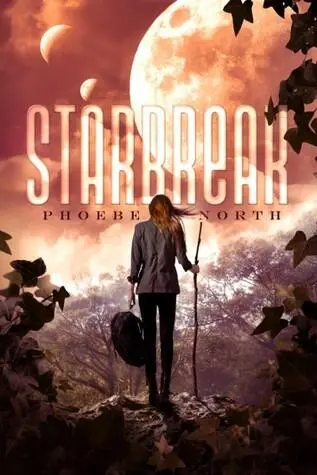
- Название:Starbreak
- Автор:
- Издательство:Simon & Schuster Books for Young Readers
- Жанр:
- Год:2014
- ISBN:нет данных
- Рейтинг книги:5 / 5. Голосов: 1
-
Избранное:Добавить в избранное
- Отзывы:
-
Ваша оценка:
Starbreak: краткое содержание, описание и аннотация
Предлагаем к чтению аннотацию, описание, краткое содержание или предисловие (зависит от того, что написал сам автор книги «Starbreak»). Если вы не нашли необходимую информацию о книге — напишите в комментариях, мы постараемся отыскать её.
Then Terra finally discovers Vadix. The boy who has haunted her dreams may be their key to survival—but his own dark past has yet to be revealed. And when Aleksandra gets humanity expelled from the planet, it’s up to Terra, with Vadix by her side, to unite her people—and to forge an alliance with the alien hosts, who want nothing more than to see humanity gone forever.
Starbreak — читать онлайн бесплатно полную книгу (весь текст) целиком
Ниже представлен текст книги, разбитый по страницам. Система сохранения места последней прочитанной страницы, позволяет с удобством читать онлайн бесплатно книгу «Starbreak», без необходимости каждый раз заново искать на чём Вы остановились. Поставьте закладку, и сможете в любой момент перейти на страницу, на которой закончили чтение.
Интервал:
Закладка:
“I’m not an alien,” I said. I reached out, cupping my hand against his smooth cheek. “ You’re an alien.”
“You are alien to this planet.”
“But not to you.” I drew close, pressing my lips against his. I think it surprised him, the warmth and wetness of my open mouth. But after a moment his cool body softened, leaning in. Our first kiss, gentle, tender—and as long as the night.
His round bed was the perfect size and shape for two long bodies. But I kept myself snuggled close to him. His half of the mattress was bowed beneath his weight—he’d spent too many nights in it alone. I let my fingers trace the scars over his shoulders. Some were old, deep, and faded into his skin. But some were white, new, raw. For the hundredth time that night, I pressed my lips to one, tasting sweet sap. I wished I still believed that kisses could heal like I had when I was a child. But I knew better now. No kisses would heal this.
I wanted to ask, but I couldn’t make the words come to my lips. So I spoke without speaking, the way we had in dreams.
You did this to yourself, didn’t you? I asked. I felt him shift so he could see me better. He was surprised, I think, to hear my voice so clear in his mind, but also pleased. This speech was as natural to him as breathing was to me.
I am a lousk, he said, as if that explained it. I drew myself up, putting my hand flat against his chest. It seemed so strange against his skin, so solid.
I don’t know what that means.
“Every spring seedlings sprout from their parents’ bodies,” he said, slipping into real speech as easily as one slipped into a new set of clothes. “Thousands of them. The funerary fields are full of light and joy. From our first conscious moments we are paired. Those who are alone wither and die. They are the first lousk. But most survive, thrive in our crèches. Never lonely. Never wanting companionship. Best friends. At night we walk in the dreamforests together, where we are one body and thought and mind.”
“Bashert,” I said. “Mate.”
Vadix nodded, the motion small and quick, his eyes still fixed fast on me.
“Zeze,” he said. “That is our word for it. God and goddess willing, we live long, happy lives. Working. Mating. Praying. Learning. Until our zeze dies. Then we are a lousk .”
“Widower,” I said. “That’s what we call it. Abba—my father—he was alone after my mother died. A widower.”
His hand was utterly still on top of mine.
“Velsa,” he said at last. “Her name was Velsa. We were always different from the rest. Brave. Ambitious. We did not like how crowded our cities had become. We wished to settle the southern lands, to build a city there. But no northern Ahadizhi would stray that far from their sprouting fields to join us, and no Xollu has ever shared words with the Ahadizhi in the south. We knew we needed to broker peace if they were to be our Guardians, to keep us safe in the long winters when we sleep and the animals roam.”
“You wanted to make a new city. For you and her.”
I saw it in his mind’s eye: nights spent whispering to each other though they lay a thousand kilometers apart. They would build their own empire, new and beautiful. Because they were young and brave. They would settle new ground, something that the Xollu hadn’t done for centuries.
“Yes. We were foolish, proud. I would be the translator, speaking the tongue of the southern Ahadizhi. She would learn diplomacy. I went to school in the south, in Aisak Ait. And she stayed here. They all said we were crazy, to live our young lives apart like lousku .”
He sat up, draping his arms around his knees. I wanted to touch him, to wrap my arms around him again and draw him close. But I knew better. It hurt too much. He was still too raw. “Velsa—Velsa died. There were riots when your people sent their first probe. The Xollu were afraid—the Ahadizhi determined to protect us from the danger. I did not see this. I was far, far away.”
I closed my eyes, remembering the days between the departure of the first probe and the news that the results had been lost. They’d been long, lonely days—and even darker nights. Until I saw him for the first time in the black of evening, drifting through my dreams. He must have lost her then, in the days before he was mine.
I could almost see it. The dust in the air. The crush of bodies. Velsa, on her way to her towering university in the south of the city. She and her friends had traced their favorite river, hoping to see the long painted boats whose multicolored flags flickered in the wind. But the pier was crowded and then there was a shout. Someone had found a strange machine in the water, with wide metal wings and eyes that blinked like beacons. It was covered in text, words no one could read.
But as the Ahadizhi dock workers began to pull the panels of the machine back, they smelled flesh on the air. Strange, alien odors in every fingerprint that had been left on the metal hull. They bared their teeth—gripped their weapons. Double-bladed knives gleamed in the sunlight. The crowd pushed forward, closer to the scent of danger. Velsa found herself swept up in the tide of bodies.
If I pushed harder, deeper, I would find the truth myself, feel the pain of the dagger’s thrust and the rush of sweet sap down the front of her robe. But I knew it would hurt him to have those memories turned over again like dirt for a fresh planting. So I drew back.
I’m sorry, I said silently, but I regretted that thought almost instantly. I’d heard those words said at Momma’s funeral and at Abba’s, and at least a hundred times in the dark days since. Once, I’d rolled my eyes, cracking awkward jokes and laughing. Why? I always said. It’s not your fault . I knew that my condolences were meager, nothing compared to the grief he felt. His sadness dragged me down too, like a boat that had sprung a leak and sank into the ocean. I was sorry, so sorry, and it wasn’t nearly enough.
When he spoke, it was as if every word came with great effort. “We never mated. I was fallow until tonight. There would have been no children. But on the day she died, I understood something I never had before then. How a lousk is not merely a rare shadow, fleeing to the funerary fields. He is possessed. He will tear his flesh with his fingers, cast his body down to the soil. I should have done this dozens of days ago. My dead, fallow body has wanted it—to be with her, to be together.”
He wants to kill himself, I realized. Now it was my turn to harden beside him. My hands dropped down into the sheets. I watched him sitting there, his shoulders hunched up and still.
“It is the only thing left for a lousk to do,” he said. As if it were nothing, as if it were natural. I suppose for him it was. “But I saw something in the darkness. A face. The pale muzzle of an animal, with a mane of tangled gold. She wandered the dreamforests. I asked her for her name, but she did not answer me. Night after night I dream of her. She touched me, and I felt—”
“Whole,” I said, finishing his sentence for him.
“I was remiss,” he said, “In my duty to Velsa. I should have rushed home, laying my body down on top of hers. We should have been one. But I was curious. And then the senate came to me. There were glyphs on the machine, and recordings embedded in it. They knew I was gifted in foreign tongues. They asked me to translate. I did. It was easy—too easy. I studied many years in Aisak Ait, but never had a language slipped so freely from my lips. I knew things I shouldn’t have. Soon your shuttle crew stumbled through the gates of Raza Ait. There was violence again, fear at these foreign beasts. The senate asks me to speak to these animals. You, who have brought Velsa’s death. Broker a peace. They say I am the only one who can. I decide I will help them. Then I will be with Velsa, as I should. But I met you.”
Читать дальшеИнтервал:
Закладка:
Похожие книги на «Starbreak»
Представляем Вашему вниманию похожие книги на «Starbreak» списком для выбора. Мы отобрали схожую по названию и смыслу литературу в надежде предоставить читателям больше вариантов отыскать новые, интересные, ещё непрочитанные произведения.







Обсуждение, отзывы о книге «Starbreak» и просто собственные мнения читателей. Оставьте ваши комментарии, напишите, что Вы думаете о произведении, его смысле или главных героях. Укажите что конкретно понравилось, а что нет, и почему Вы так считаете.