Glennon Doyle - Untamed
Здесь есть возможность читать онлайн «Glennon Doyle - Untamed» весь текст электронной книги совершенно бесплатно (целиком полную версию без сокращений). В некоторых случаях можно слушать аудио, скачать через торрент в формате fb2 и присутствует краткое содержание. Год выпуска: 2020, Издательство: Random House Publishing Group, Жанр: Публицистика, на английском языке. Описание произведения, (предисловие) а так же отзывы посетителей доступны на портале библиотеки ЛибКат.
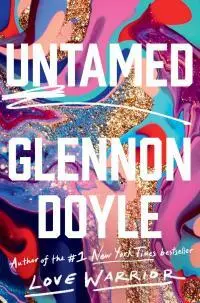
- Название:Untamed
- Автор:
- Издательство:Random House Publishing Group
- Жанр:
- Год:2020
- ISBN:нет данных
- Рейтинг книги:4 / 5. Голосов: 2
-
Избранное:Добавить в избранное
- Отзывы:
-
Ваша оценка:
Untamed: краткое содержание, описание и аннотация
Предлагаем к чтению аннотацию, описание, краткое содержание или предисловие (зависит от того, что написал сам автор книги «Untamed»). Если вы не нашли необходимую информацию о книге — напишите в комментариях, мы постараемся отыскать её.
" *Untamed* will liberate women --emotionally, spiritually, and physically. **It is phenomenal.** "--Elizabeth Gilbert, author of *City of Girls* and *Eat Pray Love***
*This is how you find yourself.
*
There is a voice of longing inside each woman. We strive so mightily to be good: good partners, daughters, mothers, employees, and friends. We hope all this striving will make us feel alive. Instead, it leaves us feeling weary, stuck, overwhelmed, and underwhelmed. We look at our lives and wonder: *Wasn't it all supposed to be more beautiful than this?* We quickly silence that question, telling ourselves to be grateful, hiding...
Untamed — читать онлайн бесплатно полную книгу (весь текст) целиком
Ниже представлен текст книги, разбитый по страницам. Система сохранения места последней прочитанной страницы, позволяет с удобством читать онлайн бесплатно книгу «Untamed», без необходимости каждый раз заново искать на чём Вы остановились. Поставьте закладку, и сможете в любой момент перейти на страницу, на которой закончили чтение.
Интервал:
Закладка:
A few years ago, Oprah Winfrey was interviewing me about my first memoir. She opened the book and read my words back to me: I was born a little broken. Then she paused, looked up from the page, and asked, “Would you still describe yourself that way? As broken?” Her eyes sparkled. I looked at her and said, “No, actually. I wouldn’t. That’s ridiculous. I think this sort of thing is why Jesus only wrote in the sand.”
Broken means: does not function as it was designed to function. A broken human is one who does not function the way humans are designed to function. When I think about my own human experience, what honest people have told me about their human experiences, and the experiences of every historical and contemporary human being I’ve ever studied, we all seem to function in the exact same way:
We hurt people, and we are hurt by people. We feel left out, envious, not good enough, sick, and tired. We have unrealized dreams and deep regrets. We are certain that we were meant for more and that we don’t even deserve what we have. We feel ecstatic and then numb. We wish our parents had done better by us. We wish we could do better by our children. We betray and we are betrayed. We lie and we are lied to. We say good-bye to animals, to places, to people we cannot live without. We are so afraid of dying. Also: of living. We have fallen in love and out of love, and people have fallen in love and out of love with us. We wonder if what happened to us that night will mean we can never be touched again without fear. We live with rage bubbling. We are sweaty, bloated, gassy, oily. We love our children, we long for children, we do not want children. We are at war with our bodies, our minds, our souls. We are at war with one another. We wish we’d said all those things while they were still here. They’re still here, and we’re still not saying those things. We know we won’t. We don’t understand ourselves. We don’t understand why we hurt those we love. We want to be forgiven. We cannot forgive. We don’t understand God. We believe. We absolutely do not believe. We are lonely. We want to be left alone. We want to belong. We want to be loved. We want to be loved. We want to be loved.
If this is our shared human experience, where did we get the idea that there is some other, better, more perfect, unbroken way to be human? Where is the human being who is functioning “correctly,” against whom we are all judging our performances? Who is she? Where is she? What is her life if it is not these things?
I got free the moment I realized that my problem isn’t that I’m not a good enough human; my problem is that I’m not a good enough ghost. Since I don’t have to be a ghost, I don’t have a problem.
If you are uncomfortable—in deep pain, angry, yearning, confused—you don’t have a problem, you have a life. Being human is not hard because you’re doing it wrong, it’s hard because you’re doing it right. You will never change the fact that being human is hard, so you must change your idea that it was ever supposed to be easy.
I will not call myself broken, flawed, or imperfect anymore. I will quit chasing ghosts, because the chase left me weary. And because I am a woman who no longer believes in ghosts.
Allow me to rewrite my own self-description:
I am forty-four years old. With all my chin hairs and pain and contradictions, I am flawless, unbroken. There is no other way.
I am haunted by nothing.
Two Christmases ago, my sister and I presented our parents with a check to buy themselves a trip to Paris. They were so touched and proud that they framed the check, uncashed, and hung it on their living room wall. This year we doubled down. We bought four plane tickets to Paris and decided to hand deliver our parents to the city they had always wanted to visit. We stayed in a tiny apartment overlooking the Eiffel Tower. I had never been to Europe before. I was charmed.
Paris is elegant and old. Being there made me feel elegant and young. It helped me forgive America for our arrogance and fury. In Paris, surrounded by ruins of ancient baths, guillotines, and churches more than a thousand years old, humanity’s mistakes and beauty are unfurled like a mural. In America, we are so new. We still fancy ourselves conquerors and renegades. We’re all still trying to be the “firsts” to do this or that. Can you imagine? We are all competing for our parents’ attention, and we have no parents. It makes us a little jumpy. Paris is not jumpy. Paris is calm and certain. It’s not going to startle easily, and it already knows the words to all the songs. Everywhere I looked in Paris, I found proof that leaders come and go, buildings are built and fall, revolutions begin and end; nothing—no matter how grand—lasts. Paris says: We are here for such a short time. We might as well sit down for a long while with some good coffee, company, and bread. Here, there is more time to be human, maybe because there has been more time to learn how.
When we visited the Louvre, we entered the Mona Lisa room and found a crowd of hundreds pushing, jostling, selfie-ing all around her.
I stared from a distance, trying to appreciate her. I really didn’t understand what all the fuss was about. I wondered if all the jostling people understood or if they were just acting like they did. A woman walked over and stood next to me.
She said, “You know, there’s a theory about her smile. Want to hear it?”
“Yes, please,” I said.
“Mona Lisa and her husband lost a baby. Sometime later, her husband commissioned this painting from da Vinci to celebrate the birth of another baby. Mona Lisa sat for Leonardo to paint her, but she wouldn’t smile during the sitting. Not all the way. The story goes that da Vinci wanted her to smile wider, but she refused. She did not want the joy she felt for her new baby to erase the pain she felt from losing the first. There in her half smile is her half joy. Or maybe it’s her full joy and her full grief all at the same time. She has the look of a woman who has just realized a dream but still carries the lost dream inside her. She wanted her whole life to be present on her face. She wanted everyone to remember, so she wouldn’t pretend.”
Now I understand what the fuss is all about. Mona Lisa is the patron saint of honest, resolute, fully human women—women who feel and who know. She is saying for us:
Don’t tell me to smile.
I will not be pleasant.
Even trapped here, inside two dimensions, you will see the truth.
You will see my life’s brutal and beautiful right here on my face.
The world will not be able to stop staring.
When I got pregnant with Chase and quit drinking, drugging, and purging, I thought it might be my last chance to stop being bad and start being good. I married Chase’s father, and I learned to cook and clean and fake orgasms. I was a good wife. I had three babies and put all their needs so far ahead of my own that I forgot I had needs at all. I was a good mom. I started going to church and learned to fear God and not ask too many questions of folks who claimed to represent God. I was a good Christian. I watched beauty trends carefully, and I dyed my hair and paid to get poison injected into my forehead so I wouldn’t look too tired from all the effort it takes to be good at beauty. I started writing and released bestsellers and spoke to sold-out audiences all over the country. A woman isn’t allowed to do well unless she also does good, so I became a do-gooder for the world. I raised tens of millions of dollars for people who were hurting, and I lost a decade of sleep writing back to strangers.
You are a good woman, Glennon, they said.
I was. I was so good. I was also exhausted, anxious, and lost. I assumed that was because I wasn’t good enough yet; I just had to try a little harder.
Читать дальшеИнтервал:
Закладка:
Похожие книги на «Untamed»
Представляем Вашему вниманию похожие книги на «Untamed» списком для выбора. Мы отобрали схожую по названию и смыслу литературу в надежде предоставить читателям больше вариантов отыскать новые, интересные, ещё непрочитанные произведения.


Обсуждение, отзывы о книге «Untamed» и просто собственные мнения читателей. Оставьте ваши комментарии, напишите, что Вы думаете о произведении, его смысле или главных героях. Укажите что конкретно понравилось, а что нет, и почему Вы так считаете.