Glennon Doyle - Untamed
Здесь есть возможность читать онлайн «Glennon Doyle - Untamed» весь текст электронной книги совершенно бесплатно (целиком полную версию без сокращений). В некоторых случаях можно слушать аудио, скачать через торрент в формате fb2 и присутствует краткое содержание. Год выпуска: 2020, Издательство: Random House Publishing Group, Жанр: Публицистика, на английском языке. Описание произведения, (предисловие) а так же отзывы посетителей доступны на портале библиотеки ЛибКат.
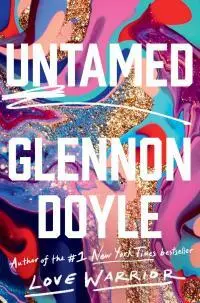
- Название:Untamed
- Автор:
- Издательство:Random House Publishing Group
- Жанр:
- Год:2020
- ISBN:нет данных
- Рейтинг книги:4 / 5. Голосов: 2
-
Избранное:Добавить в избранное
- Отзывы:
-
Ваша оценка:
Untamed: краткое содержание, описание и аннотация
Предлагаем к чтению аннотацию, описание, краткое содержание или предисловие (зависит от того, что написал сам автор книги «Untamed»). Если вы не нашли необходимую информацию о книге — напишите в комментариях, мы постараемся отыскать её.
" *Untamed* will liberate women --emotionally, spiritually, and physically. **It is phenomenal.** "--Elizabeth Gilbert, author of *City of Girls* and *Eat Pray Love***
*This is how you find yourself.
*
There is a voice of longing inside each woman. We strive so mightily to be good: good partners, daughters, mothers, employees, and friends. We hope all this striving will make us feel alive. Instead, it leaves us feeling weary, stuck, overwhelmed, and underwhelmed. We look at our lives and wonder: *Wasn't it all supposed to be more beautiful than this?* We quickly silence that question, telling ourselves to be grateful, hiding...
Untamed — читать онлайн бесплатно полную книгу (весь текст) целиком
Ниже представлен текст книги, разбитый по страницам. Система сохранения места последней прочитанной страницы, позволяет с удобством читать онлайн бесплатно книгу «Untamed», без необходимости каждый раз заново искать на чём Вы остановились. Поставьте закладку, и сможете в любой момент перейти на страницу, на которой закончили чтение.
Интервал:
Закладка:
I am offended. My insides turn hot and they feel instantly inflated, difficult to contain. I hold my breath and clench everything.
“Well, maybe I’m trying to be fine. Maybe all I do is try to be fine. Maybe I try harder than anybody.”
She says, “Maybe you should stop trying to be fine. Maybe life isn’t fine, and maybe it’ll never be fine. Maybe fine isn’t the right goal. What if you stopped trying so hard to be fine and just…lived?”
“I don’t know what you’re talking about,” I say.
I know exactly what she’s talking about. She’s talking about the Ache.
I don’t know when I first discovered the Ache, but by the time I am ten years old, it has become my constant interrupter.
When my cat, Co-Co, climbs onto the couch with me, she rubs her face against mine so softly and she purrs so gently that I’m tempted to let myself melt into her. But the Ache interrupts with: Be careful. She won’t live very long. You’ll have to bury her soon.
When my grandmother Alice whispers her evening rosary, I spy on her. She is the master of the universe, there in her rocker, controlling everything on Earth, keeping me safe. Just as I become lulled into peace by the rocking, the Ache points and says: Look at how bruised and papery the skin on her hands is. See how they shake?
When my mom leans over to kiss me good night, I catch the smell of her face lotion. I feel the soft sheets under me and the warm blanket around me, and I breathe in deeply. I rarely make it to the exhale in peace, though. The Ache paralyzes me with You know how this ends. When she goes, you will not survive.
I don’t know if the Ache is trying to protect me or terrorize me. I don’t know if it loves me or hates me, if it’s bad or good. I just know that its role is to constantly remind me of the most essential fact of life, which is: This ends. Don’t get too attached to anything. So when I get too soft, too comforted, too close to love, the Ache reminds me. It always arrives in words (she’ll die) or an image (a phone call, a funeral), and immediately, my body responds. I stiffen, hold my breath, straighten my spine, break eye contact, lean away. After that, I’m in control again. The Ache keeps me prepared, distant, safe. The Ache keeps me fine, which is another word for half dead.
It takes a lot of effort for a live human being to stay half dead. For me, it also takes a lot of food. When I discover bingeing and purging at ten, food addiction becomes a whole life I can lead that has utterly nothing to do with actual life. Bulimia keeps me busy, distant, distracted. I plan my next binge all day, and when I find a private place to start eating, my frenzy becomes a raging waterfall inside and outside me—loud, much too loud, for any interruption at all. There is no remembering, no Ache, nothing but the binge. Then, just as I’m stuffed to the point of more nothingness, the purge. Another waterfall. More noise. Nothing but noise until I am on the floor, laid out, wracked, too tired to feel or think or remember anything at all. Perfect.
Bulimia is private. I need a way to silence the Ache in public, too. That’s what booze is for. Booze overpowers the Ache. Instead of just interrupting love, it blocks it completely. No connection is real, so there is nothing risky for the Ache to bother interrupting. Over the years I learn that the bonus of booze is that it destroys all of my relationships before I can. You can’t lose people who never even found you.
By the time I turn twenty-five, I have been arrested repeatedly. I cough up blood on a regular basis. My family has distanced themselves from me for their own protection. I have no feelings left, and I am nowhere near the land of the living, which is for fools and masochists. I am no fool. I have beaten life at its own game. I have learned how to exist without living at all, and I am completely free—with nothing left to lose. I am also almost dead, but by God, I am safe. Take that, Life.
And then, that May morning, I find myself staring at that positive pregnancy test. I am certainly surprised by the pregnancy, but I’m absolutely stunned by my reaction to it. I feel inside me a deep desire to grow and birth and raise a person.
These thoughts are foreign and baffling. I stand up and stare at my puffy, dirty face in the mirror and think: Hold up. Wait, what? You, there in the mirror. You don’t even LIKE life. You don’t even find it worth trying yourself. Why, then, are you suddenly desperate to bestow life upon another being as though it’s some kind of gift?
The only answer I have is: Because I love it already. I want life for this being because I love this being. Why don’t I want life for myself, then? I want to be a being that I love, too.
The Ache sweeps in with a ferocity. Danger! Danger! Don’t be ridiculous! It becomes difficult to breathe. Yet there in that bathroom—dirty, sick, broken, aching, gasping—I still want to become a mother. That is how I learn that there is something deeper and truer and more powerful inside me than the Ache. Because the deeper thing wins. The deeper thing is my desire to become a mother. This is what I want more than I want to stay safe: I want to be this being’s mother.
I decide, right there on the floor, to get sober and reenter the land of the living. I suspect that the courage I muster up to make this decision is due, in large part, to the fact that I’m still wasted from the night before. I stand up and wobble out of the bathroom and into life.
Life is exactly as I remembered it: just the fucking worst.
While I attempt to both become a human and grow a human at the exact same ridiculous time, I am also teaching third grade. By noon each day, I am dizzy with several sicknesses at once: morning sickness, withdrawal sickness, and the sickness of living without a daily escape plan. Each day at noon, I walk my class the long way to lunch so I can peek into my friend Josie’s classroom and see the sign hung above her window, which says in big black block letters: WE CAN DO HARD THINGS.
“We can do hard things” becomes my hourly life mantra. It is my affirmation that living life on life’s own absurd terms is hard. It isn’t hard because I’m weak or flawed or because I made a wrong turn somewhere, it is hard because life is just hard for humans and I am a human who is finally doing life right. “We can do hard things” insists that I can, and should, stay in the hard because there is some kind of reward for staying. I don’t know what the reward is yet, but it feels true that there would be one, and I want to find out what it is. I am especially comforted by the We part. I don’t know who the We is; I just need to believe that there is a We somewhere, either helping me through my hard things or doing their own hard things while I do mine.
This is how I survive early sobriety, which turns out to be one long Return of the Ache. I say to myself every few minutes: This is hard. We can do hard things. And then I do them.
Fast-forward ten years. I have three children, a husband, a house, and a big career as a writer. I am not just a sober, upstanding citizen, I am kind of fancy, honestly. I am, by all accounts, humaning successfully. At a book signing during that time, a reporter approaches my father, points toward the long line of people waiting to meet me, and says, “You must be so proud of your daughter.” My father looks at the reporter and says, “Honestly, we’re just happy she’s not in jail.” We are all so happy I’m not in jail.
One morning, I am in my closet, getting dressed, when my phone rings. I answer. It’s my sister. She is speaking slowly and deliberately because she is between contractions. She says, “It’s time, Sissy. The baby’s coming. Can you fly to Virginia now?”
Читать дальшеИнтервал:
Закладка:
Похожие книги на «Untamed»
Представляем Вашему вниманию похожие книги на «Untamed» списком для выбора. Мы отобрали схожую по названию и смыслу литературу в надежде предоставить читателям больше вариантов отыскать новые, интересные, ещё непрочитанные произведения.




Обсуждение, отзывы о книге «Untamed» и просто собственные мнения читателей. Оставьте ваши комментарии, напишите, что Вы думаете о произведении, его смысле или главных героях. Укажите что конкретно понравилось, а что нет, и почему Вы так считаете.