Steve LeVine - Putin's Labyrinth
Здесь есть возможность читать онлайн «Steve LeVine - Putin's Labyrinth» весь текст электронной книги совершенно бесплатно (целиком полную версию без сокращений). В некоторых случаях можно слушать аудио, скачать через торрент в формате fb2 и присутствует краткое содержание. Город: New York, Год выпуска: 2008, ISBN: 2008, Издательство: Random House, Жанр: Публицистика, на английском языке. Описание произведения, (предисловие) а так же отзывы посетителей доступны на портале библиотеки ЛибКат.
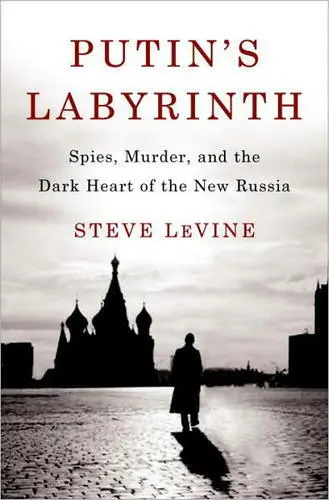
- Название:Putin's Labyrinth
- Автор:
- Издательство:Random House
- Жанр:
- Год:2008
- Город:New York
- ISBN:978-1-58836-815-7
- Рейтинг книги:3 / 5. Голосов: 1
-
Избранное:Добавить в избранное
- Отзывы:
-
Ваша оценка:
Putin's Labyrinth: краткое содержание, описание и аннотация
Предлагаем к чтению аннотацию, описание, краткое содержание или предисловие (зависит от того, что написал сам автор книги «Putin's Labyrinth»). Если вы не нашли необходимую информацию о книге — напишите в комментариях, мы постараемся отыскать её.
Drawing on new interviews with eyewitnesses and the families of victims, LeVine documents the bloodshed that has stained Putin’s two terms as president. Among the incidents chronicled in these pages: The 2002 terrorist takeover of a crowded Moscow theater—which led to the government gassing the building, and the deaths of more than a hundred terrified hostages–seen here from new angles, through the riveting words of those who survived; and the murder of courageous investigative reporter Anna Politkovskaya, shot in the elevator of her apartment building on Putin’s birthday, purportedly as a malicious “gift” for the president from supporters. Finally, a shocking story that made international headlines–the 2006 death of defector Alexander Litvinenko in London—is dramatized as never before. LeVine traces the steps of this KGB-spy-turned-dissident on his way to being poisoned with polonium-210, a radioactive isotope. And in doing so, LeVine is granted a rare series of interviews with a KGB defector who was nearly killed in strangely similar circumstances fifty years earlier. Through LeVine’s exhaustive research, we come to know the victims as real people, not just names in brief news accounts of how they died.
Putin’s Labyrinth
Putin's Labyrinth — читать онлайн бесплатно полную книгу (весь текст) целиком
Ниже представлен текст книги, разбитый по страницам. Система сохранения места последней прочитанной страницы, позволяет с удобством читать онлайн бесплатно книгу «Putin's Labyrinth», без необходимости каждый раз заново искать на чём Вы остановились. Поставьте закладку, и сможете в любой момент перейти на страницу, на которой закончили чтение.
Интервал:
Закладка:
Not dissuaded, Putin’s entourage raised the idea again with visiting congressmen. But they reacted similarly, getting “this tricky expression on their faces and saying, ‘Ah, you want to destroy NATO from within,’” Viktor recalled.
The congressmen had a point, of course. If Russia had been a NATO member in 1999, for example, Serbia would have simply overrun Kosovo as it and its surrogates had previously done with Bosnia and Herzegovina. It made sense to exclude Russia from NATO, notwithstanding the organization’s absorption of other members of the former Soviet bloc, I thought. But Viktor had been offended at the American suggestion that Russia’s motives were disingenuous. So too, apparently, had Putin. My mind wandered to Shakespeare’s admonition about protesting too much. Only minutes earlier, Viktor had openly stated that Putin wanted to join NATO in part to “reform” it. But I presume there was something irritating about Russia not being given the benefit of the doubt and instead being accused of deception.
A truly serious outrage came after the September 11, 2001, terrorist attacks on the United States, Viktor said. Putin was among the first to reach President George W. Bush with condolences and an offer to provide any needed assistance. It wasn’t long before Bush requested that Russia acquiesce to the establishment of a U.S. military presence in Uzbekistan and Kyrgyzstan, from which an offensive would be mounted against the Taliban-ruled government in Afghanistan. The American president promised that the bases were temporary and only for the Afghan attack, said Viktor. He recalled Putin giving a positive response, saying, “We’ve got to help our friends.”
A year and a half later, the active phase of the Afghanistan campaign was concluded. The Kremlin asked when the United States intended to withdraw. Viktor paraphrased the American reply: “This is a zone of our strategic interests and we’re not leaving.”
Vyacheslav Nikonov, a dapper fifty-one-year-old historian and Kremlin insider, said America’s assertion that it intended to stay in Afghanistan pushed Putin beyond his threshold of patience. “I heard it from the Kremlin, ‘We’re fed up,’” Nikonov told me. Putin increasingly felt that Russia had made too many unrequited concessions since the Gorbachev years. “It’s, ‘You guys do what we Americans want or the relationship is terrible.’ This is what the relationship has been for the last fifteen years,” Nikonov said. “We did what the U.S. wanted, and it got us zero.”
And that was the end of Putin as sometimes-friendly interlocutor. If Washington and the rest of the West were going to treat Russia as a second-class country, well, Putin had his own message to deliver. He told off Washington, saying it had “overstepped its national borders in every way.” When the United States said, in 2007, that it would install anti-missile devices in Poland and the Czech Republic, Putin’s commander of missile forces threatened to re-aim Moscow’s nuclear rockets at the installations. Then Putin struck the West’s true soft underbelly: energy. He forced both Royal Dutch Shell and France’s Total to sell controlling shares in their Russian oil properties to state-run companies at low prices, and warned that a similar fate might await Britain’s BP and the biggest company of all, ExxonMobil.
The West called Putin belligerent. But his disparaging remark about the extent to which America had extended its presence seemed altogether reasonable to me—the United States clearly had overreached around the world. America’s reaction to Putin’s complaint showed once again that it could be just as thin-skinned as the Russians, tending to vilify any outspoken critic abroad.
Viktor found it telling that Boris Yeltsin and Vladimir Putin—two wholly different people—started out and ended up at the same point in their attitudes toward the United States: hopeful at first, quite disenchanted and antagonistic in the end. What Viktor might have added was that their separate journeys reflected Russia’s historic problem since Ivan the Terrible: Much of the world felt uncomfortable with Russian ways and kept the country at arm’s length. Russia’s modern ruling elite recognized the dissonance, yet thought that over time other nations might become more accepting. Putin in particular thought that Moscow’s willingness to shelve its misgivings and bow to the West in certain situations would motivate the West to reciprocate in other instances. When the West largely failed to do so, he was hotly resentful.
The story line put forth by Viktor and Nikonov presupposed that Russia and Putin wouldn’t have adopted their chin-out attitude if the West had behaved differently. While it must be recognized that the West does not have entirely clean hands in all of this, I am not as confident as my two Russian informants. There is no way to dial back, but my own experience in the former Soviet Union is that Russia is predisposed to some amount of bullying self-importance. Russia and the West quite likely would have ended up in the same spot no matter how much more accommodating the West had been. The West likely would never accept certain Russian demands, and vice versa. For instance, it is difficult to imagine Russia willingly acceding to the West’s Balkan policy, specifically the independence of the region of Kosovo. Likewise, it’s improbable that Washington will abandon its determination to see NATO expand all the way to Russia’s borders. No matter how many diplomatic courtesies might have been exchanged during the post-Soviet years, these two issues would have remained incendiary in Russia and resulted in continuing antagonism.
Part of Putin’s in-your-face defiance may be the lawyer in him. In a 2007 interview with Time magazine, for example, its correspondents questioned him about corruption within the Kremlin. Putin figuratively coiled into a fighter’s stance—if Time was making such allegations, he assumed the magazine was certain that it had the facts right; if that was the case, his team was prepared to examine whatever Time published and take unspecified action should it find error. In other words, prove it.
The Time interview coincided with its selection of Putin as Person of the Year for 2007, an exceptional honor, although Putin seemed only grudgingly to recognize that. In a video excerpt of the interview, what I saw was the president of Russia in so many words putting up his middle finger. The writer, Adi Ignatius, in his account of how Putin behaved during their three and a half hours together, confirmed my impression. Putin was king of the world. Ignatius and his colleagues were supplicants. Here was one of the West’s most prestigious publications declaring him a man of global importance. So what? He would act as he wished. Though the interview and a dinner were obviously strained, Putin was more or less indulgent through much of it. But each time he sensed that his interrogators were using events or Russian history to patronize or bludgeon his country, he would have none of it. When his tolerance had reached its limit—before the main dinner course arrived—Putin called it a night and summarily dismissed the journalists.
In a famous remark, Sergei Yastrzhembsky, Putin’s senior envoy to Europe, said, “Gentlemen, Russia has returned. It should be reckoned with.” That’s certainly how Put in felt, and his toughness was probably necessary to move Russia along the path toward renewed greatness. In the same way that Gorbachev opened Soviet society and made peace with the West, and Yeltsin stood down the Communist Party and forced it to yield, Putin brought a sense of order to the country and prepared it for prosperity. With chaos all around, the country’s economy in tatters, and the oligarchs dictating what they were going to make off with next, he said “Enough.” He pushed back, creating space for the state and reclaiming much of the property that arguably should never have been relinquished—certainly not at such bargain-basement prices—to profiteers who enriched themselves at the country’s expense. When oil prices went up, the system was poised to benefit and take off, and that’s what happened.
Читать дальшеИнтервал:
Закладка:
Похожие книги на «Putin's Labyrinth»
Представляем Вашему вниманию похожие книги на «Putin's Labyrinth» списком для выбора. Мы отобрали схожую по названию и смыслу литературу в надежде предоставить читателям больше вариантов отыскать новые, интересные, ещё непрочитанные произведения.



Обсуждение, отзывы о книге «Putin's Labyrinth» и просто собственные мнения читателей. Оставьте ваши комментарии, напишите, что Вы думаете о произведении, его смысле или главных героях. Укажите что конкретно понравилось, а что нет, и почему Вы так считаете.