Steve LeVine - Putin's Labyrinth
Здесь есть возможность читать онлайн «Steve LeVine - Putin's Labyrinth» весь текст электронной книги совершенно бесплатно (целиком полную версию без сокращений). В некоторых случаях можно слушать аудио, скачать через торрент в формате fb2 и присутствует краткое содержание. Город: New York, Год выпуска: 2008, ISBN: 2008, Издательство: Random House, Жанр: Публицистика, на английском языке. Описание произведения, (предисловие) а так же отзывы посетителей доступны на портале библиотеки ЛибКат.
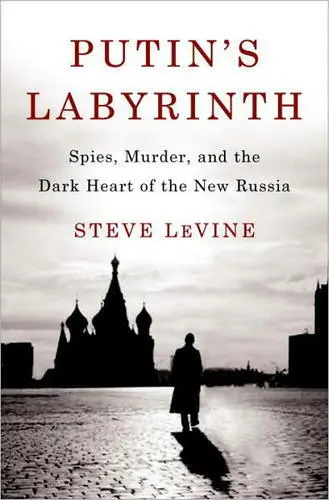
- Название:Putin's Labyrinth
- Автор:
- Издательство:Random House
- Жанр:
- Год:2008
- Город:New York
- ISBN:978-1-58836-815-7
- Рейтинг книги:3 / 5. Голосов: 1
-
Избранное:Добавить в избранное
- Отзывы:
-
Ваша оценка:
Putin's Labyrinth: краткое содержание, описание и аннотация
Предлагаем к чтению аннотацию, описание, краткое содержание или предисловие (зависит от того, что написал сам автор книги «Putin's Labyrinth»). Если вы не нашли необходимую информацию о книге — напишите в комментариях, мы постараемся отыскать её.
Drawing on new interviews with eyewitnesses and the families of victims, LeVine documents the bloodshed that has stained Putin’s two terms as president. Among the incidents chronicled in these pages: The 2002 terrorist takeover of a crowded Moscow theater—which led to the government gassing the building, and the deaths of more than a hundred terrified hostages–seen here from new angles, through the riveting words of those who survived; and the murder of courageous investigative reporter Anna Politkovskaya, shot in the elevator of her apartment building on Putin’s birthday, purportedly as a malicious “gift” for the president from supporters. Finally, a shocking story that made international headlines–the 2006 death of defector Alexander Litvinenko in London—is dramatized as never before. LeVine traces the steps of this KGB-spy-turned-dissident on his way to being poisoned with polonium-210, a radioactive isotope. And in doing so, LeVine is granted a rare series of interviews with a KGB defector who was nearly killed in strangely similar circumstances fifty years earlier. Through LeVine’s exhaustive research, we come to know the victims as real people, not just names in brief news accounts of how they died.
Putin’s Labyrinth
Putin's Labyrinth — читать онлайн бесплатно полную книгу (весь текст) целиком
Ниже представлен текст книги, разбитый по страницам. Система сохранения места последней прочитанной страницы, позволяет с удобством читать онлайн бесплатно книгу «Putin's Labyrinth», без необходимости каждый раз заново искать на чём Вы остановились. Поставьте закладку, и сможете в любой момент перейти на страницу, на которой закончили чтение.
Интервал:
Закладка:
I raise my experience not out of pique at being rebuffed, but to note the larger truth it illustrated about Putin’s Russia. Now on top of the world, it owed no one an explanation. It was up to the West to accept that Russia was back. Unlike in the 1990s, when the nation was, economically speaking, on its knees, it was now self-sustaining, on the move, and didn’t need Western help nor the West’s understanding.
A sharp rise in oil prices was behind the Kremlin’s huge confidence. Crude oil sold for about $20 a barrel when Putin succeeded Yeltsin. It was pushing $100 a barrel when he announced in late 2007 that, since term limits barred him from reelection as president, he would assume the mantle of prime minister, thereby assuring his continued hold on power. Next to the country itself, Putin was the greatest beneficiary of Russia’s new oil riches; its people credited him personally for the resulting improvement in their standard of living. Never in history did such a large percentage of the Russian population have so much money to spend.
The impact of this wealth was especially evident on my trips to the capital in 2007. Moscow had become one of Europe’s most grand and fashionable cities. Each time I visited, the number of exclusive boutiques had multiplied along Tverskaya Street, all the way to Red Square and the Kremlin. This slice of Moscow now boasted one of the world’s largest concentrations of billionaires. The swelling middle class spent its salaries with seeming abandon at new shops and malls that encircled the city. Wealthy Russians bought up lavish villas, mansions, and chateaux along Montenegro’s Adriatic coast, in southern France, and in central London.
Russia’s new muscular profile earned it global deference. It ran neck and neck with Saudi Arabia in the contest to be the world’s largest oil producer, paid off its foreign debt, banked some $200 billion in a rainy-day fund, and began to invest in international stocks and bonds. For the first time, the country burst out of its borders not at the point of a gun, but through the strength of its purse.
Europe was an important energy customer; in 2008, Russia provided a third of the continent’s oil and natural gas, and indications were that the percentage was not going to drop. Foreign oil companies assiduously courted Russia, one of the few petro-states willing to entertain their proposals. But the price of admission became steep, and giants such as Britain’s BP could no longer negotiate the advantageous terms they had when Russia was far weaker. Oilmen from the West not only had to pay cash up front but also give Russian energy companies a share of their prized energy possessions elsewhere. Gazprom accumulated an impressive list of shareholdings in gas storage, marketing, and pipeline companies across Europe—in Germany, the United Kingdom, Italy, the Netherlands, and so on—and pressed hard for more. Investment banks, too, courted Moscow and earned tens of millions of dollars in fees by enabling a wave of Russian public offerings, mergers and acquisitions, and other financing deals.
Meanwhile, Putin’s exercise of power was applauded by much of the country. After moving aggressively against Chechnya, he took on some of the best-known titans who had amassed their wealth during Boris Yeltsin’s presidency. In 2000, Putin forced two of Russia’s seemingly invincible oligarchs—Boris Berezovsky and Vladimir Gusinsky—into exile and turned their broadcast empires into pro-Kremlin propaganda vehicles. Putin’s campaign against Mikhail Khodorkovsky began in 2003; by the time it was over, Russia’s richest man had been sentenced to eight years in prison and his Yukos oil company had become the property of the state.
After eight years of paralysis under Yeltsin’s rule, Putin’s display of testosterone—dutifully reported on state-controlled television—sent his popularity rating over 70 percent. From the outside, Russia might have appeared to be under the thumb of a rogue regime. But at home, Putin was seen as demonstrating that Russia was governable. He had taken a perilous gamble, to be sure. His modus vivendi with criminal elements required that he tolerate their routine crimes and even murders in exchange for their fealty. To bind Russians together, he encouraged a campaign of sometimes frightening nationalism and xenophobia against non-Russians in Moscow, St. Petersburg, and elsewhere. Hate crimes soared. According to the SOVA Center, a Russian activist group, that kind of violence killed thirty-three people across Russia in the first three months of 2008, compared with seventy-two in all of the previous year. Racist attacks tripled in four years, SOVA reported. But that was the nation’s Faustian bargain—acquiescence to a much-compromised, all-powerful state in exchange for the freedom to emerge from their homes, sweep away the rubble from their streets, and send their children to school.
The fresh pride that Putin instilled in his people bore resemblance to the feel-good mood that Ronald Reagan inspired in many Americans with a famously successful political slogan. Vladimir Putin created what a clever Moscow ad man might have marketed as “It’s Morning Again in Russia.”
The more confident Putin became about Russia’s ascendancy, the more willing he seemed to rattle Europe occasionally and poke America in the eye with some frequency. He bluntly criticized the invasion of Iraq and complained about U.S. unilateralism. His assertiveness drew occasional scolding in America, which seemed to say, well, what can one expect of those impossible Russians?
But Putin’s increasingly disagreeable manner was not simply a Russian being difficult. It was at least in part a result of the West’s condescending attitude toward Russia when it was still deep in the throes of economic crisis. Russia’s sense that it had been humiliated when it could least defend itself helped set the stage for worsening relations as the years wore on.
Putin had begun his presidency ready to find a way to reconcile Russia’s profound differences with the West and develop friendly relations. As they did with Yeltsin, the policies of NATO would become an irritant for Putin. When the West, in the 1990s, began proceedings to absorb Eastern Europe and the former Soviet Baltic states into its military alliance, Russia objected. In nationalist circles, the NATO expansion was seen as a potential move to blackmail Moscow militarily should it mount any serious challenge to Western aims in the region. But Putin regarded the NATO dispute differently. He thought Washington simply didn’t understand the basis for Moscow’s opposition, according to Viktor, the Kremlin insider I consulted. If he was patient and made every effort to explain, Putin told his aides, “they’ll see we’re normal people, and we’ll have a different relationship,” Viktor recalled. So Putin sat for hours with major and minor Western visitors—a government minister, a vice minister, whoever was willing to hear his thoughts on Chechnya, NATO, and energy.
By the beginning of 2000, the NATO expansion was well under way. Putin met with President Bill Clinton, Secretary of State Madeleine Albright, and National Security Adviser Samuel Berger, and floated a question: What would be the West’s attitude toward Russia applying to join NATO? Putin was serious, according to Viktor. He saw dual benefits to NATO membership: Russia could integrate more tightly with the West, and, more important from Moscow’s point of view, have an opportunity to “reform” the Cold War–era organization from within. Like the other nineteen NATO members, Moscow would wield a veto. Among other things, it could stop the alliance from repeating acts Russia opposed, such as the bombing of Serbia.
As Viktor recalled the strained moment, Berger suddenly found a fly on the window to be extremely intriguing. Albright looked straight ahead. Clinton glanced at his advisers and finally responded with a diplomatically phrased brush-off. It was something on the order of, If it were up to me, I would welcome that.
Читать дальшеИнтервал:
Закладка:
Похожие книги на «Putin's Labyrinth»
Представляем Вашему вниманию похожие книги на «Putin's Labyrinth» списком для выбора. Мы отобрали схожую по названию и смыслу литературу в надежде предоставить читателям больше вариантов отыскать новые, интересные, ещё непрочитанные произведения.


Обсуждение, отзывы о книге «Putin's Labyrinth» и просто собственные мнения читателей. Оставьте ваши комментарии, напишите, что Вы думаете о произведении, его смысле или главных героях. Укажите что конкретно понравилось, а что нет, и почему Вы так считаете.