George Friedman - The Next Decade
Здесь есть возможность читать онлайн «George Friedman - The Next Decade» весь текст электронной книги совершенно бесплатно (целиком полную версию без сокращений). В некоторых случаях можно слушать аудио, скачать через торрент в формате fb2 и присутствует краткое содержание. Город: New York, Год выпуска: 2011, ISBN: 2011, Издательство: Doubleday, Жанр: Публицистика, Политика, на английском языке. Описание произведения, (предисловие) а так же отзывы посетителей доступны на портале библиотеки ЛибКат.

- Название:The Next Decade
- Автор:
- Издательство:Doubleday
- Жанр:
- Год:2011
- Город:New York
- ISBN:978-0-385-53295-2
- Рейтинг книги:5 / 5. Голосов: 1
-
Избранное:Добавить в избранное
- Отзывы:
-
Ваша оценка:
The Next Decade: краткое содержание, описание и аннотация
Предлагаем к чтению аннотацию, описание, краткое содержание или предисловие (зависит от того, что написал сам автор книги «The Next Decade»). Если вы не нашли необходимую информацию о книге — напишите в комментариях, мы постараемся отыскать её.
bestseller
now focuses his geopolitical forecasting acumen on the next decade and the imminent events and challenges that will test America and the world, specifically addressing the skills that will be required by the decade’s leaders. The next ten years will be a time of massive transition. The wars in the Islamic world will be subsiding, and terrorism will become something we learn to live with. China will be encountering its crisis. We will be moving from a time when financial crises dominate the world to a time when labor shortages will begin to dominate. The new century will be taking shape in the next decade.
In
, George Friedman offers readers a provocative and endlessly fascinating prognosis for the immediate future. Using Machiavelli’s
as a model, Friedman focuses on the world’s leaders—particularly the American president—and with his trusted geopolitical insight analyzes the complex chess game they will all have to play. The book also asks how to be a good president in a decade of extraordinary challenge, and puts the world’s leaders under a microscope to explain how they will arrive at the decisions they will make—and the consequences these actions will have for us all.
The Next Decade — читать онлайн бесплатно полную книгу (весь текст) целиком
Ниже представлен текст книги, разбитый по страницам. Система сохранения места последней прочитанной страницы, позволяет с удобством читать онлайн бесплатно книгу «The Next Decade», без необходимости каждый раз заново искать на чём Вы остановились. Поставьте закладку, и сможете в любой момент перейти на страницу, на которой закончили чтение.
Интервал:
Закладка:
I am arguing that this is a preferred policy option given the circumstances. But I am also arguing that this is the most logical outcome. The alternatives are unacceptable to both sides; there is too much risk. And when the alternatives are undesirable, what remains—however preposterous it appears—is the most likely outcome.
To see how that would affect wider circles of power and their balance, we turn to the next concern, the balance between Europe and Russia.
Chapter 8
THE RETURN OF RUSSIA
The collapse of the Soviet Union appeared to signal Russia’s demise as an international player, but news of that death was premature. A nation so large, so filled with resources, and so strategically located doesn’t simply dissolve into the air. In the 1990s, the USSR’s fall nonetheless shattered the vast empire assembled by the czars and held together by the Communists, leaving Moscow in control of a fraction of what it held in 1989. Muscovy alone (and Siberia), the region that had been the kernel of the empire, remained in Russian hands. As long as that core remained, however, the game wasn’t over. The Russian Federation, sorely weakened, still survived, and it will play an increasingly significant role in the next decade.
While Russia suffered breakaway regions and an economy in shambles, the United States emerged as the sole remaining global power, able to dominate the planet in a casual, almost indolent fashion. But the Soviet collapse gave the United States only a limited time frame in which to drive a stake into the heart of its old rival, ensuring that it stayed down. The United States could have applied stress to the Russian system by supporting secessionist movements or by increasing economic pressure. Such moves might very well have caused the entire Russian Federation to crumble, enabling its former junior partners to absorb what was left and form a new balance of power in Eurasia.
At the time, however, the effort did not seem worth the risk, mostly because Russia appeared unlikely to emerge from its chaos for generations. Destroying what was left of Russian power did not even appear to be necessary, because the United States could create the regional balance of power it wanted simply by expanding NATO and the alliance system eastward.
But the United States was also deeply concerned about the future of the Soviet nuclear arsenal, which was even more massive than the American one. Further chaos in the region would have made the weapons vulnerable to terrorists and black marketers, among other risks. The United States wanted nuclear weapons within the former Soviet Union to be under the control of one state that could be watched and shaped, and that state was Russia, not Ukraine or Belarus or all the rest. Thus while the Russian nuclear arsenal had not preserved the Soviet Union, it did save the Russian Federation—at least from U.S. intervention.
During the 1990s the non-Russian members of the former Soviet Union, countries such as Kazakhstan and Ukraine, were desperate to be organized. By rapidly and aggressively integrating them into NATO, the United States could have increased the strength and cohesiveness of these encircling nations to bottle up Russia and the former Soviet republics as well, and Russia would have been helpless to stop the process.
Yet while the United States had plans to do exactly this, it did not move quickly enough. Only eastern Europe and the Baltic states were absorbed into NATO, a significant strategic shift that becomes more significant when you consider this fact: when the Soviet Union still controlled East Germany, the distance between NATO forces and St. Petersburg was about a thousand miles, but after the Baltics were admitted into NATO, the distance was about one hundred miles. This sense of being encircled, diminished, and encroached upon shapes Russian behavior going forward.
RUSSIAN FEARS
With NATO on its doorstep, the Russians understandably became alarmed. From their point of view, this alliance was first and foremost military, and however kindly its disposition might be at the moment, its future intentions were unpredictable. The Russians knew all too well how easily moods can swing, recalling painfully how Germany had gone from being a chaotic, poor, and barely armed country in 1932 to becoming the dominant military force in Europe six years later. Russia saw no reason for the West to expand NATO unless sooner or later the West wanted NATO to be in a position to strike. After all, the Russians argued, they were certainly not about to invade Europe.
There were those in NATO, particularly the Americans and the former satellites of the Soviet Union, who wanted to take advantage of the opportunity to expand for strategic reasons. But others, particularly the Europeans, had started thinking of NATO in a different way. Rather than seeing NATO as a military alliance focused on war, they saw it as a regional United Nations, designed to incorporate friendly, liberal democracies into an organization whose primary function was to maintain stability.
The inclusion of the Baltics was the high-water mark of NATO expansion, after which events began to intervene. Vladimir Putin’s rise to power created a very different Russia from the one that had existed under Boris Yeltsin in the 1990s. Meanwhile, the one institution that had never stopped functioning was the intelligence services. Having held Russia and its empire together for generations, they operated through the 1990s almost as an autonomous state or crime organization. Putin had been trained in the KGB, and as a result he saw the world geopolitically rather than ideologically. In his mind, a strong state was essential to Russian stability, so from the moment he took power in 2000, he started the process of restoring Russian muscle.
For more than a century, Russia had been trying to become an industrial power that could compete with the West. Seeing that Russia could never catch up, Putin shifted the nation’s economic strategy to focus on developing and exporting natural resources such as metals, grain, and particularly energy. The strategy was brilliant in that it created an economy that Russia could sustain and that would sustain Russia. It strengthened the Russian state by making Gazprom an arm of the Russian government with a monopoly on natural gas. And it created European dependence on Russian energy, thus making it less likely that the Europeans—particularly the Germans—would seek or support confrontation.
The turning point in relations between the United States and Russia came in 2004, when events in Ukraine convinced the Russians that the U.S. intended to destroy or at least tightly control them. A large nation, Ukraine covers the entire southwestern frontier of Russia, and from the Russian point of view, it is the key to Russian national security.
The Russian territory lying between Ukraine and Kazakhstan is only three hundred miles wide, and all of Russia’s influence in the Caucasus—along with a good deal of the oil in the pipelines to the south—flows through this gap. At the center of the gap is Volgograd, formerly Stalingrad. During World War II, the Soviets sacrificed one million lives in the battle to keep that gap from being closed by the Germans.
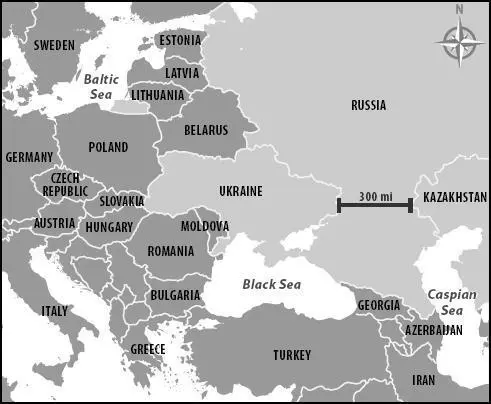
The initial winner of the Ukrainian election in 2004, President Viktor Yanukovich, was accused of widespread electoral fraud, of which he was no doubt guilty, and demonstrations took place to demand that the election be annulled, that Yanukovich step down, and that new elections be held. This uproar, known as the Orange Revolution, was seen by Moscow as a pro-Western, anti-Russian uprising designed to take Ukraine into NATO. The Russians also charged that rather than being a popular uprising, it was a carefully orchestrated coup, sponsored by the CIA and the British MI6. According to the Russians, Western nongovernmental organizations and consulting groups had flooded Ukraine to stage the demonstrations, unseat a pro-Russian government, and directly threaten Russian national security.
Читать дальшеИнтервал:
Закладка:
Похожие книги на «The Next Decade»
Представляем Вашему вниманию похожие книги на «The Next Decade» списком для выбора. Мы отобрали схожую по названию и смыслу литературу в надежде предоставить читателям больше вариантов отыскать новые, интересные, ещё непрочитанные произведения.



Обсуждение, отзывы о книге «The Next Decade» и просто собственные мнения читателей. Оставьте ваши комментарии, напишите, что Вы думаете о произведении, его смысле или главных героях. Укажите что конкретно понравилось, а что нет, и почему Вы так считаете.