Roberto Saviano - ZeroZeroZero
Здесь есть возможность читать онлайн «Roberto Saviano - ZeroZeroZero» весь текст электронной книги совершенно бесплатно (целиком полную версию без сокращений). В некоторых случаях можно слушать аудио, скачать через торрент в формате fb2 и присутствует краткое содержание. Год выпуска: 2015, Издательство: Penguin Publishing Group, Жанр: Публицистика, Криминальный детектив, на английском языке. Описание произведения, (предисловие) а так же отзывы посетителей доступны на портале библиотеки ЛибКат.
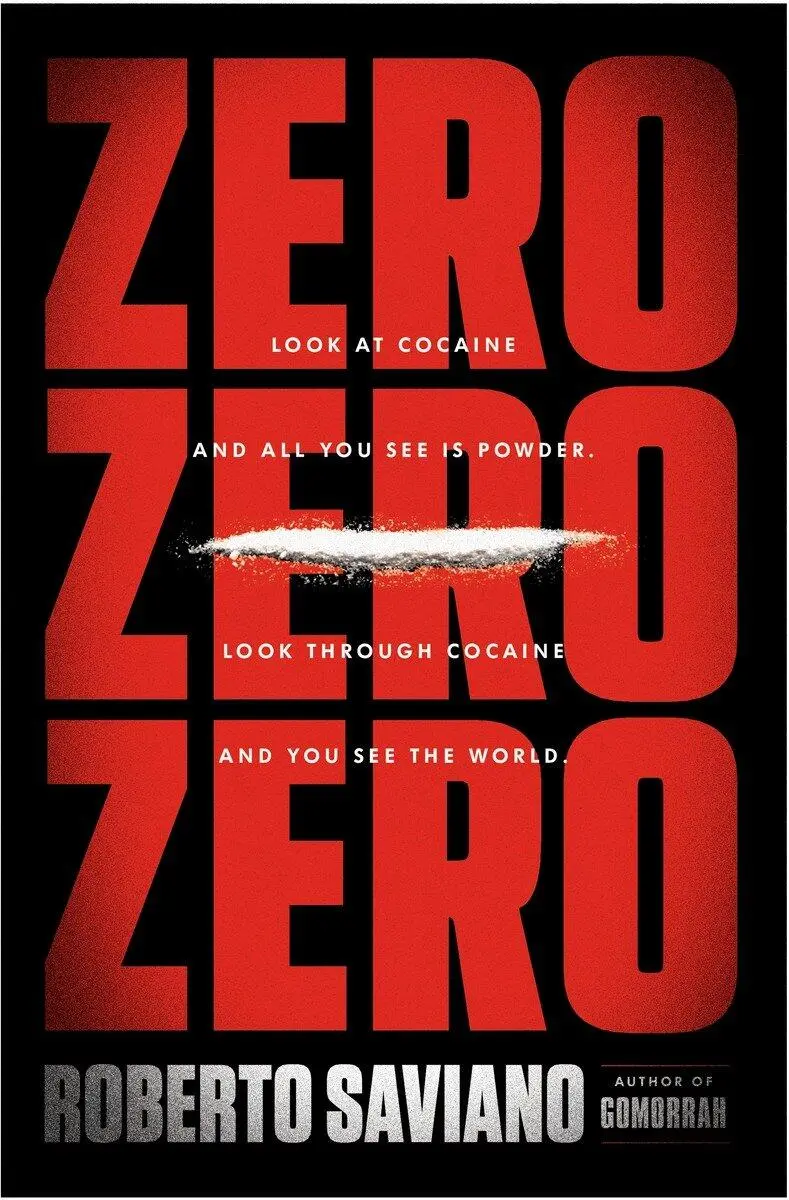
- Название:ZeroZeroZero
- Автор:
- Издательство:Penguin Publishing Group
- Жанр:
- Год:2015
- ISBN:нет данных
- Рейтинг книги:5 / 5. Голосов: 1
-
Избранное:Добавить в избранное
- Отзывы:
-
Ваша оценка:
ZeroZeroZero: краткое содержание, описание и аннотация
Предлагаем к чтению аннотацию, описание, краткое содержание или предисловие (зависит от того, что написал сам автор книги «ZeroZeroZero»). Если вы не нашли необходимую информацию о книге — напишите в комментариях, мы постараемся отыскать её.
Saviano’s
, his explosive account of the Neapolitan mob, the Camorra, was a worldwide publishing sensation. It struck such a nerve with the Camorra that Saviano has lived with twenty-four hour police protection in the shadow of death threats for more than seven years. During this time he has become intimate with law enforcement agencies around the world. Saviano has broadened his perspective to take in the entire global corporate” entity that is the drug trade in cooperation with law enforcement officials, who have fed him information and sources and used him to guide their own thinking and tactics. Saviano has used this extraordinary access to feed his own groundbreaking reportage.
The result is a truly amazing and harrowing synthesis of intimate literary narrative and geopolitical analysis of one of the most powerful dark forces in the global economy. In
, Saviano tracks the shift in the cocaine trade’s axis of power, from Colombia to Mexico, and relates how the Latin American cartels and gangs have forged alliances, first with the Italian crime syndicates, then with the Russians, Africans, and others. On the one hand, he charts an astonishing increase in sophistication and diversification as these criminal entities diversify into many other products and markets. On the other, he reveals the threat of violence to protect and extend power and how the nature of the violence has grown steadily more appalling.
Saviano is a journalist of rare courage and a thinker of impressive intellectual depth and moral imagination, able to see the connections between far-flung phenomena and bind them into a single epic story. Most drug-war narratives feel safely removed from our own lives; Saviano offers no such comfort. As heart racing as it is heady,
is a fusion of a variety of disparate genres into a brilliant new form that can only be called
.
ZeroZeroZero — читать онлайн бесплатно полную книгу (весь текст) целиком
Ниже представлен текст книги, разбитый по страницам. Система сохранения места последней прочитанной страницы, позволяет с удобством читать онлайн бесплатно книгу «ZeroZeroZero», без необходимости каждый раз заново искать на чём Вы остановились. Поставьте закладку, и сможете в любой момент перейти на страницу, на которой закончили чтение.
Интервал:
Закладка:
Fuduli cannot tell the investigators the godfather’s name or nickname. He doesn’t know if he is Mexican or Colombian. He’s been told he is in hiding, but he doesn’t know the country he’s wanted in. Felipe is the unreliable type, with delusions of grandeur that will reveal themselves later. So when he passes his “godfather” off as “one of the biggest in Mexico,” there’s no reason to believe him. But Ramiro, who is much more trustworthy, confirms to Bruno that every fifteen days he prepares a shipment and readies the runway so that Felipe can fly 400 kilos of cocaine to a private landing strip in Mexico. He also tells him that the reason those low-flying flights are made only every two weeks is simply that all the Colombian family cartels together aren’t able to fill the plane every week.
• • •
The Italian magistrates must not have found sufficient proof of the deals with the “godfather living in Mexico,” even though a Mexican citizen figures among those condemned in the first round of the trial that followed the investigation. But in light of what has transpired in the more than ten years that have passed since these reports were transcribed, in light of the information that the Reckoning and Solare investigations provided, Fuduli’s story seems in fact to be the chronicle of the Calabrians’ first landing in Mexico.
When I think about Bruno, when I recall his words, I ask myself what it means to encounter your destiny by mistake rather than by chance. The difference between fate and accident depends on your point of view, on the stories you tell — or don’t tell — yourself about the meaning of your life. The error of accepting Natale Scali’s proposal. The error he decided to try and erase by collaborating with the law. But Bruno Fuduli continued to dwell in that error for nearly ten years. He wasn’t an independent broker, and he wasn’t affiliated with a clan. He’d get on planes and go to tropical borderlands, to no man’s lands brimming with mines, fear, and poverty. And right at the end he found himself locked up for two weeks in a hut in the Bogotá savannah, altitude 11,500 feet, guarded day and night by paramilitaries armed to the teeth. The problem, that time, was the Vibo Valentia guys’ shipment seized in Hamburg, valued at $3 million. The Colombians wanted to be paid, they wanted to collect on what they’d sent. The Calabrians didn’t want to hear it, though; they wanted to pay only for the goods they received. Natale Scali couldn’t step in anymore. He’d been arrested in Marina di Gioiosa Jonica. Pasquale Marando couldn’t either — he was killed, but there’s no trace of his body. Right before the end the double game was turning into Russian roulette, with more than one bullet in the barrel. Bruno lost twenty pounds; all they gave him was water. He got sick. They moved him to an apartment in the capital, fearing for the life of their hostage. From there, instead of calling his counterparts in Calabria, he came up with a way to alert the Carabinieri. The Special Operations Group (ROS) collaborated with the Colombian police, who on January 12, 2004, managed to rescue him without firing a single shot. Later the AUC came for Ramiro. They stuffed him in the same hole of a hut Bruno’d been in until Ventrici and Barbieri finally settled their bill. Bruno’s double life as an infiltrator was about to end.
• • •
Even the judicial inquiries draw on the tree metaphor, and they propagate like branches. After Operation Decollo will come Decollo bis, Decollo ter, and Decollo Money, each of which will become intertwined with still other investigations. Follow the money: That was Giovanni Falcone’s pioneering investigative strategy and his lesson to magistrates who came after him. Yet this remains the hardest thing for investigators to do. It’s the fault of inadequate laws and tools, widespread complicity, and a lack of awareness and therefore of public pressure about the matter. It’s the fruit of a certain media logic, in which a drug seizure is worth at least ten lines in the paper, while the seizure of a property or business barely gets a mention in the local news, even though the economic aspects of Mafia activities are getting more attention in Italy. The information arrives, but it isn’t seen. The money even less.
Money isn’t merely that abstract entity, almost mystical for its volatility, infinite quantities of which can be moved from one end of the planet to the other with a mere click of a keyboard. Invested in the most cryptic funds, in the most high-risk stocks. At least not for the ’ndrangheta, or for mafias in general. For them, money is money. Cash, wads of it, suitcases crammed full of it, secret stashes. Their money has substance, weight — you can count it on your fingers. And the moldy smell it has isn’t lost even when it lands in the most unreachable bank accounts. ’Ndrangheta money is the fruit of their labor, the fruit of the tree. Which is why the ’ndrangheta does not disdain any method of cleaning it, reinvesting it, making the fruit of their labor bear more fruit. So their grand laundering schemes through finance companies that fit together like Chinese nesting boxes sit alongside the simple purchase of some two-room apartment or plot of farmland.
Operation Decollo’s first money trail discovery was incredible, both because of the amount involved and for the sheer simplicity of the laundering method. The Vibonesi bought themselves a SuperEnalotto lottery ticket. In May 2003 there was a 5+1 jackpot. The winning ticket turned out to have been sold at the Poker bar in Locri, which belonged to the father-in-law of a young man named Nicola Lucà, who laundered money for the Mancuso family. He contacted the winner right away and offered him more than €8 million for the ticket. Then he opened new accounts at the UniCredit banks of Milan and Soverato, so that the National Lottery — the Italian state, that is — could credit him the money. For Nicola Lucà the easy money marked the moment of greatest media notoriety, whereas his ascent in the ’ndrangheta hierarchy passed unobserved. He moved to northern Italy, where he became the accountant for the “local”—a ’ndrangheta cell — of Cormano, near Milan, which elected him to represent it at the summit in Lombardy: The video recording of Lucà toasting along with the other heads of the Lombard locals at the Giovanni Falcone and Paolo Bordellino Club in Paderno Dugnano, ten miles outside of Milan, during an October 2009 meeting, became the most clicked-on report on the web about the Crimine-Infinito investigation. Not a summit among bosses in ’ndrangheta territory — in Platì, Rosarno, or Gioiosa Jonica, or some Calabrian forest. This summit took place twelve hundred kilometers away, in Lombardy, Italy’s wealthiest and most advanced region, which — despite a number of investigations that have proved otherwise — had always considered itself immune to the cancer of the ’ndrangheta and of organized crime in general.
Another way that the ’ndrangheta hides is through affiliation density, which in Calabria reaches about 30 percent — and more than double that in the heart of Aspromonte — and with a capillary diffusion beyond their home turf. For anyone who doesn’t deal with the ’ndrangheta professionally, there are simply far too many of them to memorize who and where they are, and what they do. The tree’s shape is covered by its lush foliage, the branches of which are too fine and intricate to trace.
We find Nicola Ciconte — the Australian-born affiliate with Calabrian roots involved in the Decollo investigation — ten thousand miles from the base of the tree. Italy has been asking for his extradition since 2004. The most recent request is from 2012, a sentence in which he was condemned to twenty-five years. For now he tranquilly makes the rounds of the bars on the Gold Coast, the world’s surfing paradise, where he settled after making his way up the east coast from Melbourne. Since shipping Fuduli’s marble to the port of Adelaide, Ciconte has served time in Australia for fraud, swindled an ex-girlfriend, and driven a real estate agency into bankruptcy. Compared to what he did for the country he is most deeply tied to, these are minor things.
Читать дальшеИнтервал:
Закладка:
Похожие книги на «ZeroZeroZero»
Представляем Вашему вниманию похожие книги на «ZeroZeroZero» списком для выбора. Мы отобрали схожую по названию и смыслу литературу в надежде предоставить читателям больше вариантов отыскать новые, интересные, ещё непрочитанные произведения.

Обсуждение, отзывы о книге «ZeroZeroZero» и просто собственные мнения читателей. Оставьте ваши комментарии, напишите, что Вы думаете о произведении, его смысле или главных героях. Укажите что конкретно понравилось, а что нет, и почему Вы так считаете.