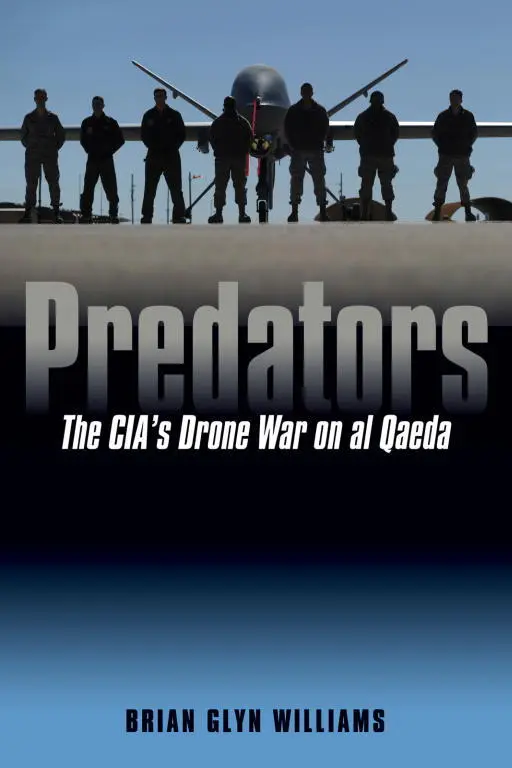
Brian Williams - Predators
Здесь есть возможность читать онлайн «Brian Williams - Predators» весь текст электронной книги совершенно бесплатно (целиком полную версию без сокращений). В некоторых случаях можно слушать аудио, скачать через торрент в формате fb2 и присутствует краткое содержание. Город: Dulles, Virginia, Год выпуска: 2013, ISBN: 2013, Издательство: Potomac Books, Жанр: nonf_military, Публицистика, на английском языке. Описание произведения, (предисловие) а так же отзывы посетителей доступны на портале библиотеки ЛибКат.
- Название:Predators
- Автор:
- Издательство:Potomac Books
- Жанр:
- Год:2013
- Город:Dulles, Virginia
- ISBN:978-1-61234-617-5
- Рейтинг книги:3 / 5. Голосов: 1
-
Избранное:Добавить в избранное
- Отзывы:
-
Ваша оценка:
Predators: краткое содержание, описание и аннотация
Предлагаем к чтению аннотацию, описание, краткое содержание или предисловие (зависит от того, что написал сам автор книги «Predators»). Если вы не нашли необходимую информацию о книге — напишите в комментариях, мы постараемся отыскать её.
, the cigarette lighter–size homing beacons spies plant on their unsuspecting targets to direct drone missiles to them, the author describes the drone arsenal in full.
Evaluating the ethics of targeted killings and drone technology, Williams covers more than a hundred drone strikes, analyzing the number of slain civilians versus the number of terrorists killed to address the claims of antidrone activists. In examining the future of drone warfare, he reveals that the U.S. military is already building more unmanned than manned aerial vehicles. Predators helps us weigh the pros and cons of the drone program so that we can decide whether it is a vital strategic asset, a “frenemy,” or a little of both.
Predators — читать онлайн бесплатно полную книгу (весь текст) целиком
Ниже представлен текст книги, разбитый по страницам. Система сохранения места последней прочитанной страницы, позволяет с удобством читать онлайн бесплатно книгу «Predators», без необходимости каждый раз заново искать на чём Вы остановились. Поставьте закладку, и сможете в любой момент перейти на страницу, на которой закончили чтение.
Интервал:
Закладка:
Unlike the poll by the Aryana Institute (discussed in chapter 9), which demonstrated support for the drone strikes among tribesmen in the FATA, a survey by the New America Foundation found the opposite. The New America Foundation reported, “More than three-quarters of FATA residents oppose American drone strikes. Indeed, only 16 percent think these strikes accurately target militants; 48 percent think they largely kill civilians and another 33 percent feel they kill both civilians and militants.” 6Although members of the Aryana Institute have argued that Taliban intimidated many average tribesmen into speaking out against the drone strikes when polled by outsiders, it is also clear that some people in Pakistan proper and the FATA strongly oppose the drone strikes. Their main concern is that the strikes kill too many civilians.
This was a concern I noticed while conducting research in Pakistan in 2010. Although many Pakistanis supported the killing of terrorists—just so long as it was done cleanly—they felt that there was no such thing as an “acceptable” number of civilians being killed in the process. For this reason, most thought the drone strikes were bad for Pakistan. Although, as has been pointed out in previous chapters, the drone campaign is unprecedentedly accurate and leads to relatively few civilian deaths, this was not the perception in Pakistan. Perception can be more important than reality. I found that even anti-Taliban, English-speaking secular elites in Islamabad, Peshawar, and Lahore believed that the drones were killing more civilians than terrorists. They could not tolerate the idea of a distrusted foreign intelligence service killing large numbers of Pakistani men, women, or children who were uninvolved with terrorism, even by accident as collateral damage.
With the Pakistani media banging a steady drumbeat of anti-Americanism, Americans have little power to change this perception. The three separate U.S. studies, discussed in chapter 8, that demonstrate that the drones kill only a small percentage of civilians in their strikes have not altered the Pakistani perceptions that the CIA is brutally killing large numbers of civilians in their country. Few Pakistanis are aware of these studies, and even if they were, they would probably distrust them because they were conducted by Americans. When U.S. officials such as Hillary Clinton visit Pakistan to engage the Pakistani people and present America’s softer side, they are drowned out by the voices asking about civilian deaths in drone strikes. This makes it impossible to “sell” America to the Pakistani people.
America is clearly losing the war of perceptions and with it the war for the hearts and minds of millions of Pakistanis, and the drones strikes don’t help. The false number of “700 dead civilians for just 14 terrorists” propagated by the antidrone voices in Pakistan is typical of this exaggerated rhetoric. This disinformation is the public relations collateral damage of the drone war, and it may far outweigh the tactical gains that clearly come from the killing of hundreds of Taliban and al Qaeda operatives and the disruption of their terror-insurgency campaign. In its most benign form this growing distrust of the United States and its drone campaign simply leads to anti-American rallies and American flag burnings. At its worse it can lead to Pakistanis, both Pashtuns and non-Pashtuns in places like the Punjab, joining or actively supporting the militants. The drones that kill terrorists may thus be inadvertently recruiting new ones to replenish their ranks. Few issues excite the fury of the Pakistanis more than stories of innocent Pakistani children killed in their homes by drone strikes; this can incite issues of ghairat (honor) and badal (revenge).
In the larger sense this failure in the war of perceptions undermines not just the Americans’ image but also the image of the Pakistani government, which is tied to it. Most Pakistanis see the Zardari government as either complicit in the murder of fellow citizens or too weak to prevent the bullying Americans from carrying out the drone assassination campaign. The Zardari government is forced to continually release public statements criticizing the drone strikes as violations of sovereignty in order to come off as defenders of Pakistan’s territorial integrity. The revelation that the CIA drones were being secretly flown from the Pakistani air base at Shamsi in southeastern Pakistan, with the obvious compliance of Pakistani authorities, seriously undermined the government’s credibility with its own people. Many Pakistanis felt that the government, which had issued many public criticisms of the drone strikes in the past, was being duplicitous.
For this reason, although there are clearly prodrone voices in the Pakistani government, as seen in chapter 8, one cannot write off all the official protests against the drone campaign as mere pro forma sop for the Pakistani masses designed to put daylight between Islamabad and the infamous CIA drones. The Pakistanis, for example, complained about the strikes to the U.S. ambassador to Pakistan and the head of CENTCOM, Gen. David Petraeus, during a 2008 visit. After a meeting with Petraeus, Pakistani president Zardari said, “Continuing drone attacks on our territory, which result in loss of precious lives and property, are counterproductive and difficult to explain by a democratically elected government. It is creating a credibility gap.” 7This statement is hard to contest. The drone strikes make the weak Pakistani president look bad before his people.
The Pakistani defense minister claimed the strikes were generating “anti-American sentiments” and creating “outrage and uproar among the people.” Another military official said that the missile strikes were “counterproductive” and “driving a wedge between the government and the tribal people.” 8Certainly there have been mass protests against the drone strikes, especially following the Damadola strikes. These may have turned local tribesmen against the government and certainly caused an uproar throughout the country.
Pakistani prime minister Yousuf Gilani described the strikes as “disastrous” and said, “Such actions are proving counter-productive to efforts to isolate the extremists and militants from the tribal population.” 9He also said, “We are trying to separate militants from tribesmen, but the drone attacks are doing exactly the opposite.” 10On another occasion he stressed, “The political and the military leadership have been very successful in isolating the militants from the local tribes. But once there is a drone attack in their home region, they get united again. This is a dangerous trend, and it is my concern and the concern of the army. It is also counterproductive in the sense that it is creating a lot of anti-American sentiment all over the country.” 11
In other words, this high-ranking Pakistani official felt the strikes might align aggrieved tribes that lost civilians as collateral damage in drone strikes with the Taliban, which would be catastrophic for the wars in both the FATA and Afghanistan. The Pakistani army’s Maj. Gen. Athar Abbas similarly claimed that the missile strikes “hurt the campaign rather than help.” 12And Abdul Basit, a Pakistan foreign office spokesman, expressed his opposition to the strikes saying, “As we have been saying all along, we believe such attacks are counter-productive. They involve collateral damage and they are not helpful in our efforts to win hearts and minds.” 13
This statement is an understatement when it comes to the damage done to America’s image in Pakistan. One has only to extrapolate how Americans would feel about the CIA killing real or suspected American extremists without trials in the United States (much less a foreign Muslim intelligence agency such as the ISI doing the same thing) to see how most Pakistanis feel about America’s secretive drone assassination campaign in their country. On several occasions Pakistanis anecdotally told me they “liked to know what was going on in their own backyard,” and this phrase seemed to have begun to circulate in regard to the drones. The secretive nature of the drone strikes and the CIA’s lack of accountability to anyone in its own government (much less the Pakistani government) disturbed many Pakistanis I met.
Читать дальшеИнтервал:
Закладка:
Похожие книги на «Predators»
Представляем Вашему вниманию похожие книги на «Predators» списком для выбора. Мы отобрали схожую по названию и смыслу литературу в надежде предоставить читателям больше вариантов отыскать новые, интересные, ещё непрочитанные произведения.












Обсуждение, отзывы о книге «Predators» и просто собственные мнения читателей. Оставьте ваши комментарии, напишите, что Вы думаете о произведении, его смысле или главных героях. Укажите что конкретно понравилось, а что нет, и почему Вы так считаете.