Antony Beevor - Stalingrad
Здесь есть возможность читать онлайн «Antony Beevor - Stalingrad» весь текст электронной книги совершенно бесплатно (целиком полную версию без сокращений). В некоторых случаях можно слушать аудио, скачать через торрент в формате fb2 и присутствует краткое содержание. Город: New York, Год выпуска: 2007, ISBN: 2007, Издательство: Penguin Books, Жанр: military_history, на английском языке. Описание произведения, (предисловие) а так же отзывы посетителей доступны на портале библиотеки ЛибКат.
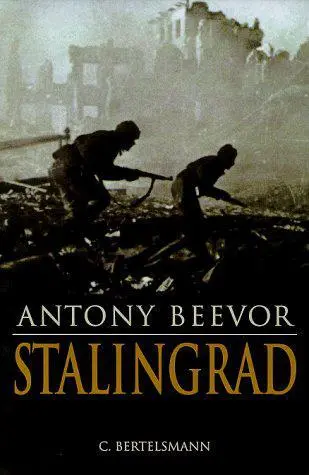
- Название:Stalingrad
- Автор:
- Издательство:Penguin Books
- Жанр:
- Год:2007
- Город:New York
- ISBN:978-0-14-192610-0
- Рейтинг книги:5 / 5. Голосов: 1
-
Избранное:Добавить в избранное
- Отзывы:
-
Ваша оценка:
Stalingrad: краткое содержание, описание и аннотация
Предлагаем к чтению аннотацию, описание, краткое содержание или предисловие (зависит от того, что написал сам автор книги «Stalingrad»). Если вы не нашли необходимую информацию о книге — напишите в комментариях, мы постараемся отыскать её.
Hitler made two fundamental and crippling mistakes during the Second World War: The first was his whimsical belief that the United Kingdom would eventually become his ally, which delayed his decision to launch a major invasion of Britain, whose army was unprepared for the force of blitzkrieg warfare. The second was the ill-conceived Operation Barbarossa—an invasion of Russia that was supposed to take the German army to the gates of Moscow. Antony Beevor’s thoughtfully researched compendium recalls this epic struggle for Stalingrad. No one, least of all the Germans, could foretell the deep well of Soviet resolve that would become the foundation of the Red Army; Russia, the Germans believed, would fall as swiftly as France and Poland. The ill-prepared Nazi forces were trapped in a bloody war of attrition against the Russian behemoth, which held them in the pit of Stalingrad for nearly two years. Beevor points out that the Russians were by no means ready for the war either, making their stand even more remarkable; Soviet intelligence spent as much time spying on its own forces—in fear of desertion, treachery, and incompetence—as they did on the Nazis. Due attention is also given to the points of view of the soldiers and generals of both forces, from the sickening battles to life in the gulags.
Many believe Stalingrad to be the turning point of the war. The Nazi war machine proved to be fallible as it spread itself too thin for a cause that was born more from arrogance than practicality. The Germans never recovered, and its weakened defenses were no match for the Allied invasion of 1944. We know little of what took place in Stalingrad or its overall significance, leading Beevor to humbly admit that “[t]he Battle of Stalingrad remains such an ideologically charged and symbolically important subject that the last word will not be heard for many years.” This is true. But this gripping account should become the standard work against which all others should measure themselves.
This gripping account of Germany's notorious campaign combines sophisticated use of previously published firsthand accounts in German and Russian along with newly available Soviet archival sources and caches of letters from the front. For Beevor (Paris After the Liberation, 1944-1949), the 1942 German offensive was a gamble that reflected Hitler's growing ascendancy over his military subordinates. The wide-open mobile operations that took the 6th Army into Stalingrad were nevertheless so successful that Soviet authorities insisted they could be explained only by treason. (Over 13,000 Soviet soldiers were formally executed during the battle for Stalingrad alone.) Combat in Stalingrad, however, deprived the Germans of their principal force multipliers of initiative and flexibility. The close-gripped fighting brought men to the limits of endurance, then kept them there. Beevor juxtaposes the grotesque with the mundane, demonstrating the routines that men on both sides developed to cope with an environment that brought them to the edge of madness. The end began when German army commander Friedrich von Paulus refused to prepare for the counterattack everyone knew was coming. An encircled 6th Army could neither be supplied by air nor fight its way out of the pocket unsupported. Fewer than 10,000 of Stalingrad's survivors ever saw Germany again. For the Soviet Union, the victory became a symbol not of a government, but of a people. The men and women who died in the city's rubble could have had worse epitaphs than this sympathetic treatment. Agent: Andrew Nurnberg. History Book Club main selection; BOMC alternate selection; foreign sales to the U.K., Germany and Russia. Amazon.com Review
From Publishers Weekly
Stalingrad — читать онлайн бесплатно полную книгу (весь текст) целиком
Ниже представлен текст книги, разбитый по страницам. Система сохранения места последней прочитанной страницы, позволяет с удобством читать онлайн бесплатно книгу «Stalingrad», без необходимости каждый раз заново искать на чём Вы остановились. Поставьте закладку, и сможете в любой момент перейти на страницу, на которой закончили чтение.
Интервал:
Закладка:
20
Karmen’s photograph was doctored in Moscow. General Telegin was removed from the print because Stalin considered him insufficiently important for such a historic occasion. (Even Dyatlenko’s promotion to major was accelerated for the release of the photograph.) This incident developed into one of those grotesque farces of the Stalinist era. When the photograph appeared across the front of Pravda , with his face removed, Telegin was terrified that someone had denounced him for a chance remark. Nothing happened, however, so he thought he was safe, but then, in 1948, he was suddenly arrested on the orders of Abakumov (the head of SMERSH) for no apparent reason.
21
German guards were also used in other camps. The worst were some two hundred Germans (most appear to have been Saxons for some reason) who had deserted from punishment battalions. Armed with wooden clubs, and granted the designation of ‘Fighters against Fascism’, they refused to allow soldiers to fall out to relieve themselves during roll-call, even though the overwhelming majority were suffering from dysentery.
22
It is, of course, possible that General von Seydlitz secretly saw this operation as a chance of tricking the Soviets into sending him and thousands of Sixth Army prisoners home. But if this had been the case, one would have expected him to mention the episode after the war when he faced such heavy condemnation from former colleagues for having collaborated with Stalin’s regime.
23
This collection is listed under fiction as the authenticity of the letters is very much in doubt.
Интервал:
Закладка:
Похожие книги на «Stalingrad»
Представляем Вашему вниманию похожие книги на «Stalingrad» списком для выбора. Мы отобрали схожую по названию и смыслу литературу в надежде предоставить читателям больше вариантов отыскать новые, интересные, ещё непрочитанные произведения.




Обсуждение, отзывы о книге «Stalingrad» и просто собственные мнения читателей. Оставьте ваши комментарии, напишите, что Вы думаете о произведении, его смысле или главных героях. Укажите что конкретно понравилось, а что нет, и почему Вы так считаете.