Shakespeare
Здесь есть возможность читать онлайн «Shakespeare» весь текст электронной книги совершенно бесплатно (целиком полную версию без сокращений). В некоторых случаях можно слушать аудио, скачать через торрент в формате fb2 и присутствует краткое содержание. Год выпуска: 2005, ISBN: 2005, Жанр: Биографии и Мемуары, на английском языке. Описание произведения, (предисловие) а так же отзывы посетителей доступны на портале библиотеки ЛибКат.
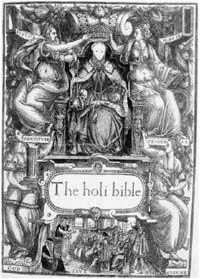
- Название:Shakespeare
- Автор:
- Жанр:
- Год:2005
- ISBN:978-0-307-49082-7
- Рейтинг книги:5 / 5. Голосов: 1
-
Избранное:Добавить в избранное
- Отзывы:
-
Ваша оценка:
Shakespeare: краткое содержание, описание и аннотация
Предлагаем к чтению аннотацию, описание, краткое содержание или предисловие (зависит от того, что написал сам автор книги «Shakespeare»). Если вы не нашли необходимую информацию о книге — напишите в комментариях, мы постараемся отыскать её.
Shakespeare — читать онлайн бесплатно полную книгу (весь текст) целиком
Ниже представлен текст книги, разбитый по страницам. Система сохранения места последней прочитанной страницы, позволяет с удобством читать онлайн бесплатно книгу «Shakespeare», без необходимости каждый раз заново искать на чём Вы остановились. Поставьте закладку, и сможете в любой момент перейти на страницу, на которой закончили чтение.
Интервал:
Закладка:
It may not be coincidence that in the autumn of the same year there appears the first public praise for Shakespeare as a dramatist rather than as a poet. In Palladis Tamia: Wits Treasury Francis Meres remarks that “as Plautus and Seneca are accounted the best for Comedy and Tragedy among the Latines: so Shakespeare among the English is the most excellent in both kinds for the stage.” Among Shakespeare’s comedies he mentions “Midsummers night dreame amp; his Merchant of Venice” and, among the tragedies, he refers to King John and Romeo and Juliet . He augments his praise by declaring that “I say that the Muses would speak with Shakespeares fine filed phrase, if they would speake Englishe.” 3He goes on to mention Shakespeare’s name in five other passages. This is high praise, only slightly modified by the general extravagance of Meres’s encomia. It signals Shakespeare’s eminence in his profession and the fact that as an author he can now legitimately claim a place beside “Philip Sidney, Spencer, Daniel, Drayton” and the other poets whom Meres mentions. Shakespeare had made the profession of dramatist culturally respectable, in a way unimaginable even twenty years before.
Meres had recently published a sermon entitled God’s Arithmetic and in the same year as Palladis Tamia he brought out a pious book entitled Granado’s Devotion; later he became a rector in Rutland. So Shakespeare now appealed to the “godly” as well as to the “lower sort” who filled the pit of the playhouses. Meres was severe on the generally dissolute lives of Marlowe, Peek and Greene but placed Shakespeare himself in the more elevated company of Sidney and Daniel and Spenser. The publication of Palladis Tamia marked a very important stage in Shakespeare’s literary reputation, also, since from this time forward begins the serious commentary upon his plays.
There is a curious addendum to Meres’s praise. Among the comedies of Shakespeare he identifies is one entitled Loue labours wonnne . The name also emerges in a publisher’s catalogue at a later date. No such play survives. It has been suggested that it is an alternative title for an existing play, such as Much Ado About Nothing , but it may well be one of those Shakespearian productions that, like the mysterious play Cardenio , has been lost in the abysm of time.
Shortly after Meres published his comments the scholar and close friend of Edmund Spenser, Gabriel Harvey, inserted a note in his newly purchased copy of Speght’s edition of Chaucer. He wrote that “the younger sort takes much delight in Shakespeares Venus, amp; Adonis: but his Lucrece, amp; his tragedie of Hamlet, Prince of Denmark, haue it in them, to please the wiser sort.” He then includes Shakespeare among a group of “flourishing metricians” 4including Samuel Daniel and his friend Edmund Spenser. Leaving aside the apparently early date for the production of Hamlet , and the fact that Harvey seems to regard that play as a text to be read, this is also significant praise from a representative of what might be called Elizabethan high poetics. Harvey had already scorned the lives and works of the jobbing playwrights of the period, in particular Thomas Nashe and Robert Greene, but in this private notation he places Shakespeare in much more elevated company – including that of his beloved Spenser.
There is one other piece of evidence that confirms Shakespeare’s standing among the “younger sort.” In this period some students at St. John’s College, Cambridge, devised a trilogy of satirical plays on current literary fashions. They have become known as the Parnassus Plays and the second of them, The Second Part of the Returne from Parnassus , has a considerable interest for the student of Shakespeare. In this play a feeble character named Gullio, who may or may not be a satirical portrait of Southampton, sings aloud the praises of Shakespeare to the amusement of the more alert Inge-nioso. “We shall have nothing but pure Shakspeare,” Ingenioso declares at an outpouring by Gullio, “and shreds of poetrie that he hath gathered at the the-ators.” When Ingenioso is obliged to attend to Gullio’s verses he cries out, sarcastically, “Sweete Mr. Shakspeare!” and “Marke, Romeo and Juliet! O monstrous theft!” Gullio then goes on to ask: “Let mee heare Mr. Shakspear’s veyne” which suggests that his “vein” was well enough known to be admired, imitated and occasionally disparaged. “Let this duncified world esteeme of Spencer and Chaucer,” Gullio goes on, ‘Tie worship sweet Mr. Shakspeare, and to honour him will lay his Venus and Adonis under my pillowe.” 5There is no doubt, then, that Shakespeare was indeed the “fashion.” Another character in the Parnassus trilogy seems designed to be a parody of the dramatist himself. Studioso is both playwright and schoolteacher, and he speaks in the accents of Shakespeare with plentiful natural analogies and melodious conceits. A recognisably Shakespearian style could be parodied in front of an audience, who would know precisely the object of the parody.
In 1599 a student of another Cambridge college, Queens’, wrote an encomium on “honie-tong’d Shakespeare” in which he praises the two long poems, Venus and Adonis and The Rape of Lucrece , as well as Romeo and Juliet . That same play was also mentioned in The Second Part of the Returne from Parnassus , which suggests that it was very popular indeed among the young scholars of the university. Shakespeare was known for his “sweetness,” but the next play of the Parnassus trilogy also mentions Richard III . The fact that Gabriel Harvey names Hamlet as one of his principal productions suggests that the dramatist was now being taken seriously on a number of levels. In the same year John Marston satirises a contemporary from whose lips flow “naught but pure Iuliat and Romio .” 6All in all, Shakespeare had become a phenomenon.
CHAPTER 58
A Loyall Just and Vpright Gentleman
Shakespeare’s purchase of New Place located the dramatist firmly at the centre of Stratford’s life. His wife and daughters moved into their newly refurbished residence, and perhaps looked forward to spending more time with the head of the household. He was of course de facto the guiding hand of the family’s own finances. He must have been instrumental in November 1597, for example, for re-entering at Westminster Hall the Shakespeares’ suit for the recovery of Arden property in his mother’s native village of Wilmcote; they were pressing their case against their relatives, the Lamberts, who had refused to hand over a house there. It was a difficult and somewhat technical legal challenge, apparently hanging upon a dispute over actual payment of, or promise to pay, the sum of £40. In the deposition John and Mary Shakespeare are described as “of small wealthe and verey fewe frendes and alyance .” 1It may have been “small wealth” that persuaded John Shakespeare, in this same year, to sell a strip of land beside his property in Henley Street to a neighbour for the sum of 50 shillings.
The witnesses brought forward in the case against the Lamberts were in fact colleagues of William, rather than John, Shakespeare, which argues the dramatist’s personal investment in the matter. Amongst this tangled procedure it is clear that the Shakespeares were assiduously and energetically pursuing their case, to the extent that John Lambert accused them of harassment. He claimed that they “doe now trowble and moleste this defendante by unjuste juste sutes in law”; 2“sutes” implies that he was being accused in other courts as well. The case dragged on for more than two and a half years, eventually to be settled, apparently in Lambert’s favour, out of court. In the course of the proceedings, however, the Shakespeares were rebuked for “wasting Chancery’s time.” 3It is an indication of how far Shakespeare would go in defence of family honour and in pursuit of family property. He may have been relentless in such matters. He forfeited 40 acres with the loss of the Wilmcote property, but soon enough he was buying up more Stratford land.
Читать дальшеИнтервал:
Закладка:
Похожие книги на «Shakespeare»
Представляем Вашему вниманию похожие книги на «Shakespeare» списком для выбора. Мы отобрали схожую по названию и смыслу литературу в надежде предоставить читателям больше вариантов отыскать новые, интересные, ещё непрочитанные произведения.






Обсуждение, отзывы о книге «Shakespeare» и просто собственные мнения читателей. Оставьте ваши комментарии, напишите, что Вы думаете о произведении, его смысле или главных героях. Укажите что конкретно понравилось, а что нет, и почему Вы так считаете.