Shakespeare
Здесь есть возможность читать онлайн «Shakespeare» весь текст электронной книги совершенно бесплатно (целиком полную версию без сокращений). В некоторых случаях можно слушать аудио, скачать через торрент в формате fb2 и присутствует краткое содержание. Год выпуска: 2005, ISBN: 2005, Жанр: Биографии и Мемуары, на английском языке. Описание произведения, (предисловие) а так же отзывы посетителей доступны на портале библиотеки ЛибКат.
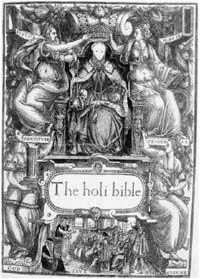
- Название:Shakespeare
- Автор:
- Жанр:
- Год:2005
- ISBN:978-0-307-49082-7
- Рейтинг книги:5 / 5. Голосов: 1
-
Избранное:Добавить в избранное
- Отзывы:
-
Ваша оценка:
Shakespeare: краткое содержание, описание и аннотация
Предлагаем к чтению аннотацию, описание, краткое содержание или предисловие (зависит от того, что написал сам автор книги «Shakespeare»). Если вы не нашли необходимую информацию о книге — напишите в комментариях, мы постараемся отыскать её.
Shakespeare — читать онлайн бесплатно полную книгу (весь текст) целиком
Ниже представлен текст книги, разбитый по страницам. Система сохранения места последней прочитанной страницы, позволяет с удобством читать онлайн бесплатно книгу «Shakespeare», без необходимости каждый раз заново искать на чём Вы остановились. Поставьте закладку, и сможете в любой момент перейти на страницу, на которой закончили чтение.
Интервал:
Закладка:
But this was undoubtedly his usual procedure: to alter, expand or cut, after seeing the play in performance. It is exactly what any playwright would do. And then he went on to the next venture, a more overt comedy in which star-crossed lovers eventually find fulfilment.
It has been suggested that A Midsummer Night’s Dream was written in order to celebrate the marriage of Southampton’s widowed mother, Mary, Countess of Southampton, to Sir Thomas Heneage. It took place on 2 May 1594, and was perhaps celebrated by the dramatist in the summer of that year. This may seem a trifle early for so accomplished a play, but it is not beyond the bounds of possibility. The play itself seems to bear witness to the terrible summer of that year- “very wet and wonderful cold” 1according to Simon Forman – in the long complaint by Titania that “the seasons alter”(462). But other noble marriages have been identified as the occasion for this paean to the married state. At the beginning of 1595 the new Earl of Derby, William Stanley, married Lady Elizabeth de Vere. They both had a connection with Shakespeare. William Stanley had inherited the earldom on the sudden death of the Earl of Derby, who was Shakespeare’s patron, Lord Strange, and Lady Elizabeth had been the intended bride of Southampton. The associations are not the most auspicious, however, and a more plausible candidate for the occasion must be the marriage of Thomas Berkeley and Elizabeth Carey at Blackfriars on 19 February 1596. The bride was the granddaughter of Lord Hunsdon, the Lord Chamberlain, and it seems a suitable occasion for him to deploy his players. Previously she had been the intended spouse for William Herbert, heir to the earldom of Pembroke, and there is evidence to suggest that the earliest of Shakespeare’s sonnets were designed to encourage that match. So he might have been considered the perfect dramatist to celebrate her eventual union. It is ironic that historians, looking for the wedding that A Midsummer Night’s Dream might celebrate, have found no fewer than three possibilities. But the world in which Shakespeare moved was a small one, in which affinities are not hard to find, and in any event these real Elizabethan marriages make no difference to A Midsummer Night’s Dream .
With its woodland setting, its noble protagonists, and its fairies, it can be deemed wholly Shakespearian; this is the “sweet Shakespeare” of contemporaneous discourse, the Shakespeare of burlesque humour and lyricism and dream. All of his reading, of Chaucer and of Ovid, of Seneca and of Marlowe, of Lyly and of Spenser, combines to create an enchanted landscape – where the mythical Theseus and Hippolyta celebrate their marriage, where Oberon and Titania, king and queen of the fairies, squabble over the possession of a changeling child, where Bottom and his country players put on an entertainment, and where star-crossed lovers are allowed at the close to fall into one another’s arms. The moon is the mistress of these proceedings, and all within her silver empire are touched by mystery. It is a play of patterns and of symmetries, of music and of harmony restored. One of its great delights lies within the formality and fluency of its design.
There are three plays of Shakespeare that seem to be without a primary “source”: Love’s Labour’s Lost, The Tempest and A Midsummer Night’s Dream . All of them are highly patterned, in a manner that seems intrinsic to the English imagination; 2they are all carefully and symmetrically structured, all touched by mystery or enchantment – two of them have elements of the supernatural – and all include dramatic entertainments within their overall structure as if in parody of the somewhat artificial plots. They are a window into Shakespeare’s art and thus, perhaps, into the English imagination itself. A Midsummer Night’s Dream is his first great contemplation of drama itself, so fresh and novel an art that it could elicit extremes of wonder and surprise. Anything might be achieved within it.
Like all Shakespeare’s plays of this period A Midsummer Night’s Dream is composed in a highly wrought and polished English, where lyrical grace is not incompatible with a hundred different rhetorical “schemes.” The play is suffused with the atmosphere of dream, as its title suggests, and yet it is a magnificent piece of theatre. The characters sleep upon the stage, and when they awake they find themselves transformed. What is the connection between the theatre and the dream? In dreams nothing is real, nothing is burdened with responsibility, nothing has meaning. This mimics Shakespeare’s attitude towards the drama itself. In plays, and in dreams, problems are expressed and resolved by means other than rational intelligence. It has often been said that a sense of the mystery of life is intrinsic to tragedy. But it is also part of Shakespearian comedy, where the irrational and the penumbral are of more consequence than that which is known or understood. The motives and impulses of his creations are not governed by the laws of reason or of conscience but by shape-shifting fancy and intuition.
A Midsummer Night’s Dream is the occasion, too, for Theseus’s remarks upon the imagination itself when he suggests (1707-8) that:
The lunatick, the louer, and the Poet
Are of imagination all compact.
It is all the more interesting on the assumption that Shakespeare himself played the part of Theseus. It is doubly interesting when an examination of the text reveals that the lines upon the imagination were added later, in the margins of his papers, as a kind of after-thought. We might, then, fruitfully speculate upon the nature of Shakespeare’s imagination.
CHAPTER 44
What Zale, What furie,
Hath Inspirde Thee Now?
His was in part a bookish imagination. There are times when he had the sources open beside him, and transcribed passages almost line for line; yet somehow, in the alchemy of his imagination, all seems changed. Words and cadences, when they pass through the medium of Shakespeare, are charged with superabundant life. To work on existing material – to pull out its associations and implications – was profoundly congenial to him. That is why he was prepared to revise his own work, as well as that of other dramatists, in the course of his professional career.
On occasions he read several books on the same topic, and their texts combined somewhere within him to create a new reality. There are times when he relied upon books rather than upon his own immediate experience. In his creation of the trickster in The Winter’s Tale , Autolycus, he borrowed from one of Robert Greene’s urban pamphlets, Second Cony-Catching , rather than employing his own observations of city life. He had learnt in his schooldays that one of the first characteristics of invention was imitation, and he was an imitator of genius. He possessed a most retentive memory as well, and could summon up phrases and quotations from his childhood reading; he could effortlessly revert to outworn dramatic or rhetorical styles.
He worked on words, not necessarily on thoughts or images. Words elicited more words from him in an act of sympathetic magic. But then one word called forth another word of quite opposite intent. In the second part of Henry IV there is just such a transition (412-14):
JUSTICE: There is not a white haire in your face, but should haue his effect of grauity.
FALSTAFF: His effect of grauy, grauie, grauie.
The collocation of gravity and gravy amply testifies to the mood of the play and, more importantly, the sensibility of Shakespeare. On an earlier occasion he was reading Arthur Golding’s translation of Ovid, in preparation for Titus Andronicus , and read the line “desyrde his presence too thentent”; the last word became transmogrified into “the Thracian Tyrant in his Tent” (138). A particular word seems to elicit from him a cluster of words, in this case alliterative; the connection is often one of sound rather than of sense. Geese are constantly associated with disease, the eagle with the weasel. There are other strange synaptic leaps. Turkeys and pistols are often associated, no doubt because of the common linkage with cock. For some reason he connects peacocks with fish and with lice in the same compound of images. On twelve occasions the word “hum” is intimately connected with death, as in Othello (2936-7):
Читать дальшеИнтервал:
Закладка:
Похожие книги на «Shakespeare»
Представляем Вашему вниманию похожие книги на «Shakespeare» списком для выбора. Мы отобрали схожую по названию и смыслу литературу в надежде предоставить читателям больше вариантов отыскать новые, интересные, ещё непрочитанные произведения.


Обсуждение, отзывы о книге «Shakespeare» и просто собственные мнения читателей. Оставьте ваши комментарии, напишите, что Вы думаете о произведении, его смысле или главных героях. Укажите что конкретно понравилось, а что нет, и почему Вы так считаете.