Shakespeare
Здесь есть возможность читать онлайн «Shakespeare» весь текст электронной книги совершенно бесплатно (целиком полную версию без сокращений). В некоторых случаях можно слушать аудио, скачать через торрент в формате fb2 и присутствует краткое содержание. Год выпуска: 2005, ISBN: 2005, Жанр: Биографии и Мемуары, на английском языке. Описание произведения, (предисловие) а так же отзывы посетителей доступны на портале библиотеки ЛибКат.
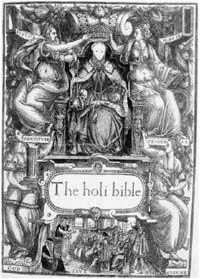
- Название:Shakespeare
- Автор:
- Жанр:
- Год:2005
- ISBN:978-0-307-49082-7
- Рейтинг книги:5 / 5. Голосов: 1
-
Избранное:Добавить в избранное
- Отзывы:
-
Ваша оценка:
Shakespeare: краткое содержание, описание и аннотация
Предлагаем к чтению аннотацию, описание, краткое содержание или предисловие (зависит от того, что написал сам автор книги «Shakespeare»). Если вы не нашли необходимую информацию о книге — напишите в комментариях, мы постараемся отыскать её.
Shakespeare — читать онлайн бесплатно полную книгу (весь текст) целиком
Ниже представлен текст книги, разбитый по страницам. Система сохранения места последней прочитанной страницы, позволяет с удобством читать онлайн бесплатно книгу «Shakespeare», без необходимости каждый раз заново искать на чём Вы остановились. Поставьте закладку, и сможете в любой момент перейти на страницу, на которой закончили чтение.
Интервал:
Закладка:
The Rape of Lucrece itself was almost as popular with the reading public as the earlier Venus and Adonis . It was reissued in six separate editions during Shakespeare’s lifetime, and in two after his death; in the year of its publication it is mentioned in several poems and eulogies. A university play of the period exclaims: “Who loves not Adon’s love, or Lucrece rape!” A reference in William Covell’s Polimanteia claims “Lucrecia” by “sweet Shakespeare” to be “all-praise-worthy,” and an elegy on Lady Helen Branch of 1594 includes among “our greater poets … you that have writ of chaste Lucretia.” 4“The younger sort take much delight in Shakespeare’s Venus and Adonis,” Gabriel Harvey wrote, “but his Lucrece” is considered “to please the wiser sort.” 5In poetical anthologies of the period it was extensively quoted and in England’s Parnassus of 1600, for example, no fewer than thirty-nine passages were extracted for the delectation of the readers.
This in turn raises an interesting, if unanswerable, question. Why at the age of thirty did Shakespeare effectively give up his career as a poet and turn back to play-writing? From the extensive comment and praise that he received for his two narrative poems, his future and fame as England’s principal poet would seem to be assured; in one essay on the English tongue, written in 1595, he is placed in the same company as Chaucer and Spenser. But he chose another path. Perhaps he considered that his life with the Lord Chamberlain’s Men offered him financial security, away from the perilous world of private patronage; in this, his judgement proved to be correct. As Jonson wrote in The Poetaster , “Name me a profest poet, that his poetrie did ever afford so much as a competencie.” Shakespeare wanted more than a “competency.” In any case he loved the work of acting and play-writing at the heart of his own company. Otherwise he would not have chosen to continue it.
Yet the larger reason must reside in the promptings of his own genius; his instinct and judgement informed him that drama was his peculiar skill and particular speciality. Attention must also be paid to the urgency of his literary ambition and inventiveness. He had already excelled at stage comedy, at melodrama and at history. Where else might his genius take him? He knew well enough that he could write poetic narratives with ease and fluency, but the form did not challenge him in the same fundamental way as the newly emerging drama. As Donne said in a private letter, “The Spanish proverb informes me, that he is a fool which cannot make one Sonnet, and he is mad which makes two.” 6He may have found it just too easy, which is perhaps why he carries his poetic effects to excess and why in Venus and Adonis he interleaves lyrical pathos with deliberate farce. He was even then beginning a sonnet sequence that would test the medium to breaking point, but it was not enough. He could perhaps have settled for a life as a “gentleman-poet,” like Michael Drayton, but that also was not enough.
CHAPTER 42
To Fill the World with Words
Soon after the formation of the Lord Chamberlain’s Men Shakespeare and his fellows began a shared run with the Lord Admiral’s Men at the playhouse in Newington Butts. This association with their principal rivals did not last for long; it was a very wet summer and the takings were low. After about ten days the Lord Admiral’s Men decamped to the Rose.
The unique position of the two companies in the Elizabethan theatre of course created competition and rivalry. When the Lord Chamberlain’s Men put on Shakespeare’s plays of Richard III and Henry V , the Lord Admiral’s Men retaliated with Richard Crookback and their own version of Henry the Fifth . The Admiral’s Men performed The Famous Wars of Henry the First as a crowd-puller to rival Shakespeare’s episodes of Henry IV . When that was not successful they tried once more with The True and Honourable History of the Life of Sir John Oldcastle , an echo of Falstaff’s original name of Oldcastle. But the traffic was not always in one direction. When the Lord Admiral’s Men staged at least seven plays on biblical subjects, the Lord Chamberlain’s Men replied with Hester and Ahasuerus and other similar dramas. The Admiral’s Men performed two plays on the life of Cardinal Wolsey at the Rose, a theme that Shakespeare would later take up in All Is True; the Admiral’s Men also played a version of Troilus and Cressida at the same theatre, before Shakespeare had written his own variation upon an identical theme. While one group had The Merry Wives of Windsor , the other staged a drama concerning the wives of Abingdon. Heywood’s A Woman Killed with Kindness vied at the Rose with Othello at the Globe, and they were no doubt viewed in the same light by the audiences who went from one theatre to the other. Two plays on the subject of Robin Hood, written by Munday and Chettle, were proving very popular at the Rose in 1598; Shakespeare retaliated with the sylvan romance As You Like It . So there was a constant cross-fertilisation of themes and ideas between the companies, fuelled by fashion and inspired by rivalry. The success of Hamlet provoked the Lord Admiral’s Men into reviving another revenge drama, The Spanish Tragedy , with special additions written by Ben Jonson. The popularity of Shakespeare’s play in fact unleashed a whole sequence of imitations such as Hoffman, or A Revenge for a Father and The Atheist’s Tragedy, or The Honest Man’s Revenge . It was not unusual for playgoers to attend the various productions of these theatrical rivals, and compare notes on their respective strengths. Was Burbage superior to Alleyn in such-and-such a role? Was Mr. Shakespeare – he had become “Mr.” on the playbills when he became a “sharer”-as excellent as Kyd?
After appearing at Newington Butts the Lord Chamberlain’s Men toured parts of the country, including Wiltshire and Berkshire, before returning to London for the winter season. On 8 October Lord Hunsdon, their patron, wrote to the Lord Mayor requesting him to allow his servants to play in the City; his new company were already at the Cross Keys in Gracechurch Street, and he wished to prolong their engagement. It is curious that they were not using the Theatre or the Curtain, but it is likely either that the playhouses were in a state of disrepair or that they were not considered suitable venues for the darker winter season. Hunsdon promised that they would begin at two in the afternoon rather than at four, and that they would use no drums or trumpets to advertise their presence. The Lord Mayor and his colleagues gave way to the Lord Chamberlain’s wishes, but this was the last time that any playing company ever used a city inn. The Lord Chamberlain’s Men also performed at court this winter, and played on two occasions before Elizabeth; on 26 and 28 December they attended her at her palace in Greenwich.
The actors did not simply arrive, with their costumes and instruments. They first had to rehearse the plays intended for Her Majesty’s pleasure before the Master of the Revels, Edmund Tilney. His suite of apartments and offices was in the former Hospital of St. John in Clerkenwell; by one of those strange coincidences of London life, Clerkenwell had once been the site of the London mystery plays. Since the company performed at the playhouses during the afternoon, these royal rehearsals must have taken place early in the morning or late at night. The chandler’s bill for the Office of the Revels records large payments for candles, coal and firewood. Tilney would act as censor, removing those lines that might be indelicate or offensive to the royal ear. He also loaned the company more sumptuous costumes if they were needed; at the court, some of their dresses and cloaks might have seemed threadbare. There are references to the actors borrowing “the monarch’s gown,” to save embarrassment before the great original, and “armor for knightly combatants” in case they were ridiculed by the more martial courtiers. The Master of the Revels also lent them “apt houses made of canvas,”“necessaries for hunters” and “a device for thunder and lightning.” 1
Читать дальшеИнтервал:
Закладка:
Похожие книги на «Shakespeare»
Представляем Вашему вниманию похожие книги на «Shakespeare» списком для выбора. Мы отобрали схожую по названию и смыслу литературу в надежде предоставить читателям больше вариантов отыскать новые, интересные, ещё непрочитанные произведения.








Обсуждение, отзывы о книге «Shakespeare» и просто собственные мнения читателей. Оставьте ваши комментарии, напишите, что Вы думаете о произведении, его смысле или главных героях. Укажите что конкретно понравилось, а что нет, и почему Вы так считаете.