Shakespeare
Здесь есть возможность читать онлайн «Shakespeare» весь текст электронной книги совершенно бесплатно (целиком полную версию без сокращений). В некоторых случаях можно слушать аудио, скачать через торрент в формате fb2 и присутствует краткое содержание. Год выпуска: 2005, ISBN: 2005, Жанр: Биографии и Мемуары, на английском языке. Описание произведения, (предисловие) а так же отзывы посетителей доступны на портале библиотеки ЛибКат.
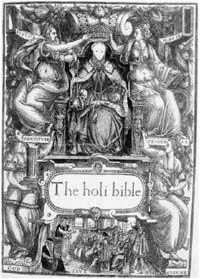
- Название:Shakespeare
- Автор:
- Жанр:
- Год:2005
- ISBN:978-0-307-49082-7
- Рейтинг книги:5 / 5. Голосов: 1
-
Избранное:Добавить в избранное
- Отзывы:
-
Ваша оценка:
Shakespeare: краткое содержание, описание и аннотация
Предлагаем к чтению аннотацию, описание, краткое содержание или предисловие (зависит от того, что написал сам автор книги «Shakespeare»). Если вы не нашли необходимую информацию о книге — напишите в комментариях, мы постараемся отыскать её.
Shakespeare — читать онлайн бесплатно полную книгу (весь текст) целиком
Ниже представлен текст книги, разбитый по страницам. Система сохранения места последней прочитанной страницы, позволяет с удобством читать онлайн бесплатно книгу «Shakespeare», без необходимости каждый раз заново искать на чём Вы остановились. Поставьте закладку, и сможете в любой момент перейти на страницу, на которой закончили чтение.
Интервал:
Закладка:
It has the distinction of being Shakespeare’s shortest play, but it is not without its subtleties of characterisation. We see here what might be called the natural bent of Shakespeare’s imagination, with the superiority of servants over their masters and the natural good sense of women contrasted with the wilful obtuseness of men. There also appears, in this comedy of twinship, the theme of self-division that runs through much of Shakespeare’s mature drama:
… oh how comes it,
That thou art then estranged from thy selfe? (500-l)
The fact that these lines are uttered by a wife, who believes that she has been abandoned by her husband, may add a private note of self-communing. In this play, as in so many others of Shakespeare, a family is reunited after many vicissitudes, and lost children are restored.
Self-estrangement has become so obvious a topic of Shakespearean commentary that it is often forgotten that it is peculiar to, and symptomatic of, his genius. Whether Shakespeare divined within himself the play of contraries, or whether it was the fruit of observation, is an open question. As a country boy come to London, as a player with aspirations to gentility, as a writer as well as an actor, he had ample scope for contemplation. We also have the interesting spectacle of an utterly practical and business-like man who was able to create a world of passion and of dream. That is perhaps the greatest mystery of all. He had within himself legions. He saw the human truth in any argument or controversy. All the evidence of his plays suggests that if he expressed a truth, or even an opinion, an opposing truth or opinion would then occur to him – to which he would immediately give assent. That was for him the natural condition of being a dramatist. It has often been noticed that in the plays there is no sense of Shakespeare’s personality, and that the characters themselves do all the thinking. It has also been suggested that there is a consistent and characteristic “doubleness” within the plays, whereby heroic or mighty action is duplicated by the fools and clowns. There are also occasions when an action can be interpreted in two different ways, or a passion such as sexual jealousy can seem both justified and unjustified. But doubleness is not the right word. Kings and clowns are all part of the essential singularity of his vision.
CHAPTER 34
They Thought It Good
You Heare a Play
In 1591 and 1592 it is likely that the young Shakespeare was working on more than one play at once for Pembroke’s Men. There is no reason why he could not move from comedy to history or tragedy, since he mingles these within individual scenes and even speeches. The Tragedy of King Richard III seems to have occurred to Shakespeare as he was completing The True Tragedy of Richard, Duke of York . The character emerges in the earlier drama but in subsequent revision, as we have observed, Shakespeare deepened and darkened the portrait in anticipation of the more accomplished play. It was a role for Burbage himself.
Richard Burbage did indeed become the principal interpreter of Shakespeare’s plays for the rest of the dramatist’s life. The recognised leader of the company, he specialised in heroic or tragic roles. It was written of him that
whatever is commendable in the grave orator is most exquisitely perfect in him; for by a full and significant action of body he charms our attention. Sit in a full theatre, and you will think you see so many lines drawn from the circumference of so many ears while the actor is centre … for what we see him personate we think truly done before us. 1
It was he who played the first Lear, the first Hamlet and the first Othello. It is also likely that he introduced Romeo and Macbeth, Coriolanus and Prospero, Henry V and Antony, to the English stage. No other actor in the world has ever achieved so much. The naturalness and liveliness of his “personation” are often mentioned. He was considered to be a Proteus of changing identity, “so wholly transforming himself into his Part, and putting off himself with his Cloathes, as he never (not so much as in the Tyring-house) as-sum’d himself again until the Play was done … never falling in his Part when he had done speaking, but with his looks and gestures maintaining it still unto the heighth.” 2He was perhaps Shakespeare’s most familiar companion. The dramatist left him money to purchase a ring, but the names of Burbage’s children are perhaps a better token of their intimacy. He had a daughter named Juliet, who died young; he had a son called William and another daughter named Anne.
And so we see Burbage, at the age of twenty-one, walking onto the stage as Richard III. The medieval Vice was the traditional way of representing evil. Yet Richard seems to emerge fully armed even as Shakespeare thought of him, as if he had come from his imagination even as he had ripped his way out of his mother’s womb. For the first time on the English stage the Vice is capable of growth and change: Richard experiences the first faint stirrings of conscience on the eve of the battle of Bosworth. It is only momentary, but his powerful lines prefigure the agonies of Macbeth and Othello: “What do I feare? my selfe? theres none else by”.
Shakespeare was too great a dramatist to rest with the conventions. He had to reinvent the paths of human consciousness in order to stay true to his interior vision. He had transcended his sources and influences – Hall, Holinshed, Seneca with the rest – by combining them in fresh and unexpected ways. The high chant of formal rhetoric is mixed with comic asides, the melodramatic with the erotic. The rough wooing of Lady Anne springs to mind, although it is hard to think of any Shakespearian scene between the sexes that is not touched by malice or competition. He had not forgotten his lessons from Marlowe, and there are echoes of Tamburlaine and The Jew of Malta in Richard III .
Now it was Marlowe’s turn to learn from him. It is generally agreed that his Edward II derives part of its inspiration from Shakespeare’s play. And why should it not be so? The theatre was a place of continual imitation. The Tragedy of King Richard III was the longest and most ambitious play that Shakespeare had written. (Only Hamlet is longer.) It moves from one climax of invention and feeling to the next, never slackening its pace. In this play Shakespeare blossoms and unfolds. He loves the villainy and malice of the crook-back. He exults in them. There is an atmosphere of mystery and of prophecy – of ancient archetypes and mythical encounters – that raises English history to a new level of significance and meaning. That was one of Shakespeare’s great gifts to English drama.
Richard III quickly became popular, with an almost unprecedented eight reprints of the quarto text, three of these after Shakespeare’s death. The despairing cry, “A horse, a horse, my kingdome for a horse,” was parodied and repeated in a hundred different contexts. Thus we have “A man! A man! A kingdom for a man!” (Scourge of Villanie , 1598), “A boate! A boate! A full hundred marks for a boate!” (Eastward Ho! , 1605) and “A foole! A foole! My coxcomb for a foole!” (Parasitaster , 1606). It would not be at all surprising to discover that it became a popular catchphrase on the streets of London.
We can only speculate about Burbage’s performance as Richard III. There is, however, one small clue: “The king is angrie, see, he gnawes his lip.” Catesby notices this mannerism, but it is one that Burbage also employed in the part of Othello. “Alas,” Desdemona asks, “why gnaw you so your neather lip?” There is a reminder of Burbage’s power as an actor in an anecdote in the diary of a citizen called John Manningham.
Читать дальшеИнтервал:
Закладка:
Похожие книги на «Shakespeare»
Представляем Вашему вниманию похожие книги на «Shakespeare» списком для выбора. Мы отобрали схожую по названию и смыслу литературу в надежде предоставить читателям больше вариантов отыскать новые, интересные, ещё непрочитанные произведения.


Обсуждение, отзывы о книге «Shakespeare» и просто собственные мнения читателей. Оставьте ваши комментарии, напишите, что Вы думаете о произведении, его смысле или главных героях. Укажите что конкретно понравилось, а что нет, и почему Вы так считаете.